
AI News — Sunday, 9 August 2026
- Sam Utteker
- Aug 9
- 4 min read
Updated: 6 days ago
5-minute update on today's AI news
In a Nutshell
AI capability and control moved together today: OpenAI paused parts of Astra development over cyber risk while Anthropic reduced unnecessary biology fallbacks. Deployment widened through agent-native browsing, presentation creation, cyclone forecasting, and unlimited ChatGPT access, but infrastructure, mental-health, and content-authenticity costs stayed visible. For U365, the operating lesson is clear: pair rapid adoption with capability gates, auditability, and domain-specific safeguards.
Industry | Reported | 19:41 UTC
OpenAI acquires presentation startup NextSlide to strengthen ChatGPT creation workflows

NextSlide built software that turns prompts, notes, documents, or research into editable presentations, and its team is now working on ChatGPT. This points toward richer end-to-end knowledge-work creation inside ChatGPT, relevant to U365 course, proposal, and briefing workflows.
🔗 TechCrunch → | 8 August 2026
Policy | Confirmed | 17:53 UTC
Amazon’s planned Texas AI data center could become America’s largest climate polluter

The on-site gas plant is permitted to release up to 33 million tons of carbon dioxide annually, according to reporting cited by The Verge. For institutions expanding AI use, compute strategy now includes energy exposure, local opposition, and sustainability governance.
🔗 The Verge → | 8 August 2026
Models | Confirmed | 18:40 UTC
OpenAI pauses parts of Astra development after critical cybersecurity capability warning

OpenAI says preliminary evaluations could not rule out critical cyber capability and triggered additional safeguards. The pause is concrete evidence that capability gates can change release schedules, a model U365 should mirror for high-risk agents.
🔗 The Verge → | 7 August 2026
Tools | Reported | 16:16 UTC
Cloudflare launches Kitesurf, a cloud browser designed specifically for AI agents

Kitesurf removes human-facing browser overhead and focuses on context windows, token cost, scalability, and agent-specific threats. This could lower the infrastructure cost of browser automation while making prompt-injection and isolation controls even more important.
🔗 TechCrunch → | 7 August 2026
Research | Confirmed | 16:00 UTC
DeepMind open-sources WeatherNext after cyclone forecasts gained an extra day of warning

DeepMind says WeatherNext can provide accurate cyclone forecasts with an extra day of warning, and independent reporting describes strong forecaster interest. The result shows how domain-specific AI can create high-value lead time from lower-resolution data.
🔗 Google DeepMind → | 6 August 2026
Models | Reported
Anthropic updates Fable 5 biology safeguards and cuts false-positive fallbacks by about 85 percent
Anthropic says the change keeps protections while enabling far more health, clinical, and educational biology queries. It illustrates the value of measuring safety systems by both risk reduction and unnecessary refusal rates.
🔗 Anthropic → | 7 August 2026
Geopolitics | Reported | 13:29 UTC
ByteDance reportedly trains a 10-trillion-parameter model to challenge US frontier labs
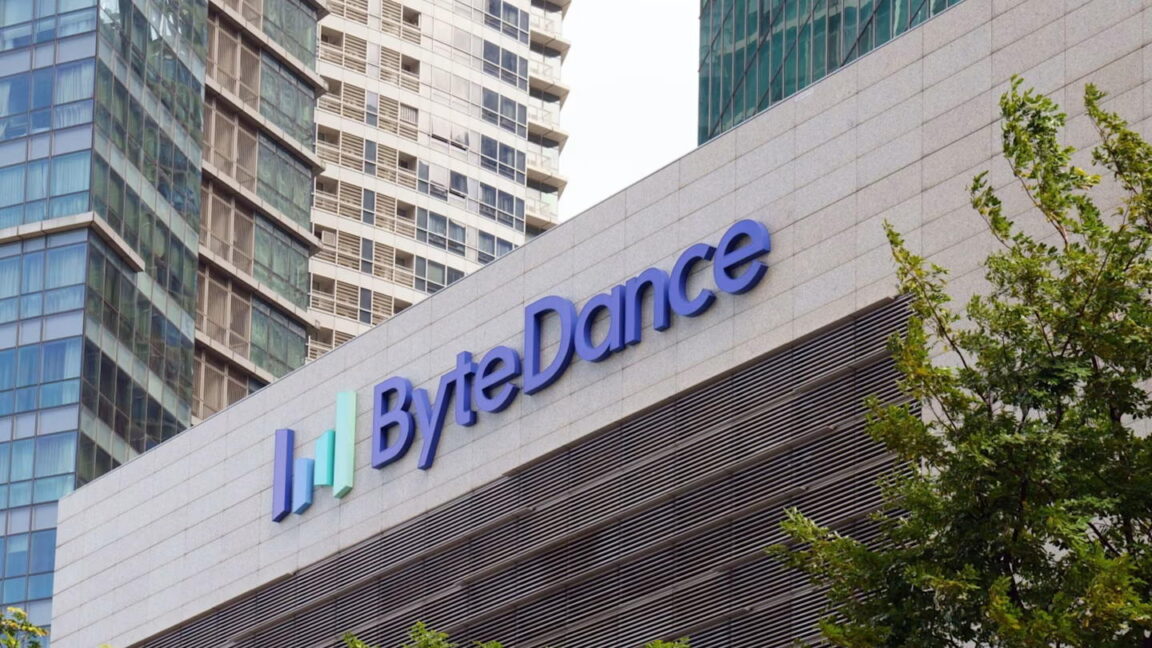
The Financial Times, republished by Ars Technica, reports an early-stage model with up to 10 trillion parameters aimed at Anthropic-tier performance. Parameters do not prove capability, but the training scale signals intensifying US-China competition and continued compute concentration.
🔗 Ars Technica → | 7 August 2026
Tools | Confirmed | 17:00 UTC
ChatGPT removes text-chat limits for free users and expands access to GPT-5.6

Free and Go users get unlimited text chats, while separate limits remain for files, images, voice, and image generation. Lower access friction will accelerate learner adoption, making AI literacy and acceptable-use guidance more urgent for U365.
🔗 The Verge → | 6 August 2026
Policy | Confirmed | 17:39 UTC
Suno adds watermarking and download controls to curb AI music misuse

Suno says it will watermark and fingerprint generated tracks, limit downloads, and tighten rules against copycat songs. This raises the baseline for provenance controls in generative media, a relevant standard for U365 content production.
🔗 The Verge → | 6 August 2026
Education | Reported
New study audits bias in AI systems that score second-language speaking

This arXiv preprint applies concept activation vectors to test whether speaking scores depend on irrelevant attributes such as first language or age. The work is directly relevant to fair AI assessment, but its findings remain preprint evidence rather than validated deployment guidance.
🔗 arXiv → | 6 August 2026
Research | Reported
TRAJDEBUG traces cascading errors to find critical failures in long-horizon AI agents

The preprint targets the earliest trajectory mistake responsible for a failed outcome, where evidence can be distributed across many steps. Better causal debugging could improve reliability and post-incident analysis for multi-step institutional agents.
🔗 arXiv → | 6 August 2026
Policy | Reported | 13:49 UTC
Researchers call for greater transparency after AI chatbots fail users in crisis

Ars Technica reports that clinicians and researchers want companies to open safety data after lawsuits alleged serious chatbot harms. Institutions deploying conversational AI should define crisis escalation, logging, and non-substitution rules before offering sensitive support.
🔗 Ars Technica → | 7 August 2026
The world of AI is evolving at full speed.
Every day brings new models, new rules, new players. The best way to stay ahead, stay relevant, and stay Superhuman is to become a Fellow of University 365 — The Applied AI University.




Comments