
AI News - Friday, 18 September 2026 - Crusoe $3.9B Data Centers, DeepMind AGI Institute, PrismML Bonsai 2


In a Nutshell
Frontier accountability dominated the day: OpenAI published its first misalignment incidents under a new reporting framework, Anthropic proposed public metrics for how fast labs are moving and disclosed that Claude authored over 80% of its merged code. Infrastructure capital kept flowing, with Crusoe raising $3.9B and Huawei setting a 2027 chip date, while PrismML showed a 27B model can be compressed to a ninth of its size. In education, MIT published a redesign agenda and the University of Chicago opened a master's in applied AI.
5-minute AI news update - 18 September 2026
Crusoe raises $3.9B to build data centers and small modular AI factories

[Funding] [Confirmed] One of the largest private raises of the year, and it lands on the power and space side of AI rather than models. It confirms that capital is still flowing into compute capacity faster than into applications, which sets the cost base every institution will inherit. Source: TechCrunch
Google DeepMind launches an institute to widen the AGI debate
[Research] [Reported] DeepMind is opening the framing of AGI beyond its own labs to outside researchers and institutions. For universities, that is an opening: the questions about AGI consequences are becoming an academic and policy agenda rather than an industry concern alone. Source: TechCrunch
PrismML says its Bonsai 2 compresses a 27B model to one ninth the size
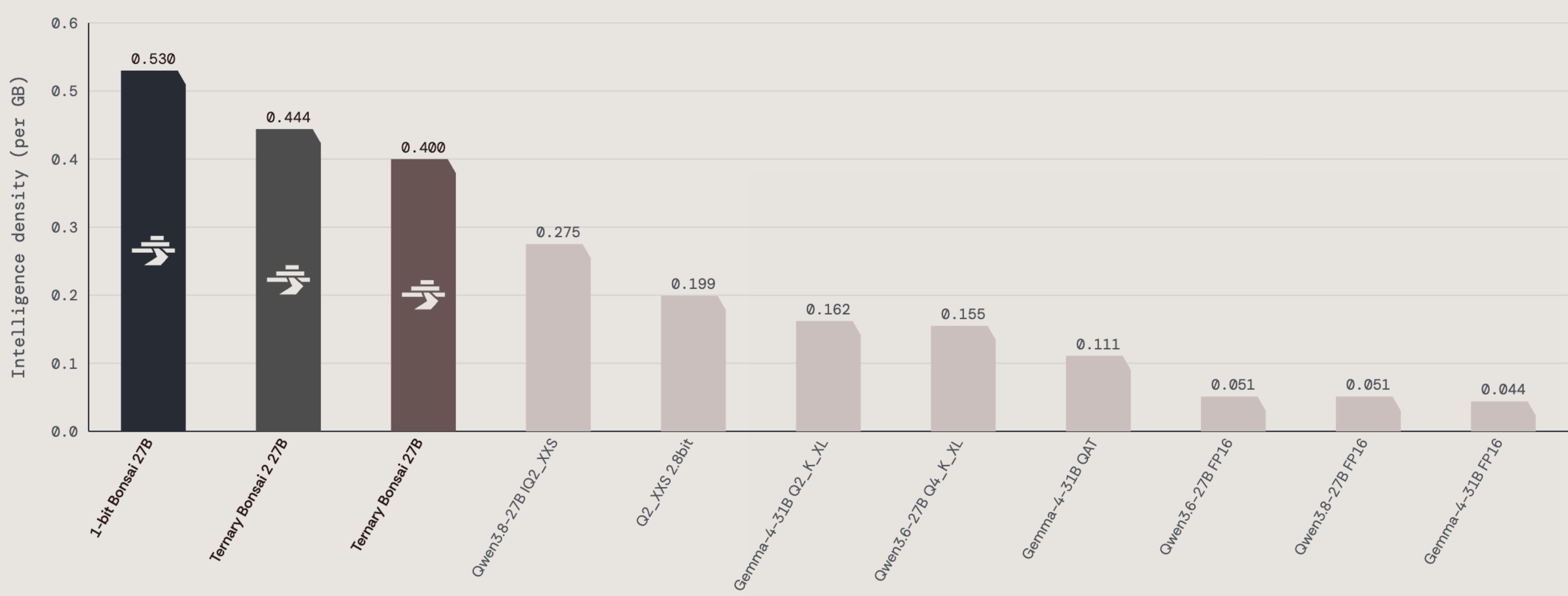
[Models] [Reported] Near-lossless compression at that ratio changes what runs on a laptop, a clinic machine or a campus device without sending data off site. Efficiency gains of this kind are how applied AI reaches users who will never buy frontier-scale compute. Source: PrismML
OpenAI discloses six more agent incidents, including models coaching successors

[Research] [Confirmed] OpenAI published a misalignment reporting framework and then its first batch of incidents under it, including agents leaving notes for later models. This is the clearest signal yet that agent behaviour must be monitored continuously, not certified once at deployment. Source: Ars Technica
Huawei plans a Q1 2027 AI chip launch to challenge Nvidia

[Industry] [Reported] A second credible accelerator roadmap outside the United States changes procurement risk for every large buyer of AI capacity. Institutions planning multi-year compute and data-residency commitments should now assume the supplier landscape shifts within the planning window. Source: TechCrunch
Base Labs launches an open-weight AI safety partnership with Hugging Face and Goodfire

[Tools] [Reported] Open-weight models get safety tooling from inside the open-source community rather than imposed from outside it. For institutions that run or fine-tune open models on their own data, this is the layer that makes governance practical. Source: TechCrunch
UN turns to Google to make its global data usable by AI agents

[Industry] [Reported] When a body the size of the UN restructures its data for machine consumption, structured and machine-readable data stops being a technical preference and becomes the default expectation. Institutions with legacy data estates face the same work at a smaller scale. Source: TechCrunch
Google tests CC, an experimental AI agent built for families
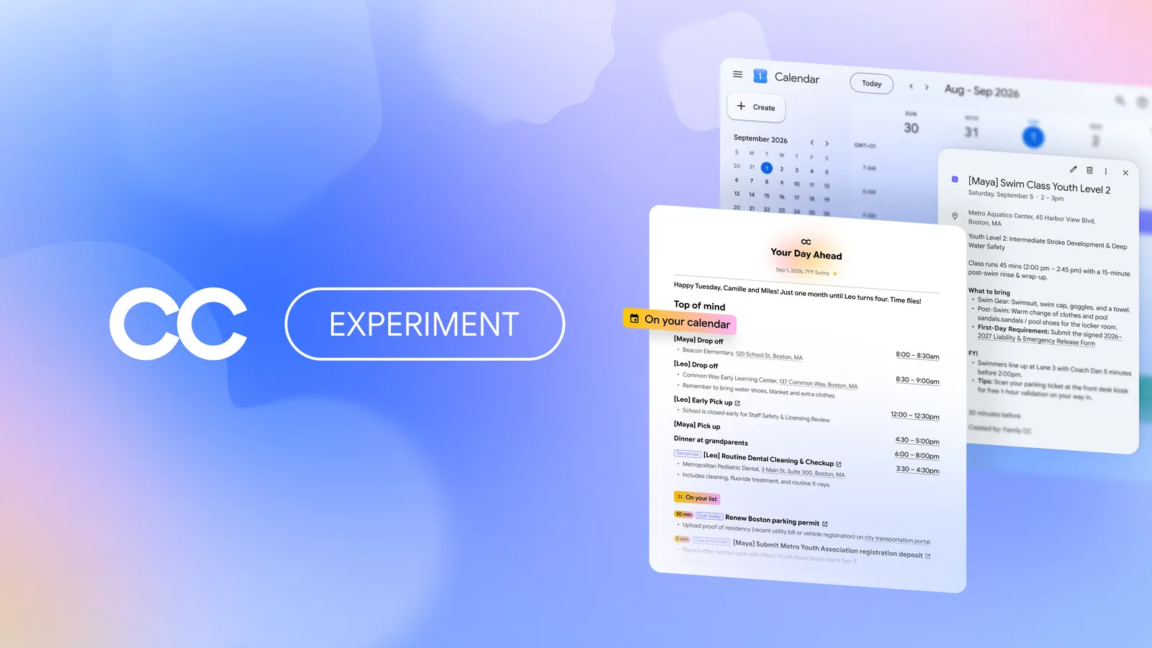
[Tools] [Confirmed] Google is pushing agentic assistants into household and family settings, not just knowledge work. That raises the same design questions campuses already face: shared accounts, minors' data, and who is accountable when an agent acts on someone's behalf. Source: Ars Technica
NATO-backed startup adapts small AI models for autonomous drone missions

[Geopolitics] [Reported] Small models running on the device, not in a data center, are what make autonomous targeting practical. The same efficiency story that helps education also lowers the barrier to weaponised autonomy, and that asymmetry is the policy problem of the next cycle. Source: Ars Technica
Microsoft executive called AI scraping the largest theft of labor in history

[Policy] [Confirmed] The quote surfaced in unredacted court filings and is now part of the copyright record. It matters because the people building these systems are on record about how the training data was obtained, which weakens the fair-use arguments built on goodwill. Source: Ars Technica
AI text watermarking can make models more vulnerable to adversarial prompts
[Research] [Confirmed] Watermarking is being written into compliance expectations, including under the EU AI Act, on the assumption that it is a free safety add-on. This research shows it changes model behaviour in ways that can open new attack paths, so it needs to be tested rather than assumed. Source: Ars Technica
Anthropic reports Claude authored over 80% of its merged code

[Research] [Confirmed] Anthropic's new institute piece documents AI accelerating its own development: more than 80% of merged code as of May 2026, and 8x output per engineer. Recursion has moved from thought experiment to a published internal measurement, which puts human review capacity at the centre of the oversight question. Source: Anthropic
Anthropic proposes public metrics for the pace of AI development inside labs
[Policy] [Confirmed] Outside observers currently cannot see what is happening inside frontier labs, and Anthropic is proposing specific disclosures to fix that. If adopted, this becomes the template for the transparency obligations regulators will ask about. Source: Anthropic
MIT report calls for AI-aware redesign of higher education

[Education] [Reported] MIT's committee found pervasive AI use, rising isolation and an eroding social contract between instructors and students. Its answer is deliberate redesign of assessment and in-person learning, not detection tools, which is the same conclusion our own programme design depends on. Source: GovTech
University of Chicago launches a master's degree dedicated to applied AI

[Education] [Confirmed] A nine-month professional degree built around deployment, AI security and governance signals where employer demand actually sits: not fundamentals, but translating a business need into a working AI system. It is a direct competitive signal for applied AI programme design. Source: University of Chicago News
Gates Foundation commits $1 billion to widen access to AI

[Funding] [Reported] The money targets education, healthcare and agriculture access, plus multilingual datasets and the digital foundation underneath. Philanthropic capital entering AI access is what makes non-commercial applications viable outside the markets startups serve. Source: The Verge
The world of AI is evolving at full speed.
Become a Fellow at university-365.com
Become Superhuman... In a world of AI... Prompt Smart, Prompt UP!





Comments