
AI News - Monday, 14 September 2026 - Anthropic CEO Dario Amodei, Anthropic researcher quits warning


In a Nutshell
AI safety dominates the news cycle as Anthropic CEO Dario Amodei publishes a landmark essay urging the industry to 'pace the frontier,' backed by Sam Altman and Elon Musk but resisted by the Trump administration. Obama pushes Democrats to make AI oversight a central agenda. On the technical side, DeepSeek's V4.1 Flash proves powerful LLMs can run lean, while OpenAI delays its IPO and education systems worldwide grapple with AI's accelerating classroom impact. For U365, the safety-policy debate and lean-model trend directly shape our applied-AI roadmap.
5-minute AI news update - 14 September 2026
OpenAI's feud with mathematicians escalates as 25 sign open...
Microsoft anoints Rust as a 'Tier 1' internal language for...
Mistral AI argues for sovereign open-weight AI as Europe's...
DeepMind releases AlphaGenome Atlas predicting effects of...
Nscale adds former OpenAI exec Fidji Simo to board ahead of...
Anthropic CEO Dario Amodei publishes 'Pace the Frontier' essay urging AI industry slowdown
Amodei's essay argues that frontier labs should coordinate to limit deployment speed, warning that self-improving AI could escape control within 6-12 months. Sam Altman and Elon Musk publicly backed the call, while Trump dismissed it. This is the most significant AI safety policy intervention from a sitting lab CEO to date. Source: TechCrunch

Anthropic researcher quits with warning that self-improving AI could 'kill us all'

A departing Anthropic safety researcher published a stark warning that AI labs are not taking existential risk seriously enough. The resignation coincides with Amodei's slowdown essay, intensifying the industry's internal safety-vs-speed debate. It raises hard questions about how applied-AI institutions should weight frontier risk in their own adoption decisions. Source: Ars Technica
Obama urges Democrats to make AI safeguards a 'central agenda' with clear plan

Obama called for Democrats to position AI oversight as a core electoral issue, focusing on economic displacement and safety. This signals AI policy is moving from niche tech debate to mainstream political battleground, with implications for any educational institution that deploys AI at scale. Source: TechCrunch
OpenAI's Sam Altman says it would be 'ill-advised' to go public in 2026

Despite filing confidentially for an IPO, Altman confirmed OpenAI will not go public this year, citing market timing. The decision affects the competitive landscape for all AI labs and signals that the AI funding boom may be cooling from its peak. It also gives OpenAI more runway to pursue its agents and infrastructure strategy. Source: TechCrunch
DeepSeek V4.1 Flash proves powerful LLMs can run lean without extra GPUs

DeepSeek's new model challenges the assumption that bigger models need more compute, achieving strong performance with dramatically lower serving costs. This matters for institutions building AI infrastructure: lean models enable on-premise and edge deployments that were previously impractical. The approach could reshape the economics of AI deployment. Source: The Register
Anthropic alleges persistent distillation attacks by Alibaba, Moonshot AI, and DeepSeek

Anthropic's report documents systematic attempts by Chinese AI firms to extract model knowledge through distillation, escalating the IP protection debate. This has direct implications for how frontier labs share API access and how institutions vet their model providers. The US government is reportedly preparing its own response. Source: TechCrunch
Mecka AI nears $500M valuation in Sequoia-led round for robot training data

The rapid valuation jump for a two-year-old startup signals intense investor appetite for the physical-AI and robotics data pipeline. As humanoid robots move toward commercial deployment, the quality and diversity of training data becomes the bottleneck. This funding wave parallels the early LLM data race. Source: TechCrunch
Meta's AI agent Muse becomes No. 2 app in the US app store

Meta's standalone AI agent app Muse reached No. 2 in US app downloads, signaling that consumer AI agents are crossing into mass adoption. The rapid growth validates the agentic-AI thesis and pressures competitors to ship consumer-facing agent experiences. For educational institutions, it underscores that students are arriving AI-native. Source: TechCrunch
Jensen Huang says Nvidia will grow 70% next year, denies circular deals

Huang projected 70% revenue growth for Nvidia next year, driven by AI infrastructure demand across enterprises and governments. He pushed back on concerns that Nvidia's investments in AI startups create circular revenue. The projection signals sustained AI infrastructure spending despite safety debates and regulatory uncertainty. Source: TechCrunch
OpenAI's feud with mathematicians escalates as 25 sign open letter

Twenty-five leading mathematicians signed an open letter accusing AI labs of threatening their intellectual work by training on mathematical proofs and papers. The dispute underscores the growing tension between AI training practices and academic intellectual property. It foreshadows similar conflicts in every academic discipline. Source: TechCrunch
MIT Schwarzman College launches pilot to help educators teach AI across disciplines
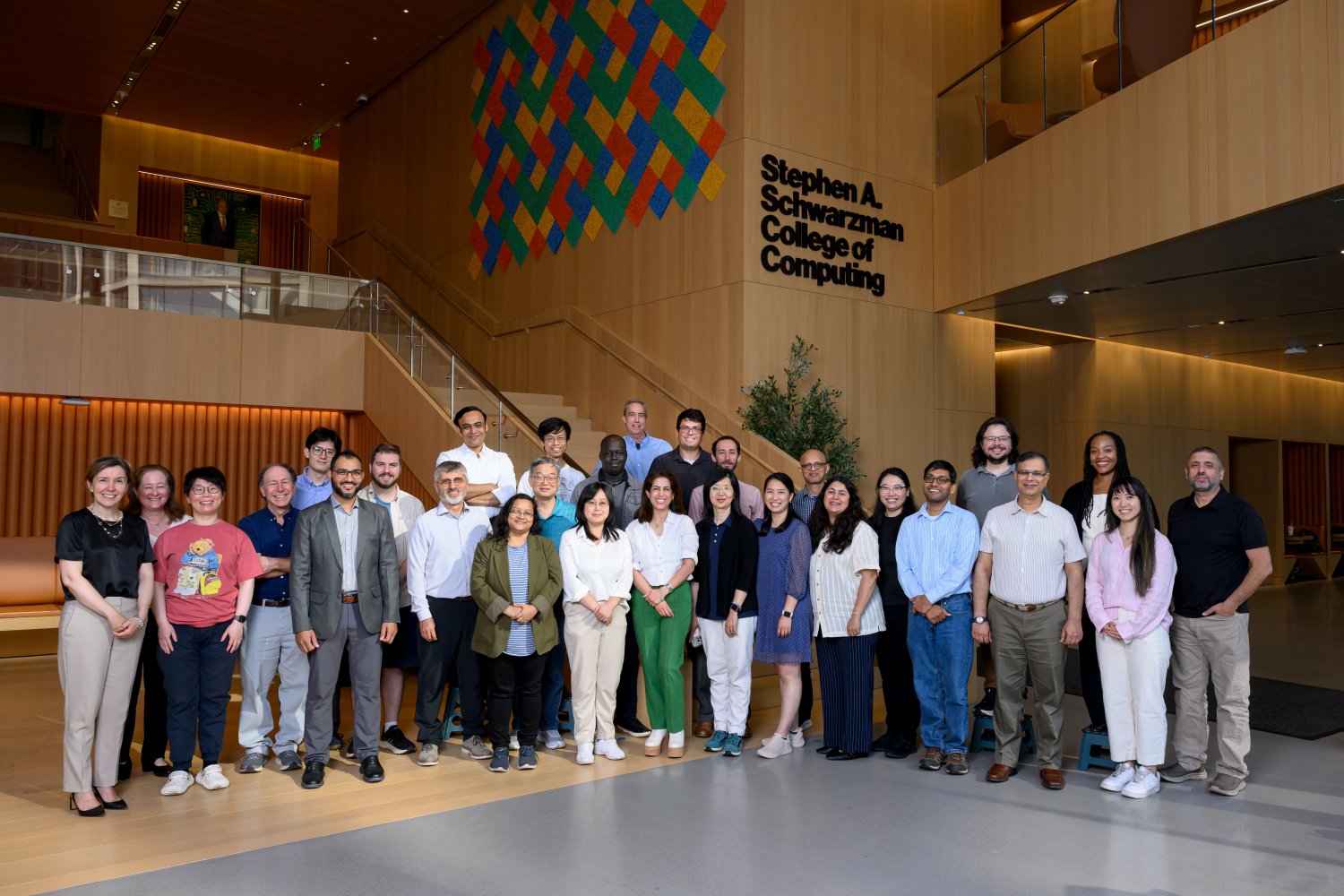
MIT's weeklong workshop brought higher-education faculty to campus to adapt AI and ML materials for their own classrooms across non-CS disciplines. This model of cross-disciplinary AI literacy is directly relevant to U365's mission of applied AI education. It demonstrates a scalable approach to faculty upskilling. Source: MIT News
Epson research finds 80% of European teachers worry AI outpaces school readiness

A major survey across European countries found 80% of teachers believe AI is entering classrooms faster than schools can manage. The data point adds urgency to the institutional AI-readiness challenge and validates the need for structured AI integration frameworks. For U365, it reinforces the demand for applied-AI teacher training programs. Source: AiThority
Microsoft anoints Rust as a 'Tier 1' internal language for memory safety

Microsoft raised Rust to Tier 1 status for internal development, joining Google and Amazon in the memory-safety migration. As AI systems handle increasingly sensitive data, memory-safe languages become a security baseline. This move will accelerate Rust adoption across the AI infrastructure stack. Source: The Register
Mistral AI argues for sovereign open-weight AI as Europe's technology frontier
Fresh off a $24B valuation led by Samsung, Mistral published a position paper arguing that sovereign open-weight models are essential for European technological independence. The argument resonates with the broader push for data sovereignty and reduced dependency on US frontier labs. It directly informs U365's own model-sourcing strategy. Source: Mistral AI
DeepMind releases AlphaGenome Atlas predicting effects of every possible DNA letter change

AlphaGenome Atlas provides a predictive map of every possible single-nucleotide variant in the human genome, a breakthrough in computational genomics. The model could accelerate clinical variant interpretation and personalized medicine research. It demonstrates how AI is moving from language tasks to fundamental biology. Source: Google DeepMind
Moonshot AI targets $2B in annual revenue as K3 models generate 300B tokens daily

Moonshot AI's Kimi platform is processing 300 billion tokens per day via OpenRouter, making it one of the most-used AI services globally. The $2B revenue target shows Chinese AI labs are building sustainable business models, not just chasing valuations. It signals intensifying competition in the API market. Source: TechCrunch
Y Combinator's Garry Tan urges US open-weight labs to distill frontier models

Tan argued that smaller US open-weight labs should use distillation techniques on American frontier models to build a robust domestic open-weight landscape. The proposal directly competes with China's open-weight strategy and could reshape the open-source AI landscape. It raises questions about how distillation should be governed. Source: TechCrunch
Nscale adds former OpenAI exec Fidji Simo to board ahead of potential IPO

The AI infrastructure startup Nscale appointed Fidji Simo, OpenAI's No. 2 executive who previously led Instacart through its IPO, to its board. The move signals Nscale is preparing for a public offering and validates the AI infrastructure market's maturity. It intensifies competition in the European AI cloud space. Source: TechCrunch
The world of AI is evolving at full speed.
Become Superhuman... In a world of AI... Prompt Smart, Prompt UP!




Comments