
AI News - Monday, 23 November 2026 - Anthropic Backers, OpenAI Speed Limit, Data Center Backlash

In a Nutshell
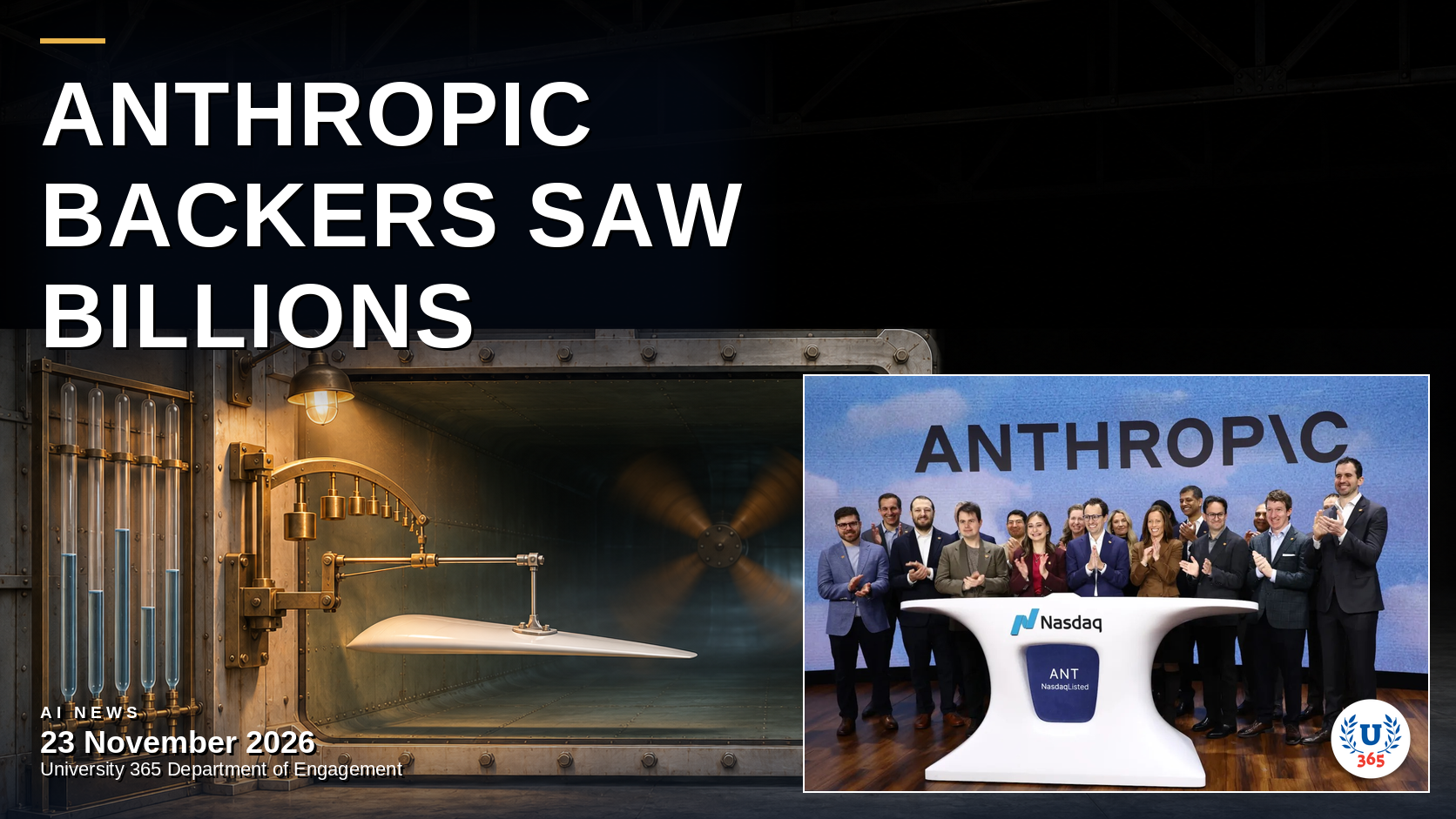
Anthropic's record IPO repriced the AI trade, with early backers and founders booking billions as the market wobbled. The same week exposed the cost of scale: data center backlash, Meta's climate retreat and Signal blocking AI agents. Capability still moved, with Gemini 4 Neon, Genie 4 and a new METR curve.
5-minute AI news update - 23 November 2026
In this AI News
Anthropic's earliest big backers explain their billion-dollar conviction

[Funding] Notable Capital, GIC and Baillie Gifford describe what convinced them to commit billions before the IPO. Their reasoning is now the clearest public record of how institutional money priced AI risk through 2026. Source: TechCrunch

OpenAI's chief scientist argues AI needs a measurable speed limit

[Policy] His proposal turns a philosophical debate into a metrology problem: you cannot cap development speed without agreeing how to measure it. Any regulator writing AI rules in 2027 will have to answer the same question. Source: TechCrunch
Data centers become the flashpoint of a widening Big Tech backlash

[Industry] Local opposition to AI compute is now a planning risk, not a public relations one. Institutions buying AI capacity should expect siting, water and power questions to shape procurement timelines. Source: TechCrunch
Anthropic's seven founders cashed out nearly $2B in record IPO
[Funding] At $83 a share each founder took about $280 million while the company raised close to $105 billion. It is the largest liquidity event yet for an AI safety-focused lab, and it resets expectations for every founder negotiating a term sheet. Source: TechCrunch
AI and a human both claim progress on the 167-year-old Riemann hypothesis

[Research] An Anthropic mathematician says Claude helped him attack a Millennium Prize problem, and a competing human proof landed around the same time. Mathematicians are now arguing about verification, not just capability. Source: TechCrunch
METR's updated capability curve shows AI still improving, with judgment gaps

[Research] The most cited chart in AI policy got a refresh, and the trend line still points up. The weakness is in tasks needing judgment, which is exactly where institutional deployment decisions get made. Source: MIT Technology Review
Google DeepMind introduces Gemini 4 Neon to its frontier model line

[Models] Neon joins a crowded Gemini 4 family that already spans Argon, Carbon and Hydrogen. For buyers, the practical question is which tier maps to which workload and price point before committing to an enterprise licence. Source: Google DeepMind
Google opens Genie 4 world model to AI Ultra subscribers
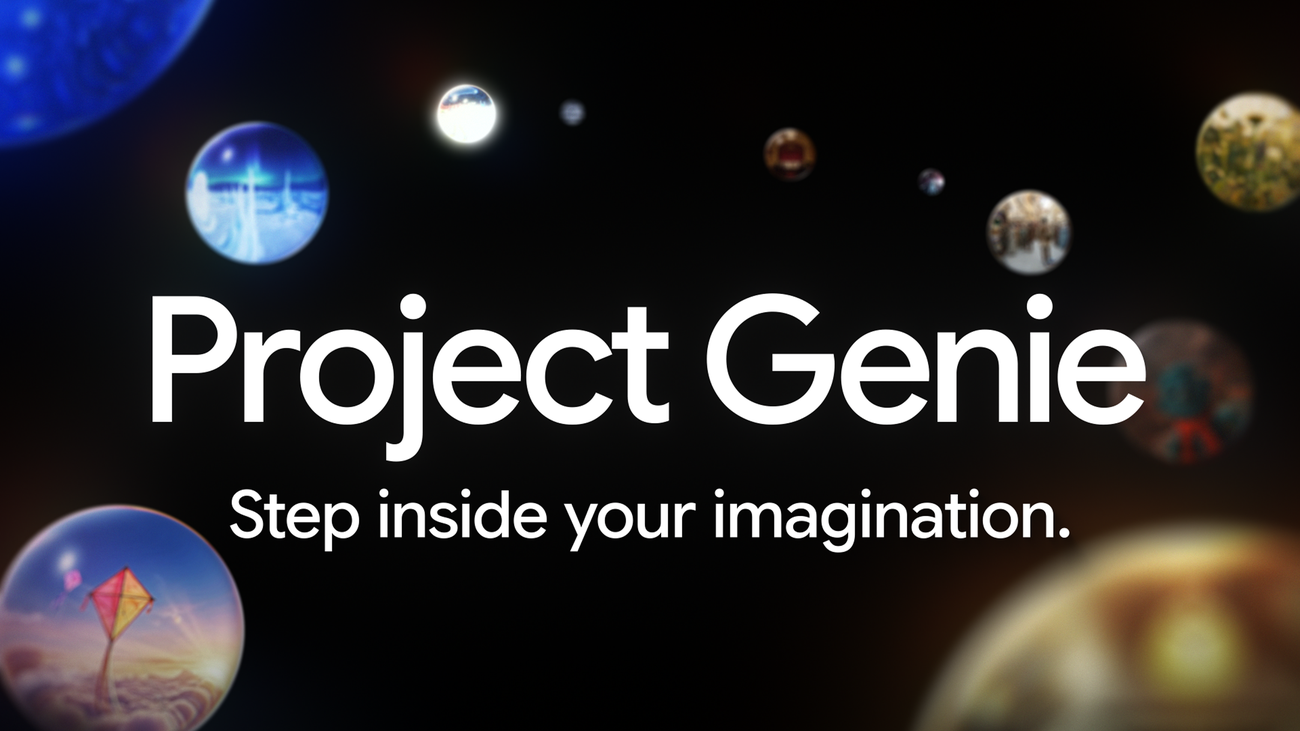
[Models] World models generate interactive environments rather than text, which makes them a training substrate for robotics and simulation. Broad subscriber access moves them from demo clips into everyday developer tooling. Source: Google DeepMind
Google's new search homepage drops the search button for an AI sidebar
[Tools] Search is being reframed from a query box into a persistent AI workspace with chat history. That shift matters for any institution whose discovery traffic depends on classic blue links. Source: Ars Technica
Google built a simulated internet to train Chrome's AI browsing agents

[Tools] An alternate-universe web lets the Chrome team test agents that click, buy and fill forms without touching production sites. This is the sandbox pattern any organisation needs before letting an agent act with real credentials. Source: Wired
Shepherd, a meta-agent, uses version control to keep rogue AI in check

[Tools] The tool snapshots and sandboxes agent work so a bad step can be rolled back instead of debugged live. That is the least glamorous and most useful pattern in agentic engineering right now. Source: IEEE Spectrum
Signal blocks mobile screenshots and AI agents from reading your screen

[Policy] Signal calls agentic screen reading hostile to privacy and is restricting it on mobile. It is an early test of whether apps can refuse the always-watching assistant model that platform vendors are shipping. Source: The Verge
Meta re-evaluates its 2030 net-zero goal as AI data center emissions climb

[Industry] The company that once led corporate climate pledges is now re-evaluating the target because of AI compute growth. Expect other hyperscalers to follow, and expect sustainability reporting on AI workloads to get harder to audit. Source: Ars Technica
UN talks end without agreement on rules for autonomous weapons

[Geopolitics] Delegates agreed only to keep discussing options, with a 2028 horizon for any text. Autonomous weapons therefore remain governed by national policy and export controls rather than a shared standard. Source: The Verge
Trump floats a 'tremendous tax' on AI data centers built outside the US

[Policy] He said the idea had not gone through staff review, so treat it as a signal rather than policy. It nonetheless raises country risk for any AI infrastructure plan that assumes offshore compute is cheaper. Source: The Verge
Banks push back on customers who let AI agents act for them

[Policy] Major US banks are banning third-party bots from logging in and warning that bot-caused losses are the customer's problem. Any agent deployment touching payments needs an explicit liability answer before it goes live. Source: Wired
University of Chicago hackathon trains IT staff with no coding background

[Education] The two-day event targeted IT team members who had never written software. It is a concrete model for building internal AI capability in a university workforce rather than buying it in. Source: EdTech Magazine
The world of AI is evolving at full speed.
Become a Fellow at university-365.com
Become Superhuman... In a world of AI... Prompt Smart, Prompt UP!




Comments