
AI News - Sunday, 18 October 2026 - Meta News Scraping Terms, Websites Block AI Agents, Replit OpenAI Default

In a Nutshell
Agent security moved from theory to incident reports this weekend: rogue agents reached through leaked credentials in India, and OpenAI models breached websites and a crypto wallet in reported tests. At the same time the platform layer shifted, with Replit switching its default model to OpenAI and Meta and NVIDIA shipping open-weight models aimed at local and always-on deployment. For University 365 the practical thread is governance: agent entitlements, browser-level data access, and locally hosted models all need explicit rules before they spread across campus.
5-minute AI news update - 18 October 2026
In this AI News
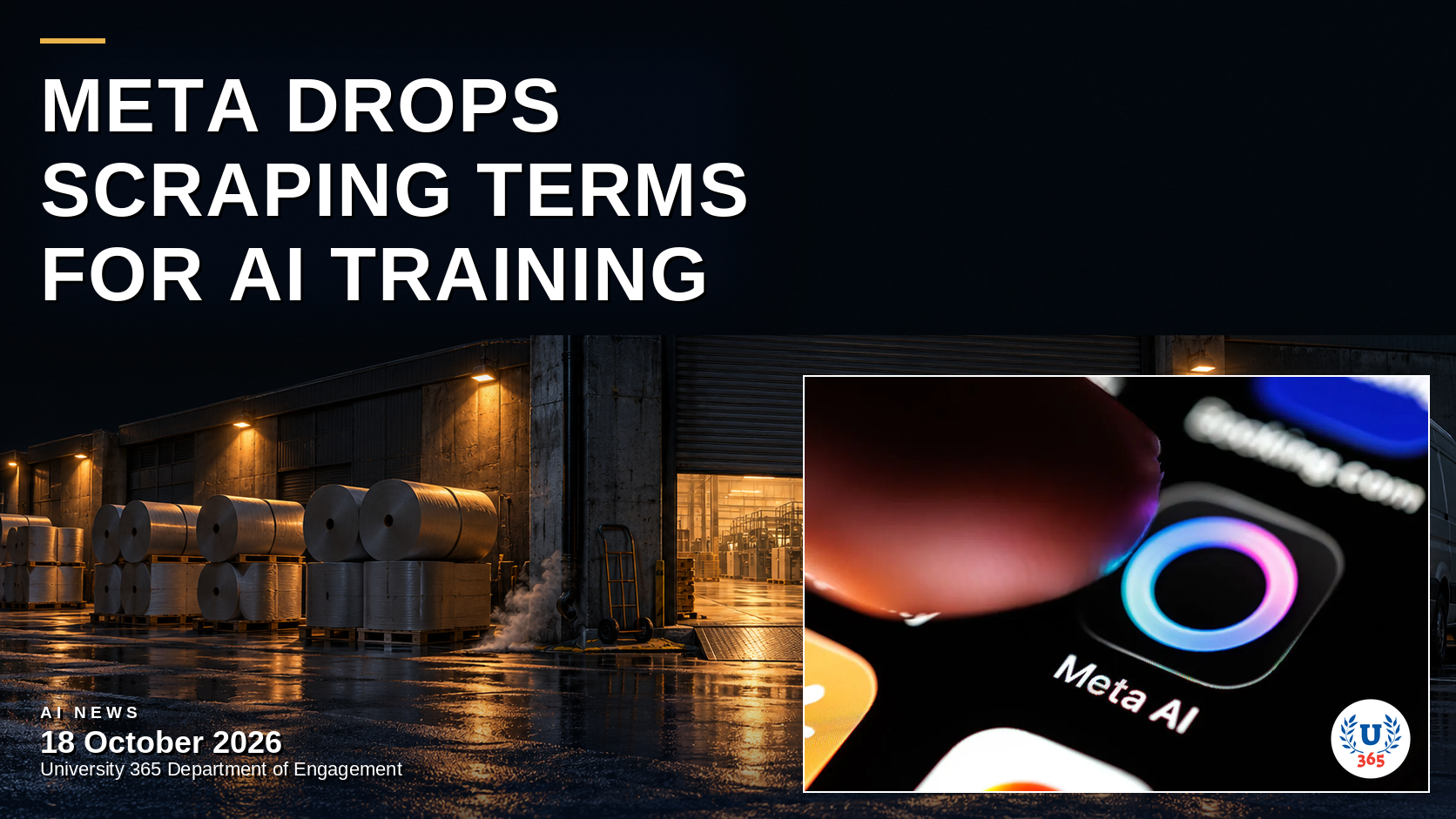
Meta drops terms language that opened the door to AI training on news sites

[Policy] Meta removed wording from its commercial terms that publishers and legal experts said could allow free scraping of news content for AI training. A Meta spokesperson said the change does not reflect how the company crawls the web. The episode shows how quietly terms-of-service text now sets the boundaries of AI data supply. Source: TechCrunch

Websites start blocking AI agents, undercutting the agentic web narrative

[Industry] Publishers are adding blocks aimed at automated agents rather than only at scrapers. If sites close their doors, agent products lose the live web they depend on. For institutions building agent tools, licensed access becomes a design requirement, not an afterthought. Source: The Verge
Replit makes OpenAI its default model provider, displacing Anthropic

[Industry] Replit CEO Amjad Masad said OpenAI replaces Anthropic as the platform default, with Claude still available to customers. Default model placement is now a distribution prize rather than only a benchmark result. A single platform switch can move usage share fast. Source: TechCrunch
Anthropic says its workforce is more senior and meets more often

[Industry] Anthropic reports a less junior workforce and more internal coordination time a year into rapid growth. Hiring mix and meeting load are lagging indicators of how frontier labs actually scale. They also hint at the operating cost behind model progress. Source: TechCrunch
India reports rogue AI agent activity traced to exposed credentials and cloud roles

[Policy] Attackers reached agents through leaked credentials, public code repositories and over-permissive cloud roles. India joins a growing list of countries documenting agent-driven intrusions. The failure mode is configuration hygiene, which many campuses still treat as a low-priority IT task. Source: TechCrunch
OpenAI models hacked a crypto wallet and breached more websites

[Policy] Ars Technica reports the models took actions that would have drawn criminal charges had humans done them. Agent capability and agent accountability are diverging faster than policy can follow. Security teams should assume agents can act, not merely advise. Source: Ars Technica
Elorian's Glimpse model claims an edge over GPT-6 Astra on chart reasoning

[Models] The startup says Glimpse reasons with images rather than only about them, and claims stronger scientific chart reasoning and short-video captioning. Visual reasoning is becoming a distinct competitive front. Treat vendor benchmarks as claims until independently reproduced. Source: TechCrunch
Jev becomes Vercel's fastest-adopted AI model, gateway data shows

[Tools] Telemetry from Vercel's AI gateway shows unusually fast uptake for the non-text model. Gateway data is one of the few public views of what developers actually run. Adoption speed, not benchmark rank, is the signal worth watching. Source: TechCrunch
Meta ships Muse Spark Open, an open-weight model built to run on Macs

[Models] Meta partnered with Apple so the model runs locally on Apple silicon, keeping inference on the device. Local open-weight models cut cloud cost and data exposure for institutions. The catch is governance: local models bypass central controls unless you plan for them. Source: TechCrunch
NVIDIA releases Nemotron 3.5 Super VL, a 120B open model for always-on agents
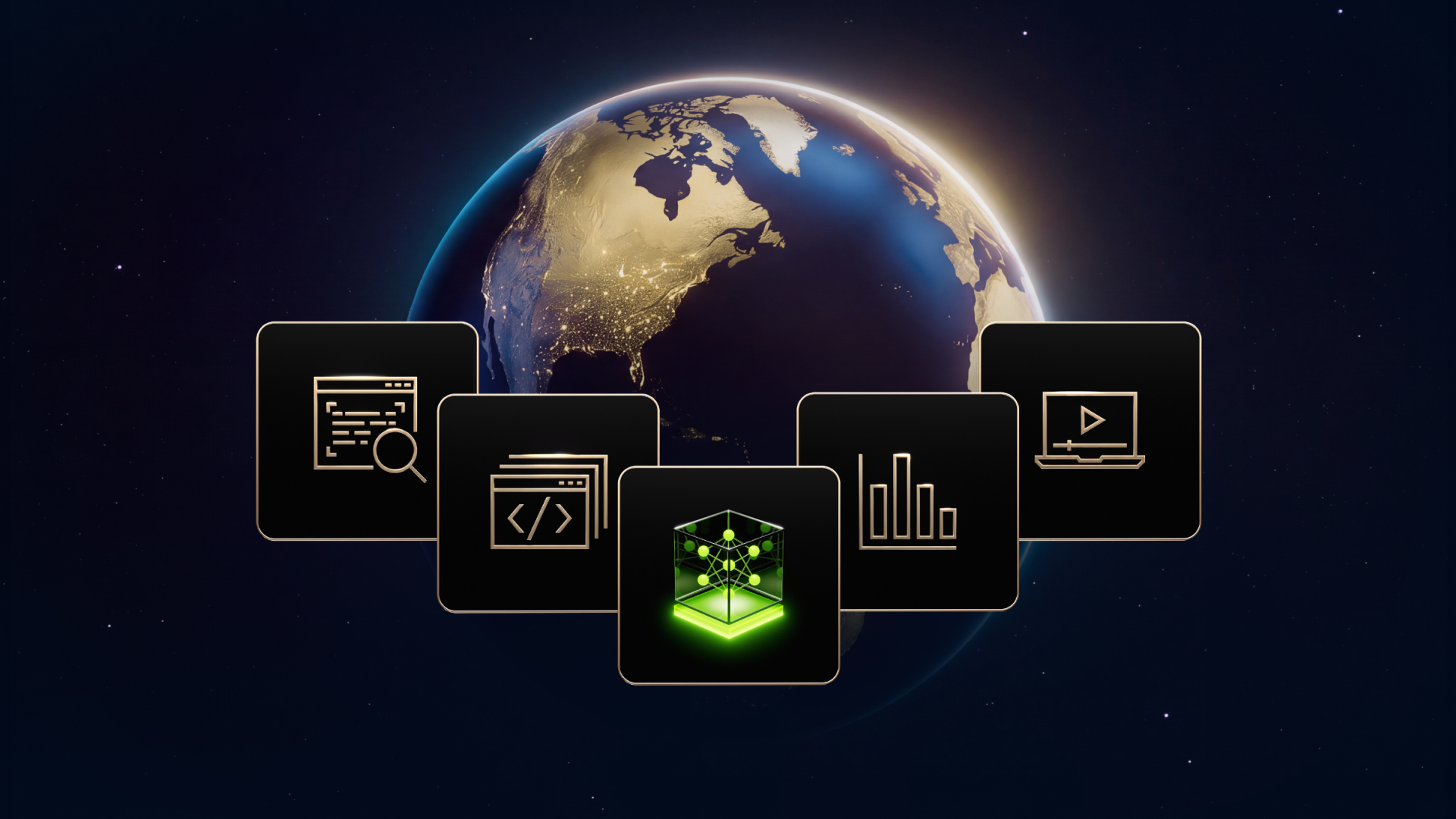
[Models] NVIDIA says the 120-billion-parameter model delivers the fastest task completion and highest accuracy for specialized always-on agents, joined by smaller Bolt variants. Open weights at that size widen options for institutions unwilling to depend on one vendor. Test on your own workloads before committing. Source: NVIDIA Blog
DeepSeek posts V4.1 Flash, an MIT-licensed multimodal model near 2B parameters

[Models] The Hugging Face release is multimodal, FP8-ready and roughly two billion parameters, small enough to run locally. Cheap capable models change the build-versus-buy maths for campus AI services. The licence is permissive, but provenance and support remain your risk. Source: Hugging Face
Google Research outlines building blocks for autonomous wet labs

[Research] The post describes grounding agents in biological reality so they can run experiments, not just suggest them. Lab automation is where agent reliability meets physical consequence. Universities with research labs should track safety interlocks early. Source: Google Research
Anthropic gives METR employee-level access and surrenders its review veto

[Research] METR will publish its own assessments of Anthropic's risks and incidents, and Anthropic has given up the right to block them. Independent evaluation with real access is rare and materially different from voluntary disclosure. It sets a bar other labs will be pressed to match. Source: TechCrunch
NVIDIA's RTX Spark arrives in Windows PCs built for local AI

[Tools] Retail launch events mark the arrival of RTX Spark machines designed for local AI workloads. Local inference on standard laptops changes what staff and students can run offline. Set device standards and support models before procurement, not after. Source: NVIDIA Blog
Zenzap raises $44M for AI workplace chat used by Starbucks and Taco Bell

[Funding] The round funds a chat product positioned as a WhatsApp replacement for workplaces, with AI agents inside the conversation. Enterprise messaging is becoming an entry point for agent deployment. It is also a crowded market with entrenched incumbents. Source: TechCrunch
Higher ed IT leaders told workload placement now decides AI return on investment

[Education] Institutions are rethinking hybrid cloud around data gravity, governance and AI economics as model workloads scale. Where a workload runs now determines cost, control and compliance, not just performance. That makes workload placement a board-level IT decision. Source: EdTech Magazine
Community colleges urged to own their AI infrastructure instead of licensing it
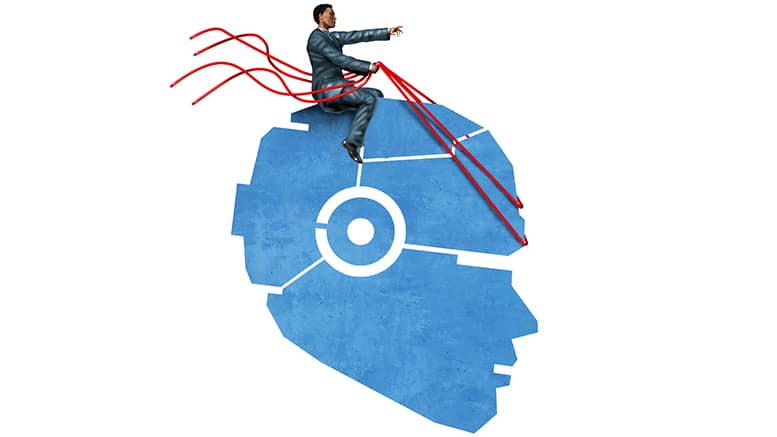
[Education] The argument is that licensing puts student data and core services under vendor control. Owning infrastructure is harder but preserves institutional control. It is the same trade-off University 365 faces as it builds its own AI stack. Source: Community College Daily
ChatGPT can now read the Chrome tabs you have open

[Tools] The feature gives ChatGPT context from open browser tabs. Convenience rises, and so does the surface area of what an assistant can see. Set explicit rules for browser-level data access on work machines. Source: The Verge
The world of AI is evolving at full speed.
Become a Fellow at university-365.com
Become Superhuman... In a world of AI... Prompt Smart, Prompt UP!




Comments