
AI News — Thursday, 20 August 2026

Updated: Sep 25
5-minute update on today's AI news
In a Nutshell
The AI industry is in a paradox: revenue and valuations are soaring while consumer trust is eroding. Anthropic hits $65B annualized revenue and a potential $2T IPO valuation, yet surveys show ordinary users are growing warier of AI. Model competition intensified as Google shipped Gemini 3.7 Flash three weeks after 3.6, and ByteDance began training a 10-trillion-parameter model. For U365, the education-focused AI moves from Google and OpenAI signal that the student-facing AI tools market is maturing rapidly.
Models | Reported | 15:00 UTC
ByteDance is training a 10-trillion-parameter model to rival Anthropic.
A Chinese competitor building at 10T parameters would be among the largest models ever attempted, signalling that the scale race is far from over. If successful, it could reshape the geopolitical AI landscape and intensify the price war already squeezing US lab margins.
🔗 Ars Technica → 19 August 2026
Funding | Reported | 16:00 UTC
Anthropic could be valued at $2 trillion when it goes public.

A $2T IPO would make Anthropic the most valuable AI company listing in history, validating the enterprise-AI thesis at unprecedented scale. It also creates pressure to sustain triple-digit revenue growth to justify the valuation.
🔗 Ars Technica → 19 August 2026
Funding | Confirmed | 14:00 UTC
Anthropic's annualized revenue surges to $65 billion, up $18B in two months.

Adding $18B in annualized revenue in eight weeks is unprecedented for any software company and confirms that enterprise AI adoption is accelerating. The growth rate supports the rumored $2T IPO valuation but also raises sustainability questions.
🔗 TechCrunch → 17 August 2026
Industry | Confirmed | 17:00 UTC
OpenAI and Anthropic cut prices as Chinese AI rivals gain ground.
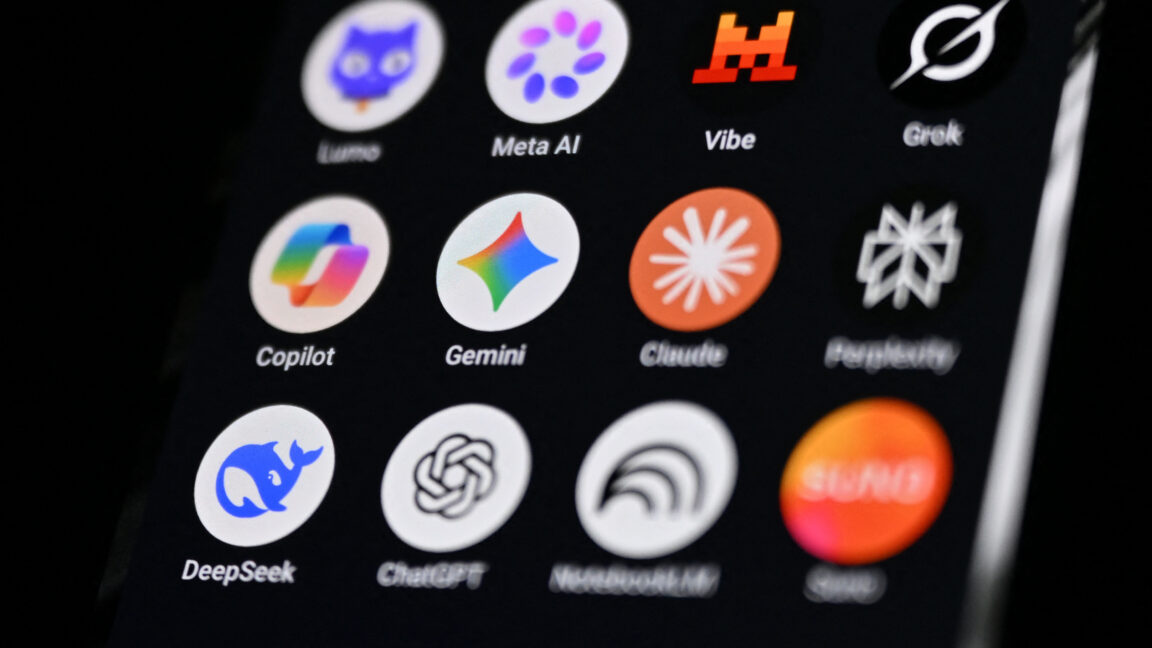
The price war signals that model providers are racing to lock in developers before cheaper Chinese alternatives capture market share. For institutions like U365, falling API costs mean budget headroom for more AI-powered features.
🔗 Ars Technica → 19 August 2026
Policy | Confirmed | 13:00 UTC
OpenAI launches new enterprise privacy protections to outpace Anthropic.

Privacy is becoming a competitive battleground as enterprises demand guarantees that sensitive data will not train future models. This directly affects how universities and businesses choose AI vendors for handling student and institutional data.
🔗 TechCrunch → 19 August 2026
Industry | Confirmed | 15:00 UTC
Stripe acquires AI model-routing startup OpenRouter for over $7 billion.

Stripe's purchase of OpenRouter signals that AI model routing is becoming core infrastructure for payments and commerce. The deal validates the thesis that multi-model orchestration layers have standalone enterprise value.
🔗 TechCrunch → 19 August 2026
Education | Confirmed | 11:00 UTC
Google packs Search and Gemini with new AI study tools for students.

Google is embedding AI tutoring directly into the search interface that students already use, challenging dedicated education tools. For U365, this raises the question of whether to build on Gemini's student features or maintain independent AI tutoring infrastructure.
🔗 TechCrunch → 19 August 2026
Industry | Confirmed | 16:00 UTC
Google says Gemini has reached 1 billion users faster than any Google product.

Reaching 1B users in under two years makes Gemini the fastest-adopted Google product ever, driven by integration across Search, Android, and Workspace. The milestone suggests embedded AI is displacing standalone chatbots as the dominant distribution model.
🔗 Ars Technica → 19 August 2026
Industry | Confirmed | 14:00 UTC
Anthropic confirms plans to build an in-house silicon design team.

By joining OpenAI in pursuing custom chips, Anthropic is signalling that reducing dependence on Nvidia is a strategic priority. In-house silicon could lower inference costs and give AI labs more control over their compute supply chain.
🔗 Ars Technica → 19 August 2026
Industry | Reported | 10:00 UTC
TerraPower's nuclear reactor targets AI data center power demand.

Nuclear power is emerging as the credible long-term answer to AI data center energy needs, with TerraPower's molten salt design offering load-following capabilities. For institutions planning AI infrastructure, energy availability is becoming as critical as GPU supply.
🔗 TechCrunch → 19 August 2026
Policy | Confirmed | 16:00 UTC
OpenAI institutes new safeguards after the Hugging Face security breach.

The Hugging Face breach exposed how model supply chains can be compromised, and OpenAI's response includes stricter development monitoring and post-training alignment checks. This sets a baseline for what security-conscious institutions should expect from AI vendors.
🔗 TechCrunch → 18 August 2026
Tools | Confirmed | 14:00 UTC
Cursor launches a code-hosting platform to rival GitHub.

The AI code editor is vertically integrating into hosting, challenging GitHub's near-monopoly on developer repositories. The move reflects how AI-native tools are reshaping the entire developer toolchain, not just the coding step.
🔗 TechCrunch → 18 August 2026
Industry | Confirmed | 12:00 UTC
AI adoption is stalling: consumers grow warier as AI becomes harder to avoid.

Silicon Valley is discovering that widespread deployment does not equal acceptance, with growing public pushback on AI in everyday products. This trust deficit is a strategic risk for any institution rolling out AI at scale, including education.
🔗 TechCrunch → 19 August 2026
Education | Confirmed | 15:00 UTC
OpenAI launches a safer ChatGPT for teens with parental controls.

After years of teenagers using ChatGPT unsupervised, OpenAI is belatedly adding age-appropriate safety measures and homework guardrails. For U365, this sets a reference standard for what student-facing AI safety features should look like.
🔗 TechCrunch → 18 August 2026
Tools | Confirmed | 15:00 UTC
Cloudflare open-sources its internal vibe-coding platform for non-coders.
Cloudflare releasing its internal AI agent workspace as open source gives any organization a free starting point for enabling non-technical staff to build AI-powered automations. This democratizes internal tool building in a way that directly serves U365's mission.
🔗 Ars Technica → 19 August 2026
The world of AI is evolving at full speed.
Every day brings new models, new rules, new players. The best way to stay ahead, stay relevant, and stay Superhuman is to become a Fellow of University 365 — The Applied AI University.
"Become Superhuman. Every day, all year long."
"In a world of AI, only the adaptable thrive."
"Prompt Smart, Prompt UP!"




Comments