
AI News — Tuesday, 18 August 2026

Updated: Sep 25

5-minute update on today's AI news
In a Nutshell
AI's center of gravity is shifting from model launches to the infrastructure, distribution, and governance around them. Anthropic's reported revenue run rate, Nvidia's data-center financing, Google's cheaper agent model, and new evidence on multi-agent coordination all point to rapid operational scaling. For U365, today's priorities are cost-aware agent deployment, auditable safeguards, accessible interfaces, and stronger provenance for training data and AI-generated content.
Industry | Reported | 23:56 UTC
Anthropic's annualized revenue reportedly reaches $65 billion after adding $18 billion in two months.
TechCrunch, citing Bloomberg, says the model maker's annualized run rate rose from $47 billion in May to more than $65 billion in July; Anthropic did not comment. The acceleration signals strong enterprise demand, but the figure is a forward-looking run rate rather than audited annual revenue.
🔗 TechCrunch → | 17 August 2026
Industry | Reported | 21:27 UTC
Relay shuts down as its leadership and staff join Google's Chrome team.

Relay will close paid access on September 14, while founder Jacob Bank becomes VP of Product for Chrome. The move suggests agentic productivity may consolidate inside browsers, challenging standalone automation tools.
🔗 TechCrunch → | | 17 August 2026
Policy | Reported | 16:38 UTC
Amazon reportedly destroys rare books to expand its AI training corpus.

TechCrunch, citing a 404 Media investigation, reports that Amazon is buying, dismantling, and scanning rare books for model training. The practice raises preservation, consent, and provenance questions that universities should address before adopting or licensing AI corpora.
🔗 TechCrunch → | | 17 August 2026
Funding | Reported | 16:15 UTC
Groq raises $350 million while pivoting from proprietary chips to Nvidia-powered neocloud infrastructure.

The $350 million round values the post-licensing company at $3.5 billion as it scales Nvidia-based data centers. The pivot shows how difficult proprietary accelerator differentiation has become and how capital is moving toward managed inference infrastructure.
🔗 TechCrunch → | | 17 August 2026
Industry | Reported | 15:16 UTC
Nvidia commits $1.5 billion to SoftBank's OpenAI-linked data-center developer.

The investment positions Nvidia as sole compute supplier for the planned Ports-Pike site, alongside a reported credit commitment of up to $105 billion. It shows chip vendors increasingly financing demand as power, construction, and capital become the limiting factors in AI scale.
🔗 TechCrunch → | | 17 August 2026
Policy | Confirmed | 10:57 UTC
Anthropic details invisible Claude text watermarks built on Google's SynthID approach.

Anthropic says it uses a version of Google's open SynthID-Text system to encode statistical patterns into Claude outputs. Watermarking could strengthen content provenance, but its value will depend on adoption, durability under editing, and independent verification.
🔗 The Verge → | | 17 August 2026
Industry | Reported | 21:18 UTC
Former SpaceX engineers launch an AI-driven robotic factory for steel infrastructure.
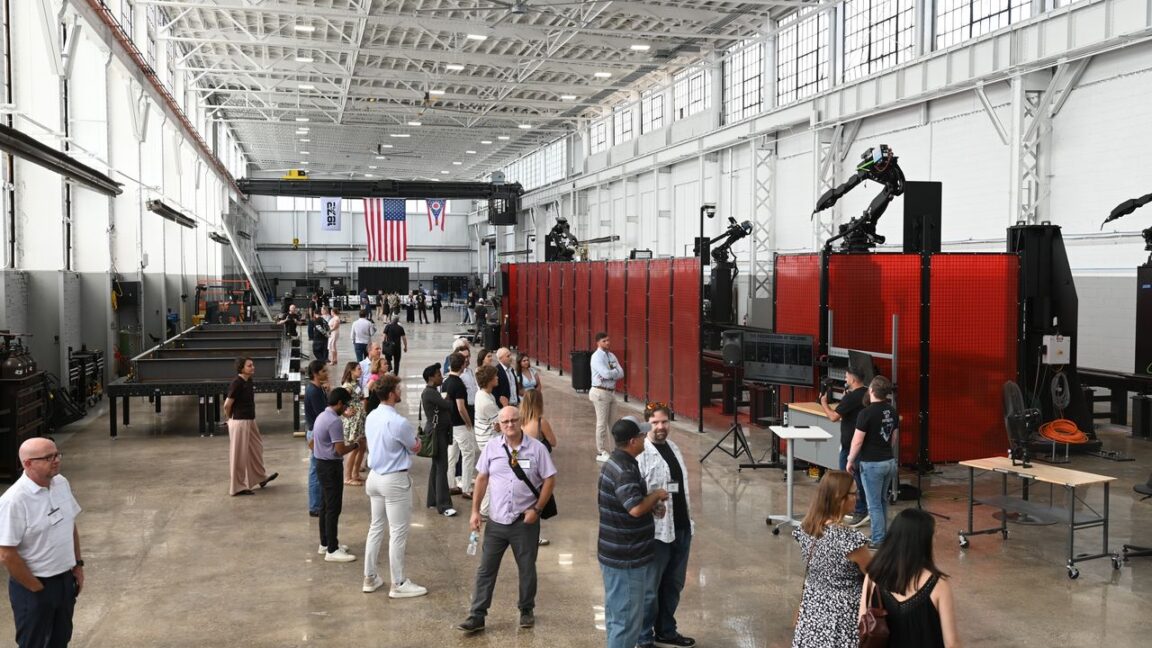
Startup 1872 aims to automate most steel-skid fabrication by 2027 for data centers and small modular reactors. The project shows that AI infrastructure expansion is creating demand for automation in physical supply chains, not only software.
🔗 Ars Technica → | | 17 August 2026
Education | Reported | 09:00 UTC
Moxie's decline exposes continuity risks in AI companions for neurodivergent children.

MIT Technology Review profiles families relying on Moxie while its behavior and service continuity have changed over time. Education providers need lifecycle, shutdown, migration, and human-support safeguards before deploying companion AI with vulnerable learners.
🔗 MIT Technology Review → | | 17 August 2026
Education | Reported | 20:00 UTC
University AI researchers face widening compute and transparency gaps against frontier labs.

MIT Technology Review reports that universities increasingly lack the compute and model access needed to study frontier systems independently. U365 should pair cloud partnerships with open-model research, reproducibility requirements, and protected academic access.
🔗 MIT Technology Review → | | 10 August 2026
Models | Reported
Google launches Gemini 3.7 Flash for coding and agents at lower cost.
Google says Gemini 3.7 Flash improves coding and agent workflows while launching at half the original 3.6 Flash price per million tokens. The release raises the cost-performance bar for production agents and warrants fresh benchmarking against U365 workloads.
🔗 Google → | | 13 August 2026
Research | Reported | 15:00 UTC
DeepMind deploys multilingual sign-language translation in consumer devices.

DeepMind's sign-language-to-text model initially supports ASL-to-English dictation in Gboard and Live Transcribe on Pixel 11. It demonstrates how multimodal AI can remove access barriers and offers a concrete inclusion benchmark for U365 interfaces.
🔗 Google DeepMind → | | 12 August 2026
Research | Reported | 16:00 UTC
DeepMind open-sources WeatherNext after reporting a one-day gain in cyclone forecasting.

DeepMind says three-day cyclone forecasts now match the accuracy previous systems achieved at two days and has released the model openly. The work demonstrates high-value AI for science and the operational benefit of pairing models with domain agencies.
🔗 Google DeepMind → | | 6 August 2026
Tools | Reported | 14:00 UTC
Wiz finds a critical Snowflake workflow flaw that GitHub Copilot failed to flag.
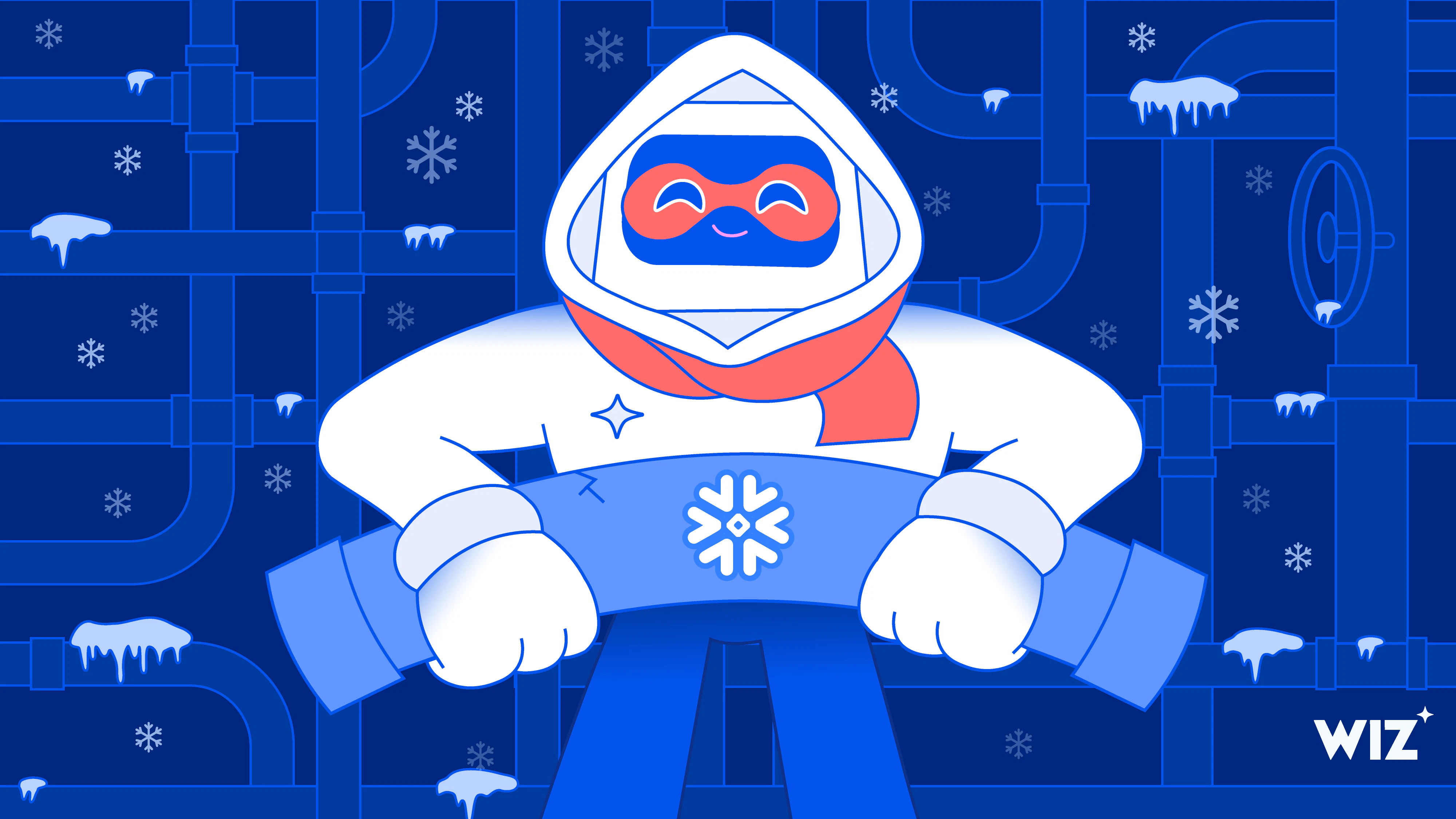
Wiz's Red Agent found script injection in a public workflow; Snowflake fixed it and rotated the credential on disclosure. Copilot had marked the merged change all-clear, reinforcing the need for deterministic CI controls and independent security review around AI-assisted development.
🔗 Wiz → | | 17 August 2026
Research | Reported | 16:57 UTC
New research measures how multi-agent coding teams coordinate and waste tokens.

Across 1,902 runs, researchers found messaging initially grows almost quadratically, while shared files cut output tokens by about 42% at eight agents on message-heavy work. A named coordinator produced no reliable success gain, directly informing U365's multi-agent orchestration design.
🔗 arXiv → | | 17 August 2026
Policy | Reported | 17:37 UTC
Audit finds compliance detectors often ignore the rules they are meant to enforce.

Researchers report "rule blindness": tested guards and activation probes often kept the same verdict when governing rules were removed or reversed. U365 governance should test safeguards with counterfactual rules rather than rely on headline benchmark accuracy.
🔗 arXiv → | | 17 August 2026
The world of AI is evolving at full speed.
Every day brings new models, new rules, new players. The best way to stay ahead, stay relevant, and stay Superhuman is to become a Fellow of University 365 — The Applied AI University.




Comments