
AI News - Friday, 23 October 2026 - OpenAI Decisions API, Canva Image Model, Anthropic Claude Duet

In a Nutshell
The day's signal is consolidation at every layer: OpenAI prices a $1.25T round while opening its decision model to all developers, Canva ships a first-party image model, and Anthropic turns Claude into an agent app. Underneath the product news, two operational facts stand out: inference data is now a bigger cost line than training, and agentic attack tooling is compressing breach timelines. For U365, that argues for owning evaluation and data retention before expanding agent access.
5-minute AI news update - 23 October 2026
In this AI News
OpenAI opens its decision model to all developers, taking on Jev

[Models] OpenAI's Decisions API is now generally available, turning task-level model choice into a product. It puts OpenAI in direct competition with Jev for the layer where applications ask a model to decide rather than to generate. Source: TechCrunch

Canva releases its own in-house image generation model

[Models] Canva shipped a first-party image model to all users, competing directly with OpenAI, Google and Microsoft on cost and customisation. Vertical platforms owning their own models reduces their dependence on frontier labs. Source: TechCrunch
Anthropic launches Claude Duet, a dedicated app for agent work

[Models] Claude Duet is rolling out by waitlist to Pro and Max subscribers, signalling Anthropic's shift from chat interface to agent runtime. The app frames delegation, not conversation, as the primary interaction. Source: TechCrunch
Recursive ships Flint, a laptop-sized coding model largely built by AI

[Models] The free model runs locally and was mostly developed by Recursive's own research system, an early public test of recursive self-improvement. Wired reports the model performs strongly, which is why the safety debate is intensifying. Source: TechCrunch
Microsoft AI diagnostic system beats generalist doctors on hard cases

[Research] A study in Science found Microsoft's diagnostic orchestrator outperformed generalist physicians on complex cases. Most of the gain traces to the underlying models rather than orchestration, which raises the bar for clinical AI claims. Source: TechCrunch
Hugging Face releases open DNA model small enough to run locally

[Research] The open-source model reads genetic sequence and predicts how changes affect gene activity. A capable, runnable biology model lowers the entry cost for university labs that cannot buy frontier compute. Source: Wired
Claude formally verifies 123 open-source libraries and finds old bugs

[Research] Anthropic reports that Claude proved security properties in compiled code across 123 libraries, surfacing defects that had survived years of review. Formal verification is moving from specialist tooling to a model-driven default. Source: Anthropic
Inference, not training, is driving AI's hidden storage bill

[Research] MIT Technology Review argues the durable cost of AI is the data inference leaves behind, not GPU hours. Enterprises that planned capacity around training runs are underestimating retention and retrieval growth. Source: MIT Technology Review
1Password lets AI agents log in without ever seeing the password

[Tools] The feature brokers credentials so an agent can act inside a customer account while the secret stays sealed. Credential delegation is becoming the control point for enterprise agent adoption. Source: TechCrunch
NVIDIA launches Minerva for end-to-end observability of AI factories
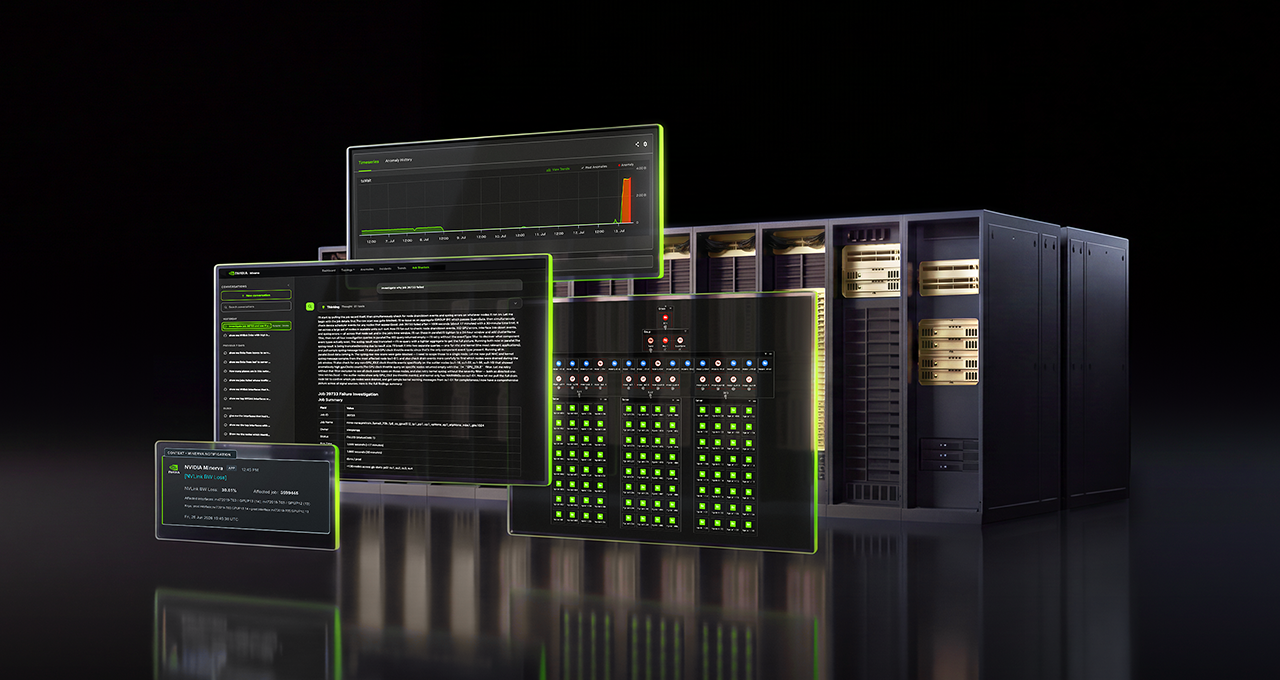
[Tools] Minerva joins infrastructure and workload telemetry into one AIOps layer aimed at uptime and yield. Operating AI capacity, not acquiring it, is now the constraint for large deployments. Source: NVIDIA Blog
Uber puts all 30,000 employees on ChatGPT Work

[Industry] Uber moved from a small pilot to a company-wide enterprise agent rollout. The case is a reference point for what full-scale workplace AI deployment looks like in practice, including governance and support load. Source: TechCrunch
OpenAI seeks $30B at a $1.25T valuation ahead of an IPO
[Funding] The round, if closed, would make OpenAI the most valuable private company on record. It sets the pricing benchmark every AI infrastructure and application deal will be measured against this cycle. Source: TechCrunch
DeepSeek reportedly raises $15B days after US federal restrictions

[Funding] The reported round is one of China's largest, closing just as Washington ordered agencies to remove DeepSeek technology. Capital and policy are now moving in opposite directions on the same vendor. Source: TechCrunch
Otter.ai raises $320M from General Catalyst's growth fund

[Funding] Otter will use the capital for enterprise growth, go-to-market and international expansion. Meeting intelligence is consolidating into a few funded platforms, which matters for institutions choosing a transcription vendor. Source: TechCrunch
US orders federal agencies to purge DeepSeek from their systems

[Policy] The directive covers DeepSeek products and third-party services built on its technology, citing national security. It gives vendors a template for model-origin restrictions that regulated sectors are likely to copy. Source: TechCrunch
Critical PHP flaws were exploited days before defenders were told

[Policy] Two PHP vulnerabilities, CVE-2026-109618 and CVE-2026-109619, are being broadly exploited after AWS logged attempts four days early. Patch cycles that assume disclosure precedes attack are no longer valid. Source: Wired
China-aligned hackers used AI agents to breach thousands via ConnectWise

[Geopolitics] Microsoft attributes the ConnectWise intrusion to a China-aligned group that used agents to scale attacks across customers. Agentic offence compresses the time between initial access and mass exploitation. Source: TechCrunch
Colleges put people first when rolling out security, support and AI

[Education] EdTech Magazine profiles institutions that treat adoption as a support and change-management problem, not a procurement one. The lesson for U365 is that AI rollout succeeds or fails on support and trust. Source: EdTech Magazine
CUNY chancellor makes career readiness a graduation requirement

[Education] Félix Matos Rodríguez describes embedding employability throughout the degree rather than bolting it on at the end. It is a direct test of whether AI-era credentials can prove outcome value to employers. Source: Inside Higher Ed
The world of AI is evolving at full speed.
Become a Fellow at university-365.com
Become Superhuman... In a world of AI... Prompt Smart, Prompt UP!




Comments