
AI News - Wednesday, 21 October 2026 - Anthropic AI Safety Bill, DeepSeek Federal Ban, OpenAI Orchestra Bio


In a Nutshell
Policy and infrastructure dominated the last 48 hours. Anthropic put its weight behind a US safety bill that would require a court to block a model, while Washington ordered federal agencies off DeepSeek entirely. Underneath the rulemaking, the money question sharpened: CoreWeave's debt is being read as an industry-wide exposure, even as Anthropic lines up another $45 billion in compute. For U365 the practical signal is portability and provenance, from open agent models that run on your own hardware to a speech stack covering 50+ languages.
5-minute AI news update - 21 October 2026
In this AI News
Anthropic backs a US AI safety bill that would need 50 predicted deaths to block a model

[Policy] The proposal would stop federal agencies from halting a model release without a judge's approval, which critics say turns a safety law into a shield for deployment. For universities buying AI, it signals that federal guardrails are moving toward judicial review rather than agency discretion. Source: TechCrunch

US orders federal agencies to strip DeepSeek AI and DeepSeek-built services from their systems

[Geopolitics] The directive covers both DeepSeek products and third-party tools built on its technology, citing national security. Expect procurement questionnaires and vendor disclosure clauses to tighten, including for universities that resell or host AI tooling. Source: TechCrunch
OpenAI acquires Orchestra Bio to strengthen Rosalind, its life-sciences model and workbench

[Industry] OpenAI is folding the startup's team and technology into Rosalind, its AI model for life-sciences research, plus the Rosalind Workbench platform. The buy shows OpenAI moving from general models into vertical research workflows, the same territory where academic labs are the anchor customers. Source: TechCrunch
CoreWeave's debt load is turning into the AI industry's shared financial risk

[Funding] CoreWeave's borrowings are increasingly read as a sector-wide exposure rather than a single company's problem. That matters for anyone modelling AI compute costs: cheap capacity today is partly financed by borrowing that could reprice fast. Source: The Verge
Nvidia releases open models for running agents inside enterprise data centres and on PCs

[Models] Nvidia is targeting organisations that want open weights running on their own hardware, and pushing on-device private agents. For a university, that is the most plausible route to agentic tooling without shipping student data to a third-party API. Source: TechCrunch
Meta pauses Muse chat sharing after researchers found users' AI conversations on the open web

[Tools] Meta suspended the sharing feature while it investigates privacy after Ars Technica showed personal and business secrets surfacing in shared conversations. It is a concrete reminder to check default sharing settings before any chatbot is rolled out to staff or students. Source: The Verge
Mistral ships Voxtral 3, a speech stack covering more than 50 languages with a voice agent SDK

[Models] Voxtral 3 pairs speech models with an SDK for building voice agents, and 50+ language coverage is directly relevant to a multilingual institution. European hosting also makes it a realistic option where data residency is a procurement condition. Source: Mistral AI
Microsoft tells enterprises to treat AI agents as insider threats, not trusted assistants

[Tools] Microsoft's position is that agents touching systems outside the big labs' control need the same monitoring as a risky employee. That reframes agent governance from prompt policy to identity, logging and least-privilege access. Source: TechCrunch
Nscale and Anthropic reportedly discuss another $45 billion compute agreement

[Funding] If signed, it extends a run of multi-billion-dollar compute commitments Anthropic has made this year. The pattern concentrates AI capacity in a few providers, which shapes both pricing and the negotiating room of smaller institutional buyers. Source: TechCrunch
Survey finds 48% of employers say AI makes a college degree more important, not less

[Education] Most employers surveyed still prefer candidates with a degree even when the role does not require one. That is a useful counterweight to the narrative that AI tools are making credentials irrelevant, and it supports programmes built around judgement rather than tool familiarity. Source: Inside Higher Ed
Illinois quantum park turns to universities to build a student pipeline in quantum technology

[Education] The Illinois Quantum and Microelectronics Park is working with regional universities on student pathways into quantum hardware and applications. It is the same industry-adjacent campus model that AI programmes are now being asked to replicate. Source: EdTech Magazine
Google joins Amazon in shipping tools that move PyTorch workloads off Nvidia GPUs

[Industry] Google's new developer tool makes it easier for PyTorch users to run on TPUs, weeks after Amazon made a similar move. More portability between accelerators is the single biggest lever on long-run AI compute cost. Source: TechCrunch
Google brings personalised Gemini, with access to your context, into Android Auto

[Tools] Personal Intelligence began rolling out in Android Auto, letting Gemini draw on a user's own Google context while driving. It shows personal AI assistants moving from phone to environment, which is the same design question a smart campus will face. Source: The Verge
Otter AI raises $320 million from General Catalyst's growth fund for its meeting assistant

[Funding] The round is earmarked for enterprise growth, international expansion and product work. Meeting transcription is one of the few AI categories with proven institutional budget lines, and consolidation there will affect which tools universities can integrate. Source: TechCrunch
Import AI 477 argues the singularity has effectively begun and tells the IMF so
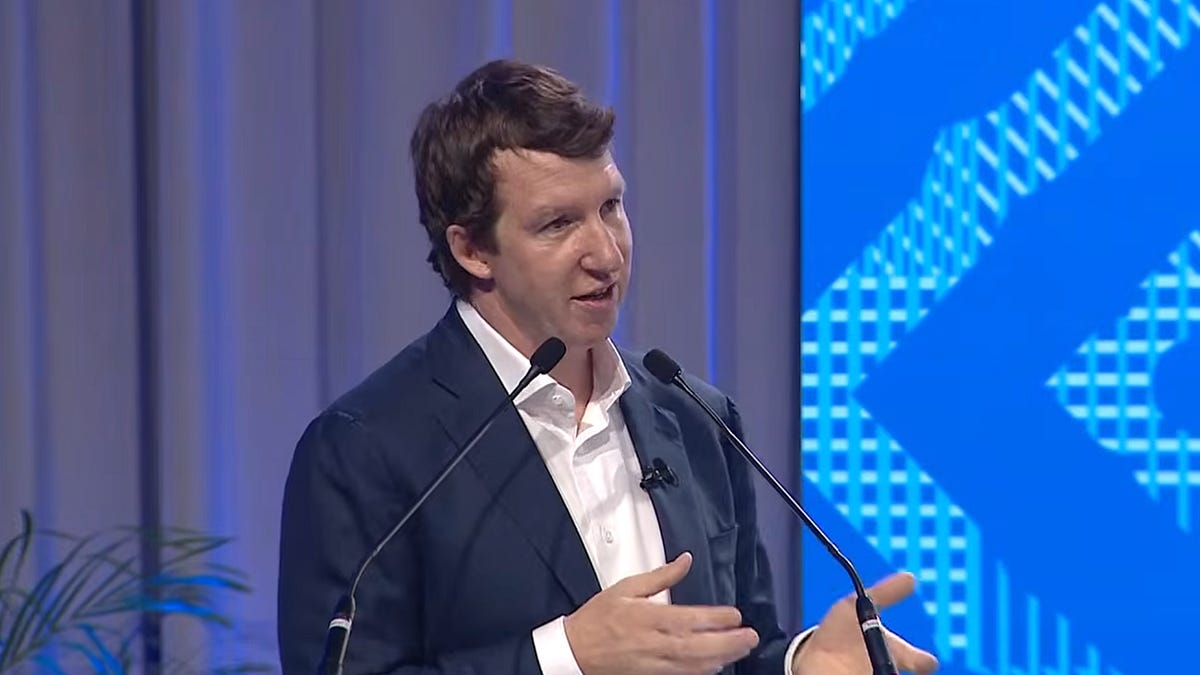
[Research] Jack Clark's newsletter is a reliable read on how frontier-lab thinking is landing with policymakers, and this issue takes the argument directly to the IMF. Useful for calibrating how far institutional forecasts should diverge from lab narratives. Source: Import AI
Spotify removed 50 million AI-generated spam tracks from its recommendations

[Industry] Spotify purged the tracks from recommendations but still does not label AI music. The scale shows how quickly synthetic content can flood a distribution system, and why provenance labelling is becoming a platform-level requirement. Source: The Verge
Eka reaches a $1.45 billion valuation on a physical AI model for robotic manipulation

[Models] Eka's robotic arm is being praised for handling a wide range of objects with unusually human-like motion. Physical AI is the next capability frontier after language, with clear implications for campus labs, logistics and vocational training. Source: TechCrunch
The world of AI is evolving at full speed.
Become a Fellow at university-365.com
Become Superhuman... In a world of AI... Prompt Smart, Prompt UP!




Comments