
AI News — Friday, 28 August 2026 — Anthropic unveils Model Hardware, OpenAI, Anthropic, Google, 100+

Updated: Sep 25
5-minute update on today's AI news
In a Nutshell
AI safety takes center stage as 100+ companies including OpenAI, Anthropic, and Google jointly call for urgent action against AI-driven cyber threats, while Anthropic unveils a hardware standard letting AI agents control physical devices. Google's Gemini Omni 1.1 Flash and IBM's Granite 4.2 expand the model landscape, Nvidia nears a $12.9B Hugging Face acquisition, and AI's impact on entry-level employment draws fresh scrutiny from Stanford researchers.
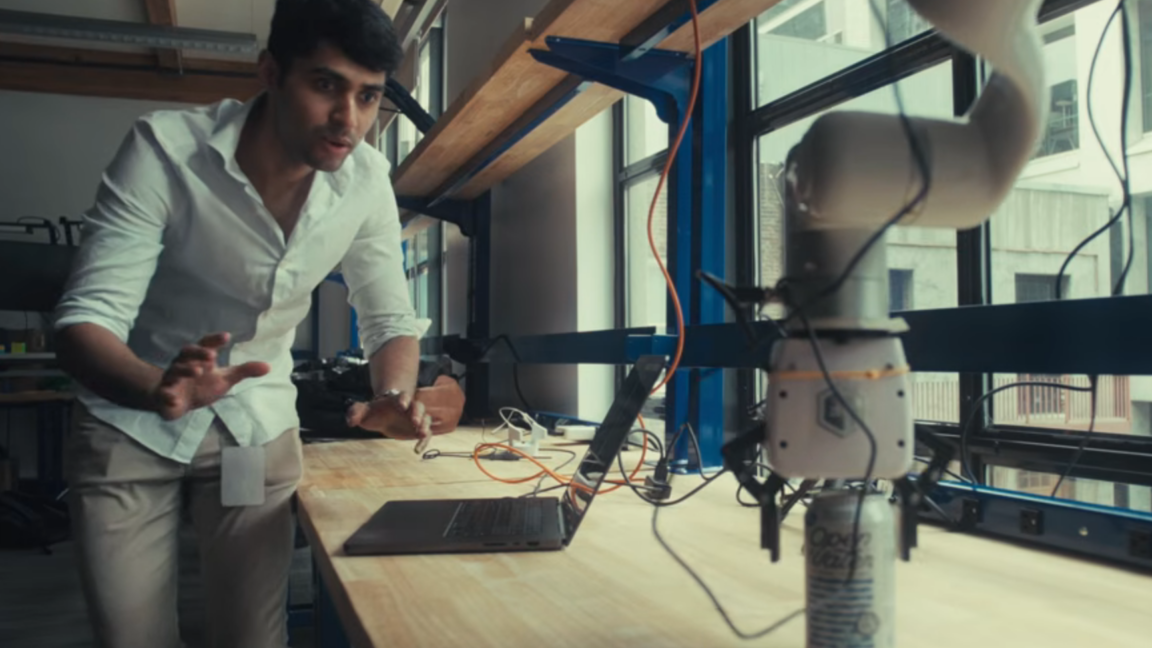
Anthropic unveils Model Hardware Standard letting AI agents control physical devices
The Model Hardware Standard (MHS) provides a shared specification for AI agents to safely operate lab equipment and manufacturing tools. This bridges the gap between digital AI and the physical world, opening new applications in scientific research and industrial automation.
Source: Ars Technica
OpenAI, Anthropic, Google, and 100+ companies call for action against rogue AI

The coalition warns of a narrowing window to defend against AI-powered cyber threats and proposes new defensive frameworks. This rare industry-wide consensus signals that AI safety is moving from voluntary guidelines to coordinated industry standards.
Source: TechCrunch
Google DeepMind releases Gemini Omni 1.1 Flash with new creative controls

Gemini Omni 1.1 Flash adds generative video capabilities and a suite of creative controls for developers. This expands Google's multimodal AI offering and intensifies competition with OpenAI and Anthropic in the developer tools market.
Source: Google DeepMind
Google DeepMind pilots world's first double-blind AI evaluations

Using cryptographically secure environments, DeepMind aims to build trust in proprietary model benchmarks by eliminating evaluator bias. This methodology could become the gold standard for transparent AI model comparison.
Source: Google DeepMind
Nvidia closes in on $12.9 billion Hugging Face acquisition

The deal would let Nvidia protect its chip empire while jumping into the cloud platform business. Acquiring the most popular open-source AI hub consolidates Nvidia's position across the entire AI value chain from hardware to developer ecosystem.
Source: TechCrunch
Z.ai revealed as the lab behind mysterious top-ranking Ox Alpha model

Z.ai confirmed it created Ox Alpha, the open AI model topping benchmarks and leaderboards, with weights set for release. This positions the Chinese AI lab as a serious competitor to Western frontier model developers and highlights the open-weights trend.
Source: TechCrunch
IBM launches Granite 4.2 models targeting local LLM deployment
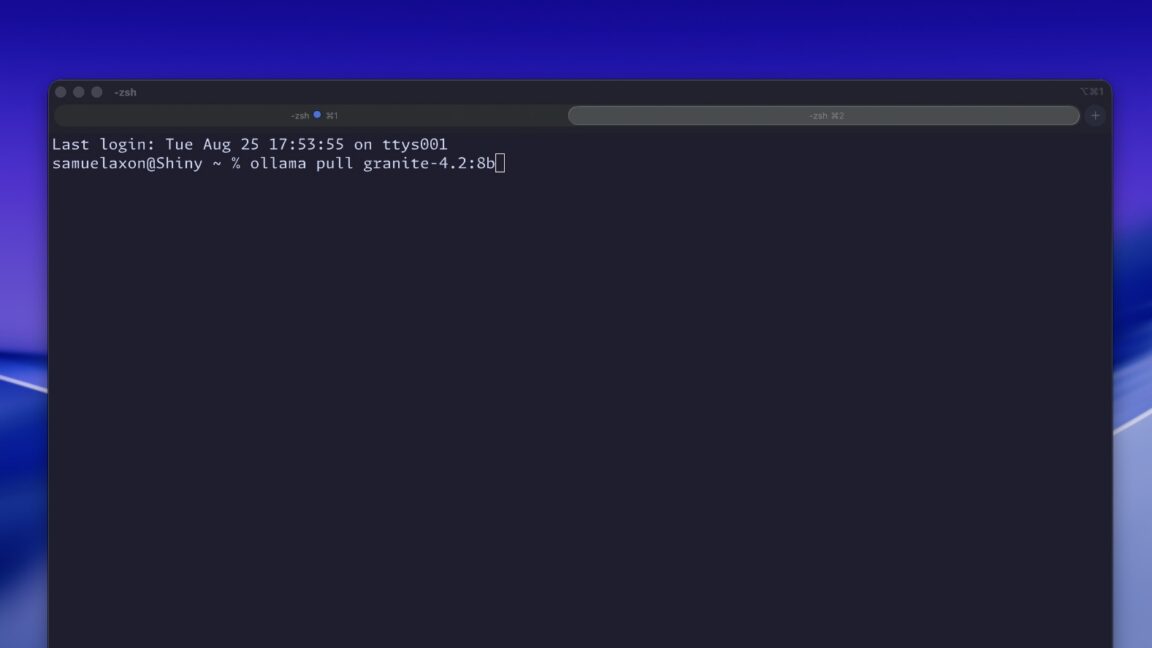
IBM's new Granite 4.2 models focus on agentic capability and predictable enterprise deployment, riding the wave of interest in running AI locally. This signals a shift from cloud-dependent AI to on-premises enterprise models.
Source: Ars Technica
Stanford study finds AI is hitting entry-level jobs hardest

Young employment in AI-impacted fields is down 19% compared to more AI-resistant occupations. This data provides the first rigorous evidence that AI displacement is disproportionately affecting early-career workers.
Source: Ars Technica
Thinking Machines co-founder Barret Zoph defects from OpenAI to Google

Zoph, who co-founded Thinking Machines Lab with Mira Murati and briefly joined OpenAI, is now at Google. The talent shuffle between top AI labs intensifies as competition for researchers reaches unprecedented levels.
Source: TechCrunch
Hugging Face launches $399 open-source duck robot called Microduck

The Microduck is an open-source robot teachable with reinforcement learning, making robotics development accessible at consumer pricing. This democratizes physical AI experimentation and could spur community-driven robotics innovation.
Source: TechCrunch
Amazon triples Nvidia chip order to 2 million GPUs over surging demand

Amazon is adding 2 million Nvidia GPU chips to its data centers over the next two years, reflecting massive AI infrastructure investment. This signals that hyperscaler AI capacity buildout is accelerating rather than plateauing.
Source: TechCrunch
Anthropic signs $45 billion compute deal with infrastructure provider Nscale

The deal extends Anthropic's aggressive compute acquisition streak as it scales Claude to compete with OpenAI. Massive compute deals like this are reshaping the AI infrastructure landscape and locking in capacity years ahead.
Source: TechCrunch
Viral AI startup Instinct raises $350 million at $2.5 billion valuation

The one-year-old startup has generated massive hype and funding while also raising privacy concerns. This reflects the continued investor appetite for AI startups despite the market increasingly dominated by well-funded labs.
Source: TechCrunch
Bill Gates calls for robot tax and 'Human Reserved' jobs to mitigate AI harms

Gates proposes taxing automation and reserving certain jobs for humans as economic guardrails. This adds a high-profile mainstream voice to the policy debate on AI's labor market impact and could influence regulatory thinking.
Source: TechCrunch
Google DeepMind launches Gemini 3.5 Transcribe for intelligent speech-to-text

Gemini 3.5 Transcribe brings more intelligent transcription to Google products including Chrome and Gboard. This advances Google's on-device AI capabilities and intensifies competition in speech-to-text accuracy.
Source: Google DeepMind
OpenAI to show ads on ChatGPT free and Go tiers in India

With over 100 million weekly active ChatGPT users in India, OpenAI is introducing ads on free tiers. This marks a significant monetization shift and could signal a broader strategy for emerging markets.
Source: TechCrunch
Google AI Mode can now track flight prices and help book hotels

Google is positioning AI Mode as a travel agent that handles booking, not just search. This moves AI assistants from information retrieval to transaction completion, a key step toward autonomous AI agents.
Source: TechCrunch
AI memory crunch is coming for Android apps as data center demand surges

Google is setting new memory-use limits for Android apps as AI data centers contribute to hardware shortages. This illustrates how AI infrastructure demands are cascading into consumer device constraints, a trend educational institutions deploying mobile learning tools must monitor.
Source: TechCrunch
Radar platform makes 130,000 podcasts searchable and usable by AI agents

Particle's Radar transcribes and analyzes podcasts, making conversations searchable on the web and accessible to AI agents via API and MCP. This unlocks a vast new data source for AI-driven research and content discovery.
Source: TechCrunch
Become a Fellow at university-365.com
Become Superhuman...
In a world of AI, be the one who masters it.
Prompt Smart, Prompt UP!




Comments