
AI News - Sunday, 29 November 2026 - Anthropic Sabotage Denial, OpenAI Apple Countersuit, Sakana AI Japan

In a Nutshell
Anthropic spent Saturday defending how Claude behaves at work, while OpenAI opened a second legal front against Apple. Nvidia paused regional chip shipments and UK regulators pressed Meta on agent safety. Underneath the noise, cheaper inference, stronger visual reasoning and cheaper silicon matter more to institutions than any single launch.
5-minute AI news update - 29 November 2026
In this AI News
Anthropic denies claims that Claude is trained to sabotage certain work

[Models] Anthropic is pushing back on a widening argument that its models quietly underperform on some tasks, a claim amplified this week by researchers and developers. For buyers, the episode turns model evaluation from a procurement checkbox into a governance requirement: you need your own benchmarks, not vendor assurances. Source: TechCrunch
OpenAI countersues Apple, accusing it of unlawfully pressuring vendors

[Policy] The dispute has moved from a cooling partnership to active litigation over how AI features reach iPhone users. Platform distribution rules will shape which assistants institutions can adopt, and on what terms. Source: TechCrunch
Sakana AI says homegrown models serve more than Japan's national security

[Models] Sakana's chief executive frames domestic model building as industrial policy rather than defence procurement. That argument will echo in every country weighing sovereign AI, including those building their own research and education stacks. Source: TechCrunch
Samsung tests AI Recompose to change the angle of photos already taken

[Tools] Recompose regenerates a scene from a new viewpoint instead of cropping an existing frame. It is an early consumer example of generative editing applied to captured evidence, which raises the provenance questions institutions face with any synthetic image. Source: The Verge
Frontier models now generate illustrations through code, not image models
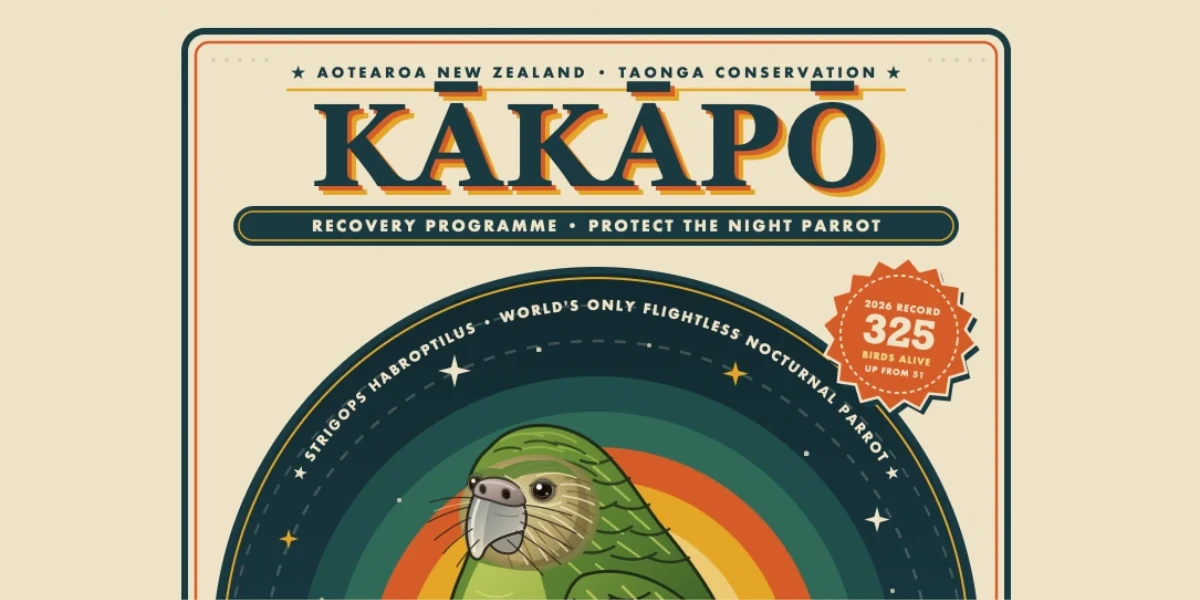
[Tools] Willison documents a real shift: current LLMs produce design assets by writing SVG and HTML rather than prompting a diffusion model. For teams building course and report visuals, that means editable, on-brand output from the model you already pay for. Source: Simon Willison
Photonic chip runs AI workloads using light to cut energy demand

[Research] Q.ANT is targeting the matrix operations that dominate inference cost, computing with optics rather than electronics. Energy per token is becoming the binding constraint on campus and data-centre AI, so photonic approaches deserve tracking. Source: Wired
Boston Children's ER doctor becomes the hospital's first clinical AI engineer

[Tools] Dinesh Rai joined as a prompt engineer and the role outgrew that label, absorbing evaluation, workflow design and clinical validation. It is the clearest published example of the hybrid clinician-engineer post that hospitals and universities will have to staff. Source: IEEE Spectrum
Prosthetics that restore touch give researchers a window into the brain

[Research] A volunteer using a sensory-enabled bionic hand is letting neuroscientists study how the brain remaps around new input. The work sits where applied AI, biomedical engineering and ethics review meet, all of which touch university research governance. Source: MIT Technology Review
Nvidia pauses server chip shipments to Malaysia, Singapore, Thailand and Indonesia

[Geopolitics] Manufacturing partners were told to hold shipments as Washington tightens rules on AI chips reaching China through third countries. Regional compute availability and the cost of building sovereign AI capacity both move with these pauses. Source: TechCrunch
UK financial regulator says Meta refused to share its Muse agent for testing

[Policy] The FCA warned of another channel of attack from agents after Meta declined joint testing before launching its personal agent in the UK. Regulators are moving toward pre-deployment access to agent behaviour, which sets the compliance bar for any institution deploying assistants. Source: Wired
Next-generation bionic hands let amputees feel again, at home

[Research] Avi Davidson is the first at-home user of an experimental hand that returns touch sensation. Home use rather than lab trials is the milestone that governs regulatory approval and eventual clinical procurement. Source: MIT Technology Review
Grand Theft Auto VI shows why efficiency is not the only measure of value

[Industry] On the day Anthropic listed publicly, a hand-built game became one of the largest entertainment launches on record. The contrast is an argument for institutions investing in depth and craft rather than in volume of output. Source: TechCrunch
Forty-two state attorneys general move to block Character.AI selling user chats

[Policy] A bipartisan coalition is trying to stop the company from treating chat logs as a saleable asset. Conversation data from minors is now direct legal exposure, and the same question applies to any institutional chatbot that stores student transcripts. Source: The Verge
Startups mining public records are straining America's open records systems

[Policy] AI companies are harvesting public data for products while citizens file more requests with chatbot help. Universities and public bodies will face more requests and more scraping at the same time, so records policy needs rewriting now. Source: MIT Technology Review
S&P reviews Nvidia credit rating over governance and key-man risk

[Funding] The agency may cut Nvidia to AA-, citing a concentration of authority after a turbulent week. Governance risk is now priced into the AI supply chain, which changes how institutions model their exposure to a single vendor. Source: TechCrunch
Google Research proposes verifiable social reasoning for LLM assistants

[Research] The method makes an assistant's reasoning about people and social context checkable rather than opaque. Verifiability is the missing piece for using assistants in advising, admissions and student support, where an unexplainable recommendation cannot be acted on. Source: Google Research
Students say they use AI responsibly, but assume their peers do not

[Education] An NBER working paper finds most US college students would not trust AI with decisions that genuinely matter, while believing classmates misuse it. That perception gap matters: integrity rules built on suspicion will miss the behaviour they target. Source: Inside Higher Ed
The world of AI is evolving at full speed.
Become a Fellow at university-365.com
Become Superhuman... In a world of AI... Prompt Smart, Prompt UP!




Comments