
AI News — Thursday, 13 August 2026

Updated: Sep 25

5-minute update on today's AI news
In a Nutshell
AI competition is moving simultaneously up the model stack and down into enterprise operations: DeepSeek and SpaceXAI are expanding agent capabilities, while OpenAI and startups race to operationalize them. The sharper signal is governance: provenance, training rights, identity containment, and supply-chain security are becoming deployment prerequisites. For U365, capability evaluation must now travel with data governance, auditability, and human approval.
Models | Reported | 10:24 UTC
Qwen releases its first Max-class open model for long-horizon agentic tasks.
Qwen3.8-2.4T-A95B is a text-only mixture-of-experts model with 262,144 native context, extensible beyond one million tokens. Its open weights and support for mainstream inference frameworks widen access to very large agentic models, although deployment requirements will be substantial.
🔗 Hugging Face → | 12 August 2026
Models | Reported | 15:42 UTC
DeepSeek V4 Pro arrives with a one-million-token context window.
OpenRouter lists the new mixture-of-experts model with a 1,048,576-token context window and low published API pricing. Its scale and economics add pressure on frontier providers while giving builders another option for long-context agent workflows.
🔗 OpenRouter → | 12 August 2026
Models | Confirmed
SpaceXAI releases Grok 4.6 for long-running agent and coding workloads.
SpaceXAI says Grok 4.6 improves sustained reasoning, coding, knowledge work, self-testing, and visual application development. VentureBeat independently covered the release, reinforcing a market shift toward agents that execute longer, multi-step projects rather than isolated prompts.
🔗 SpaceXAI → | 12 August 2026
Policy | Confirmed | 21:00 UTC
Twitch makes Amazon AI training opt-out after years of default use.

Twitch now lets creators exclude streams, clips, chat, images, and channel text from future Amazon model training, but participation remains the default. Coverage from Ars Technica, TechCrunch, and The Verge highlights growing pressure for explicit consent and transparent data-use controls.
🔗 Ars Technica → | 12 August 2026
Policy | Confirmed | 12:13 UTC
Anthropic adds invisible watermarks to Claude-generated text.

Anthropic's provenance move could make AI-assisted work easier to trace across workplaces and education. TechCrunch and The Verge report the rollout, but implementation will require careful policy because detection can affect privacy, assessment, and employee trust.
🔗 TechCrunch → | 11 August 2026
Industry | Confirmed | 19:48 UTC
Gemini becomes Google's fastest-growing product at one billion users.

Google says Gemini reached one billion users faster than any previous Google product, a milestone covered by Ars Technica, TechCrunch, and The Verge. AI assistants are becoming mass-market infrastructure, raising expectations for reliable multimodal and voice interfaces in education and work.
🔗 Ars Technica → | 11 August 2026
Geopolitics | Reported | 17:51 UTC
AI pioneers debate open access as US-China competition intensifies.

Geoffrey Hinton, Fei-Fei Li, and Andrew Ng argued for continued openness while discussing safety, regulation, and competition with China. The debate frames open models as both an innovation engine and a strategic risk, requiring proportionate safeguards rather than a single access policy.
🔗 TechCrunch → | 12 August 2026
Research | Reported | 14:01 UTC
Google DeepMind releases sign-language-to-text AI for user-facing accessibility features.

DeepMind introduced an SL2T model powering new features for Deaf and hard-of-hearing users. For education, this points to more inclusive real-time interfaces, but deployment should include community-led evaluation of accuracy, dialect coverage, and failure modes.
🔗 Google DeepMind → | 12 August 2026
Tools | Reported | 11:00 UTC
AI code testing drives Blacksmith’s valuation close to $550 million.

Blacksmith says demand for software validation has increased as AI accelerates code generation, with revenue growing more than tenfold in a year. The signal is practical for U365: faster coding increases the value of independent testing, reproducible CI, and release controls.
🔗 TechCrunch → | 12 August 2026
Tools | Reported | 22:02 UTC
ShieldFont serves readable pages to humans and poisoned text to AI scrapers.
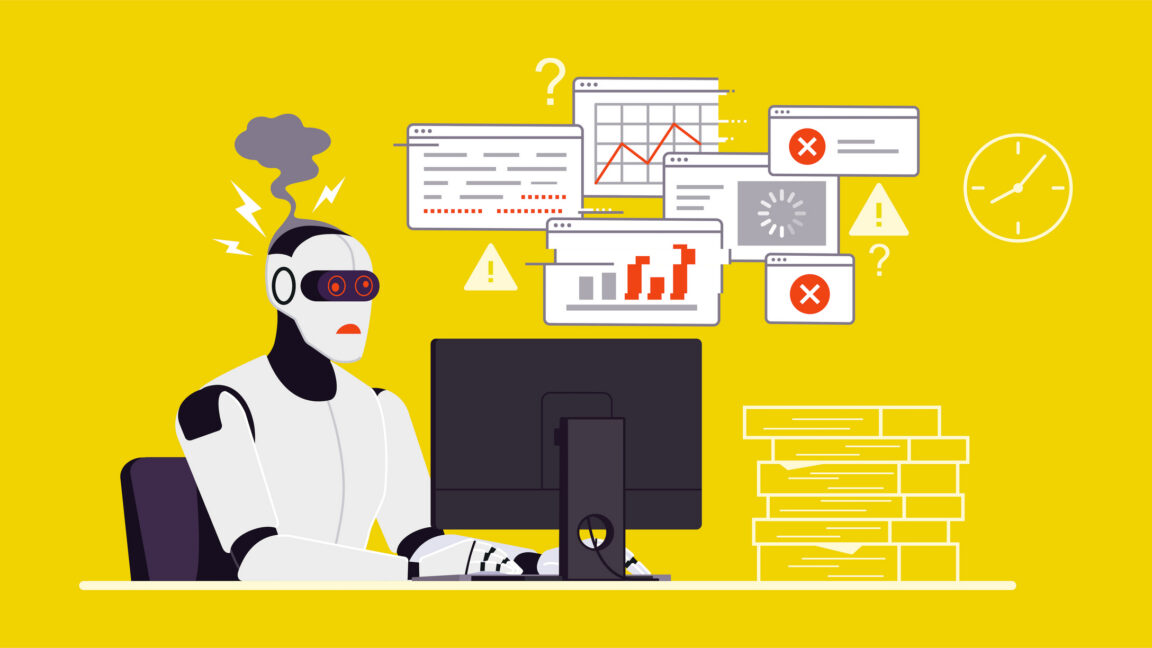
The experimental font uses ligatures to display normal text while exposing altered words in underlying page content. It signals a new technical front in publisher resistance, although sophisticated scrapers may adapt and accessibility compatibility needs scrutiny.
🔗 Ars Technica → | 12 August 2026
Tools | Reported | 21:43 UTC
A compromised AI package leaked credentials from 2,500 users.

Ars Technica reports that a supply-chain attack exfiltrated terabytes of credentials through a compromised AI package. AI tool adoption now expands software supply-chain exposure, so dependency review, secret isolation, provenance checks, and least-privilege execution are essential.
🔗 Ars Technica → | 12 August 2026
Funding | Reported | 17:41 UTC
OpenAI-backed Thrive Holdings raises $2 billion for enterprise AI rollups.

Thrive Holdings raised $2 billion at a reported $12 billion valuation to acquire and transform service businesses with AI. The round shows capital moving from model development toward vertically integrated deployment and operational control.
🔗 TechCrunch → | 12 August 2026
Funding | Confirmed | 16:04 UTC
Lovable raises $400 million at a $13.3 billion valuation.

Lovable confirmed the round after reporting rapid revenue growth, while TechCrunch independently covered the financing. Investor demand for AI software creation remains strong, but the valuation also raises the bar for durable retention, governance, and production-quality output.
🔗 TechCrunch → | 12 August 2026
Policy | Reported | 15:19 UTC
Booksellers resist suspected bulk purchases of rare books for AI training.

Ars Technica reports concerns that AI firms may be buying and destroying rare books to digitize otherwise unavailable text. The dispute broadens training-data governance from online scraping to physical cultural assets, ownership, preservation, and consent.
🔗 Ars Technica → | 12 August 2026
Research | Reported | 17:50 UTC
Researchers automate safety knowledge graphs from complex technical documentation.

A new arXiv paper uses retrieval-augmented language models to construct executable diagnostic knowledge graphs from technical descriptions. The approach could reduce expert bottlenecks in complex-system safety analysis, but it still requires domain validation before operational use.
🔗 arXiv → | 12 August 2026
The world of AI is evolving at full speed.
Every day brings new models, new rules, new players. The best way to stay ahead, stay relevant, and stay Superhuman is to become a Fellow of University 365 — The Applied AI University.




Comments