
AI News - Thursday, 8 October 2026 - Mistral 1T Model, Reflection Beam, Claude in Google Workspace

In a Nutshell
Today's AI news is about cost, provenance and local control rather than raw model capability. Mistral and Reflection pushed cheaper frontier and open-weight alternatives, Google shipped a small open embedding model, and OpenAI extended watermarking into text under EU rules. Anthropic's $100M engineer academy and the crackdown on smuggled Nvidia chips both point the same way: skills, compute access and verifiable origin, not model access, are what now decide who can use AI at scale.
5-minute AI news update - 8 October 2026
In this AI News
Mistral's new 1T model aims to leapfrog closed and open rivals.

[Models] The French lab says its largest model yet is designed to compete with both frontier closed systems and leading Chinese open-weight releases. A credible European frontier model broadens procurement choice for institutions that want to avoid single-vendor dependence. Source: TechCrunch

Reflection debuts Beam, an open-weight model built to rival Chinese systems at lower compute cost.

[Models] Beam is positioned as an open-weight alternative that runs cheaper than comparable Chinese releases. Lower inference cost is the main practical lever for universities deploying AI at scale across thousands of learners. Source: TechCrunch
Claude now works inside Google Docs, Sheets and Slides.
[Tools] Anthropic's assistant is available directly in Google Workspace files, so drafting and analysis happen where staff already work. This reduces copy-paste context loss, which is the main friction in institutional AI adoption. Source: Claude (Anthropic)
Google releases EmbeddingGemma 2, an open lightweight multimodal embedding model.
[Tools] A small open embedding model can run locally for search, clustering and retrieval over institutional documents. That matters for U365 because it allows semantic search and RAG pipelines without shipping sensitive data to a third-party API. Source: Google Blog
ChatGPT's new Intelligent UI fills responses with pictures, charts and buttons.

[Tools] OpenAI is moving the chat interface from plain text toward generated visual explanations and interactive controls. For teaching material and learner-facing assistants, visual output lowers the reading burden and makes abstract content easier to grasp. Source: The Verge
Meta's Muse AI agent launches on iPad a month after its mobile debut.

[Tools] Meta is pushing its consumer agent onto tablet hardware, widening the audience that meets AI assistants by default. Institutions should expect incoming learners to already treat agents as ordinary software. Source: TechCrunch
Don't be fooled: LLMs don't reason, argues MIT Technology Review.

[Research] The analysis pushes back on claims that large language models perform genuine reasoning rather than sophisticated pattern completion. It is a direct caution for anyone writing AI capability claims into curriculum, assessment or policy. Source: MIT Technology Review
An AI mind-reading tool reconstructs what a person is looking at from a brain scan.

[Research] Researchers rebuilt visual images from neural signals, extending an already sensitive line of work on decoding brain activity. The privacy and consent questions it raises arrive well before the technology is reliable. Source: MIT Technology Review
Anthropic says Claude discovered a novel enzyme system with CRISPR-like repeats.

[Research] The company reported an AI-assisted discovery in a peer-facing science context, pointing to research acceleration rather than chat. It is evidence for the applied-research case that U365 teaches. Source: Anthropic
arXiv paper AgentTime asks whether AI agents can estimate and control their own runtime.

[Research] Self-reported runtime awareness is a prerequisite for agents that budget their own compute and stop before they overspend. For any department running agents, this is the measurement layer that makes cost control possible. Source: arXiv (cs.AI)
OpenAI will start watermarking ChatGPT's text in the EU.

[Policy] Provenance marking moves from images into generated text, driven by the EU AI Act. Academic integrity and assessment design need to assume machine-readable origin signals rather than detection after the fact. Source: TechCrunch
Google's new SynthID website can identify AI-generated media.

[Policy] Google opened a public detector for content carrying its SynthID watermark, including some generated images, audio and video. It gives institutions a free verification tool, though it only works on content that was watermarked in the first place. Source: TechCrunch
Anthropic invests $100 million to train 10,000 engineers and close the enterprise AI talent gap.
[Education] A major model vendor is funding an academy aimed at the skills shortage its own customers report. It signals that applied AI competence, not model access, is now the binding constraint for enterprises. Source: Anthropic
ChatGPT for Teens is an unacceptable risk, says Common Sense Media.

[Education] The child-safety group warns that the teen-facing assistant keeps engaging on sensitive topics, including mental-health crises. For any institution serving minors, it is a concrete argument for age-gated deployment and human escalation paths. Source: The Verge
Microsoft releases new Nvidia-chip AI PCs with a revamped Windows 11.

[Industry] Microsoft is pairing local AI silicon with a Windows update and giving Copilot deeper control over files and search. Local inference is the lever that keeps institutional documents off third-party servers, so hardware refresh cycles now carry an AI decision. Source: TechCrunch
Nous Research confirms it reached a $1.5B valuation and launched AI agents for business users.

[Industry] An open-model lab is moving into business-facing agents, blurring the line between research releases and enterprise products. It shows how quickly open-weight work is being commercialised. Source: TechCrunch
AI computing startup Lambda to raise $4 billion ahead of a planned IPO.

[Funding] Another large raise for GPU cloud capacity underlines that compute supply, not model quality, is where capital is concentrating. It also signals that public markets will soon price AI infrastructure demand directly. Source: TechCrunch
US arrests a tech CEO accused of smuggling $300M in Nvidia chips into China.
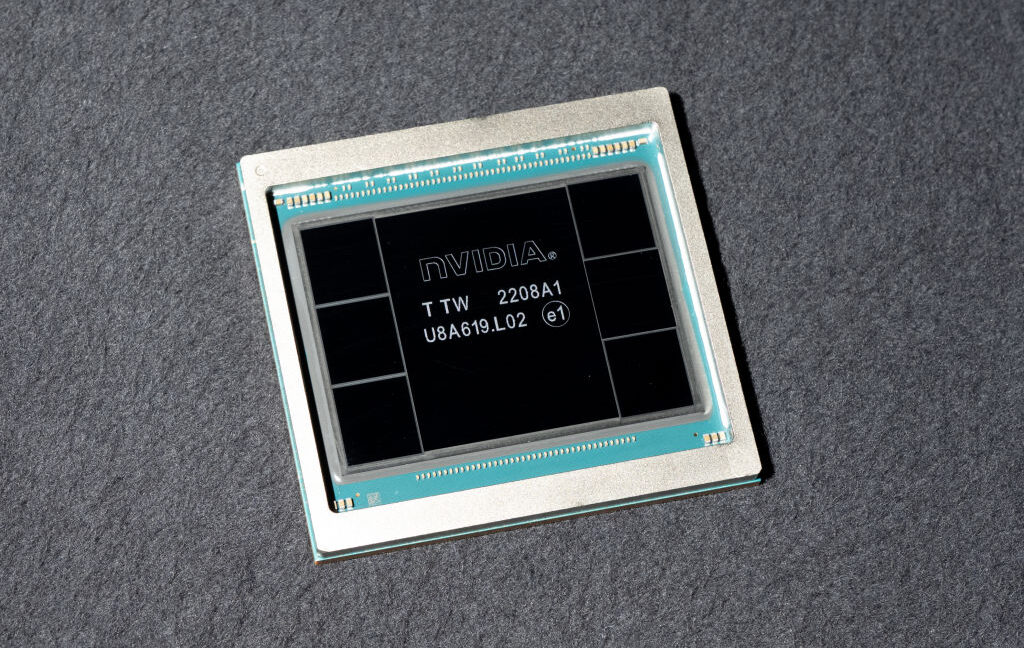
[Geopolitics] The case is the first criminal prosecution of its kind tied to export-control rules on advanced AI chips. It shows that compute access is now treated as a national-security matter, with consequences for procurement and vendor compliance. Source: Ars Technica
Amazon's $1B plan to combat data center backlash draws more backlash.

[Industry] Community and regulatory resistance to AI data centers is growing across US states, and corporate response is itself being challenged. For institutions planning on-campus or hosted compute, local consent and energy questions are now part of the project risk. Source: Ars Technica
The world of AI is evolving at full speed.
Become a Fellow at university-365.com
Become Superhuman... In a world of AI... Prompt Smart, Prompt UP!




Comments