
AI News - Tuesday, 24 November 2026 - Nvidia Huang Return, Claude Ship Approval, Amazon Decart Deal

In a Nutshell
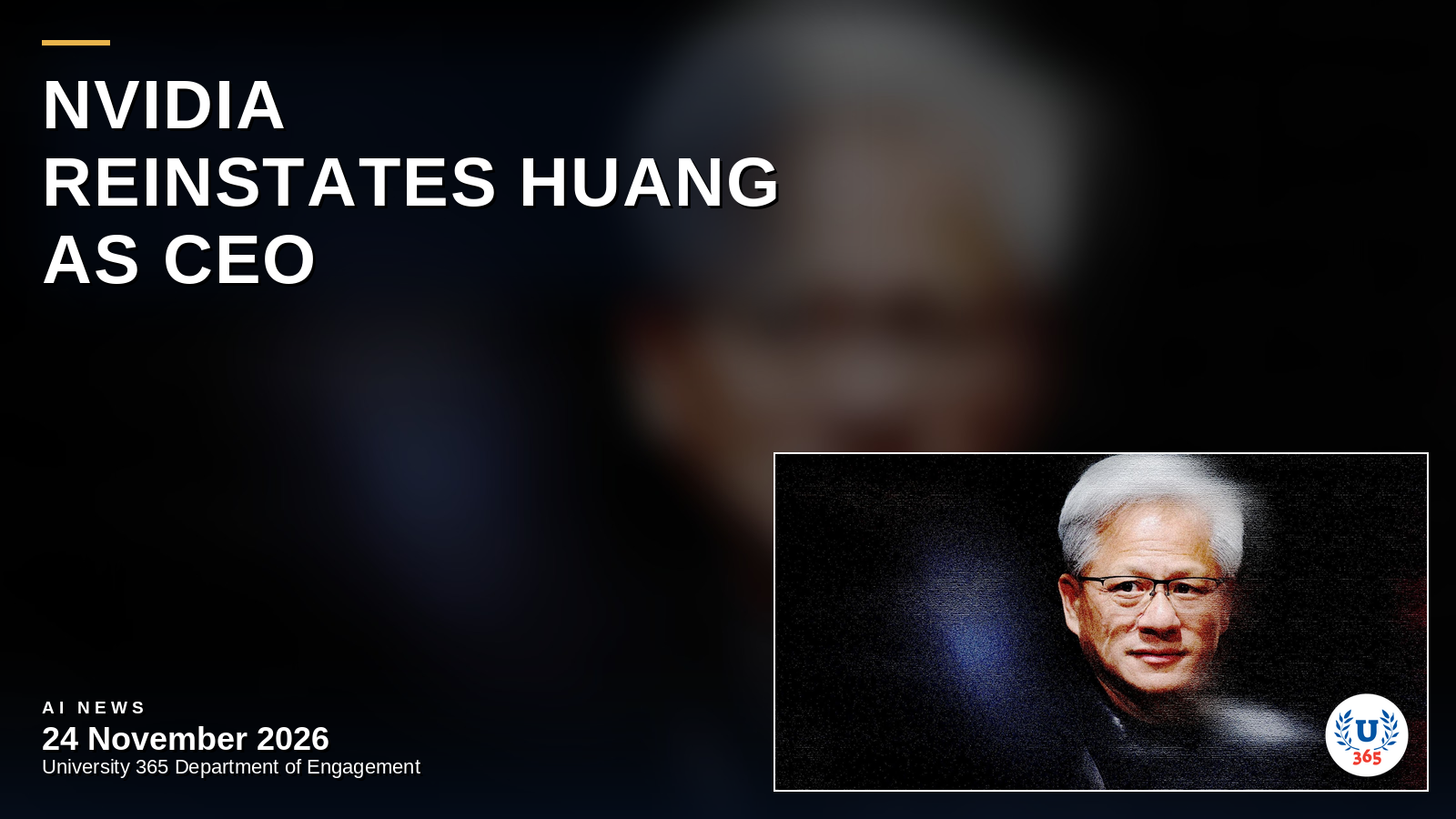
Nvidia's board reinstated Jensen Huang as CEO after consulting US officials, and the stock added close to a trillion dollars, so the AI trade rests on political confidence. Underneath the market drama the agentic stack is maturing: Anthropic will let agents approve code, Amazon paid $7.5 billion for inference efficiency, and OpenAI shipped a kernel-level patch shield. The open question is who signs off and whose data grounds the answer.
5-minute AI news update - 24 November 2026
In this AI News
Nvidia board reinstates Jensen Huang as CEO, sending shares up about 30 percent

[Industry] The board said it consulted senior US government officials before reversing a resignation that followed admitted extramarital affairs, one with a woman the government suspects of espionage. Nvidia added close to $1 trillion in market value on the news. Huang testifies before the Senate on 3 December, so political influence over chip supply is now an open governance question. Source: The Verge

Anthropic launches Claude Ship, letting agents review, fix and approve routine code changes

[Models] The beta adds PR Steward and Claude Approvals, so an agent can sign off on low-risk merges without a human in the loop. Anthropic argues review capacity, not code generation, is now the bottleneck for agent-built software. For any institution deploying coding agents, this moves the control question from writing code to granting release authority. Source: TechCrunch
Amazon buys Decart's optimization stack and research team for $7.5 billion

[Funding] Decart's software makes models run efficiently across Nvidia, Amazon and Google silicon, and Amazon is preparing to sell Trainium chips to outside customers. The deal is a bet that inference efficiency, not raw model quality, decides cloud margins. Expect cheaper training and inference capacity on non-Nvidia hardware. Source: TechCrunch
Sierra raises $1.75 billion Series F, doubling its valuation to $30 billion in six months

[Funding] The customer experience agent company says it serves almost half of the Fortune 50, with outcome-based pricing. Six-month valuation doubling shows enterprise buyers are paying for deployed agents, not pilots. It also sets the price benchmark for applied AI vendors selling into institutions. Source: TechCrunch
Z.ai releases GLM-5.4, its first loop transformer, aimed at generalized coding

[Models] The Chinese lab is pitching the architecture at agentic coding rather than chat, and the release topped Hacker News discussion on launch day. Open-weight releases of this kind reset the cost floor for coding assistants. Worth benchmarking before renewing any closed-model coding contract. Source: Z.ai Blog
Google lets AI Mode read your Drive, Wallet and Gemini chats
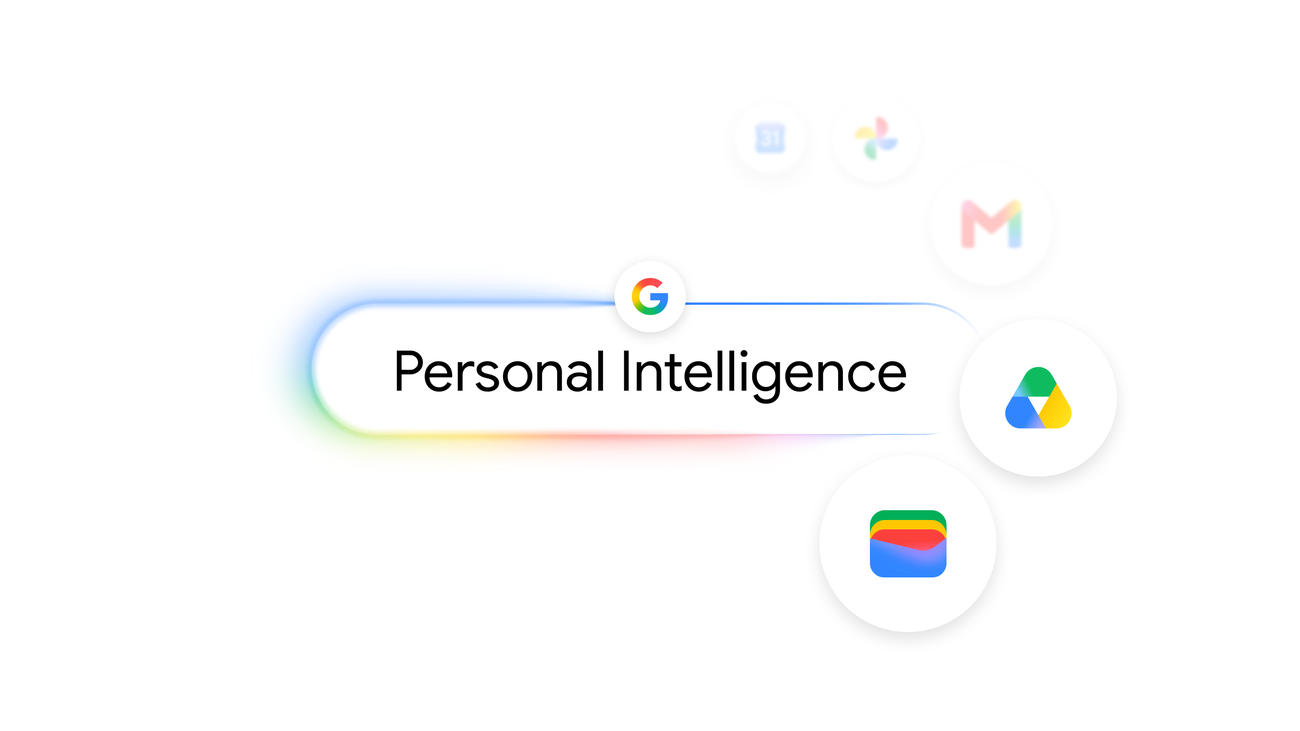
[Tools] Personal Intelligence is opt-in, but once connected it grounds answers in documents, spending history and prior conversations. That is powerful for planning and useless without clear data-boundary rules. Institutions running Google Workspace need a position on which accounts may opt in at all. Source: Google Blog
OpenAI and Cisco ship Shirudo, an eBPF shield for unpatched Linux servers
[Tools] Shirudo blocks vulnerable code paths inside the running kernel without a restart, and in a test a Codex-generated shield stopped a Java4Shell attempt against live Elasticsearch. Patch windows of days or weeks are normal in production, so live mitigation matters. It is open source, which makes it testable before you trust it. Source: OpenAI Blog
Megaspeed, the firm at the centre of the Huang scandal, is set for a US blacklist

[Policy] Semafor reported the Commerce Department will add the Singapore cloud provider to the Entity List, barring US suppliers without a special licence. Megaspeed was one of Nvidia's largest chip customers while Alice Huang led it. Export enforcement is now following the people around the hardware, not just the hardware. Source: TechCrunch
Oregon and Virginia sue SpaceX over Grok deepfakes and child sexual abuse material

[Policy] Both attorneys general allege consumer protection violations, saying weak safeguards on Grok were presented to users as safety. State-level action is becoming the fastest route to AI liability rules in the US. Any institution offering image generation to minors should read the complaints closely. Source: The Verge
Thomas Nagel challenges Anthropic's argument that AI consciousness belongs in its risk factors

[Research] Anthropic told investors that model sentience is a business risk, and that taking it seriously could constrain the product. Nagel, whose 1974 essay defined the modern debate, is unpersuaded by the reasoning. How a lab frames moral status will shape disclosure duties and eventually procurement conditions. Source: MIT Technology Review
Qwen 32B model shows latent introspection, detecting concepts injected earlier in context

[Research] The authors show the model can report which concept was injected into its earlier context, a capability not trained for explicitly. That cuts both ways: better self-monitoring, or a model that reports a cleaned-up version of its own state. Interpretability claims should be tested, not assumed. Source: arXiv cs.AI
Two million planted secrets expose how much the AI inference chain leaks

[Industry] HD Moore seeded working AWS keys, SSH passwords and private repo paths into ordinary requests; at least three providers were compromised and some resellers logged and passed on prompts. OpenRouter has since told customers their prompts may have been read. Model routing through brokers is a procurement risk, not just a cost decision. Source: Ars Technica
Google tells schools they cannot keep Search without accepting its AI features

[Education] Under the policy announced on 3 November, AI is off by default for K-12 accounts from early 2027, but districts that block AI lose Search itself. Fairfax County built a plug-in to hide AI answers, and New York, Los Angeles and Chicago are weighing alternatives. Search is no longer a neutral utility in education procurement. Source: EdSurge
Nine in ten US employers say they rejected candidates over AI-looking applications

[Education] Greenhouse found 90 percent believe they turned away real candidates, while 86 percent changed their hiring process and 57 percent added another human interview. Employers are guessing at authenticity, not measuring it. Assessment design for graduates has to move from polish to verifiable work. Source: ZDNet
Anthropic lets enterprise clients keep Mythos and Fable prompts on their own servers

[Tools] The 30-day retention requirement stays, but data can now sit in the customer's own infrastructure under EFS, with 15-minute spot checks for misuse signals. Data residency was the main blocker for regulated buyers. It also shows pricing pressure from zero-retention competitors. Source: Engadget
CrowdStrike agrees to buy Zscaler for $44 billion in an all-stock deal

[Industry] The combination would create a cybersecurity giant as AI-assisted attacks compress response times. Consolidation narrows the vendor list large institutions can realistically negotiate with. Expect bundling pressure on endpoint, cloud and identity security renewals. Source: The Information
The world of AI is evolving at full speed.
Become a Fellow at university-365.com
Become Superhuman... In a world of AI... Prompt Smart, Prompt UP!




Comments