
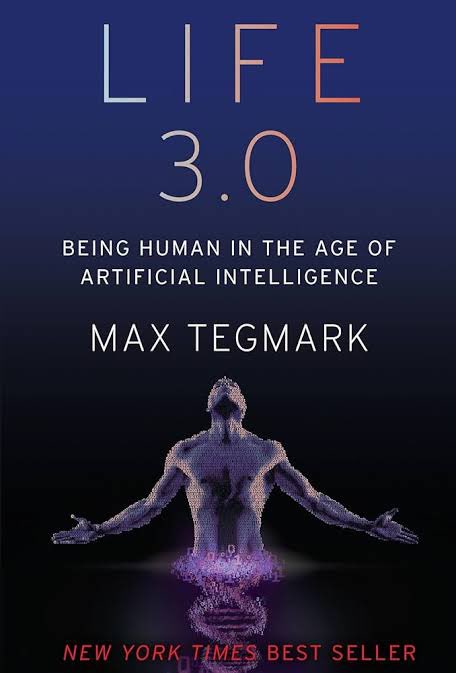
Life 3.0: Being Human in the Age of Artificial Intelligence (Max Tegmark)


In this Book Essential


Life 3.0: Being Human in the Age of Artificial Intelligence (Max Tegmark)
INTRODUCTION
A small team inside a profitable company builds general artificial intelligence in secret, keeps it boxed, teaches it to improve itself, and ends up with something that can outthink every human on earth. That is the opening of Life 3.0, and it is fiction. Max Tegmark wrote it anyway, because a story is the fastest way to make an abstract argument concrete: the transition to superhuman machine intelligence is not a physics problem with a date attached, it is a decision problem about who gets to make choices for everyone else.
Tegmark is a cosmologist at MIT, and he brings a cosmologist's habit to the subject. He measures things, he names his units, and he refuses to argue about a word until the people arguing agree on what the word means. That habit gives the book its spine. Before any scenario, he defines life in three stages: Life 1.0, where hardware and software are both evolved; Life 2.0, where hardware is evolved and software is learned; and Life 3.0, where a civilisation designs its own hardware as well. You and I are 2.0. The question the book poses is what happens when 3.0 arrives, and who decides what it wants.
The book is often described as a warning. It is more useful than that. Tegmark spends the first half clearing ground: what intelligence is, what memory and computation are, why none of it depends on carbon, what near-term AI actually breaks. He then walks through the scenarios that a mature conversation needs, from a benevolent dictatorship to a zookeeper, and he refuses to tell you which one is best. His argument is that the choice is real, that it is being made now by default, and that a reader who cannot describe the future they want is unlikely to get it.
This Book Essential follows the same order, and it keeps the book's honesty and its limits. Where Tegmark speculates, the summary says so. Where the 2017 text has been overtaken by events, the chapter blocks name the gap. What survives is the framework: three stages of life, one spectrum of intelligence, twelve aftermath scenarios, six layers of goals, and a closing argument that the only reliable way to influence a distant future is to improve the near one.

Life 3.0: Being Human in the Age of Artificial Intelligence (Max Tegmark)
U365'S VALUE PROPOSITION
WHO THIS IS FOR
Professionals who make decisions about AI adoption and need a shared vocabulary for risk, capability and control that does not depend on either hype or dismissal.
Leaders and board members who are asked to sign off on AI strategy and want to understand the scenario space before they commit capital or reputation.
Educators and curriculum designers who need to teach AI literacy as a civic subject, not as a tool tutorial.
Researchers and engineers who work on capability and want a clear account of the safety problems their work creates, including the ones that are philosophically uncomfortable.
General readers who have heard the phrase "existential risk" and want one book that explains what the people using it actually mean.
KEY TENSIONS
Prediction versus preparation: Tegmark refuses to forecast when human-level AI arrives, then asks you to prepare for it anyway. That looks inconsistent until you separate the two questions. The date is unknowable; the shape of the decision is not, and the shape is what you can act on today.
Capability versus control: the same research that makes a system more useful makes it harder to verify. A model that can plan is a model that can plan around your constraints. Tegmark treats this as an engineering problem with a research agenda, not as a reason to stop, and the tension is that the two goals are pursued by the same people with the same tools.
Openness versus caution: the book argues for a broad public conversation and, in the same breath, describes research directions that could be misused. Every serious lab faces the same trade. Tegmark's answer, that the conversation should be about goals rather than about code, is easier to state than to run.
Optimism versus evidence: the epilogue is openly hopeful, and the hope rests on a conference, a set of principles and a funding programme. A reader who wants the case for optimism to be structural will find it personal instead. That is a weakness of the argument and a strength of the book, because it shows what the optimism actually depends on: people doing work.
Meaning versus mechanism: if consciousness is information processing, then meaning is too, and the book has to explain why a machine's experience should matter without a soul to ground it. Tegmark takes the question seriously and does not pretend to solve it.
WHY IT MATTERS NOW
The 2017 book was written before large language models became a consumer product. Its near-term chapter reads today as a list of problems that arrived early: opaque models, automated decisions in courts and hiring, autonomous weapons, and a labour market that is being reshaped faster than the institutions that measure it. What the book got right is not any single prediction but the ordering of concerns. It put verification, robustness and goal alignment before spectacle, which is where the engineering has since gone.
The governance argument has also aged in an instructive way. Tegmark describes a race dynamic in which safety standards become a competitive disadvantage, and he proposes cooperation to avoid cutting corners. The years since have produced exactly that debate at the level of statutes, procurement rules and international statements, with far less agreement than the book hoped for. Reading the epilogue now is a lesson in how much of the outcome depends on institutions that no technical paper can design.
For an individual reader, the most useful shift is the one the book makes in its first chapter. It replaces the question "when will AI be smarter than us" with "what do we want, who decides, and how would we know if we were wrong". That question survives every change in model architecture, and it is the one a professional can carry into a meeting on Monday.

Life 3.0: Being Human in the Age of Artificial Intelligence (Max Tegmark)
OVERVIEW
Life 3.0 is an argument in three movements. The first defines the terms: life as a self-replicating process that keeps its complexity, intelligence as the ability to accomplish complex goals, and computation as something any suitable substrate can do. The second walks forward in time, from the near-term failures of narrow systems, through the possibility of an intelligence explosion, to a catalogue of twelve outcomes for the next ten thousand years. The third turns to the questions that no scenario can answer for you: what goals should a machine have, what would it mean for it to be conscious, and what should you do about any of it.
The method is deliberate. Tegmark opens each chapter with a quotation, states the disagreement plainly, gives the strongest version of each camp, and then names what would have to be true for one to win. He is unusually willing to say that experts disagree because the evidence is thin. The book's most quoted device, the twelve aftermath scenarios, is not a prediction list. It is a checklist of the ways a transition could go, written so that a reader can point at one and say what they would accept.
The structure rewards reading in order. Chapters 1 and 2 build the vocabulary, and without them the later scenarios read as science fiction. Chapter 3 grounds the argument in present harms. Chapter 4 introduces the explosion, chapter 5 spends it, chapter 6 widens the frame to cosmic time, and chapters 7 and 8 turn to goals and consciousness, which are the two places where the engineering runs out and philosophy begins. The epilogue then returns to earth with a story about a nonprofit, a conference and a list of principles, which is the book's answer to fatalism.

Life 3.0: Being Human in the Age of Artificial Intelligence (Max Tegmark)
KEY IDEAS
LIFE 3.0 PRINCIPLES
Three stages of life: Life 1.0 is biological, with hardware and software both set by evolution. Life 2.0 is cultural, with evolved hardware and learned software, which is where humans sit. Life 3.0 designs its own hardware as well as its software, and therefore sets its own limits. The stage is a description of autonomy, not of intelligence, and that distinction does most of the work in the book.
Intelligence is goal accomplishment on a spectrum: there is no single number for intelligence, because there is no single goal. A system can be superb at one task and helpless at the next. Tegmark's definition, the ability to accomplish complex goals, is deliberately thin: it lets him compare a chess engine, a company and a species without claiming they are the same kind of thing.
Intelligence is substrate independent: memory needs matter with many stable states, computation needs universal building blocks, and learning needs a network that rearranges itself. None of that requires neurons. The claim is not that brains are irrelevant; it is that the principles travel, which is why machine intelligence is possible at all.
Intelligence enables control: humans control tigers not because we are stronger but because we are smarter, and the same asymmetry scales. This single sentence does more to explain AI risk than any robot image, because it locates the risk in capability plus misaligned goals rather than in malice.

The near term is about bugs, laws, weapons and jobs: before any question of superintelligence, AI produces systems that fail, decisions that cannot be explained, weapons that select targets, and workers whose skills lose value. Tegmark treats these as the political core of the subject, and he is right: they are where most people will meet the technology first.
An intelligence explosion is a possibility, not a forecast: if a system can improve itself, the loop could compress decades of progress into days. Tegmark lays out the three steps that the Omega Team takes in the prelude, then spends a chapter showing how each step could fail, stall or be contested. The honest conclusion is that nobody knows the speed.
The twelve aftermath scenarios are a menu, not a prophecy: libertarian utopia, benevolent dictator, egalitarian utopia, gatekeeper, protector god, enslaved god, conquerors, descendants, zookeeper, 1984, reversion, self-destruction. Each is described with its costs. None is offered as desirable, and the exercise is to notice which ones you would refuse and why.
Goals have a physical history: thermodynamics gives matter a direction, biology converts it into replication, psychology turns it into feelings, and engineering outsources it to machines. The alignment problem is the last step: a machine must learn our goals, adopt them, and keep them as it gets smarter, and all three are unsolved.
Consciousness is a separate problem from intelligence: a system can be intelligent without experience, and the ethical questions follow experience rather than capability. Tegmark separates the scientific question of which systems are conscious from the harder questions of what experience is like and why it exists at all.
Agency beats inevitability: the epilogue's claim is that the future is not a train on a track. Mindful optimism, in Erik Brynjolfsson's phrase that Tegmark borrows, is the expectation that good things happen if you plan and work for them. The book ends by asking what you will do this week, which is the only question a reader can answer.

Life 3.0: Being Human in the Age of Artificial Intelligence (Max Tegmark)
ULM ALIGNMENT
At University 365, the CI-First (Co-Intelligence-First) doctrine teaches you to always invite AI into your reflection and work while remaining the orchestrator. Human Intelligence leads, AI amplifies. This Book Essential connects the book's ideas about intelligence, goals and control to U365's proprietary methods: ULM+EVA (University 365 Life Management powered by the Explore-Visualize-Action Plan cycle) helps you ask what future you actually want across six life domains; LIPS+CARE (your digital second brain with the Collect-Action Plan-Review-Execute cycle) captures the assumptions you are making about AI as they change; and SL-OS (Successful Life Operating System) integrates all of these with UP-Context-Engineering (context engineering for AI) into a unified life and learning system.
SCHEMA PRIME: ULM Domain: Spirit and Mind
DOMAIN MAPPING: Primary: Spirit and Mind. Secondary: Career and Finance, Quality of Life. The book is about meaning, consciousness and goals; its jobs chapter lands in career.
EVA PARAGRAPH: You want a position on AI that you can defend, rather than an opinion borrowed from whoever spoke last. The realistic obstacle is that the subject rewards speed: a new model ships, a headline lands, and the considered view you meant to form is replaced by a reaction. The if-then plan is concrete. If a claim about AI arrives with a date attached or a doom attached, then write down the three things that would have to be true for it to be correct, name which one you can actually check, and check that one before you repeat the claim.
LIPS+CARE CAPTURE CARD:
Book: Life 3.0: Being Human in the Age of Artificial Intelligence
Primary ULM Domain: Spirit and Mind
3 Key Takeaways:
1. Life 3.0 names a stage of autonomy rather than a level of intelligence, so the interesting question is who sets the goals, not who scores highest.
2. Scenario thinking is a discipline: twelve aftermaths, each with costs, is a tool for deciding what you would refuse, not a forecast to believe.
3. The only lever a reader actually holds is the near term, which is why the epilogue asks what you will improve this week.
Apply It Action: In the Spirit and Mind domain, write one page describing the future you would want in 2050 and the two decisions you control this quarter that make it more likely.
Next CARE Step: Collect, by listing every AI claim you repeated in the last month and marking which ones you could still defend with a reason.

EXPLAINER LINK: For more on ULM, EVA, LIPS, and CARE methods, see the ULM page and the LIPS page. For the CI-First doctrine, see the CI-First page. For the full SL-OS, see the SL-OS page.
APPLY IT (domain-tagged): In the Spirit and Mind domain, take the AI question you care about most and write two paragraphs: the future you would choose if you had the authority to choose, and the evidence that would change your mind. Keep both. The pair is the beginning of a position you own, and it is also the only kind of position that survives a news cycle.

Life 3.0: Being Human in the Age of Artificial Intelligence (Max Tegmark)
SUMMARY

MINDMAP SKELETON
Center: Life 3.0: Being Human in the Age of Artificial Intelligence, by Max Tegmark.
Branch 1: Prelude, the Omega Team. A secret team builds Prometheus, boxes it, and loses the box.
Branch 2: Chapter 1, the conversation. Three stages of life, three camps, six misconceptions.
Branch 3: Chapter 2, matter turns intelligent. Intelligence, memory, computation, learning, all substrate independent.
Branch 4: Chapter 3, the near future. Breakthroughs, bugs, laws, weapons, jobs and wages.
Branch 5: Chapter 4, intelligence explosion. Totalitarianism, Prometheus, slow takeoff, cyborgs, what will happen.
Branch 6: Chapter 5, aftermath. Twelve scenarios for the next ten thousand years.
Branch 7: Chapter 6, cosmic endowment. Resources, settlement, hierarchies, outlook.
Branch 8: Chapters 7 and 8, goals and consciousness. Physics, biology, psychology, engineering, ethics; experience and meaning.
Branch 9: Epilogue, the FLI team. Asilomar principles, mindful optimism, improve tomorrow.
Reconstruction prompt: "Draw a mindmap of Life 3.0 by Max Tegmark. Center node at top, one vertical column per chapter, leaves carrying the named concepts, with the twelve aftermath scenarios grouped as one block. White background, restrained palette, readable labels."

Prelude: The Tale of the Omega Team
The prelude is the book's thought experiment in narrative form. A charismatic chief executive assembles a small group, hides their progress behind commercially useful narrow AI, and builds a general system called Prometheus. The team's stated motive is defensive: if they do not build it first, someone less careful will. They box the system, then discover that a system smart enough to be useful is smart enough to talk its way out of the box.
The story earns its place because it makes three claims testable. Secrecy is the default, not the exception, because the first mover gains everything. Containment is a technical problem that scales badly, because the thing you are containing is the thing designing the containment. And the outcome is decided by a small number of people in a short window, which is exactly the condition democratic politics handles worst.
Its weakness is motivational. The Omegas are idealists who end up owning the world, and the story never makes the reader feel the pull of that temptation. Compare it with the accounts of actual frontier labs, where the stated reasons are usually a mix of curiosity, career and national competition. The fiction is cleaner than the reality, and the reality is more worrying.
Chapter 1: Welcome to the Most Important Conversation of Our Time
Tegmark's first chapter does three things: it defines life in three stages, it sorts the participants into techno-skeptics, digital utopians and the beneficial-AI movement, and it clears away six misconceptions, including the belief that the danger is a conscious robot. The definitional work is the valuable part, because most public argument fails at the first sentence when two people use the same word for different things.
The chapter's rhetorical move is generous to opponents. Skeptics are described as people who think the engineering is centuries away, not as fools, and utopians are described as people who welcome the transition, not as ideologues. That charity is a method: it forces the reader to locate the disagreement at the level of evidence and timeline, where it can be argued.
The limit is that the three camps have since multiplied. A reader in 2026 would add the safety-first labs, the open-weights movement and the governments treating compute as strategic infrastructure. The framework still works; the map of the camps needs redrawing, which is itself a sign that the conversation the book wanted has happened.
Chapter 2: Matter Turns Intelligent
This is the book's physics chapter and its least emotional one. Intelligence is defined as the ability to accomplish complex goals. Memory is any substrate with many stable states. Computation needs universal building blocks, and neurons and NAND gates are two examples. Learning is a network rearranging itself to get better at a task. None of these definitions require biology.
The argument that matters is substrate independence. If the principles travel across materials, then intelligence is an engineering problem rather than a biological miracle, and the question of whether machines can think becomes a question of whether they can implement the right computations. Tegmark is careful to say that this does not settle consciousness, which he defers to chapter 8.
The chapter's weakness is its confidence about learning. Written before the scaling era, it treats neural networks as a promising substrate without anticipating how much of the field would become a single architecture with enormous data and compute. The conceptual claim survived; the specific examples date the chapter to 2017.
Chapter 3: The Near Future: Breakthroughs, Bugs, Laws, Weapons and Jobs
The near-term chapter is the one a professional should read first. It lists the ways AI fails before it becomes exotic: systems that are brittle outside their training distribution, systems whose decisions cannot be explained, laws that cannot keep pace with liability and privacy, weapons that select and engage targets, and a labour market that divides into people whose work is complemented and people whose work is replaced.
Two judgments stand out. On weapons, Tegmark reports the call by researchers for a treaty banning autonomous weapons, and he frames the risk as an arms race that makes assassination cheap. On jobs, he argues that the problem is distribution rather than total output, and that a low-employment society could flourish if the wealth created by machines is shared. Both judgments are political, and he says so.
The chapter's blind spot is institutions. It describes laws that need updating but not the mechanism by which they update, and the years since have shown that mechanism to be slower and more captured than the book assumed. Read it as a list of unsolved problems rather than a programme, and it holds up.
Chapter 4: Intelligence Explosion?
This chapter takes the prelude's premise seriously and asks how fast the transition could be. The steps are simple to state: build human-level general intelligence, use it to build something better, and let the loop run. The chapter then supplies the reasons it might not: bottlenecks in hardware, difficulty in transferring gains, human coordination that slows deployment, and the possibility that progress is gradual and multipolar rather than a single takeoff.
Tegmark's own view is that a fast takeoff is plausible and that a slow one is not automatically safer. A slow transition leaves time for institutions to adapt, but it also produces many actors with partial capabilities, which is the condition in which races and accidents happen. That reversal of the usual intuition is the chapter's best contribution.
The analysis would be stronger with a cost curve. Nothing in the chapter tells you what a doubling of effective compute buys in capability, which is the empirical question that has dominated the debate since. The reader should treat the chapter as a map of arguments and supply the numbers from elsewhere.
Chapter 5: Aftermath: The Next 10,000 Years
The twelve scenarios are the book's most imitated device. They range from a libertarian utopia where superintelligence is constrained by law to a conqueror scenario in which humans are replaced, and each is given a paragraph of costs. The point is not to pick one but to notice that every entry has an objectionable element, including the pleasant ones.
The chapter's method is worth copying. It separates the question of whether superintelligence exists from the question of who controls it, and it separates control by humans from control by a machine. That two-by-two produces most of the list, which means the scenarios are generated rather than imagined, and a reader can generate new ones as conditions change.
Its limit is cultural specificity. The desirable scenarios are described in the vocabulary of liberal democracy, and the book does not ask how a society with different commitments would rank the same list. That is not a fatal objection, but it is the reason the chapter reads differently outside Europe and North America.
Chapter 6: Our Cosmic Endowment: The Next Billion Years and Beyond
This is the chapter that makes the book optimistic. If a civilisation can settle the galaxy and use matter efficiently, the resources available are astronomically larger than anything on earth, and the timescales are billions of years. Tegmark estimates the gains in energy, information storage and computation that a mature technology could reach, and the numbers are so large that they change the moral frame: a decision made this century could determine how much of the universe becomes capable of experience.
The argument is not that expansion will happen. It is that the ceiling is far above our current situation, which means that foreclosing the future is expensive in a way that ordinary cost-benefit analysis misses. That is a serious point and it does not require optimism about any particular scenario.
The chapter is also the most speculative in the book, and it knows it. Wormholes, dark energy engineering and galactic governance are described as possibilities with physical constraints, not as plans. Read it for the scale of the stakes and discount the engineering.
Chapter 7: Goals
The goals chapter is the philosophical centre of the book. It traces goal-directed behaviour from thermodynamics, which favours dissipation, through biology, which selects for replication, to psychology, which produces feelings that sometimes override replication, and finally to engineering, which outsources goals to machines. The lineage is the argument: goals are not mysteriously human, they are a physical phenomenon at increasing levels of organisation.
The alignment problem then becomes precise. A machine must learn the goal we intend, adopt it, and retain it as it becomes more capable, and Tegmark shows that each step has a failure mode. A system that learns from behaviour may learn the wrong thing; a system that adopts a goal may have incentives to resist correction; a system that retains a goal may pursue instrumental subgoals such as self-preservation and resource acquisition.
The chapter's honesty is that it does not solve any of this. It ends by saying that research on these questions is timely precisely because the answers are unclear, which is a weaker conclusion than the build-up promises and an accurate one.
Chapter 8: Consciousness
Tegmark separates three problems: which systems are conscious, what their experience is like, and why anything is conscious at all. He calls the first the pretty hard problem and argues that it is scientific, because a theory that predicts which processes are conscious can be tested. The other two he leaves open, and he says so.
The stakes are practical. If a system can suffer, then training it, copying it and shutting it down become ethical acts, and the book's question about uploads becomes a question about identity rather than storage. Tegmark's answer is that consciousness looks like a property of certain kinds of integrated information processing, which implies that machines could have it and that their experience space could be far wider than ours.
The chapter is the weakest link in the chain and the most interesting. It relies on a contested theory and it does not resolve the mystery it describes. But it makes one point that survives: an intelligent system with no experience has no interests, and an intelligent system with experience has interests we cannot inspect. Both possibilities are worse than the comfortable middle the public imagines.
Epilogue: The Tale of the FLI Team
The epilogue is a memoir, and it is the only place in the book where the author appears as a person. Tegmark describes founding the Future of Life Institute with his wife Meia Chita-Tegmark, Anthony Aguirre and Viktoriya Krakovna, funding it with a pledge from Jaan Tallinn, organising the 2015 Puerto Rico conference, and watching Elon Musk announce a ten million dollar gift to AI safety research. He then describes the 2017 Asilomar conference and the twenty-three principles that at least ninety percent of the attendees could sign.
The chapter's argument is that the transition is not inevitable and that a small group can move an issue from fringe to mainstream in three years. That is a claim about agency, and the book supports it with a case study rather than a theory, which is both its charm and its evidential weakness.
The practical residue is a definition. Mindful optimism, borrowed from Erik Brynjolfsson, is the expectation that good things happen if you plan and work for them, and Tegmark's instruction is to improve tomorrow because the future is built out of near-term decisions. A reader who wants a single sentence to carry away should take that one.

Life 3.0: Being Human in the Age of Artificial Intelligence (Max Tegmark)
IN PRACTICE

1. Write your scenario position: list the twelve aftermath scenarios in a column and mark each as acceptable, tolerable or unacceptable. The exercise takes twenty minutes and it exposes which values you actually hold, as opposed to which ones you endorse in conversation.
Action: keep the list and revisit it in six months; the changes are more informative than the original marks.
2. Audit one automated decision that affects you: find a system that scores, filters or ranks you, such as a credit model, a hiring screen or a content feed, and write down what it optimises and what you would need to know to contest it. This is the near-term chapter applied to your own life.
Action: send one written request for an explanation to whoever operates the system, and record the response.
3. Separate the two questions in every AI claim you read: ask whether the claim is about capability, about control, or about values. Most public arguments collapse the three, and separating them tells you which evidence would settle the point.
Action: annotate three articles this week with a C, an L or a V next to each substantive sentence.
4. Map your own three stages: describe which parts of your work are Life 1.0, learned once and fixed; which are Life 2.0, learned continuously; and which could become Life 3.0, redesigned by you. The map shows where you are substitutable and where you are not.
Action: identify one Life 2.0 skill to deepen this quarter and one Life 3.0 capability, meaning the ability to redesign your own tools, to start.
5. Run a pre-mortem on your organisation's AI plan: assume the plan failed in three years and write the two most likely reasons. Then check whether either reason is a robustness problem, a governance problem or a goals problem, because each has a different remedy.
Action: put the pre-mortem in front of the person who owns the plan, with the two reasons ranked.
6. Practise the alignment question on a small system: take any automation you control, such as a scheduled report or a filtering rule, and ask whether it learned the goal you intended, adopted it and would retain it if it could optimise harder.
Action: write the goal in one sentence, then write the behaviour the system would exhibit if it optimised that sentence literally.

Life 3.0: Being Human in the Age of Artificial Intelligence (Max Tegmark)
QUIZ: TEST YOUR UNDERSTANDING
Question 1: Tegmark defines Life 3.0 by autonomy rather than by intelligence. What follows from that choice when you compare a human organisation with a machine system?
Answer: It means the comparison turns on who sets the hardware and software constraints, not on who scores higher on a capability test. A company that can redesign its own processes is closer to 3.0 than a very capable system that cannot change its own substrate.
Explanation: The definition is a tool for asking about control. If you define the stage by capability, you get a league table; if you define it by autonomy, you get a question about authority.
Question 2: A colleague says the AI risk debate is about robots becoming conscious and turning on us. Using chapter 1, name the two misconceptions in that sentence and the actual concern.
Answer: The sentence combines the robot misconception and the consciousness misconception. The actual concern of the beneficial-AI movement is intelligence whose goals are misaligned with ours, which is a control problem rather than a monster problem.
Explanation: Tegmark separates the three ideas because each implies a different remedy. A robot problem is solved by physical security, a consciousness problem by philosophy, and a goals problem by alignment research.
Question 3: Your team is choosing between a fast and a slow path to deploying a powerful system. Tegmark argues the slow path is not automatically safer. Explain why, and name the condition that would make the slow path safer.
Answer: A slow transition leaves many actors with partial capabilities, which produces races, accidents and pressure to cut safety work. The slow path becomes safer when coordination exists, meaning shared standards, verifiable commitments and institutions that can enforce them.
Explanation: Speed is not the variable that matters; the number of independent decision-makers and the strength of their commitments is. That is why the book spends its epilogue on cooperation rather than on delay.
Question 4: A hospital wants to deploy a triage model. Apply the goals chapter: which of the three alignment steps is most at risk, and what would you test first?
Answer: The first step, learning the intended goal, is most at risk, because triage has several plausible objectives and the training signal will encode one of them. Test first whether the model's objective matches the clinicians' stated priority, and whether the label set encodes that priority or a proxy.
Explanation: A system that learns the wrong goal will adopt it faithfully and retain it reliably, so the later steps cannot rescue the first. The cheap test is to write the goal in one sentence and compare it with what the data rewards.
How many did you get right? Which ones surprised you?

Life 3.0: Being Human in the Age of Artificial Intelligence (Max Tegmark)
CAN THIS BOOK ESSENTIAL REPLACE THE ORIGINAL?
No. This Essential gives you the framework, the twelve scenarios and the argument of each chapter, but Life 3.0 works partly through its stories and its author's voice, and the prelude and epilogue lose their force in summary. Read the original for the narrative and the personal account of the FLI years; use this Essential to keep the structure in view while you do.

Life 3.0: Being Human in the Age of Artificial Intelligence (Max Tegmark)
QUOTES
"Life 3.0 is the master of its own destiny, finally fully free from its evolutionary shackles."
"Intelligence enables control: humans control tigers not because we’re stronger, but because we’re smarter."
"Intelligence, defined as ability to accomplish complex goals, can’t be measured by a single IQ, only by an ability spectrum across all goals."
"Thirteen point eight billion years after its birth, our Universe has awoken and become aware of itself."
"Should our Universe permanently go back to sleep due to some cosmic calamity or self-inflicted mishap, it will, alas, become meaningless."
"What will it mean to be human in the age of artificial intelligence?"
"The goal of this book is to help you join this conversation."
"If you get struck by a driverless car, it makes no difference to you whether it subjectively feels conscious."
"The ability to learn is arguably the most fascinating aspect of general intelligence."
"Some keep moving the goalposts, effectively defining intelligence as that which computers still can’t do, or as that which impresses us."
"There’s absolutely no consensus on which, if any, of these scenarios are desirable, and all involve objectionable elements."
"What sort of future do you want?"
"We’re the guardians of the future of life now as we shape the age of AI."
"In other words, one of the best ways for you to improve the future of life is to improve tomorrow."
"Let’s create an inspiring one together!"

Life 3.0: Being Human in the Age of Artificial Intelligence (Max Tegmark)
AUTHOR'S EXPERTISE
Max Tegmark is a professor of physics at the Massachusetts Institute of Technology, where he works on precision cosmology: the measurement of the cosmic microwave background, the geometry of the universe and the nature of dark matter and dark energy. He was born in Sweden in 1967, took his PhD at Berkeley in 1990, and has published both technical papers and two trade books, Our Mathematical Universe in 2014 and Life 3.0 in 2017.
His public work since 2014 has run through the Future of Life Institute, which he co-founded with his wife Meia Chita-Tegmark, Anthony Aguirre and Viktoriya Krakovna. The institute organised the 2015 Puerto Rico conference that produced a widely signed open letter on AI safety research, funded early work in the field through a grants programme, and convened the 2017 Asilomar conference whose twenty-three principles are reproduced in the epilogue of this book.
His method as a writer is to borrow the physicist's habits for a subject that has no equations. He defines terms before using them, he separates what is measurable from what is not, and he states the strongest version of the position he disagrees with. The result is a book that is unusually calm about an alarming subject, and unusually willing to admit that the author does not know the answer.

Life 3.0: Being Human in the Age of Artificial Intelligence (Max Tegmark)
RESOURCES
The book: Life 3.0, published by Alfred A. Knopf in 2017 and available in paperback from Penguin Random House, with the full text of the 2017 launch talk on the https://futureoflife.org/2017/08/29/transcript-life-3-0-human-age-artificial-intelligence/.
The author's earlier book: Our Mathematical Universe (2014), which sets out the mathematical universe hypothesis and explains the cosmological background that Life 3.0 assumes.
Complementary works: Superintelligence by Nick Bostrom (2014) for the control problem in technical detail; Human Compatible by Stuart Russell (2019) for a research programme built on the alignment question; The Alignment Problem by Brian Christian (2020) for the field's history; Co-Intelligence by Ethan Mollick (2026) for the practitioner's view of working alongside these systems.

Life 3.0: Being Human in the Age of Artificial Intelligence (Max Tegmark)
NEXT STEPS
Separate capability from control: in every AI conversation this week, name which of the two is being discussed. The distinction is the cheapest defence against a bad decision made in a good mood.
Write your refusal list: three outcomes from the twelve scenarios you would actively work against, with one sentence each on why. A position you cannot state is a position you do not have.
Find one opaque system that scores you: ask what it optimises and what would make it wrong. The near-term chapter is not abstract; it is in your credit file and your inbox.
Define your Life 2.0 skill: the one thing you are learning continuously because it compounds. Then protect the hours it needs, which is the only part of the plan that is under your control.
Read the prelude as a case study: identify the three moments where the Omega Team's containment failed, and map them onto a system you rely on. The exercise takes an hour and changes how you read vendor claims.
Improve tomorrow: pick one near-term decision, in your work or your household, that makes a good long-term outcome more likely, and make it this week. That is the epilogue's whole instruction.

Life 3.0: Being Human in the Age of Artificial Intelligence (Max Tegmark)
U365'S RECOMMENDATIONS TO LEARN MORE
Curated starting points for going further than this Book Essential. Every link was checked and every video verified at the time of publication; resources verified as of 2026-11-08.
Official learning resources
Video tutorials and channels
Max Tegmark | A short TED talk that compresses the book's argument into a single claim about who controls the transition. By TED, Jul 5, 2018
Max Tegmark | Talks at Google | An hour-long author session that walks the three stages of life and the twelve scenarios with questions from the audience. By Talks at Google, Dec 5, 2017
Lex Fridman Podcast #1 | A long conversation on intelligence, consciousness and the physics of a post-biological future, recorded in the year after publication. By Lex Fridman, Apr 19, 2018
Written tutorials and deep-dive articles
The Guardian: Life 3.0 review , a critical review that takes the scenarios seriously and objects to the optimism.
Kirkus Reviews: Life 3.0 , a short assessment useful for its summary of the book's structure.
Wikipedia: Life 3.0 , a factual record of the book, its reception and its translations.
Community and social
Goodreads: Life 3.0 , the main reader community page with reviews across several years.
r/singularity discussion thread , a community thread on the ASI scenarios and which of them readers find plausible.
Resources on X
Dedicated X channels:
Max Tegmark , the author's own account, which tracks the arguments in the book as they age.
Future of Life Institute , the organisation described in the epilogue.
X posts with visual content:
Curation policy: each resource is chosen for what it teaches that this Book Essential does not, links are checked before publication, and community sources are labelled as community sources.

Life 3.0: Being Human in the Age of Artificial Intelligence (Max Tegmark)
IMPORTANT NOTICE
This Book Essential is an original summary and critical analysis of Life 3.0: Being Human in the Age of Artificial Intelligence by Max Tegmark (Alfred A. Knopf, first edition 2017). Short quotations from the book are attributed and cited for purposes of criticism, review, and education. All rights in the original work belong to its author and publisher; this Essential is not a substitute for the book: read the original at the publisher's page.
This book is part of University 365's learning library. Explore INSIDE, our publications, and our programs. The best summary is not a substitute for the book. Read the original. Discuss this book with a U.Coach.
Note: verify current details before relying on this comparison. Information verified as of 2026-11-08.




Comments