
Prompt Bundle: Learning Anything Faster (UP-Context, Spirit and Mind)

In this Prompting Publication

Why this bundle exists
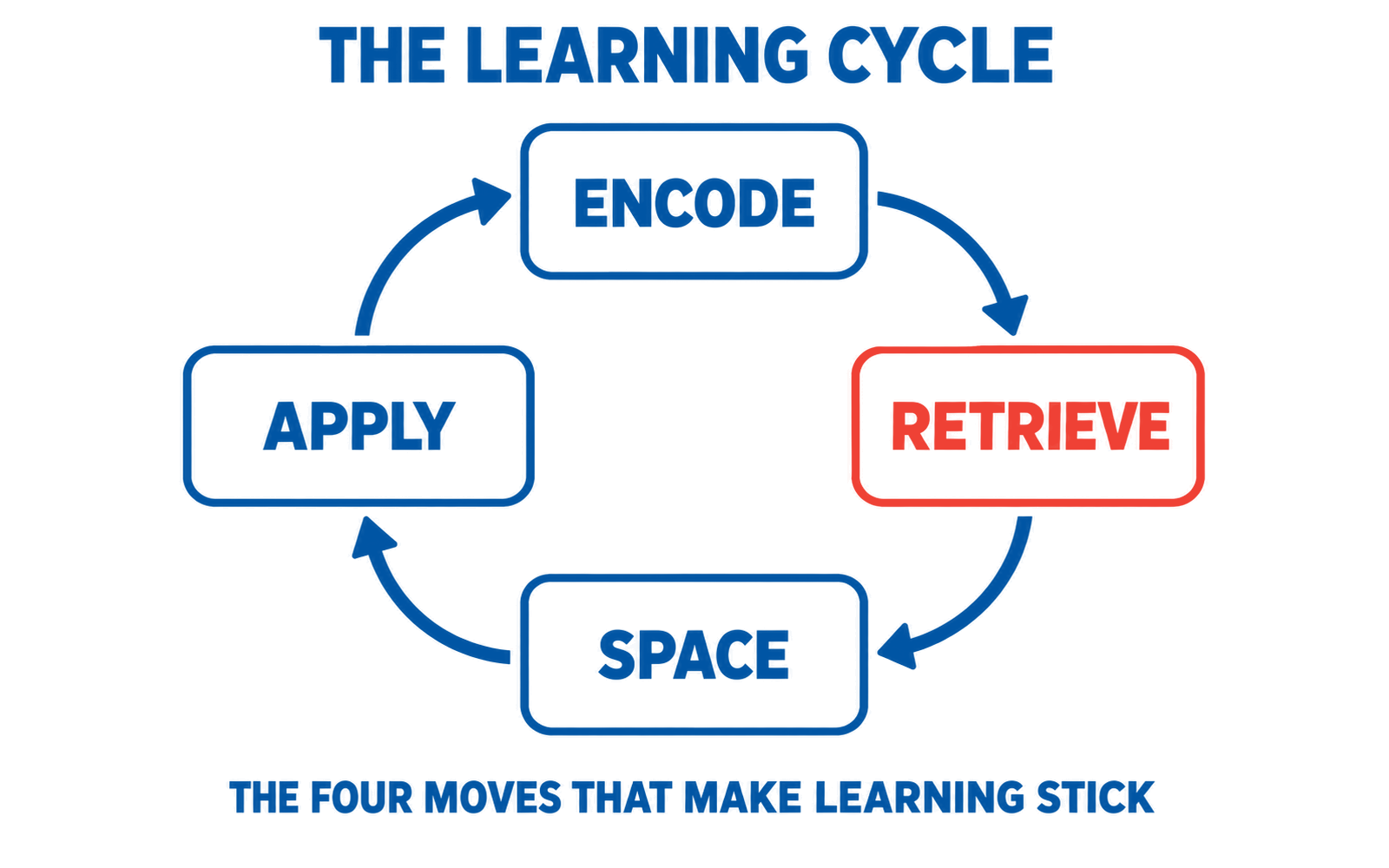
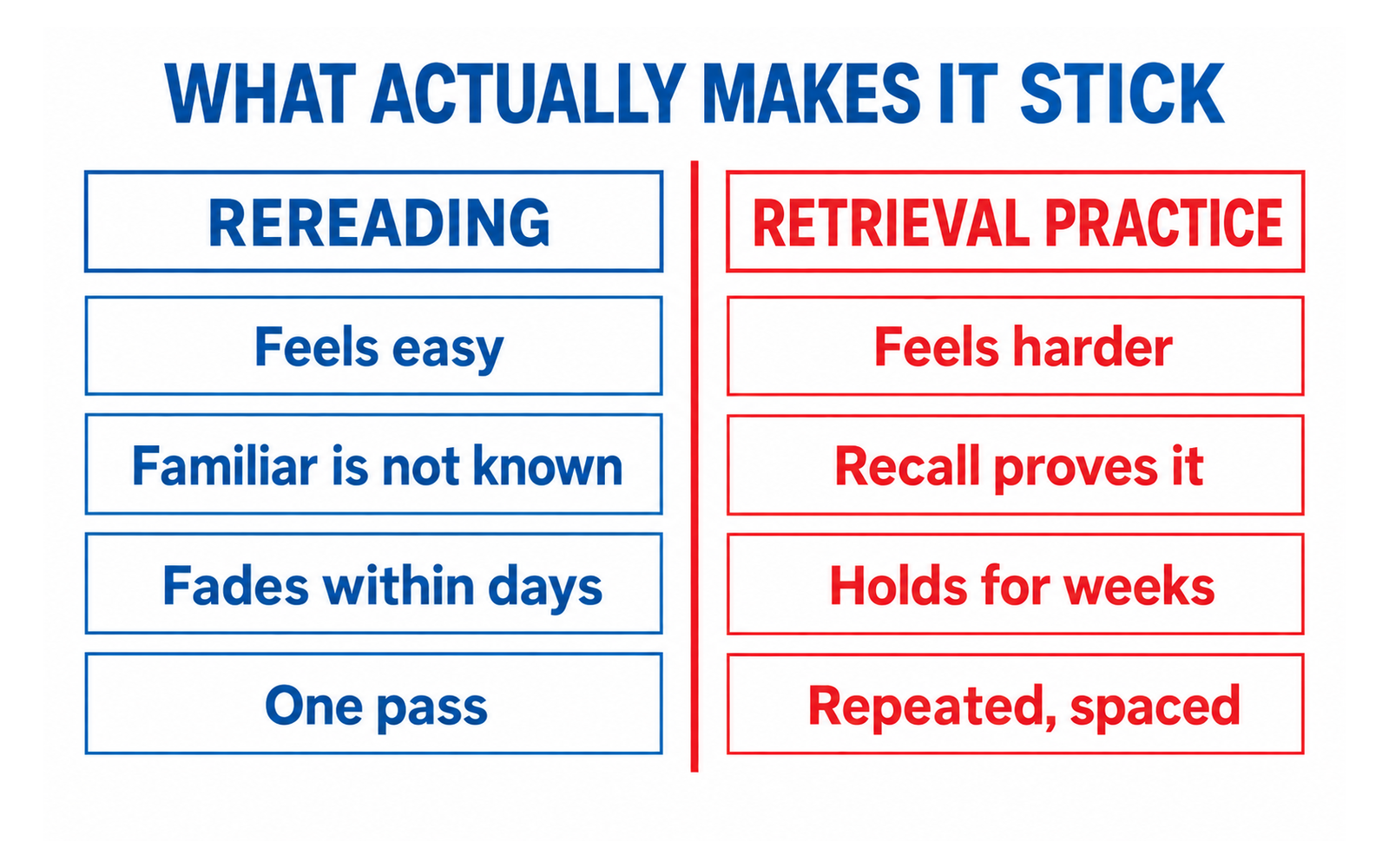
Most study time is spent on the wrong activity. Rereading notes feels productive and leaves almost nothing behind. The work that does stick is harder, less comfortable, and takes less total time: recalling, spacing, and practising the part you cannot do yet.
This bundle gives you the prompts for that work. Six prompts, each for one job in learning a subject faster than you otherwise would, all of them written to be used with a context you build once: the eight UP-Context layers.
These prompts come from the U365 method: the six ULM life domains, the eight-layer UP-Context method, and the EVA path of Explore, Visualize and Action Plan. They are written to build your own capability, not to replace it.
Before you start: UP-Context prerequisites
THIS BUNDLE ASSUMES YOU HAVE IMPLEMENTED THE UP-CONTEXT METHOD. Every prompt in this bundle is written to be used with the eight UP-Context layers already in place, five required and three optional: USER-PERSONA, FULL-CONTEXT, AI-PROFILE-ROLE-EXPERTISE, USER-FINAL-GOAL, AI-EXACT-TASK, AUDIENCE, EXPECTED-FORMAT and EXAMPLES. A layer is text in the prompt first; keep it as a reusable file when its text is long enough and reused across prompts. If you have not built those layers, the prompts below will still run, but they will produce generic output and you will be doing the work twice. Build your UP-Context layers first. Start with the UP-Context Method publication, then download the templates in the next section. The prerequisites are not a formality: they are the difference between a prompt that knows your situation and a prompt that guesses.
Where to build the layers: the UP-Context Method publication explains the method and the eight layers, and the UP-Context USER-PERSONA build takes you through the interviews that produce the first and most important layer. Neither is a prerequisite for reading this page; both are what make the prompts below worth running.
The templates this bundle needs
This bundle assumes four of the eight layers are available as reusable files, because all six prompts lean on them:
Template | What it holds |
USER-PERSONA template | Your learning persona: how you study, what you already know, what has failed you before. The professional variant is not needed here. |
FULL-CONTEXT template | One file per subject you are learning: the material, the deadline, the standard you are aiming at. |
AI-PROFILE-ROLE-EXPERTISE template | The teacher, the coach, the examiner. Select one per prompt rather than writing a role from scratch. |
AUDIENCE template | Who the output is for: almost always your future self, with the notes closed. |
The remaining four layers are written directly in each prompt: USER-FINAL-GOAL, AI-EXACT-TASK, EXPECTED-FORMAT and EXAMPLES are usually short and specific to the task, so they belong in the prompt text rather than in a file.
What you will be able to do
Four finished capabilities, in the order the prompts teach them:
Capability | What it means |
Test yourself properly | Turn any set of notes into questions that prove recall rather than recognition. |
Space the revisits | Build a schedule whose gaps grow, and which survives a week that goes wrong. |
Practise the hard part | Copy a demonstration, break it into sub-skills, and drill the one that limits you. |
Diagnose the stall | Find why something is not sticking and change the method, not the effort. |
The prompts in this bundle
Work through them in this order. Each row links to the prompt.
Prompt | What it does |
Notes become questions in four depths, each with its answer. | |
Real dates, growing intervals, and a plan for a bad week. | |
Copy it, break it into sub-skills, drill the hard part, rebuild. | |
Scores the five causes of a stall and gives you a test for its verdict. | |
The shape, the questions, the words: walk in with a map. | |
Triage, plan backwards, protect the last two days for retrieval. |


How to work through them
Start with the question builder. It is the prompt that changes the most: once your notes are questions, every later session tests something instead of rereading it.
Then the spaced schedule, which decides when each question comes back. Spacing is the part everyone skips, and it is the part that does the work.
The remaining four are independent. Use them as the need appears.
How to check your work
One shared checklist, used on every prompt in this bundle:
Check | What it asks of you |
Multi-model check | Run the same prompt on a second model. Where the two disagree, you have found the part of the answer that depends on the model rather than on your material. |
External source check | Any factual claim that matters gets a source outside the AI. |
Human review | Before you act on an answer, a person reads it. The AI drafts; the person decides. |
CI-First test | Ask the second question: does using this prompt build your own capability, or quietly replace it? |
Institutes and life domain
Owning institute: this is a cross-institute bundle, produced by the University 365 Department of Academics, because learning method belongs to no single institute. It draws on all four: UIT, UIB, UIC and UID.
Primary ULM life domain: Spirit and Mind. Learning is a practice of the mind before it is a technique.
Sources and last reviewed
Sources: the UP-Context Method (University 365 Prompting-Context), owned by the University 365 Research Center; and this bundle's own six prompts.
Last reviewed 2026-09-27. Bundle code UDA-PRM-B13. Review cycle: quarterly, as the Evolve step of the method.




Comments