
Sovereign AI Race: Italy (2026)

Updated: 5 hours ago

In this Report

This publication is part of the Sovereign AI Race series.
The Co-Intelligence-First (CI-First) approach is a genuine and unique University 365 concept: a proposal for imagining a better future where AI and Human Intelligence coexist productively, each amplifying the other rather than replacing it.


Sovereign AI Race: Italy (2026)
The Context
The five layers, and why Italy is the first mover with an implementation gap
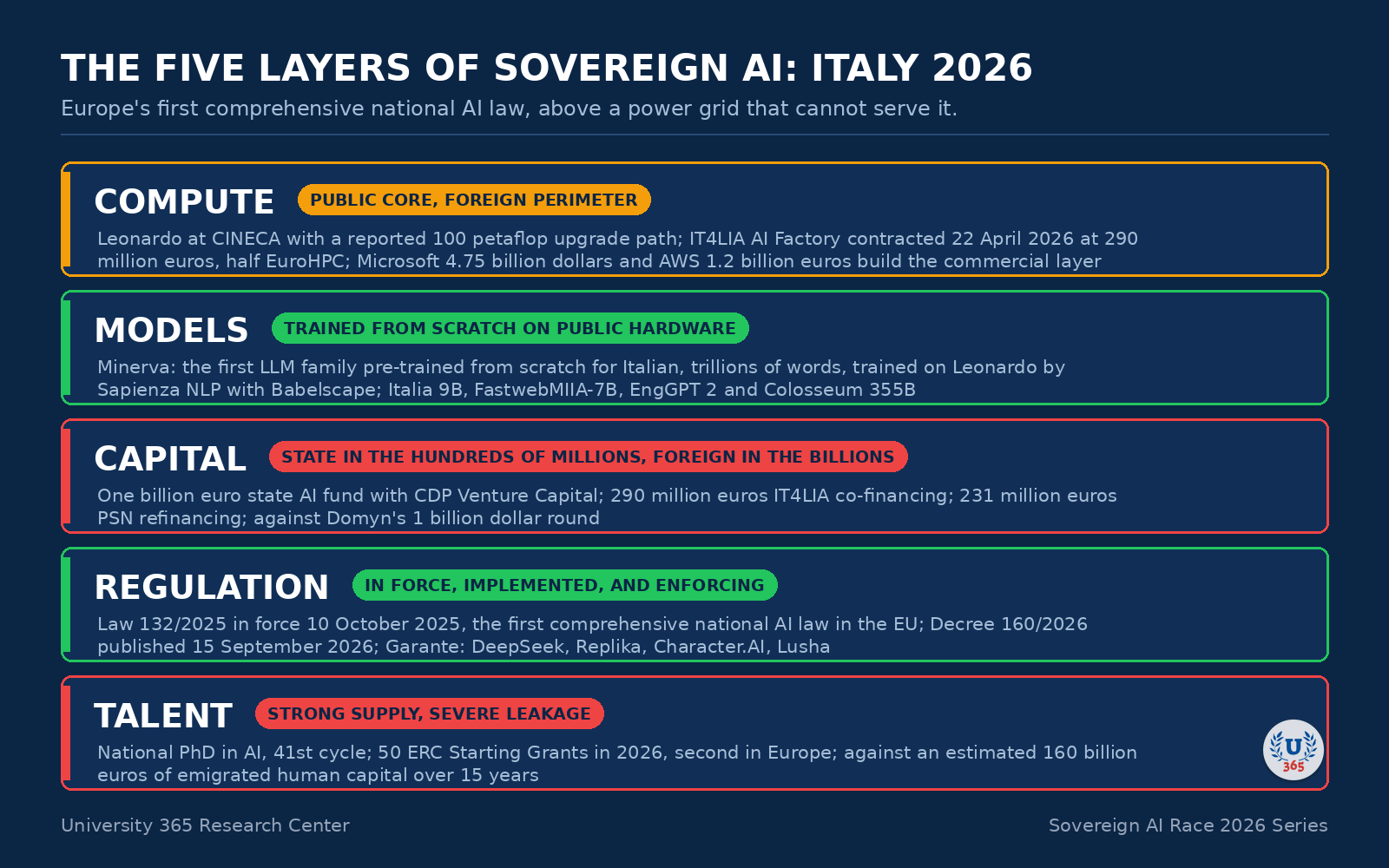
The five layers assessed. Europe's first comprehensive national AI law above a compute perimeter owned by others and a grid that cannot serve it. University 365 Research Center.
This is the fifteenth report in a twenty-part series assessing how states attempt to control the production of artificial intelligence inside their own jurisdiction. The framework is fixed and applied identically to every country. Sovereign AI capacity separates into five layers, and a state can hold any one of them without holding the others.
Compute sovereignty is the physical layer: where the chips and data centres sit, and who may switch them off. Model sovereignty is who builds the models a country depends on, and in whose languages and domains those models are competent. Capital sovereignty is who funds the build-out and on what terms. Regulatory sovereignty is who writes the rules and whether they can be enforced. Talent and education sovereignty is who builds and runs the systems, and how the next generation is prepared.
The series treats three races as running at once: the compute race, the model race and the rules race. Italy is the country where the legal race was won first and the physical race is the one in trouble. On 17 September 2025 the Senate approved Law 132/2025, and Italy became the first European Union member state with a comprehensive national AI law aligned with the European regulation. Nine months later, on 22 April 2026, the European High Performance Computing Joint Undertaking signed the contract for the IT4LIA AI Factory at Bologna, the country's EuroHPC machine, on the same campus as its flagship supercomputer. In between, the regulators began doing the work: the Garante blocked DeepSeek, fined the operator of Replika, fined Character Technologies, fined Lusha, and lost one case on jurisdiction when the Court of Rome annulled its 15 million euro order against OpenAI on 18 March 2026.
The series places Italy in the "regulator and host" posture alongside Singapore, the United Kingdom, Germany, Spain, Portugal and Bahrain, and this report tests that placement layer by layer. Italy owns a real public supercomputing base, a genuine domestic model layer that trained from scratch on Italian public hardware, the strongest privacy enforcement record in the series, and a statutory framework that is in force and is being implemented by decree. It does not own the compute that is actually being built, it does not have the electricity to power what has been announced, and its own AI market is the smallest in the series relative to its economy. The report's question is what a legal first-mover advantage is worth when the physical layer is being built by other countries' companies and connected by a grid that is already behind the applications it has received.
The vocabulary this report needs
Five terms recur, and they are defined here once.
Law 132/2025. The Italian AI law, Legge 23 settembre 2025, n. 132, "Disposizioni e deleghe al Governo in materia di intelligenza artificiale". Approved by the Senate on 17 September 2025, signed on 23 September, in force from 10 October 2025. It is the first comprehensive national AI statute in the European Union, and it aligns Italian law with Regulation (EU) 2024/1689 while adding national provisions: criminal penalties including for deepfakes, mandatory human oversight for decisions affecting citizens' rights, and server localisation requirements for public sector deployments.
The implementing decrees. Article 24 of Law 132/2025 carries a delegation under which the Council of Ministers approved two legislative decrees: preliminary approval on 10 June 2026, final approval on 4 August 2026, and publication of Legislative Decree no. 160 of 9 September 2026 in the Official Gazette, General Series no. 214. This is the text that puts the enforcement architecture in place, distributes powers, and creates the criminal provisions that matter for corporate behaviour.
ACN and AgID. The Agenzia per la Cybersicurezza Nazionale is the market-surveillance authority under the AI Act, with inspection and sanctioning powers, and the national contact point. The Agenzia per l'Italia Digitale is the notifying authority for conformity assessment bodies. AGCOM holds joint competence on media and platform matters. The sectoral regulators, notably the Garante for data protection, keep their existing jurisdiction.
The Garante. The Garante per la protezione dei dati personali is the data protection authority and, on the evidence of this research, the most active AI enforcer in the series. It acted against DeepSeek, Replika, Character.AI and Lusha under the privacy framework rather than the AI framework, which is the pattern this report treats as the country's real regulatory story.
IT4LIA. The Italian AI Factory, hosted and operated by CINECA at the DAMA Tecnopolo in Bologna, procured under a contract signed on 22 April 2026 with E4 Computer Engineering and Dell Technologies, with a total budget of 290 million euros, half of it from the EuroHPC Joint Undertaking through the Digital Europe Programme and the balance co-financed by the Italian Ministry of University and Research. Its stated peak AI inference performance exceeds 160 exaflops, a vendor and programme claim carried here as a claim.

Sovereign AI Race: Italy (2026)
The Question
Can a state be the first to legislate and the last to build?
Italy's position is unusual enough that the series' usual question has to be restated for it. Most countries in this series are trying to acquire capability and writing rules after the fact. Italy wrote the rules first, in a parliament, in a statute that entered force in October 2025, and is now discovering which of the layers underneath that statute it actually controls.
The country has three assets that most states in the series do not. It has a supercomputing tradition with real institutional depth, centred on CINECA and the Leonardo machine at Bologna. It has an academic and industrial model layer that trained Italian-language models from scratch on Italian public hardware, which is a more demanding achievement than fine-tuning a foreign base model. And it has a regulatory authority, the Garante, with a demonstrated willingness to act against the largest AI companies in the world, including one action, against DeepSeek, that was the first of its kind anywhere.
It also has three constraints that the same evidence establishes. Its compute build-out is being financed overwhelmingly by American hyperscalers and sits on infrastructure those companies own. Its data centre programme is limited by electricity: connection applications to the transmission operator rose by more than 48 per cent in one eight-month period, analysts expect demand to roughly quadruple by 2030, and the country's answer to the energy ceiling, a return to nuclear power, was approved by the Senate on 23 September 2026 with no facility expected before the 2030s. And its adoption of the technology its law governs is low by European standards, tripling in two years from a small base and still below the European Union average.
The question this report puts to the evidence is therefore not whether Italy has an AI strategy. It plainly does. The question is whether a state can convert legal first-mover advantage into sovereign capacity when the capital, the compute and the connection to the grid are all controlled by somebody else, and what it can enforce in the interval.

Sovereign AI Race: Italy (2026)
The Contradiction
The country that wrote the law first cannot power the build-out

Giorgia Meloni, President of the Council of Ministers of Italy, as of 2026. Her government carried Law 132/2025 through the Senate on 17 September 2025, approved the implementing decrees in June and August 2026, and described AI on 9 September 2026 as a challenge at the heart of government action. Photograph: Governo Italiano, CC BY 3.0 it, via Wikimedia Commons.
The central contradiction in the Italian case is between the speed of its legal system and the speed of its physical one.
Italy legislated first and enforced first. The parliament passed a comprehensive AI statute in September 2025, months before any other member state completed the exercise. The data protection authority has been fining AI companies since at least 2022, when it fined Clearview AI 20 million euros, and its 2025 and 2026 record includes DeepSeek, Replika, Character.AI and Lusha. When the implementing decrees were finalised in August 2026, the country's own press described Italy as having completed Europe's first full national implementation package for the AI Act.
Against that, the physical layer is not Italian. The two largest commitments to Italian data centre capacity in the research window come from Microsoft, at 4.75 billion dollars announced in October 2024 and commonly reported as a 4.3 billion euro Italian programme, and from Amazon Web Services, which said in November 2024 that it planned to invest 1.2 billion euros in Italy over five years on top of the Milan region it opened in 2020. The largest single Italian-announced AI supercomputer, Colosseum, was announced by iGenius in 2024 and 2025 with NVIDIA and Vertiv; by August 2026 the company was trading as Domyn, had raised more than a billion dollars in a round that was nine-tenths debt, and the machine was described as 80 NVIDIA GB200 NVL72 systems drawing about seven megawatts and rated at 115 exaflops. There is no verification in this research that the full originally announced scale was delivered.
And the physical layer has a hard constraint that no law can repeal. Applications to connect data centres to Terna's transmission grid rose by more than 48 per cent in a single eight-month reporting period, the majority of them from Lombardy. Analysts covering the market warned that Italian data centre electricity demand could roughly quadruple to 20 terawatt hours by 2030 and that grid bottlenecks could push investment to Spain instead. The European network of transmission system operators projected in April 2026 that total European data centre demand would grow by more than half between 2025 and 2030. Italy's structural answer to that ceiling is nuclear power, and the law reopening the path to it was approved by the Senate on 23 September 2026, technology-specific and oriented to small modular reactors, with the first facility not expected before the 2030s.
So the contradiction has a precise shape. Italy can fine a chatbot for processing data unlawfully today. It cannot, on any published timeline, supply a gigawatt of new electricity to the industry it wants to host before the next decade. A state whose regulatory authority moves faster than its grid is a state whose rules will govern systems other countries build, powered by electricity other countries generate.

Sovereign AI Race: Italy (2026)
The Current State
Compute: a genuine public base, and a build-out that belongs to others

Bologna. The DAMA Tecnopolo hosts CINECA's Leonardo supercomputer and is the site of the IT4LIA AI Factory, contracted on 22 April 2026 at 290 million euros with half EuroHPC funding. Minerva, Italy's first from-scratch Italian language model, was trained on Leonardo here. Photograph: Pexels License, via Pexels.
Italy's public supercomputing layer is real and institutionally deep. Leonardo, hosted at CINECA's Bologna datacentre in the Tecnopolo DAMA area, has been the country's flagship public high performance computing system through 2025 and 2026, with continuing operational upgrades, including a Slurm scheduler upgrade announced on 18 August 2026, and published best-practice guidance for running AI workloads on it through the EuroHPC application support portal. DatacenterDynamics has reported a 100 petaflops upgrade path for Leonardo in the EuroHPC context, and a separate EuroHPC-funded AI upgrade of 28 million euros to add GPUs, CPUs and high bandwidth memory; the dates of both announcements could not be verified precisely in this research window.
The IT4LIA AI Factory is the country's structural answer on the public side. On 22 April 2026 the EuroHPC Joint Undertaking signed a procurement contract with E4 Computer Engineering, an Italian high performance computing integrator based in Scandiano, and Dell Technologies to deploy the machine at the DAMA Tecnopolo in Bologna. The architecture is liquid-cooled NVIDIA GB200 NVL4, combining Grace CPUs with Blackwell GPUs and Quantum-X800 InfiniBand networking, with a dedicated European inference partition using accelerators from Axelera AI of Eindhoven and European-designed SiPearl CPUs on the VAST Data platform. The total budget is 290 million euros, half EuroHPC and half co-financed by the Italian Ministry of University and Research. The programme states more than 160 exaflops of peak AI inference performance, a claim carried as a claim here. Its service model is aimed primarily at startups and small and medium enterprises, with vertical services in agritech, cybersecurity, meteorology, climate and manufacturing. Italy's national cybersecurity agency publicised the award as placing the country among the hosts of the first European AI factories.
Beneath those public systems sits a substantial industrial computing base that is not usually counted in the AI conversation. Eni, the state-controlled energy major, opened its supercomputing capacity to outside users, and trade coverage described its systems at the Green Data Centre in Ferrera Erbognone as the most powerful computing platform owned by any company, a characterisation carried as a claim. The significance is structural: Italy has corporate high performance computing capacity that predates the current wave and that has now been offered to third parties.
The build-out that is actually happening is foreign-financed and concentrated in one region. Microsoft committed 4.75 billion dollars to Italy in October 2024, began primary and secondary construction at Bornasco in the province of Pavia on 15 September 2025, and its Italian programme is commonly reported at 4.3 billion euros. Amazon Web Services said on 7 November 2024 that it planned to invest 1.2 billion euros over five years in an expansion on top of the Milan region it opened in 2020, and Italian trade coverage in January 2026 reported the company confirming the 1.2 billion euro figure with 5,500 jobs by 2029; a unit conflict in one outlet's headline, which rendered the figure in dollars while the body rendered it in euros and Reuters rendered it as 1.3 billion dollars, is stated here rather than resolved. Reuters reported on 10 June 2026 that Lombardy, the country's economic core, had set data centre rules as Italy eyed a 22 billion euro boom, with the region seeing up to 12 billion euros of investment over five years, Puglia also bidding to become a digital hub, and Italy hosting an estimated 205 data centres. Aruba, the Italian cloud and data centre operator, activated two Megaport points of presence in its data centres on 15 June 2026 and acquired three hydroelectric plants in Italy on 9 July 2026, tying power supply directly to its data centre estate.
Two further compute assets deserve mention for what they signal rather than for what they produce. Energy Vault's 100 megawatt AI infrastructure project in Sardinia, Digital Vault Sulcis, received designation as a project of pre-eminent national strategic interest on 1 September 2026, proposed by the Ministry of Enterprise and Made in Italy with the support of the Autonomous Region of Sardinia, with an initial AI data centre of about 30 megawatts over 24 months inside a broader campus combining renewable generation and storage at a former coal mine complex. The designation is a government act and is reported as a fact here; the 100 megawatt build is the company's own scope statement and is carried as a claim. Separately, the Council of Ministers declared seven large-scale data centre programmes of pre-eminent national strategic interest in July and August 2026, representing more than 25 billion euros of planned investment by secondary reporting; the government releases of 24 July and 4 August 2026 are the primary anchors for the exact list and values, and the count and total are carried here with that qualification.
On the subsea layer, Sparkle, TIM's international arm, announced the GreenMed cable system on 11 February 2026 with Alcatel Submarine Networks and Elettra Tlc, opening a high-performance corridor across the central and eastern Mediterranean, and DE-CIX operates an internet exchange in Palermo marketed at 5 to 15 milliseconds from North Africa. Italy's physical position between Europe, Africa and Asia is real; the capacity that uses it is not, on this evidence, Italian.
Models: the strongest from-scratch layer in the series, and a thin private market

The corridor of open doors, the locked one at the end, and the supervisors who hold no key. University 365 Research Center.
Italy's model layer is the most interesting in this series because the leading Italian models were trained from scratch rather than adapted. The distinction matters analytically: fine-tuning a foreign base model produces capability but not sovereignty over the training process, the data pipeline or the tokenizer, and the series uses "open weights" and "open source" deliberately because they are not the same claim.
The clearest example is Minerva, developed by the Sapienza NLP group at the University of Rome under Professor Roberto Navigli, in collaboration with Babelscape and CINECA. The project describes Minerva as the first family of large language models pre-trained from scratch for Italian, trained on trillions of words of open-access Italian and English data, and trained on the Leonardo supercomputer. This is the strongest documented link in the country between public compute and public model capability: the same national machine that runs the country's scientific workloads trained its national language model. In June 2026 Sapienza presented ChatMinerva, described in reporting as a multimodal evolution of the model.
Beneath that academic anchor sits a commercial layer of varying depth. iGenius published Italia 9B, described as the first Italian open large language model family for public and private sector use, with a model card on Hugging Face; the company's Modello Italia, a nine-billion-parameter model aimed at public administration, was described in secondary coverage as trained from scratch on Leonardo, a training claim this research could not confirm against a primary source and carries as a claim. iGenius later launched Colosseum 355B, described as built with NVIDIA DGX Cloud infrastructure and the NVIDIA AI Enterprise platform and aimed at regulated industries, where the infrastructure is a vendor's cloud rather than Italian hardware; the launch is a fact and the quality characterisation is a vendor claim. By 2026 the company was reported as Domyn, having raised more than a billion dollars, mostly in debt, a round Sifted described as Europe's largest AI round at the time.
Fastweb published FastwebMIIA-7B, its "Modello Italiano di Intelligenza Artificiale", on Hugging Face, and Fastweb and Vodafone unveiled the NeXXt AI Factory and an Italian AI language model. Engineering Ingegneria Informatica launched IS-IA, described as an Italian architecture for governable, open and sustainable artificial intelligence built on the EngGPT 2 foundation model, a vendor description carried as a claim. Reply and Mistral AI announced a partnership on 18 March 2026 to develop sovereign and enterprise-grade AI solutions on European infrastructure, which places a European model vendor inside Italian enterprise delivery. TIM's own Italian-language model work could not be verified in this research window and is not asserted; the company appears here through Sparkle's cable programme and through its position in the national sovereign cloud.
On the European layer, CINECA is a named participant in OpenEuroLLM, the EU-supported project to build a family of large language models covering all EU official languages with published data, training sources and models. Italy's participation in the earlier EuroLLM project beyond CINECA's OpenEuroLLM role could not be verified.
The honest boundary on the Italian model layer is this: it is genuinely domestic in the sense that matters most, because part of it was built from scratch on Italian public hardware with public money, and it is thin in the sense that matters commercially, because none of the Italian laboratories is at the frontier and the domestic market on which Italian-language models would be monetised is the smallest in this series relative to the size of the economy.
Capital: state instruments in the hundreds of millions, foreign commitments in the billions

Rome. The name Colosseum was given to the AI supercomputer iGenius announced with NVIDIA and Vertiv in 2025; by August 2026 the company traded as Domyn, had raised over a billion dollars mostly in debt, and the machine was described at about seven megawatts and 115 exaflops. Photograph: Pexels License, via Pexels.
Italy's capital layer has a clear architecture and a clear scale problem.
The architecture runs through Cassa Depositi e Prestiti, the state lender, and its venture arm. The government announced an AI investment fund with an initial endowment of one billion euros, backed by CDP Venture Capital and presented by Prime Minister Meloni; CDP Venture Capital separately stated it would invest one billion euros over five years across AI and cybersecurity. The fund vehicle persists: CDP Venture Capital maintains a dedicated AI fund investing from early to late stage, and its own commentary describes the government building an organic regulatory response to AI transformation with the venture arm in a strategic role. The exact 2026 budget lines for the national AI fund and its deployment status could not be verified in this research window and are not asserted.
The second instrument is the sovereign cloud. The Polo Strategico Nazionale, the state-linked cloud provider for public administration data, was refinanced on 6 August 2026 by a pool of five Italian banks for 231 million euros, layered on 900 million euros of national recovery plan migration funds. Its financial position is not strong: a review of its accounts reported a loss of 11.4 million euros in 2024, a figure whose source is secondary and is flagged here rather than asserted against a filing. Its ownership is being consolidated around industrial champions: Reuters sources reported on 6 July 2026 that Leonardo, already holding 25 per cent, was preparing to acquire a further 10 per cent from Sogei, and that Poste was also seeking control. That is the key governance fact of the year in this layer, and the direction is consistent with the rest of Italian industrial policy: the state consolidates strategic digital assets into defence-industrial and postal-financial groups rather than leaving them with the digital agency.
The third instrument is tax. The 2026 Budget Law, Law 199/2025, introduced a hyper-amortisation mechanism for digital transformation investments including AI and Industry 5.0, with the application platform launched on 15 June 2026, and the Transizione 5.0 tax credit introduced by Decree-Law 19/2024 rewards innovation projects that combine capital goods and software with reductions in company energy consumption. Practitioner coverage describes the latter as tied to energy saving logic rather than to AI as such, which is a real limitation for a country whose AI adoption problem is concentrated in small firms.
Against those instruments, the private flows are of a different order. Domyn raised over a billion dollars in August 2026, composed of roughly ten per cent equity and ninety per cent debt. Bending Spoons, the Milan-based app company, filed for a US initial public offering in June 2026 with reports citing a target valuation around 20 billion dollars. Exein, a physical AI security company, became an Italian unicorn at a 1.7 billion dollar valuation on 16 September 2026. Milan-based AI companies raised 340 million euros in the first half of 2026, a 47 per cent increase year on year, on figures compiled by CDP Venture Capital, and national startup funding reached 652 million dollars in the first half of 2026, up 29 per cent, on Dealroom analysis released by Wave by Vento. Eureka Venture launched a 20 million euro early-stage deep tech fund in September 2026.
The scale comparison is the finding. A state that endows a fund with one billion euros and refinances its sovereign cloud with 231 million is competing for influence in a market where single private commitments to Italian infrastructure run to 4.75 billion dollars from one company, and where a single Italian company's debt round exceeds the state's headline fund. Italy is not an owner state in this layer. It is a co-investor with a board seat in a market dominated by foreign balance sheets.
Regulation: the strongest enforcement record in the series, and the statute that anchors it
This is the layer where Italy leads the series, and the report treats it as the country's principal claim to sovereign capacity.
Law 132/2025 entered into force on 10 October 2025 after Senate approval on 17 September. Its provisions include sectoral obligations and criminal sanctions for developers, deployers and public bodies, alignment with the European regulation, specific national provisions on privacy and child access, mandatory human oversight for decisions affecting citizens' rights, server localisation within national territory for sovereign security in public sector deployments, and systematic risk and data protection impact assessments. The deepfake criminal provisions are reported consistently in the legal literature; the exact article numbers and penalty ranges could not be verified to article level in this research and are not asserted.
The implementing architecture was completed in three steps in 2026. The Council of Ministers gave preliminary approval to two legislative decrees on 10 June 2026. Final approval followed on 4 August 2026. Legislative Decree no. 160 of 9 September 2026 was published in the Official Gazette, General Series no. 214, on 15 September 2026, aligning national law with Regulation (EU) 2024/1689. Content reported from the package includes mandatory training across sectors, tighter restrictions on real-time biometrics for police use, civil liability provisions, a new Article 437-bis of the Penal Code, a provision making automated dismissals void, a 100 million euro teacher-training fund, and a new offence for failing to secure or supervise high-risk AI systems with exposure of firms to advertising bans over AI-generated content offences. Those content items come from secondary analysis and are the reason the Official Gazette text is named as the primary anchor.
The institutional division of labour is specific and worth stating because it explains how the country will actually enforce. ACN is the market-surveillance authority with inspection and sanctioning powers and the national contact point. AgID is the notifying authority for conformity assessment bodies. AGCOM holds joint competence on media and platform matters, and adopted Resolution 127/26/CONS establishing a technical working group on AI, copyright and media pluralism. The sectoral regulators keep their jurisdiction, and the one that matters most on the evidence is the Garante.
The Garante's record is the most consequential part of this section. On 30 January 2025, provision 10098477, it ordered an urgent and immediately effective limitation on the processing of personal data by Hangzhou DeepSeek Artificial Intelligence and affiliates, effectively blocking the app in Italy; the action was reported internationally as the first of its kind by any regulator against DeepSeek. On 10 April 2025 it fined the operator of the Replika chatbot five million euros for processing personal data without a legal basis. On 9 July 2026 it fined Character Technologies, the operator of Character.AI, 158,000 euros over breaches including inadequate age verification on a generative AI service accessible to minors; the procedure, opened on 26 January 2026, cited failures in transparency because the privacy policy was available only in English after the Italian launch, training on user data without disclosure or a workable opt-out, and late adoption of a data protection impact assessment. On 27 July 2026 it fined Lusha two million euros. And on 18 March 2026 the Court of Rome annulled the Garante's 15 million euro fine against OpenAI, imposed in November 2024, on one-stop-shop jurisdiction grounds, which is the one loss on the record and is reported as such. The lineage predates the current wave: Clearview AI was fined 20 million euros in March 2022 with a ban on processing the biometric data of Italian data subjects. The Garante also opened an enquiry into school data, giving 20 days to supply pre-launch assessments, processing methods for pupils' and staff data, the list of participating institutes, technology suppliers and any impact assessment.
The remaining regulatory surface is thinner. The AI sandbox framework is referenced under Law 132/2025, but its operator, launch date and operational status as of September 2026 could not be verified. AgID continues to run the three-year plan for information technology in public administration and, on 22 July 2026, gave public administrations until 30 September 2026 to respond to an ICT asset census questionnaire. And the country's position on AI and copyright is channelled through the AGCOM working group and the SIAE discussions rather than through a documented decision this research could locate.
Talent: an oversubscribed pipeline, a leaking retention record and a demography problem
Italy's talent layer has the shape the series has now documented in several countries, with an Italian severity to it.
On supply, the machinery exists and is national. Italy runs a National PhD in Artificial Intelligence organised by area and cycle, with the 41st cycle covering academic year 2025 to 2026 and hosted across multiple universities. The university research base is concentrated and internationally visible: the ELLIS network has Italian units including the University of Modena and Reggio Emilia, where Professor Rita Cucchiara leads the AIRI laboratory, and the FAIR programme, the national recovery plan funded AI research initiative, held its closing general conference in Rome presenting three years of national research, implying the funded period has ended. Sapienza hosts the Minerva development. The Ministry of Education and Merit issued guidelines on the use of AI in schools on 12 November 2025, reported through the European Commission's Eurydice network, and the implementing decrees carry a 100 million euro teacher-training fund.
On outcomes, the country's own data is severe. The value of human capital emigrating from Italy over the previous fifteen years was estimated at approximately 160 billion euros in a June 2026 report whose underlying study is not named in the available coverage and is therefore carried as an estimate. The Proxima Observatory's 2026 education and employment report found Italy last in Europe for employment among 20 to 29-year-olds, and the coverage describes the country as ill-prepared for the AI transition. Against that, Italy won 50 European Research Council Starting Grants in the 2026 round, the second largest national contingent among the 421 awarded, a result that coverage noted exposes the retention problem rather than solving it, and the European Union allocated some 75 million euros for 50 young Italian researchers in September 2026.
The demographic layer is the deepest constraint. Italy continues to lose population to falling birth rates, with immigration now the only factor preventing real demographic decline on the latest migration data. The national strategy's own framing acknowledges that AI's productivity contribution is partly a response to a shrinking workforce, which places the education question in a specific form for this country: the state needs AI adoption to compensate for workers it will not have, and it is training specialists who leave for markets that pay them more.
On the instruments for inflow, Italy transposed the European single-permit directive via Legislative Decree 83/2026, published on 20 May 2026, and formalised a digital nomad visa in Article 27-quater of the Immigration Code through a joint ministerial decree in April 2026. Specific Italian AI talent programmes targeting Latin American or Mediterranean cohorts could not be verified in this research window.
What changed since our April 2025 report on Italy
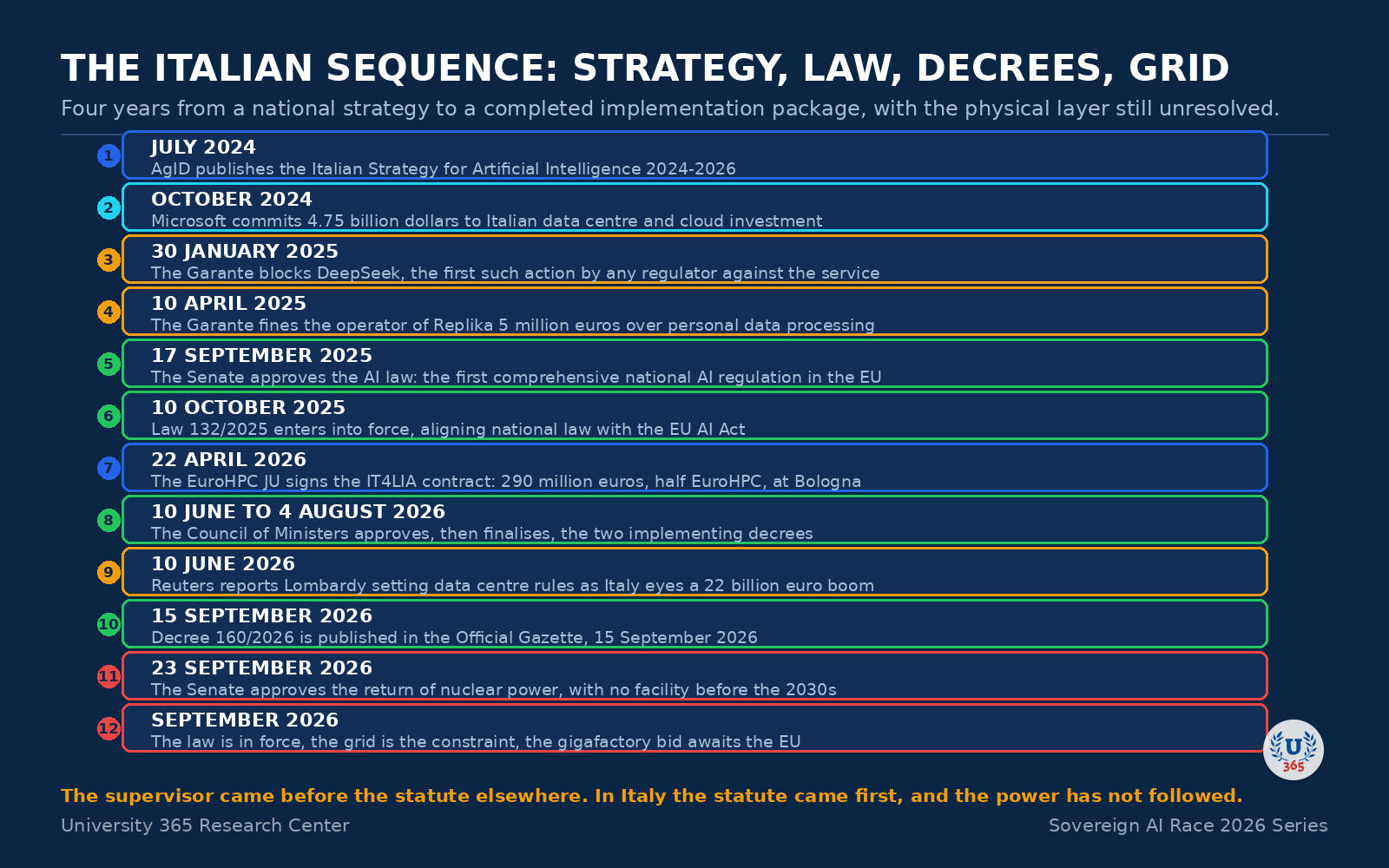
The Italian sequence: strategy, enforcement, law, decrees, and the grid still unresolved. University 365 Research Center.

Read the earlier report: Italy's AI Renaissance: A Comprehensive Analysis of the Nation's Artificial Intelligence Landscape. University 365 INSIDE, 22 April 2025.
University 365 published "Italy's AI Renaissance: A Comprehensive Analysis of the Nation's Artificial Intelligence Landscape" on 22 April 2025. That report was written as the country's strategy, its one billion euro fund and its nascent model layer were coming together, and it captured a country in the build-up phase with real momentum in specific domains. Against that baseline, seventeen months have delivered a legislative first, a regulatory record and a stalled physical layer.
The legal position changed completely, and this is the report's largest update. The April 2025 report described the Italian Strategy for Artificial Intelligence 2024-2026, published by AgID on 22 July 2024, as the operative framework and noted that the government had committed to crafting AI-specific legislation. Between that report's date and this one, the Senate approved Law 132/2025 on 17 September 2025, the law entered force on 10 October 2025, and the implementing decrees completed on 4 August 2026 with publication in the Official Gazette on 15 September 2026. The country that was described as intending to legislate is now the first European Union member state with both a comprehensive national AI law and a completed implementation package.
The model layer moved from description to artefacts, and one figure needs correcting. The April 2025 report described Minerva as building on pre-trained multilingual models with specialised training on Italian data and more than 500 billion words. The primary project sources describe Minerva as the first family of large language models pre-trained from scratch for Italian, trained on trillions of words, on the Leonardo supercomputer. The from-scratch character is the more significant claim, and it is the one the project itself makes; this report uses the project's own description. The report's description of Modello Italia as a collaboration between iGenius and CINECA aimed at automating public administration remains consistent with secondary coverage, and the training-on-Leonardo detail is still not confirmed by a primary source in this research window. What is genuinely new since April 2025 is the commercial layer: Colosseum 355B, Fastweb's MIIA-7B, Engineering's EngGPT 2 and IS-IA, and the Reply partnership with Mistral AI.
The compute numbers moved in opposite directions. The April 2025 report recorded the Italian supercomputing base and the announced Colosseum programme. The verified position now is that the IT4LIA AI Factory contract was signed on 22 April 2026 at a 290 million euro budget, half EuroHPC funded, with a stated but unverified 160-plus exaflop inference target; that Colosseum's operator renamed itself Domyn, raised over a billion dollars mostly in debt in August 2026, and describes the machine at 80 systems, roughly six thousand Grace Blackwell chips, about seven megawatts and 115 exaflops; and that the announced capacity still exceeds the delivered capacity. On the private side, Microsoft's 4.75 billion dollar commitment and AWS's 1.2 billion euro expansion are the two facts the earlier report anticipated in general terms and can now be dated precisely.
The adoption position moved materially and the reporting needs its base stated. The April 2025 report quoted an increase from 5.7 per cent of companies using AI in 2021 to 11.4 per cent in 2024, an adoption gap between large enterprises at 24.1 per cent and small and medium enterprises at 7.7 per cent, and sector spending led by banking at 173.6 million euros. The current position from national statistics is that the share of Italian companies using at least one AI technology more than tripled between 2023 and 2025 from 6 per cent to 16.4 per cent on the 2026 annual report basis, with a separate and near-identical measure of 15.7 per cent of small and medium enterprises for 2025 in the December 2025 release against 7.7 per cent in 2024. Both figures are carried with their universes, because they measure different populations and the difference matters.
The market size figures in the April 2025 report and the current sources do not reconcile, and the conflict is stated rather than resolved. The earlier report gave the market as 435 million euros in 2022, 674 million in 2023 and 909 million in 2024, with a projection to 1.802 billion euros by 2027. Current sources give the Italian AI market as over four billion euros, with one commentary giving 1.8 billion for 2025 and describing generative AI as 46 per cent of the total, and another framing 1.2 billion with growth split between large companies and small ones. The definitions behind those numbers differ and this report does not choose between them; the range is the finding.
Two numbers the earlier report carried are restated with their correct status. The productivity claim that generative AI could increase Italian productivity by up to 18 per cent and generate up to 312 billion euros of added value annually is a modelling estimate from consultancy work, not a measurement, and it is carried here as an estimate rather than as a projection of fact. The claim that Italy could save approximately 21.74 billion euros annually by implementing AI in healthcare is likewise an estimate, and the adoption context the earlier report noted, that only 26 per cent of Italian healthcare companies planned to invest in AI in 2023, is consistent with a sector that has not yet absorbed the opportunity.
The genuinely new items since April 2025 are these. Law 132/2025 and the implementing decrees, including Decree 160/2026. The IT4LIA contract, signed on the day the earlier report was published. The Garante's 2026 enforcement wave: the Character.AI fine, the Lusha fine, and the Court of Rome's annulment of the OpenAI order. The Polo Strategico Nazionale refinancing and the Leonardo and Poste consolidation. The seven strategic data centre designations in July and August 2026, more than 25 billion euros on secondary reporting. Energy Vault's Sardinia designation. The Senate's approval of the nuclear return on 23 September 2026. Domyn's billion dollar round, Bending Spoons' IPO filing and Exein's unicorn valuation. The India, Italy and Kenya AI trilateral and the seven African AI partnerships signed in Bologna on 17 June 2026 under the Mattei Plan framework. The Anthropic Milan office opened on 27 May 2026. And the grid: the 48 per cent surge in connection applications, and the analysts' warning that Italy's bottleneck could push investment to Spain.

Sovereign AI Race: Italy (2026)
Key Findings
1. Italy is the first European Union member state with a comprehensive national AI law, and the law is in force. Law 132/2025 was approved by the Senate on 17 September 2025, signed on 23 September and in force from 10 October 2025. It aligns national law with Regulation (EU) 2024/1689 and adds national provisions including criminal penalties for deepfakes, mandatory human oversight for decisions affecting citizens' rights, and server localisation for public sector deployments.
2. The implementation is complete to the level of the Official Gazette. The Council of Ministers approved two legislative decrees on 10 June 2026, gave final approval on 4 August 2026, and Legislative Decree no. 160 of 9 September 2026 was published on 15 September 2026 in the Official Gazette, General Series no. 214. Content reported from the package includes a teacher-training fund of 100 million euros, tighter restrictions on real-time police biometrics, civil liability provisions, an offence for failing to secure high-risk AI systems, and advertising-ban exposure for firms over AI-generated content offences.
3. The enforcement architecture is distributed and the sectoral regulators were enforcing first. ACN is the market-surveillance authority with inspection and sanctioning powers and the national contact point; AgID is the notifying authority; AGCOM holds joint competence on media and platform matters; the sectoral regulators keep their jurisdiction. The Garante is the authority with the record: DeepSeek blocked on 30 January 2025, Replika fined five million euros on 10 April 2025, Character.AI fined 158,000 euros on 9 July 2026, Lusha fined two million euros on 27 July 2026, and the 15 million euro OpenAI order annulled by the Court of Rome on 18 March 2026 on jurisdiction grounds.
4. The public model layer trained from scratch on Italian public hardware, which is the strongest such case in this series. Minerva, from the Sapienza NLP group with Babelscape and CINECA, is described by its project as the first family of large language models pre-trained from scratch for Italian, trained on trillions of words on the Leonardo supercomputer. Italia 9B, FastwebMIIA-7B, EngGPT 2 and the Colosseum 355B model sit around it, with differing degrees of verified domestic provenance.
5. The public compute base is real and the build-out is foreign. IT4LIA, contracted on 22 April 2026 at 290 million euros with half EuroHPC funding and a stated 160-plus exaflop inference target carried as a claim, joins Leonardo at CINECA. Against it: Microsoft's 4.75 billion dollar commitment and its 4.3 billion euro Italian programme, AWS's 1.2 billion euro expansion on top of the Milan region, Lombardy's 12 billion euro five-year outlook inside a 22 billion euro national frame, and 205 estimated data centres. The state's own recent compute instruments are a 231 million euro refinancing for the sovereign cloud and a one billion euro fund.
6. The binding constraint is electricity, and the answer arrives in the 2030s. Connection applications to Terna rose by more than 48 per cent in an eight-month period, mostly from Lombardy; analysts warned demand could roughly quadruple to 20 terawatt hours by 2030 with bottlenecks pushing investment to Spain; and the Senate approved the return of nuclear power on 23 September 2026 with no facility expected before the 2030s.
7. The sovereign cloud is being recapitalised and consolidated around industrial champions. Five banks refinanced the Polo Strategico Nazionale for 231 million euros on 6 August 2026 on top of 900 million euros of recovery plan migration funds; the company reported a loss of 11.4 million euros in 2024 on a secondary source that is flagged; and Reuters sources reported on 6 July 2026 that Leonardo, already at 25 per cent, was preparing to take a further 10 per cent from Sogei with Poste also seeking control.
8. Private capital re-rated in 2026 and the state is the smaller counterparty. Domyn raised over a billion dollars, nine-tenths of it debt, in August 2026; Bending Spoons filed for a US listing in June 2026 with reports citing a 20 billion dollar target valuation; Exein became a unicorn at 1.7 billion dollars on 16 September 2026; Milan AI companies raised 340 million euros in the first half of 2026, up 47 per cent year on year; national startup funding reached 652 million dollars in the same half. The state's headline AI fund is one billion euros.
9. Talent supply is real, retention is the problem, and demography is the pressure. The National PhD in AI runs across universities with the 41st cycle in 2025 to 2026; ELLIS has Italian units and FAIR closed its funded period; Italy won 50 ERC Starting Grants in 2026, second in Europe. Against it: an estimated 160 billion euros of emigrated human capital over fifteen years, last place in Europe for employment among 20 to 29-year-olds, and a population that declines without immigration.
10. Adoption is rising from a low base and the European benchmark flatters nobody. Domestic statistics show company AI use rising from 6 per cent in 2023 to 16.4 per cent in 2025, with a 15.7 per cent small and medium enterprise figure for 2025 against 7.7 per cent in 2024. The European Union average was 19.95 per cent of enterprises with ten or more employees in 2025, with a size gradient from 17 per cent for small firms to 30.36 per cent for medium ones, and almost eight in ten Italian small and medium enterprises have only basic digital intensity.
11. The honest overall verdict: Italy is the series' legal first mover with the series' most constrained physical layer. It legislated first and enforced first, and it is the only country in the series whose model layer trained a national language model from scratch on national public compute. Its compute build-out is owned by American hyperscalers, its data centres cannot get the electricity they need before the 2030s, and its domestic market is small enough that the Italian-language models it built have few Italian buyers. On this evidence the country has bought first position in the rules race, holds a genuine but narrow position in the model race, and is a tenant in the compute race.

Sovereign AI Race: Italy (2026)
Deep Analysis
Why the implementation gap is the fact that matters most in this report
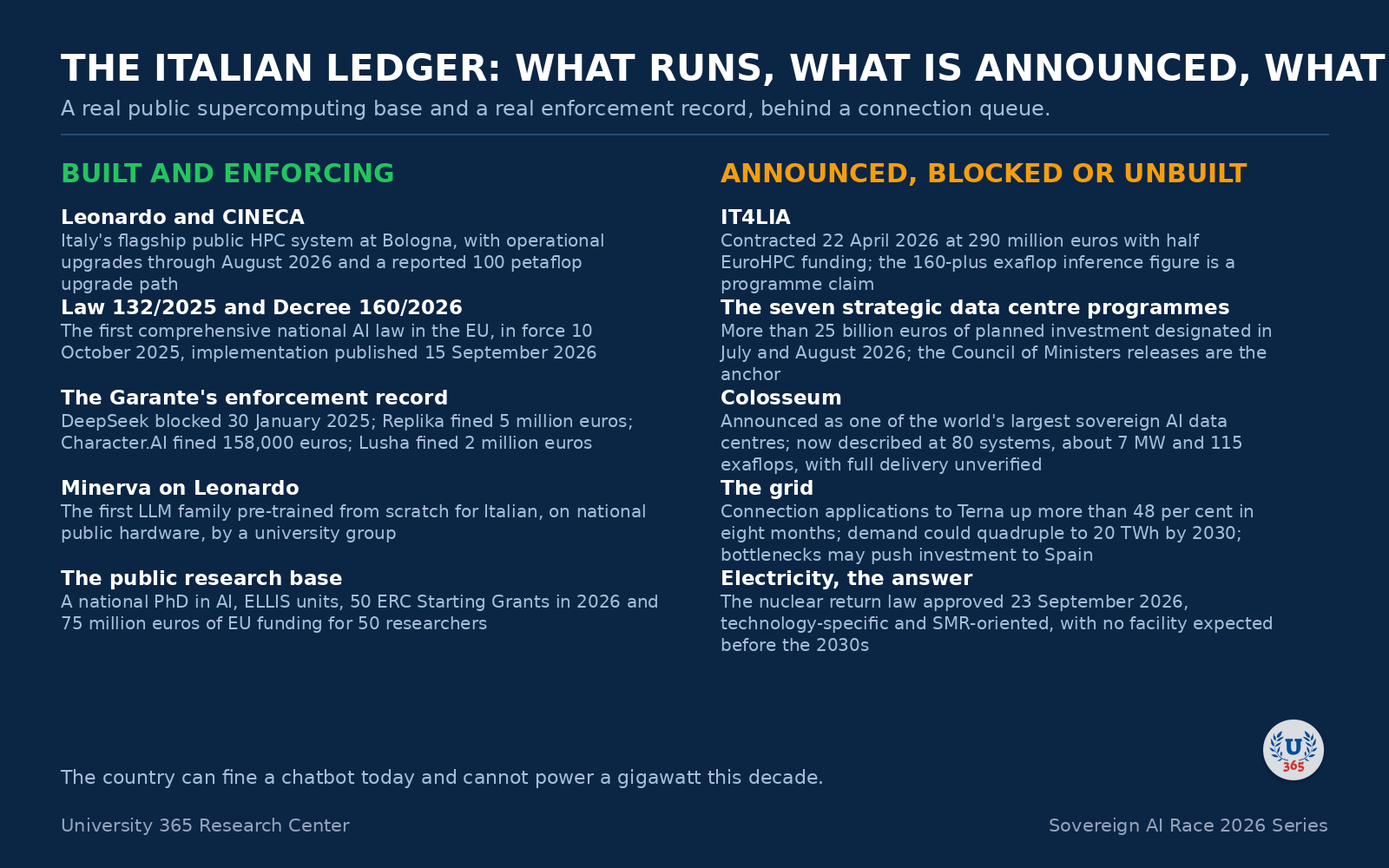
What runs and enforces, against what is announced or blocked. University 365 Research Center.
Italy's case is easy to tell in two wrong ways. One telling says the country is Europe's regulatory leader: first comprehensive AI law, first completed implementation package, the toughest privacy enforcer in the Union. The other says the country is a nation of declarations: a law with no compute behind it, a supercomputer programme that keeps being announced, a data centre boom that cannot get connected. Both tellings cite real facts, and the difference between them is what the law is actually for, which is where this series' five-layer frame does its work.
Start with what the statute can do. Law 132/2025 and Decree 160/2026 give Italian authorities a defined framework, a designated market-surveillance body with inspection and sanctioning powers, criminal provisions that reach corporate conduct, mandatory human oversight rules for public sector decisions affecting rights, and localisation requirements that shape what the state itself may procure. Those are not statements of intent; they are operative instruments, and the enforcement record that surrounds them, mostly from the Garante under the privacy framework but with the AI framework now available, is the densest in this series.
Now measure what the statute governs. Italy's AI capacity is overwhelmingly foreign-owned at the compute layer, thin at the frontier model layer, small at the capital layer by comparison with the flows it attracts, and low in adoption by European standards. A perfect statute applied to a small domestic industry produces a small domestic effect. This is the mechanism the report wants to be precise about: regulatory sovereignty is the power to shape behaviour inside the jurisdiction, and its value scales with the size and the importance of the activity inside the jurisdiction. A regulator with excellent instruments and a small regulated population has a real asset and a bounded one.
The comparison that sharpens this is with the countries the series has already covered. Spain built the supervisor before the statute and is waiting for the statute. Germany has the industrial base and writes its rules through a European framework with national regulators. The United Kingdom has the research base and lost its flagship compute project to a tenant's pause. Italy differs from all three in one respect: it has both the instruments and the record, and it has the smallest private AI market relative to the size of its economy of any large country in the series. That is why its law has not, on this evidence, produced an Italian compute build-out, an Italian frontier laboratory or an Italian adoption curve above the European average. Law is necessary for sovereignty and it is not sufficient for capacity.
There is a further point that this report treats as the strongest evidence in the country's favour. The Garante's enforcement wave reached companies headquartered in the United States and China, in a market where the country has no authority over those companies' domestic conduct, and it produced changes in behaviour: DeepSeek's service was unavailable in Italy, the Replika operator paid, Character.AI paid. A state with a small market and a strong regulator can still impose costs. That is a real form of sovereignty, it is the one Italy holds most securely, and it is the one most countries in this series do not have at all.
The grid as the sovereign constraint, and what a 2030s answer means
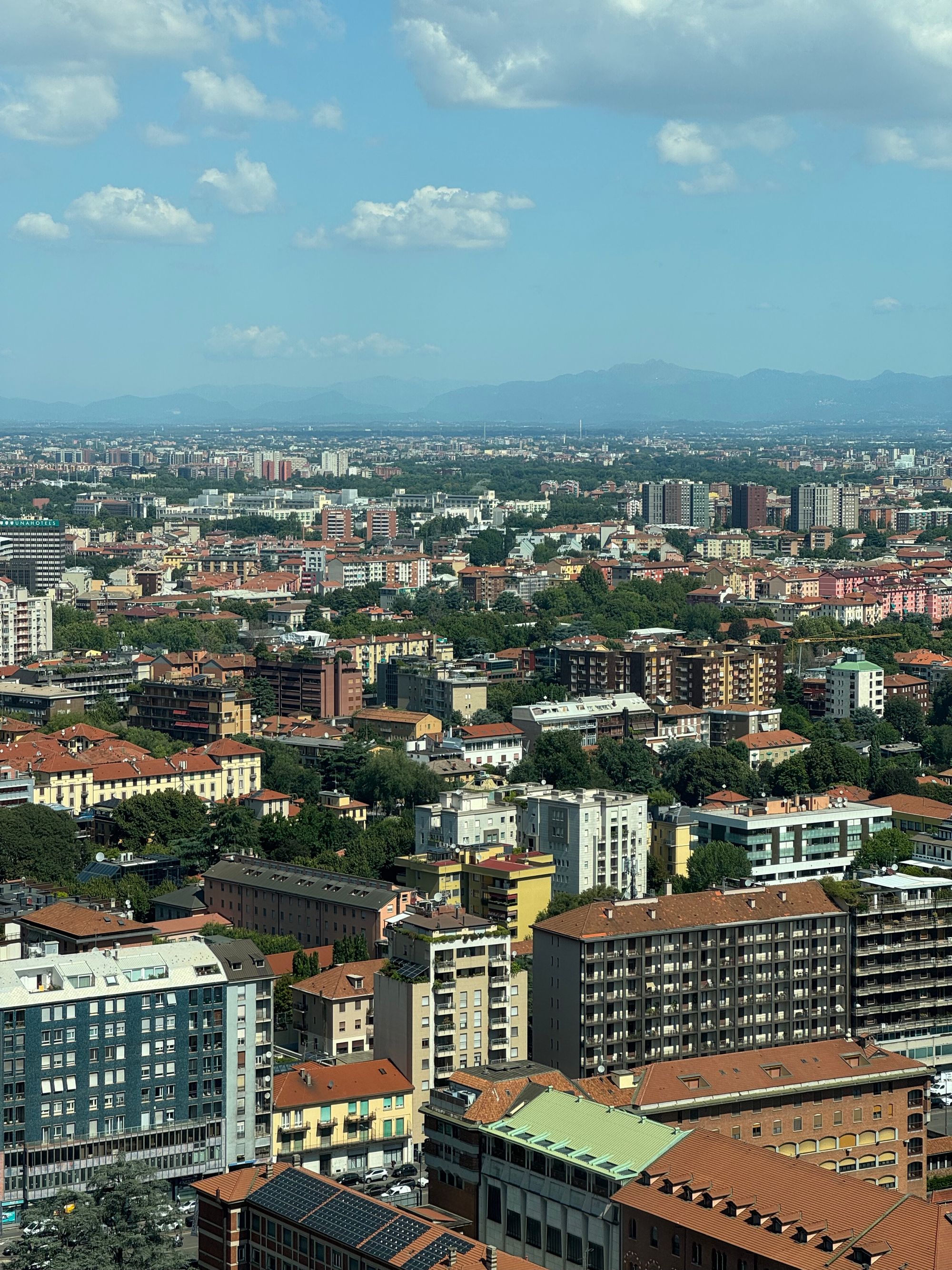
Milan. Lombardy is the centre of the Italian data centre market and the source of most connection applications to the Terna grid, up more than 48 per cent in one eight-month reporting period. Milan-based AI companies raised 340 million euros in the first half of 2026. Photograph: Pexels License, via Pexels.
The most consequential fact in the Italian physical layer is not the size of any single data centre project. It is the timing of the electricity.
The evidence is consistent across sources. Applications for data centre connections to Terna, the transmission system operator, surged by more than 48 per cent in a single eight-month reporting window, with the majority originating in Lombardy. Analysts covering the market warned that Italy's data centre power demand could roughly quadruple to 20 terawatt hours by 2030, and that grid bottlenecks could push investment toward Spain and other markets. The European network of transmission system operators projected in April 2026 that total European data centre electricity demand would grow by more than half between 2025 and 2030, concentrated in metropolitan hubs. And Italy's structural answer, a return to nuclear generation after nearly four decades, was approved by the Senate on 23 September 2026 with a technology-specific design oriented to small modular reactors and with the government's own expectation of a first facility in the 2030s.
Four consequences follow, and they are the analytical content of this section.
First, the timing mismatch is longer than a political cycle. A data centre built in 2027 and connected in 2030 is a different asset from one connected in 2027, and the announced pipeline in Lombardy and elsewhere is priced on the assumption of speed. The Italian government's answer to that problem is procedural rather than physical: the strategic-interest designations for seven data centre programmes, and the special commissioner mechanism visible in the Sardinia case, compress permitting. They do not create electricity. Compressing approvals into a grid that is behind on connections changes the queue order, not the queue.
Second, the constraint redistributes the build toward the places where power already exists. Energy Vault's Sardinia project is at a former coal mine complex with an existing industrial connection, which is not a coincidence; Aruba bought hydroelectric plants, which is a power strategy dressed as a property transaction; and the regions with the best renewable resource and the weakest existing demand are the ones with room. This is a legitimate strategy, and it is also a strategy that pushes compute away from the population centres where the users and the skilled workforce are.
Third, the constraint weakens the negotiating position of a state that wants to attach conditions to foreign investment. In a market where the state needs the capacity more than the builders need the site, the terms of the deal favour the builder. The report does not assert that any particular commitment was made on unfavourable terms; it observes that the structural asymmetry points that way, and that the state's own instruments in this layer, a 231 million euro cloud refinancing and a one billion euro fund, are small relative to the 4.75 billion dollars one company has committed.
Fourth, the nuclear answer, whatever its merits, arrives after the current wave of build-out has been decided. The first Italian SMR of the 2030s will serve the second phase of the country's AI infrastructure, not this one. The country's answer to the energy question is therefore correct in the long run and unavailable in the short, which is the definition of a strategic position that has to be judged on a decade.
The three races, measured in Italy
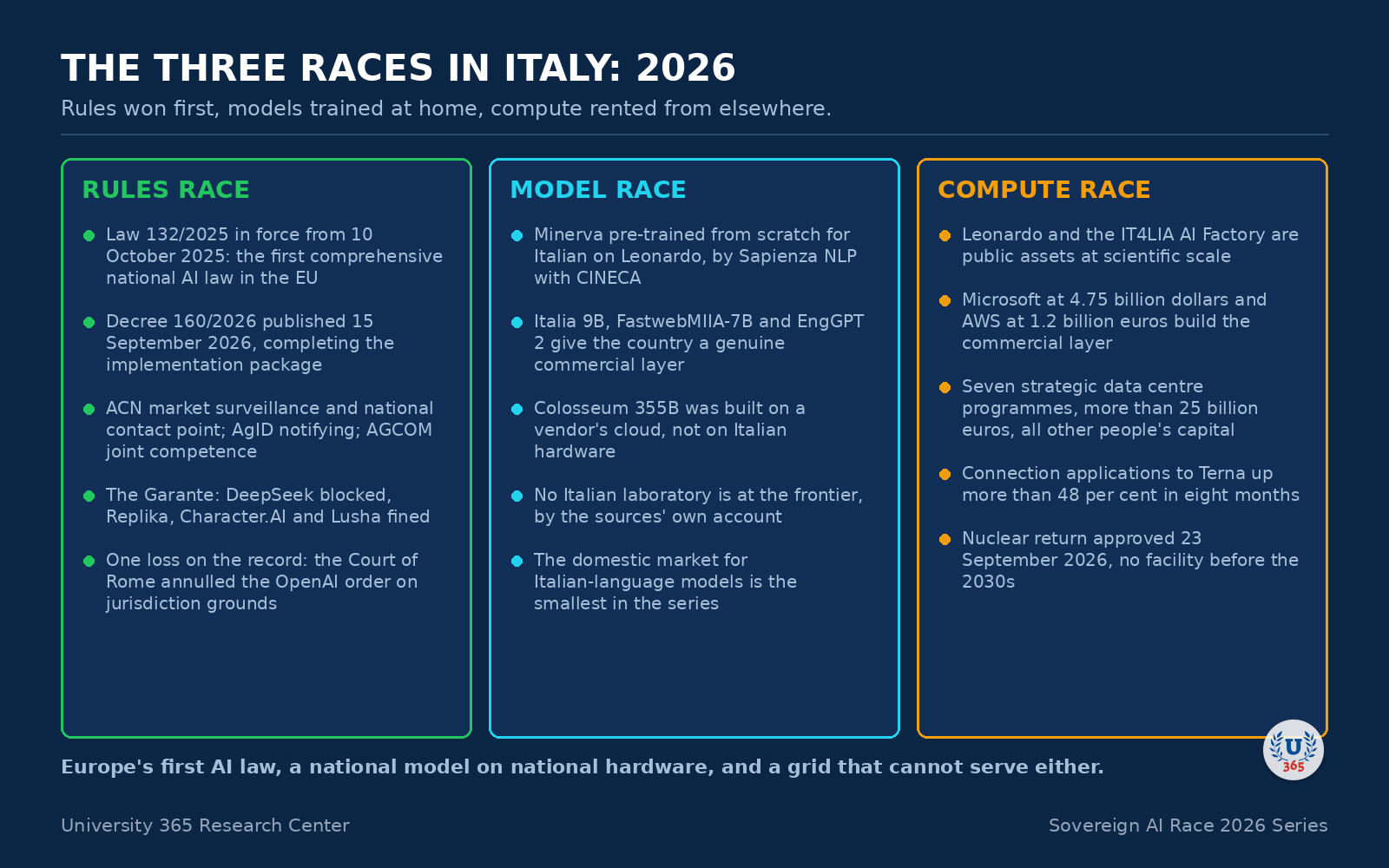
The three races in Italy, run at three different speeds. University 365 Research Center.
The series separates the compute race, the model race and the rules race. Italy is the country where the three are running at the most different speeds and with the most different owners, and the pattern is clean enough to state.
In the rules race, Italy leads the series and runs on its own. Law 132/2025, Decree 160/2026, the ACN and AgID and AGCOM split, and the Garante's record against DeepSeek, Replika, Character.AI and Lusha are domestic instruments applied domestically. The country has moved from legislating to enforcing inside twelve months, which no other state in this series has done at that pace.
In the model race, Italy runs second in its own weight class and on public hardware. Minerva's from-scratch training on Leonardo is the strongest link in the series between national compute and national model capability, and it required no foreign cloud. The commercial layer around it is thinner and partly foreign-dependent: Colosseum 355B was built using a vendor's cloud, Fastweb's Italian-language work used Amazon SageMaker, and the Mistral partnership imports a French frontier vendor into Italian enterprise delivery. Italy built the small, hard part itself and buys the large, easy part.
In the compute race, Italy is a tenant. Leonardo and IT4LIA are public systems at scientific scale; the megawatt-scale capacity that serves commercial AI workloads is Microsoft's, Amazon's and the hyperscaler pipeline's. The state's most recent instruments in this race are permits and a refinancing, not construction. The measure of the gap is that the country's own strategic designation programme, at more than 25 billion euros of planned private investment across seven projects, is larger than every public compute instrument the state has assembled, and it is entirely other people's capital.
The three tempos produce the report's cleanest summary of Italy. A country that wrote the best rules in Europe, trained the most original model in the series from scratch on its own supercomputer, and cannot connect the data centres that would use either.

Sovereign AI Race: Italy (2026)
Data and Evidence
Table 1: The five layers, assessed for Italy in September 2026
Layer | What Italy holds | What it does not hold | Assessment |
Compute | Leonardo at CINECA's Bologna datacentre with continuing operational upgrades and a reported 100 petaflop upgrade path; IT4LIA, the EuroHPC AI Factory, contracted 22 April 2026 at 290 million euros with half EuroHPC funding and a stated 160-plus exaflop inference target (claim); Eni's industrial high performance computing opened to outside users; Microsoft's 4.75 billion dollar commitment and 4.3 billion euro programme at Bornasco; AWS's 1.2 billion euro expansion on the Milan region; seven strategic data centre designations over July and August 2026 (more than 25 billion euros on secondary reporting); Energy Vault's Sardinia designation at an initial 30 megawatts on a 100 megawatt scope (company claim) | Ownership of the commercial build-out; delivered capacity at the scale announced (Colosseum's full original scope unverified); the electricity to power what is proposed before the 2030s; leadership in fabrication, with the Catania pilot line at regional rather than national scale | A genuine public scientific base and a foreign-owned commercial build, limited by the grid |
Models | Minerva and ChatMinerva, pre-trained from scratch for Italian by Sapienza NLP with Babelscape and CINECA on Leonardo; Italia 9B with a Hugging Face model card and Modello Italia (training detail a claim); Colosseum 355B built on vendor cloud infrastructure; FastwebMIIA-7B published on Hugging Face; Engineering's EngGPT 2 and IS-IA (vendor architecture); OpenEuroLLM participation through CINECA | A frontier laboratory; a permissively licensed flagship with verified full domestic provenance; a domestic market large enough to monetise Italian-language capability; verified TIM model work | The strongest from-scratch national model layer in the series, commercially thin |
Capital | A one billion euro state AI fund announced and backed by CDP Venture Capital; CDP Venture Capital's one billion euro five-year commitment; the Polo Strategico Nazionale refinanced at 231 million euros on 900 million euros of recovery plan funds; hyper-amortisation under Law 199/2025 and the Transizione 5.0 credit; 290 million euros co-financing for IT4LIA; Milan AI raises at 340 million euros in H1 2026 and national startup funding at 652 million dollars | A sovereign wealth fund; state capital at the scale of the foreign flows it attracts (one company's 4.75 billion dollar commitment and one company's billion dollar debt round each exceed the headline fund); verified 2026 deployment status of the national AI fund | A co-investor state in a market owned by foreign balance sheets |
Regulation | Law 132/2025 in force from 10 October 2025, the first comprehensive national AI law in the EU; implementing decrees approved 10 June and 4 August 2026 with Legislative Decree 160/2026 published 15 September 2026; ACN as market-surveillance authority and national contact point, AgID as notifying authority, AGCOM with joint competence; the Garante's enforcement record against DeepSeek, Replika, Character.AI and Lusha; the AI Act applying directly; sectoral regulators retaining jurisdiction | The reported deepfake penalty articles verified to article level; the AI sandbox's operator and launch; a documented AI copyright decision; a fully staffed and published enforcement statistics regime | The strongest regulatory position in the series, applied to a small domestic market |
Talent and education | The National PhD in AI with the 41st cycle in 2025 to 2026; ELLIS units including Modena and Reggio Emilia; the FAIR programme completed; 50 ERC Starting Grants in 2026, second in Europe; 75 million euros of EU funding for 50 young researchers; MIM school AI guidelines of 12 November 2025; a 100 million euro teacher-training fund in the implementing decrees; the single-permit transposition and the digital nomad visa | Retention: an estimated 160 billion euros of emigrated human capital over fifteen years and last place in Europe for 20 to 29 employment; a domestic demand base able to absorb the graduates it produces; verified National PhD intake and funding figures for the current cycles | A strong academic supply chain in a country that loses people |
Table 2: The controlled metrics, series bible format
Metric | Italy position | Source and date |
Flagship compute commitment | IT4LIA AI Factory, hosted and operated by CINECA at the DAMA Tecnopolo Bologna: procurement contract signed 22 April 2026 with E4 Computer Engineering and Dell Technologies, total budget 290 million euros, 50 per cent EuroHPC through the Digital Europe Programme and the balance co-financed by the Ministry of University and Research, NVIDIA GB200 NVL4 with a European inference partition on Axelera AI and SiPearl silicon, stated peak AI inference above 160 exaflops (programme claim, vendor-derived). Leonardo at CINECA remains the installed flagship with a reported 100 petaflop upgrade path and a separate 28 million euro EuroHPC AI upgrade (announcement dates unverified) | EuroHPC Joint Undertaking, 22 April 2026; HPCwire AIwire, 22 April 2026; CINECA HPC centre news, 18 August 2026; DatacenterDynamics |
Capital committed | State: one billion euro AI fund announced with CDP Venture Capital backing; CDP Venture Capital at one billion euros over five years across AI and cybersecurity; 290 million euros co-financing for IT4LIA; 231 million euros PSN refinancing on 900 million euros of recovery plan funds. Private foreign: Microsoft 4.75 billion dollars (October 2024), commonly reported as a 4.3 billion euro Italian programme; AWS 1.2 billion euros over five years on top of the Milan region. Private domestic: Domyn over one billion dollars (August 2026, roughly 10 per cent equity and 90 per cent debt); Bending Spoons' US IPO filing with reports citing a 20 billion dollar target (June 2026); Exein at a 1.7 billion dollar valuation (16 September 2026); Milan AI raises of 340 million euros in H1 2026 | Reuters; Microsoft; Reuters, 7 November 2024; Sifted, 20 August 2026; Reuters, 8 June 2026; Euronews, 16 September 2026; dailymilan.news, 4 July 2026 |
Flagship national models | Minerva and ChatMinerva, Sapienza NLP with Babelscape and CINECA, described by the project as the first family of large language models pre-trained from scratch for Italian, trained on trillions of words on Leonardo; Italia 9B (Hugging Face model card); Modello Italia (training on Leonardo carried as a claim); Colosseum 355B on NVIDIA DGX Cloud and NVIDIA AI Enterprise infrastructure; FastwebMIIA-7B (Hugging Face); EngGPT 2 and IS-IA (Engineering, vendor description) | Sapienza NLP and minerva-ai.org; Hugging Face model cards; NVIDIA and secondary coverage for Colosseum 355B; Engineering, April 2026 |
Anchor entities | CINECA (compute); ACN (market surveillance and national contact point); AgID (notifying authority and digital strategy); AGCOM (joint competence); the Garante (data protection enforcement); CDP and CDP Venture Capital (state capital); the Polo Strategico Nazionale with Leonardo, Poste and Sogei (sovereign cloud); MIMIT and MUR (industrial and research programmes) | ACN; AgID; Garante; CDP Venture Capital; Reuters, 6 July 2026; Normattiva |
Chip dependency | Complete at the accelerator layer: Leonardo, IT4LIA and the announced private campuses all run on NVIDIA and other foreign silicon, with IT4LIA's European inference partition using Axelera AI and SiPearl silicon at pilot scale; no leading-edge fabrication on Italian soil; the Catania microchip pilot line is regional and part-funded within a reported 198 million euro programme; Chips Act 2.0 would extend European pilot lines | EuroHPC JU, 22 April 2026; Regione Siciliana; European Commission Chips Act 2.0 proposal as mirrored |
Regulatory instrument and status | In force: Law 132/2025 (10 October 2025); Legislative Decree 160/2026 published 15 September 2026; Regulation (EU) 2024/1689 applying directly; the GDPR enforced by the Garante. Institutional split: ACN market surveillance and national contact point, AgID notifying authority, AGCOM joint competence, sectoral regulators retaining jurisdiction. Not verified: the AI sandbox's operator and launch status; article-level deepfake penalty ranges | Normattiva consolidated text of Decree 160/2026; Garante provisions and press releases; EuroHPC JU; AgID; secondary legal analysis flagged as such |
Talent anchors | The National PhD in Artificial Intelligence (41st cycle, 2025 to 2026, organised by area and hosted across universities); ELLIS units including the University of Modena and Reggio Emilia; Sapienza and the Minerva group; Politecnico di Milano; the FAIR programme (funded period closed); 50 ERC Starting Grants in 2026 | Universita Campus Bio-Medico call, 2025 to 2026; Sapienza; ELLIS and UniMoRe; Fondazione FAIR; ERC 2026 results as reported |
Independent index standing | Oxford Insights Government AI Readiness Index 2025: Italy 25th of 195 with an overall score of 68.81. The publisher's January 2026 report prints the rank and the six pillar scores and no overall column, so the overall is recomputed from its own published pillar weights (Policy Capacity 10 per cent, AI Infrastructure 25, Governance 15, Public Sector Adoption 15, Development and Diffusion 25, Resilience 10), a method that reproduces all nine overall scores the report states in its narrative exactly. Italy's Policy Capacity pillar score is 69.50. The same edition carries the note that the December 2025 publication contained incorrect scores and rankings which the January 2026 report corrects. Stanford HAI AI Index 2026 Italy-specific metrics were not extracted in this research window and are not asserted | Oxford Insights Government AI Readiness Index 2025, January 2026 report and full rankings table |
Adoption | Domestic statistics: the share of Italian companies using at least one AI technology rose from 6 per cent in 2023 to 16.4 per cent in 2025 on the annual report basis, with a separate measure of 15.7 per cent of small and medium enterprises for 2025 against 7.7 per cent in 2024 on the December 2025 release. European benchmark: 19.95 per cent of EU enterprises with ten or more employees used AI in 2025, with small firms at 17 per cent and medium firms at 30.36 per cent. Digital maturity: almost eight in ten Italian small and medium enterprises have only basic digital intensity against an EU average of 71.4 per cent, and 7.3 per cent reach the very high level against 9.1 per cent | ISTAT annual report 2026 and Imprese e ICT 2025 as summarised; Eurostat as analysed; the digital maturity observatory 2026 |
Distinguishing mechanism | Legislative first mover: the first comprehensive national AI law in the European Union, in force, implemented by decree, and paired with the most active AI enforcement record in the series from a sectoral privacy regulator, above a compute layer that is foreign-owned and a grid that cannot serve the announced pipeline before the 2030s | This report |
Core tension | The country that wrote the strictest national AI rules in Europe cannot supply the electricity its AI industry needs before the 2030s, and the models it trained from scratch on public hardware have the smallest domestic market in the series to sell into | This report |
Table 3: Timeline, 2022 to 2026
Date | Event | Source |
9 March 2022 | The Garante fines Clearview AI 20 million euros and bans processing of the biometric data of Italian data subjects | Garante press room |
22 July 2024 | AgID publishes the Italian Strategy for Artificial Intelligence 2024 to 2026 | AgID |
October 2024 | Microsoft commits 4.75 billion dollars to Italian data centre and cloud investment | Microsoft; Reuters |
7 November 2024 | AWS announces a 1.2 billion euro Italian expansion over five years on top of the Milan region | Reuters, 7 November 2024 |
November 2024 | The Garante fines OpenAI 15 million euros over ChatGPT and orders a six-month public information campaign | Wilson Sonsini case note |
16 January 2025 | Reuters reports Italian data centres expected to add 10 billion euros of investment across 2025 and 2026 | Reuters, 16 January 2025 |
23 to 24 February 2025 | UAE State Visit to Italy; the Italy-UAE Joint Statement is issued on 24 February | Governo Italiano; UAE Ministry of Foreign Affairs |
30 January 2025 | The Garante orders an urgent limitation on DeepSeek's processing of personal data, effectively blocking the app in Italy | Garante provisions 10098477 and 10097450; Reuters |
10 April 2025 | The Garante fines the operator of Replika 5 million euros | Garante order 10130115 |
22 April 2025 | Vertiv announces the iGenius Colosseum AI data centre collaboration with NVIDIA | Vertiv; Engineering.com |
22 April 2025 | University 365 publishes its Italy AI landscape report | University 365 INSIDE |
15 June 2025 | Proxima Observatory reporting places Italy last in Europe for 20 to 29 employment (date of coverage approximate) | Il Sole 24 Ore as reported |
20 June 2025 | Italy and the European Commission issue a joint press release on the Mattei Plan and the EU Global Gateway | Governo Italiano |
15 September 2025 | Microsoft begins primary and secondary construction at Bornasco in the province of Pavia | Microsoft |
17 September 2025 | The Senate approves the AI law; Reuters reports Italy becomes the first EU country with comprehensive AI regulation aligned with the AI Act | Reuters, 17 September 2025 |
23 September 2025 | Legge 23 settembre 2025, n. 132 is signed | JuLIA legislation database |
10 October 2025 | Law 132/2025 enters into force | Secondary legal coverage |
7 November 2025 | The Polo Strategico Nazionale publishes its Wave 3 Quater migration notice for public administrations | PSN notices |
12 November 2025 | The Ministry of Education and Merit issues AI-at-school guidelines, reported by Eurydice | Eurydice; MIM |
15 December 2025 | ISTAT publishes Imprese e ICT 2025: 15.7 per cent of small and medium enterprises use at least one AI technology against 7.7 per cent in 2024 | ISTAT as summarised |
20 January 2026 | The EuroHPC mandate is expanded under Council Regulation (EU) 2026/150 with AI Gigafactory pillars | EuroHPC JU, 20 January 2026 |
26 January 2026 | The Garante opens the procedure that leads to the Character.AI findings | Regulations.ai case summary |
11 February 2026 | Sparkle, Alcatel Submarine Networks and Elettra Tlc announce the GreenMed subsea cable system | International Telecoms Week, 11 February 2026 |
18 March 2026 | The Court of Rome annuls the Garante's 15 million euro fine against OpenAI on one-stop-shop jurisdiction grounds | Wilson Sonsini; case notes |
18 March 2026 | Reply and Mistral AI announce a sovereign enterprise AI partnership | BusinessWire, 18 March 2026 |
April 2026 | Engineering launches IS-IA built on the EngGPT 2 foundation model | Engineering, April 2026 |
April 2026 | Italy formalises the digital nomad visa in Article 27-quater of the Immigration Code | VisaHQ; Remote Work Europe |
22 April 2026 | The EuroHPC Joint Undertaking signs the IT4LIA contract with E4 Computer Engineering and Dell: 290 million euros, half EuroHPC, NVIDIA GB200 NVL4, stated 160-plus exaflops inference | EuroHPC JU, 22 April 2026 |
20 May 2026 | Legislative Decree 83/2026 transposing the EU single-permit directive is published | VisaHQ, 21 May 2026 |
27 May 2026 | Anthropic opens its Milan office, its sixth in Europe | Anthropic, 27 May 2026 |
8 June 2026 | Bending Spoons files for a US IPO with reports citing a 20 billion dollar target valuation | Reuters, 8 June 2026 |
10 June 2026 | Reuters reports Lombardy setting data centre rules as Italy eyes a 22 billion euro boom, with the region seeing up to 12 billion euros over five years and Italy hosting an estimated 205 data centres | Reuters, 10 June 2026 |
10 June 2026 | The Council of Ministers gives preliminary approval to two implementing decrees under Law 132/2025 | Studio Legale Stefanelli; DLA Piper |
15 June 2026 | Aruba and Megaport activate two points of presence in Aruba data centres | Aruba press kit |
15 June 2026 | The hyper-amortisation 2026 platform launches under Law 199/2025 | Practitioner coverage |
17 June 2026 | Seven partnerships between African AI innovators and Italian and European industry leaders are signed at Tecnopolo DAMA, Bologna | UNDP Rome Centre, 17 June 2026 |
20 June 2026 | Industry Minister Urso says the Italian AI gigafactory candidacy may be defined in the coming weeks | Adnkronos coverage, 20 June 2026 |
6 July 2026 | Reuters sources report Leonardo preparing to acquire a further 10 per cent of the Polo Strategico Nazionale from Sogei, with Poste also seeking control | Reuters via Channel News Asia, 6 July 2026 |
9 July 2026 | The Garante fines Character Technologies 158,000 euros over breaches including age-check failures on a generative AI service accessible to minors | Garante, 9 July 2026; Reuters |
9 July 2026 | Aruba acquires three hydroelectric plants in Italy | Reuters via MarketScreener, 9 July 2026 |
17 July 2026 | The 26th Franco-German Ministerial Council references binational AI research between DFKI and INRIA | Elysee, 17 July 2026 |
22 July 2026 | AgID opens the ICT asset census with administrations given until 30 September 2026 to respond | AgID, 22 July 2026 |
24 July 2026 | The Council of Ministers declares two data centre programmes of pre-eminent national strategic interest worth 8 billion euros | Secondary reporting citing Council of Ministers releases |
27 July 2026 | The Garante fines Lusha 2 million euros | Garante English press room |
4 August 2026 | The Council of Ministers gives final approval to the two AI Act implementing decrees and declares two further strategic data centre programmes worth 6.8 billion euros | Secondary legal and industry coverage |
6 August 2026 | Five Italian banks refinance the Polo Strategico Nazionale for 231 million euros on top of 900 million euros of recovery plan migration funds | Institutional press analysis, 6 August 2026 |
6 August 2026 | Reporting counts seven large data centre programmes of pre-eminent national strategic interest representing more than 25 billion euros, including Equinix and K2 Strategic | Industry reporting, 6 August 2026 |
20 August 2026 | Domyn, formerly iGenius, raises over one billion dollars, mostly in debt, described as Europe's largest AI round at the time | Sifted, 20 August 2026 |
1 September 2026 | Energy Vault's Digital Vault Sulcis project in Sardinia is designated a project of pre-eminent national strategic interest, with an initial 30 megawatt AI data centre on a 100 megawatt scope | Energy Vault investor release, 1 September 2026 |
3 September 2026 | ANSA reports 75 million euros from the EU for 50 young Italian researchers | ANSA, 3 September 2026 |
9 September 2026 | Legislative Decree no. 160 of 9 September 2026 is signed | Normattiva |
9 September 2026 | Prime Minister Meloni describes AI as a challenge at the heart of government action with extraordinary potential but enormous risks | LaPresse, 9 September 2026 |
15 September 2026 | Legislative Decree 160/2026 is published in the Official Gazette, General Series no. 214, aligning national law with Regulation (EU) 2024/1689 | Normattiva; secondary analysis |
16 September 2026 | Exein becomes an Italian unicorn at a 1.7 billion dollar valuation | Euronews, 16 September 2026 |
23 September 2026 | The Senate gives final approval to the law reopening the path to nuclear power, technology-specific and oriented to small modular reactors | AP and syndications, 23 September 2026 |
September 2026 | The AI law is in force with its implementation package complete; the grid remains the binding constraint on the announced data centre pipeline; the gigafactory candidacy awaits the European decision | As cited above |

Sovereign AI Race: Italy (2026)
Implications
For the countries still to come in this series
Italy offers a lesson about sequence and a warning about physics. The lesson is that legislating first is worth doing, and it is worth more than it looks: the country that writes its rules early arrives at enforcement with a practiced regulator, a defined institutional split and a body of casework, and the Garante's record shows that a small market does not prevent a determined authority from imposing costs on foreign platforms. The warning is that a statute is an instrument for shaping conduct, and conduct requires something to shape. Countries that write their AI law before they have an AI industry will discover that the law's practical reach is proportional to the activity inside their borders, and that the three things that determine the size of that activity, capital, compute and electricity, are not legislated into existence. The specific lesson for any country with a data centre pipeline and a strained grid is the Italian one: the connection queue, not the permit queue, is the binding constraint, and a state that reforms permitting without addressing generation and transmission has moved the bottleneck rather than removed it.
For the technology providers
Italy is a market where the rules are clear, the demand is growing from a low base, and the physical constraints are the deciding variable. Providers should read four signals. First, the regulatory environment is settled and enforceable, so compliance work is a live market rather than a preparation for one: the AI Act applies, the national statute is in force, the implementing decrees are published, and the supervisory split is known. Second, the permitting environment is unusually favourable for data centre investment right now, because the state has designated seven programmes as strategic and can appoint commissioners, which shortens the administrative path; that advantage is real and it is bounded by the connection queue behind it. Third, the model layer has a genuinely competitive public incumbent for Italian-language workloads in Minerva and the Italian open models, which compresses pricing for anyone selling Italian-language capability into public sector and research markets. Fourth, the Italian enterprise market is the least penetrated in Western Europe relative to its economic weight, which means the opportunity is in adoption services for small and medium firms rather than in infrastructure or frontier capability, and the tax instruments that exist, hyper-amortisation and the Transizione 5.0 credit, are structured around capital and energy investments rather than around subscription or service spending.
For institutional and enterprise buyers
Italy offers buyers a clear legal environment and an uncertain supply chain, and the two should be evaluated separately. On the legal side, buyers operating in Italy now have something rare in this series: a national statute in force with declared enforcement bodies, which makes compliance planning tractable and makes the Italian market a reasonable place to run high-risk deployments under supervision. On the supply side, buyers should assume that commercial AI compute in Italy will be provided by foreign-owned operators on foreign parents' terms, that new capacity may be delivered later than announced because of grid constraints, and that the state's own cloud instrument, the Polo Strategico Nazionale, is a public sector vehicle rather than a commercial one. For buyers with Italian-language or Italian-citizen data requirements, the domestic open models are a genuine option, and their Apache and open-weight licence terms are more permissive than most commercial alternatives. The gap a buyer should plan around is depth of local support: the Italian provider base is strong in systems integration and weak in frontier model capability, so contracts should name escalation paths that reach outside Italy.
For University 365
Italy is the fifteenth country in this series and the clearest case so far of a country that solved the legal problem and has not solved the human one, which is precisely the terrain this institution works on. The country has the institutions, the statute, the research base and an oversubscribed pipeline that produces AI specialists it cannot keep: an estimated 160 billion euros of emigrated human capital over fifteen years, last place in Europe for employment among 20 to 29-year-olds, and 50 ERC Starting Grants won in a year in which retention remained the complaint. That combination has a specific educational shape. A state that needs AI to compensate for a shrinking workforce, and that trains specialists for other countries' markets, has an adoption problem before it has a talent problem, and adoption problems are solved by teaching judgement to people who are not technologists rather than by producing more technologists. The Italian case is the strongest evidence in this series for the proposition that the value of AI education at national scale sits with the majority of workers who will use these systems under supervision, and that the professionals who build them will go where the market pays, whatever the country's universities do. That is a lesson our own learners can act on, and it is worth naming plainly rather than dressing the Italian record as a supply problem.

Sovereign AI Race: Italy (2026)
Education and Skills Impact
What the Italian case teaches about a first-class pipeline and a leaking bucket
This series returns in every report to the gap between using AI and building it, because that gap is where the educational argument lives. Italy adds the sharpest case of a country whose education system is not the constraint.
The supply evidence is strong and it is Italian. The National PhD in Artificial Intelligence is organised nationally by area and cycle, with the 41st cycle covering the 2025 to 2026 academic year, and it is hosted across the university system rather than concentrated in one institution. The research base beneath it is internationally visible: ELLIS maintains Italian units including the University of Modena and Reggio Emilia, Sapienza's Minerva project trained the country's first from-scratch Italian language model on the national supercomputer, and the FAIR programme, funded through the national recovery plan, closed its three-year funded period having assembled researchers and companies from across the country. Italy won 50 European Research Council Starting Grants in the 2026 round, the second largest national contingent among the 421 awarded across Europe, and the European Union directed 75 million euros to 50 young Italian researchers in September 2026.
The retention evidence is equally strong and points the other way. The value of human capital emigrating over the previous fifteen years has been estimated at approximately 160 billion euros, a figure whose underlying study this research could not name and which is therefore carried as an estimate. The Proxima Observatory's 2026 report placed Italy last in Europe for employment among 20 to 29-year-olds, and the coverage of that finding described the country as ill-prepared for the AI transition. The grant results are themselves part of the pattern: a country that wins the second-largest share of Europe's most competitive early-career research funding, and simultaneously reports a structural outflow of its graduates, is producing talent at a rate its own market does not absorb. That is a matching and pay-structure problem, not an education problem, and the series has now documented its Spanish, Indian, Moroccan, Korean and Japanese forms; Italy adds the European demographic variant, in which the market that fails to absorb the graduates is also shrinking.
The adoption evidence closes the loop. Italian firms use AI at a lower rate than the European average, with almost eight in ten small and medium enterprises at only basic digital intensity and fewer than one in thirteen at the very high level. Companies that adopt shallowly do not need deep specialists, which is the demand-side half of the retention problem: the vacancies that would keep the graduates exist in principle, and the firms that would create them are not yet organised to need them.
The Italian case also offers a specific and unusual instrument worth naming. The implementing decrees approved in August 2026 carry a 100 million euro teacher-training fund, in a country whose Ministry of Education issued national guidelines on the use of AI in schools on 12 November 2025. That is the state spending on the education of the people who teach the majority, rather than only on the minority who will build. On the evidence of this series, that is the allocation more countries should make and fewer do.
The finding for this series sharpens into its Italian form. A curriculum produces capability; a labour market decides whether the capability stays, and how deeply the businesses around it use what the capability can build. Italy graduates AI specialists, wins European research grants, trains them on a national supercomputer, and reports that they leave. It also trains its teachers in AI and legislates for oversight of automated decisions, which is the part of the education problem that countries more often solve last. The two facts sit together without contradiction: this is a country making the right educational investments in the wrong order relative to its labour market.

Sovereign AI Race: Italy (2026)
The CI-First Perspective
Where the Italian capability is real, and where the law outruns the capacity
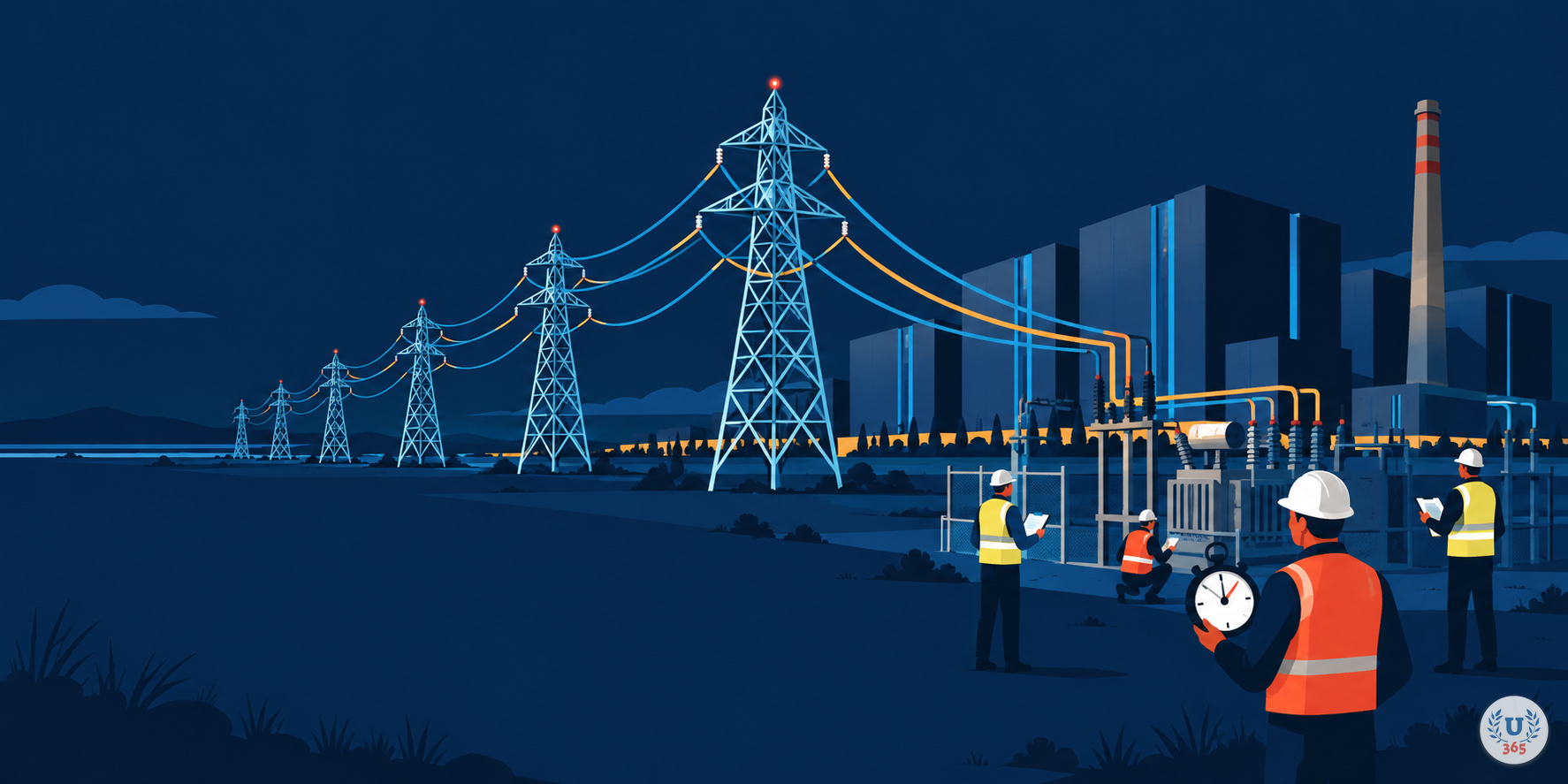
The pylons, the halls, and the stopwatch. University 365 Research Center.
The Co-Intelligence First framework asks whether an arrangement amplifies human capability or substitutes for it, and where the risk of AI Imposture sits. Applied to Italy, the verdict is that the capability is real and narrow, that the regulatory achievement is genuine and larger than the country's capacity to be regulated, and that the imposture risk sits in one specific place: the gap between what has been announced at gigawatt and multi-billion-euro scale and what has been connected to a grid.
The capability is real at three layers, and each has a concrete artefact. At the model layer, Minerva is the strongest evidence in this series that a mid-sized European state can train a national language model from scratch on its own public hardware with its own academics: not a fine-tune of an American base, not a vendor deployment, but a pretraining run on Leonardo by a university group with a research consortium behind it. At the compute layer, CINECA's Leonardo and the IT4LIA AI Factory are functioning public assets with European co-funding, and the IT4LIA procurement deliberately includes a European inference partition using European-designed silicon, which is an attempt to build a non-American path inside a machine that is otherwise American-silicon. And at the regulatory layer, the country's institutions do work that can be observed: the Garante has imposed costs on DeepSeek, Replika, Character.AI and Lusha, the government has published an implementation package, and the institutional split between ACN, AgID, AGCOM and the sectoral regulators is defined rather than aspirational.
The imposture risk is specific and it is a presentation risk rather than a fabrication. Italy's data centre programme is described in terms, 25 billion euros across seven programmes, 12 billion euros in one region, 22 billion nationally, that describe other companies' planned investment rather than national capability, and the state's own contribution to the same layer is measured in permits, a 231 million euro refinancing and a one billion euro fund. The Colosseum machine is the clearest case: announced in 2024 and 2025 as one of the world's largest sovereign AI data centres, now described at about seven megawatts and 115 exaflops with roughly six thousand Grace Blackwell chips, with no verification available in this research that the full originally announced scale was delivered. That is not a false claim by any party, and it is a large gap between the announcement and the delivered article. The report treats it as the Italian version of a pattern the series has documented in several countries, and it is milder here than elsewhere because the Italian state is not the party making the inflated claim: the announcements belong to companies, and the state's own documents are, in this report's sample, notably careful about distinguishing approved projects from operating ones.
The exposure is the grid, and this is the fact that matters most in the CI-First reading. A state can write whatever rules it likes about human oversight of automated decisions, and those rules will apply to systems that run on electricity. Italy's electricity for the AI wave arrives, on the government's own timeline, in the 2030s. In the interval, the country's supervisory architecture will be applied to capacity built by companies headquartered elsewhere, powered by a grid that has not been expanded for them, and monetised in a domestic market that is the smallest in this series relative to the size of the economy. That is a coherent position, and it is a position of influence rather than of capability.
The CI-First verdict on Italy is this. It is the series' clearest example of a state that legislated for amplification before it built anything to amplify: its institutions are designed for a world in which AI systems make decisions about citizens and must be supervised, and it has built real supervisory capacity before it has the industry that would need supervising. Its population's protection from AI harm runs ahead of its population's access to AI benefit. On the evidence, that is a defensible choice and a costly one, and the two facts a reader should carry away are that Italy can fine a chatbot today and cannot power a gigawatt before the 2030s.

Sovereign AI Race: Italy (2026)
What This Means for You and Us
For a reader in a country with Italy's position
If your country has a strong research base, a small domestic AI market and a grid that is already behind its connection queue, Italy is the case to study, and four practices are worth copying exactly. Legislate early, because the enforcement body you build will be more capable by the time it matters and because the casework accumulates while the industry is still small. Train a national model on national hardware if you have public supercomputing at all, because that is the only way the capability stays in your universities rather than in your vendors' cloud tenancy. Give the supervisory mandate to an authority that already knows how to investigate, because in Italy the data protection regulator was enforcing while the AI framework was still being drafted. And fund the training of the people who will use these systems as well as the people who will build them, which is what the teacher-training allocation in the Italian decrees does. One practice deserves a warning: do not read a strategic designation programme as a capacity programme. Permits can be granted faster than power can be generated, and the announcements a country makes about other companies' investment are not the same asset as the capacity those companies operate.
For a reader watching the series
Fifteen countries in, Italy completes the European quartet with the United Kingdom, Germany and Spain and sharpens the series' emerging finding. All four host compute they do not own, and all four have research bases larger than their AI industries. They differ in what they own instead. The United Kingdom owns its research and its legal tradition; Germany owns its industrial base and its data protection culture; Spain owns a public multilingual model and a supervisory institution; Italy owns the strongest enforcement record in the series and a from-scratch national model on public hardware. The series' finding is now stable enough to state across fifteen reports: sovereignty in AI is the ownership of at least one layer that others cannot substitute, and the layers that can be owned by a mid-sized state without a hyperscaler balance sheet are the regulatory layer, the public model layer built on public compute, and the educational layer. Italy holds the first two and is losing the third, which makes it the clearest illustration in the series of the proposition that sovereignty is a portfolio rather than a position.
For University 365
Italy is the fifteenth country in this series and the first whose central problem is the one this institution addresses most directly, because its constraint is not knowledge but adoption. The country legislated for a supervised AI economy, trained a national model, funded a national doctorate, and reports that its firms use the technology at below the European average while almost eight in ten of its small and medium enterprises have only basic digital intensity. Those firms do not lack information about AI; they lack the judgement to deploy it under supervision, which is a teachable capability and the one the Co-Intelligence First approach is built around. There is also a straightforward institutional lesson in the Italian sequence for our own work: the country that wrote the rules first is spending the next phase teaching its teachers, which is the correct order for a society and an expensive one for a government. Our learners should read the Italian case as evidence that the regulatory and the educational tracks can be run in parallel, and that the population which benefits first from a strong AI law is the population that understands what the law is protecting.

Sovereign AI Race: Italy (2026)
The Road Ahead
Three observable things would change this assessment.
Whether the announced data centre capacity gets connected, and when. The numbers to watch are Terna's published connection queue and the actual commissioning dates of the seven strategically designated programmes, particularly the large Lombardy campus and the Sardinia project. The government's current instruments, strategic designation and commissioners, accelerate permitting. If the first of those programmes reaches commercial operation before 2029, the country will have demonstrated that a permitting reform can pull the physical layer forward despite the generation constraint, and the analysis in this report would need to be revised upward. If the announcements continue to accumulate while commissioning slips past 2030, the constraint is generation rather than administration, and Italy will spend the decade as a rule-maker for capacity that is built and powered elsewhere.
Whether the nuclear law produces power on a useful timeline. The Senate approved the return of nuclear generation on 23 September 2026 with a technology-specific design oriented to small modular reactors. The observable milestones are the implementing decrees, the licensing framework and the first site authorisation. A first facility in the early 2030s changes the Italian compute story materially, because it converts the country's AI strategy from a regulatory play into an integrated one. A first facility in the late 2030s or later leaves the current wave of hyperscaler investment as the country's AI compute base for its entire useful life, with no state ownership lever at all.
Whether the domestic model layer finds a market and whether its builders stay. The figures to watch are the deployment of Minerva and the Italian open models into public administration and regulated industries, the survival and re-rating of the commercial players after the 2026 financing wave, and the retention numbers that will show whether the country keeps the specialists its universities produce. The Minerva route, public compute to public model to public deployment, is the only one in this series that converts a national supercomputer into national capability; if the Italian state buys its own model at scale, the route is proven. If the models are published and unused while their authors leave, the country will have built the capability and sold none of it.

Sovereign AI Race: Italy (2026)
Sources and Methodology
Methodology
This report was researched from public sources with a preference for primary documents: the Official Gazette and the Normattiva consolidated text of Legislative Decree 160/2026; Law 132/2025 and its parliamentary record; the Garante's provisions and press releases, including provision 10098477 on DeepSeek and the Character.AI release of 9 July 2026; the EuroHPC Joint Undertaking's IT4LIA contract release of 22 April 2026 and its mandate expansion under Council Regulation (EU) 2026/150; the Oxford Insights Government AI Readiness Index 2025 as published in January 2026, including its full-rankings table; the AgID strategy and census notices; the Polo Strategico Nazionale's own notices; the European Commission's Digital Decade country report and STEP material; the ENTSO-E data centre report of 30 April 2026; the Ministry of University and Research and MIMIT releases; the Oxford Insights dataset; and the Italian and international press for everything else. Government targets, claimed investment totals and vendor figures are labelled as claims, and where sources conflict the conflict is stated rather than resolved: the two near-identical Italian adoption measures of 16.4 per cent of companies and 15.7 per cent of small and medium enterprises for the same period; the four renderings of the Italian AI market's size; the AWS investment figure, which Reuters renders in euros and one Italian outlet's headline renders in dollars; the count and total of the seven strategic data centre programmes, carried from secondary reporting with the Council of Ministers releases named as the primary anchor; and the two Oxford Insights publications of December 2025 and January 2026, the later of which the publisher itself states corrects incorrect scores in the earlier edition.
This report carries the series' "What Changed Since" treatment against the prior University 365 report, "Italy's AI Renaissance: A Comprehensive Analysis of the Nation's Artificial Intelligence Landscape", published on 22 April 2025. Five specific items from the earlier report are carried through the comparison with their corrections or their updated values: the legal position, which moved from an intention to legislate to a law in force with its implementation complete; the description of Minerva, which the project's own sources state was pre-trained from scratch on trillions of words rather than built on pre-trained multilingual models, and which this report corrects toward the primary source; the compute numbers, with Colosseum's original scale still unverified; the adoption figures, restated on the national statistical bases; and the market size figures, which do not reconcile with the current sources and are carried as a stated conflict. The standard applied to the earlier report is whether its statements were accurate as of their date, and where a figure described a modelling estimate, the estimate is labelled rather than repeated as a measurement.
Five limits should travel with this report. First, the Italy-UAE joint statement of 24 February 2025 is recorded as a diplomatic instrument; the AI content beneath it and any 2026 deliverables were not verifiable in this research window and are not asserted. Second, the AI sandbox's operator and launch status under Law 132/2025 could not be verified, and the report says so rather than describing a sandbox it cannot place. Third, the national PhD intake and funding figures for the current cycles were not verified, so the report describes the programme and not its size. Fourth, the deepfake penalties are reported consistently in the legal literature but not to article level here, and the Official Gazette text is named as the anchor for any precise citation. Fifth, several load-bearing figures rest on single or secondary sources and are labelled individually: the Polo Strategico Nazionale's reported 2024 loss, the 160 billion euro emigration estimate whose originating study could not be named, the 100 petaflop Leonardo upgrade path whose announcement date could not be verified, and the count of seven strategic data centre programmes.
Principal sources
Government, regulatory and judicial. Normattiva: the consolidated text of Decreto Legislativo 9 settembre 2026, n. 160, and the Official Gazette record of 15 September 2026; the Garante per la protezione dei dati personali: provision 10098477 and press release 10097450 on DeepSeek (30 January 2025), order 10130115 on Replika (10 April 2025), the Character.AI release of 9 July 2026, the English press room record of the Lusha fine of 27 July 2026 and the Clearview AI action of 2022; the Corte dei conti's PNRR implementation report of 27 May 2026; AgID: the Italian Strategy for Artificial Intelligence 2024-2026, the three-year plan for IT in public administration, and the ICT asset census notice of 22 July 2026; ACN: the IT4LIA AI Factory profile and the Polo Strategico Nazionale cloud infrastructure page; the Polo Strategico Nazionale: its sovereign infrastructure page and migration notices; MIMIT: the Italy-Germany-France cooperation notice, the Transizione 5.0 programme page and news items including the UNDP co-leadership; the Elysee on the 26th Franco-German Ministerial Council (17 July 2026); the European Commission: the Digital Decade country report for Italy, the STEP material on OpenEuroLLM, CORDIS project 101234224 and the European Parliament resolution on copyright and generative AI of 10 March 2026; the EuroHPC Joint Undertaking: the IT4LIA contract release of 22 April 2026 and the mandate expansion of 20 January 2026; ENTSO-E: the data centre and power system report of 30 April 2026; the OECD's country note on Italy under the EU Coordinated Plan on AI (October 2025); Eurydice on the Italian school AI guidelines (12 November 2025); the Regione Siciliana on the Catania microchip pilot line; Governo Italiano: the Italy-UAE joint statement of 24 February 2025 and the Mattei Plan and Global Gateway joint release of 20 June 2025; the Italian Embassy in New Delhi on the India-Italy-Kenya trilateral (27 February 2026); the Italian Embassy in Nairobi on the Bologna partnerships (June 2026); the UNDP Rome Centre on the seven partnerships of 17 June 2026.
Institutional, company and academic disclosures. CINECA: the Leonardo news index and the OpenEuroLLM project page; Sapienza NLP and minerva-ai.org on the Minerva family and ChatMinerva; Hugging Face model cards for Italia-9B and FastwebMIIA-7B; Engineering on IS-IA and EngGPT 2 (April 2026); Reply and Mistral AI via BusinessWire (18 March 2026); Anthropic on the Milan office (27 May 2026); Microsoft's Bornasco construction update and the Reuters account of the October 2024 commitment; AWS's Milan region page and the Reuters report of 7 November 2024; Aruba's press kit and its hydroelectric acquisition via Reuters (9 July 2026); Energy Vault's investor release of 1 September 2026 and its syndications; Domyn's round via Sifted (20 August 2026); Bending Spoons' filing via Reuters (8 June 2026) and its own 6-K; Exein via Euronews (16 September 2026); CDP Venture Capital's fund pages and commentary; Vertiv's Colosseum release of 22 April 2025; NVIDIA's material on Colosseum 355B; E4 Computer Engineering's IT4LIA material; Sparkle's GreenMed announcement (11 February 2026); DE-CIX Palermo; the ELLIS unit and UniMoRe presentation deck; the Fondazione FAIR closing conference notice; Politecnico di Milano's repository; the University of Modena and Reggio Emilia's AIRI laboratory.
Research and measurement. Oxford Insights Government AI Readiness Index 2025 (January 2026 edition and full rankings); ISTAT's Imprese e ICT 2025 and the 2026 annual report as summarised; Eurostat's enterprise AI adoption data as analysed by third parties; the digital maturity observatory 2026; the Proxima Observatory 2026 education and employment findings as reported by Il Sole 24 Ore; ERC Starting Grant 2026 results as reported; ENTSO-E's data centre demand projection; the IT4LIA AI Factory's own resource page on Italian industry adoption.
Reporting. Reuters, Il Sole 24 Ore, ANSA, LaPresse, Sifted, Euronews, HPCwire AIwire, DatacenterDynamics, Montel News, BusinessWire, Euronews, Decode39, and the specialist outlets named in the text where a claim depends on them.

Sovereign AI Race: Italy (2026)
About This Report
Sovereign AI Race: Italy (2026) is report fifteen of twenty in the Sovereign AI Race series, followed by a comparative capstone. The series assesses how states attempt to control the production of artificial intelligence inside their jurisdiction, using one five-layer framework and one metric set applied identically to every country: compute, models, capital, regulation, and talent.
Each report in the series carries a "What Changed Since" treatment against the earlier University 365 report on the same country where one exists. Italy has a 2025 landscape report from this institution, "Italy's AI Renaissance: A Comprehensive Analysis of the Nation's Artificial Intelligence Landscape", published on 22 April 2025, and this report is compared against it throughout The Current State, including the corrections the comparison required.
Author: Hubert Graef, Dean of Research, University 365 Research Center.
Series: Sovereign AI Race, report 15 of 20, followed by the comparative capstone.
*Published by University 365 Research Center. CI-First is University 365's Co-Intelligence First framework, a method constant of the institution.*
Revision 4, 30 September 2026, 18:31 UTC. Published 29 September 2026.




Comments