
Sovereign AI Race: Morocco (2026)

Updated: 2 hours ago
In this Report
This publication is part of the Sovereign AI Race series.
The Co-Intelligence-First (CI-First) approach is a genuine and unique University 365 concept: a proposal for imagining a better future where AI and Human Intelligence coexist productively, each amplifying the other rather than replacing it.


Sovereign AI Race: Morocco (2026)
The Context
The five layers, and why Morocco is the African anchor case
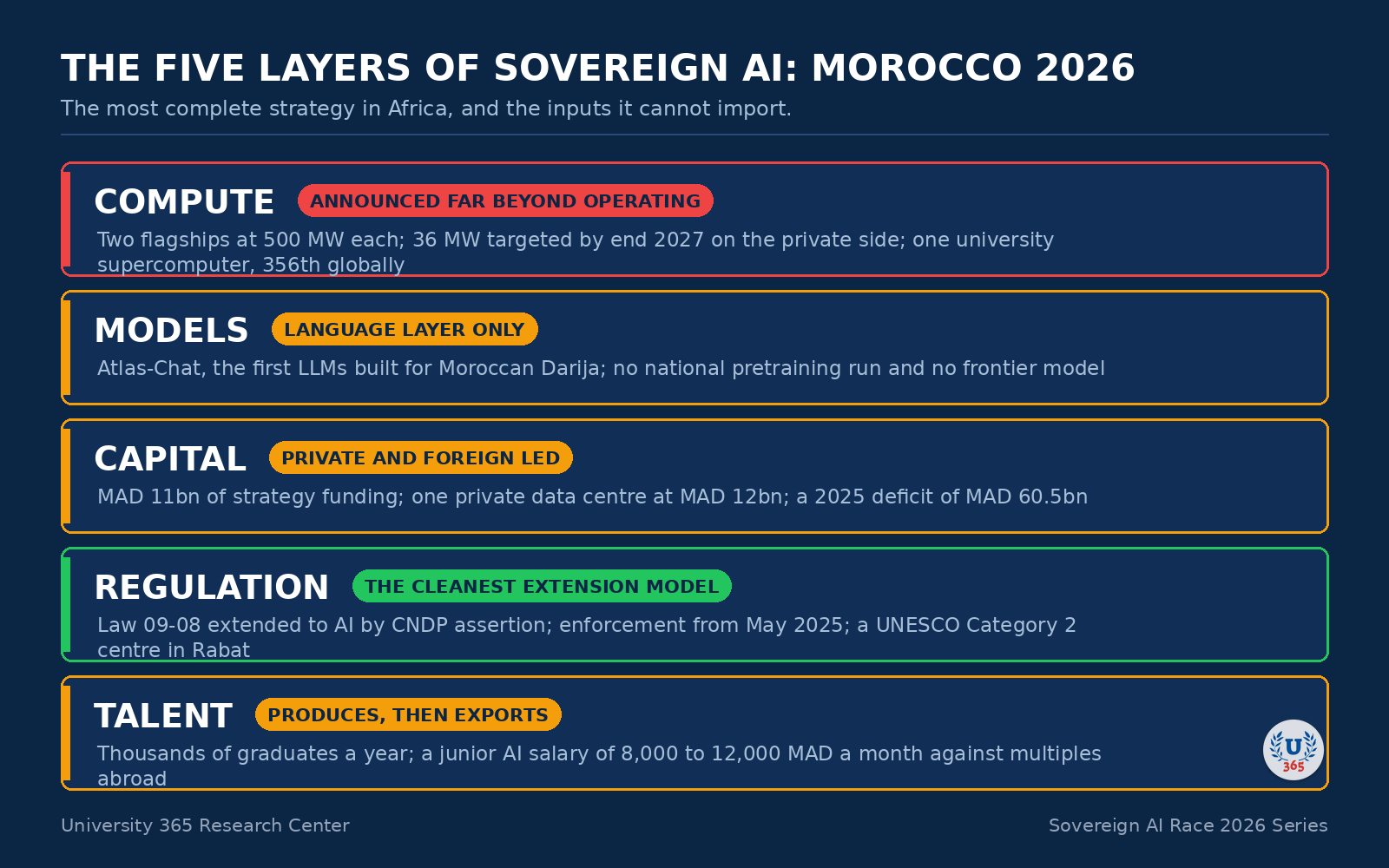
The five layers assessed. The most complete strategy in Africa, and the inputs it cannot import. University 365 Research Center.
This is the seventh report in a twenty-part series assessing how states attempt to control the production of artificial intelligence inside their own jurisdiction. The framework is fixed and applied identically to every country. Sovereign AI capacity separates into five layers, and a state can hold any one of them without holding the others.
Compute sovereignty is the physical layer: where the chips and data centres sit, and who may switch them off. Model sovereignty is who builds the models a country depends on, and in whose languages and domains those models are competent. Capital sovereignty is who funds the build-out and on what terms. Regulatory sovereignty is who writes the rules and whether they can be enforced. Talent and education sovereignty is who builds and runs the systems, and how the next generation is prepared.
The six countries examined so far span the strategic spectrum, from the full-stack Chinese build to the American switch, the French depth play and the Indian scale play. Morocco enters as the African anchor and the first country in the series whose ambition is genuinely continental rather than national. It hosts the UNESCO-affiliated AI centre for the continent, it holds the European Union's digital-dialogue partnership as its principal external alignment, and its two flagship compute projects, one private and one state-backed, are each sized at half a gigawatt. The report's question is what those numbers meet when they arrive: the country's own energy balance and its own water balance.
The vocabulary this report needs
Four terms recur, and they are defined here once.
The national roadmap is "AI Made in Morocco", also called Maroc IA 2030, launched in Rabat on 12 January 2026 by the Ministry of Digital Transition and Administration Reform, and presented in its implementation phase on 8 September 2026. It targets MAD 100 billion, about 10 billion dollars, of added GDP value, 50,000 direct and indirect jobs, and 200,000 people trained and certified, all by 2030. These are government targets and this report labels them as claims.
Announced capacity versus connected capacity carries more weight here than in any report before it, because the gap is the largest in the series. The two flagship data centre projects are announced at 500 megawatts each and neither has energised at anything approaching that scale: the private one targets 36 megawatts by the end of 2027, and the state-backed one is at the technical-study stage.
Thermal share is the proportion of electricity generated from coal, gas and other fossil sources. It matters in this report because data centres require continuous stable supply, and roughly three quarters of Morocco's electricity still comes from thermal sources, which is why the energy arithmetic of the two half-gigawatt projects is the sharpest constraint the series has documented.
The envelope is the fiscal space a programme must live inside. Morocco's 2025 budget deficit was MAD 60.5 billion, 3.5 per cent of GDP, and a single announced private data centre carries a headline budget of MAD 12 billion, larger than the state's whole digital strategy appropriation.

Sovereign AI Race: Morocco (2026)
The Question
Can a state build AI sovereignty on inputs it does not have enough of?
Morocco has done the strategy work that most countries in this series took years to complete. It has a named roadmap with a launch date, a published GDP target, four newly created institutes, a sovereign AI marketplace in development, a national school curriculum, a data protection authority that has moved from awareness to enforcement, a UNESCO Category 2 centre for AI on the continent, a digital dialogue with the European Union, and two half-gigawatt compute projects announced within eighteen months. Every one of those items is verified in this report's sources with a date and a publisher.
Underneath the strategy sits an arithmetic that is unusually well documented, because Moroccan business journalism has done the calculation the state has not published. At full capacity, the two flagship projects would consume between 4.7 and 9 terawatt hours of electricity a year depending on the denominator used, which is between nearly ten per cent and close to one fifth of national electricity consumption. A single 200-megawatt AI data centre would use about 8.6 million litres of water a day, the daily consumption of a city of 140,000 people. And roughly three quarters of the country's electricity still comes from thermal sources, so connecting a consumer of this scale today means burning coal to power computing services for foreign clients, in the words of the Moroccan analysis this report cites.
Morocco's design choices are themselves an admission of the constraint. The state-backed Dakhla complex is specified as fully renewable-powered and ocean-cooled. The private Casablanca project carries a 500-megawatt aspiration into a 36-megawatt first phase. The country has built desalination plants to secure water and plans 11.6 gigawatts of new renewable capacity with 2.6 gigawatts of storage by 2030 through its national utility, against competing demand from industry, desalination, electric mobility and green hydrogen.
So the question is not whether Morocco can design an AI strategy. The design is among the most complete in the series. The question is whether a lower-middle-income economy with a water deficit and a thermal-heavy grid can host the compute layer it has announced, and what it will actually look like if it does.

Sovereign AI Race: Morocco (2026)
The Contradiction
The strategy is complete on paper, and the inputs it needs are the two it lacks most
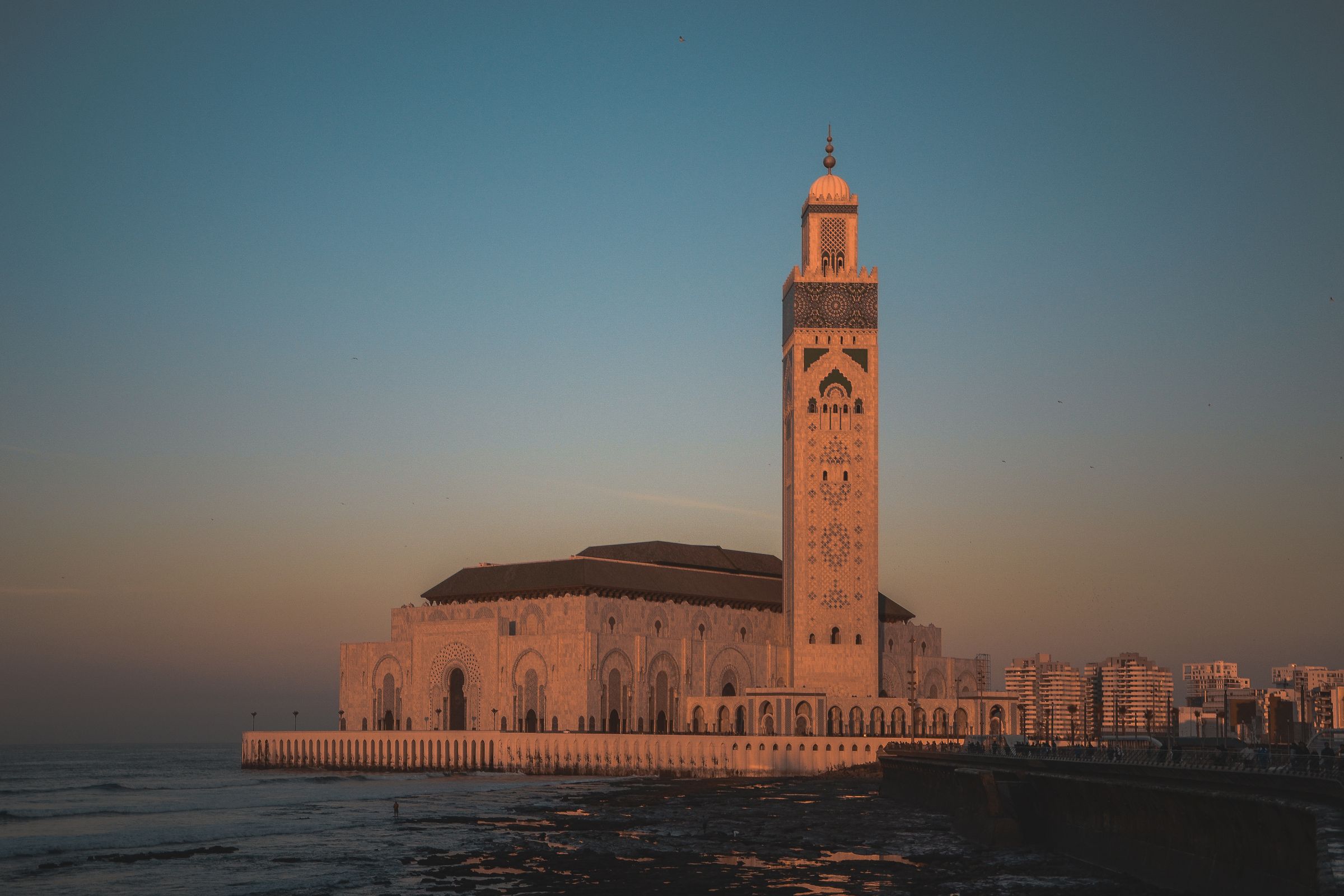
Casablanca, home of the Hassan II Mosque and of the Nexus AI Factory announced at 500 megawatts, thirty-six of which are targeted by the end of 2027. Photograph free-licensed via Pexels.
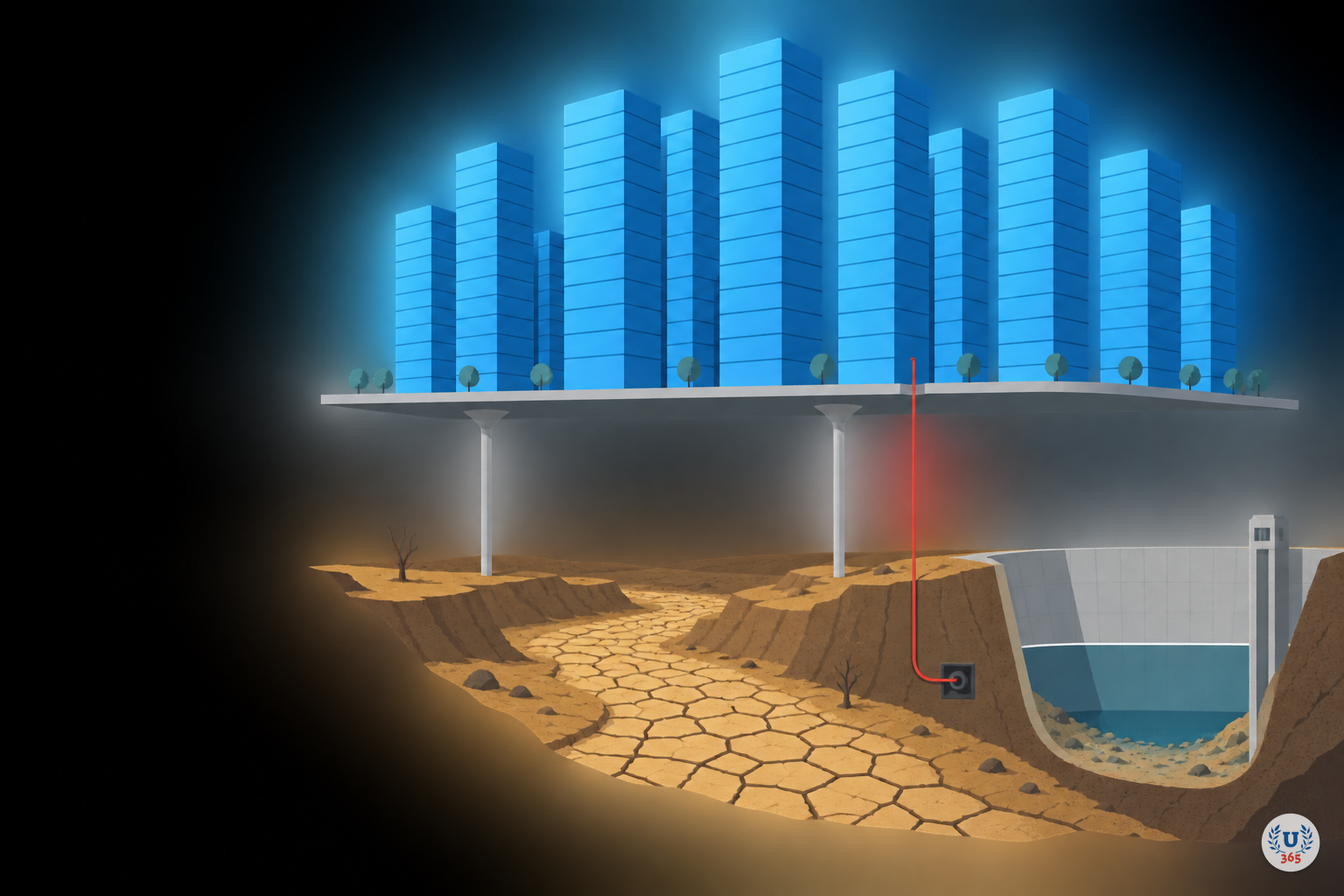
The towers on the platform, and the riverbed underneath. University 365 Research Center.
Here is the paradox, stated as plainly as the evidence allows.
The purpose of a sovereign AI strategy is to place the production of AI under domestic control. Morocco's roadmap is explicit about it: the ministry published a document titled "Towards Digital Sovereignty", and the roadmap's first pillar is sovereignty and trust. Its instruments are real policy instruments: a sovereign AI marketplace for secure services on domestic infrastructure, an administrative assistant, four institutes, a certification target of 200,000 people, and a governance framework built by extending the existing data protection law to AI rather than writing a new one.
The physical layer that would make any of it sovereign is where the constraint lands. Morocco has exactly one verified operating large-scale compute asset: the Toubkal supercomputer at Mohammed VI Polytechnic University, installed in 2021 at 3.15 petaflops, ranked 356th on the global list as of June 2025. It is a university high-performance computing asset, not an AI training cluster. The country has no verified sovereign GPU cloud and no verified foundation-model pretraining run at national scale. Its two flagship data centre projects are announced at half a gigawatt each, and neither has connected: the private project in Nouaceur targets 36 megawatts by the end of 2027, and the state-backed Dakhla complex has launched technical studies.
Now add the two inputs. Electricity: at full capacity the two projects would draw between nearly ten per cent and close to a fifth of national consumption, in a system where roughly three quarters of generation is thermal and the national utility's capacity plan must also serve desalination, hydrogen and industrial load. Water: a 200-megawatt AI data centre consumes about 8.6 million litres a day, in a country whose annual surface water supply has halved from an average of 21.7 billion cubic metres between 1945 and 1980 to 10.4 billion cubic metres between 2015 and 2021, and where agriculture takes just under ninety per cent of what remains.
The design choices acknowledge all of it. Fully renewable power and ocean cooling at Dakhla. A staged 36-megawatt first phase at Casablanca. The constraint is the strategy's own subject, and the report's finding is that Morocco is the first country in the series where the binding limit is neither capital nor chips nor rules, but heat and water.
The second tension is the model layer. Morocco's verified model work is research-grade: Atlas-Chat, published in the LoResLM workshop proceedings in 2025, is described by its authors as the first collection of language models specifically developed for dialectal Arabic, focused on Moroccan Darija. There is vendor-claimed multilingual work and Darija speech models beside it. All of it is fine-tuning and application-layer work on foreign bases. Morocco has no frontier foundation model and, on the evidence, is not attempting one. Its model strategy is language and application, which is a defensible choice and a different claim from the one the sovereignty pillar implies.
And the third tension is the talent ledger. Morocco produces thousands of engineering and computer science graduates a year from ENSIAS, UM6P, EMI, INPT, ENSA and EMSI, plus the free 1337 and YouCode coding schools. A junior AI engineer earns between 8,000 and 12,000 dirhams a month, which is a fraction of the equivalent European or Gulf salary, and the prior U365 report and current sectoral sources both identify the AI skills gap and specialist shortage as a binding constraint. The state's response is diaspora mobilisation: a skills forum, an ideas campaign, a remittances base of MAD 122 billion reframed as an investment channel. That is a coherent response to a labour market that cannot yet pay for the talent it produces, and it is also a statement that the domestic market cannot yet absorb it.

Sovereign AI Race: Morocco (2026)
The Current State
Compute: two half-gigawatt announcements and one supercomputer that runs
The Hassan II Mosque, Casablanca. Photograph free-licensed via Pexels.
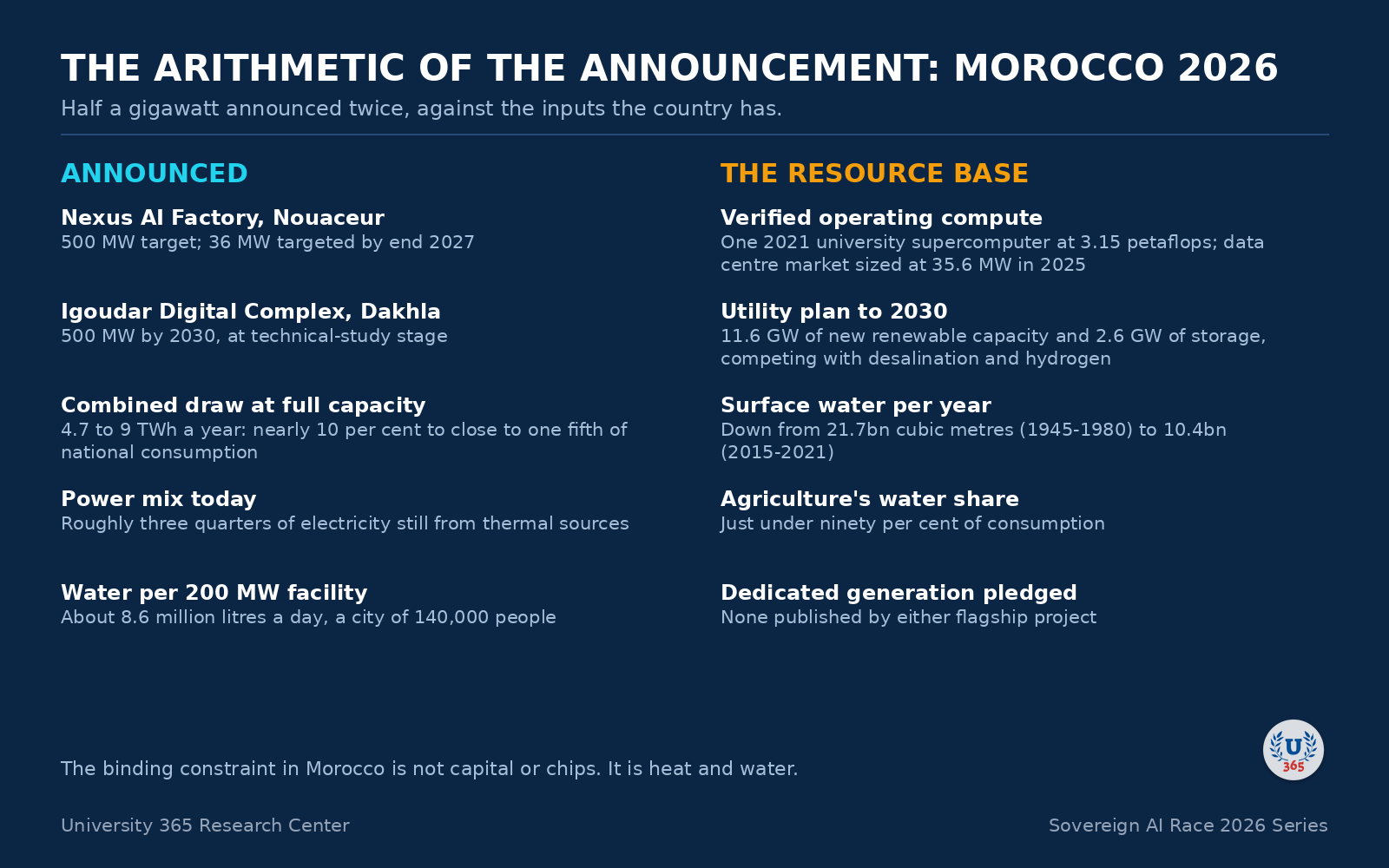
The arithmetic of the announcement, against the inputs the country has. University 365 Research Center.
Morocco's compute position is the largest announced-to-operating gap in the series, and both sides of it are documented.
The announced side is substantial by African standards. The Nexus AI Factory at Nouaceur near Casablanca was launched at GITEX Africa with a budget of MAD 12 billion, about 1.2 billion dollars, and a target capacity of 500 megawatts, with NVIDIA and Naver Cloud reported among the partners. The Igoudar Digital Complex at Dakhla, backed by the Caisse de Dépôt et de Gestion and the Mohammed VI Investment Fund, is also specified at 500 megawatts, described by the Minister of Digital Transition, Amal El Fallah Seghrouchni, as a true data embassy on the edge of the Sahel, powered exclusively by renewable energy and cooled with Atlantic Ocean water, at the technical-study stage. NVIDIA confirmed Morocco in two African AI compute projects in September 2026 and has announced a continental AI hub in the country. Oracle has opened a cloud region in Casablanca with a second planned for Settat, and Microsoft Azure, Google Cloud and Oracle appear in the continental data centre association's report as users of high-tier colocation facilities in Morocco. One analyst estimate puts Morocco at 35 per cent of Africa's total data centre capacity, which this report labels as an analyst claim.
The operating side is Toubkal: 3.15 petaflops at launch in 2021, described then as the most powerful supercomputer in Africa, ranked 356th globally as of June 2025, operated by a university. Morocco's total data centre capacity was sized at 35.6 megawatts in 2025 by one market research estimate. The distance between 35.6 megawatts of market capacity and two 500-megawatt announcements, with 36 megawatts targeted by end 2027 on the private side, is the compute story of this report.
Connectivity is the part that has genuinely arrived. The Medusa submarine cable landed at Nador in December 2025, Morocco's first cable landing station, on a system spanning over 8,700 kilometres with nineteen landings connecting southern Europe, North Africa and the Middle East. The country's three mobile operators have committed more than MAD 80 billion through 2035, and its first private industrial 5G network, a fifty-two-hectare factory deployment, was announced with a Chinese partner at GITEX Africa 2026.
Capital: a 1.1 billion dollar strategy inside a 3.5 per cent deficit
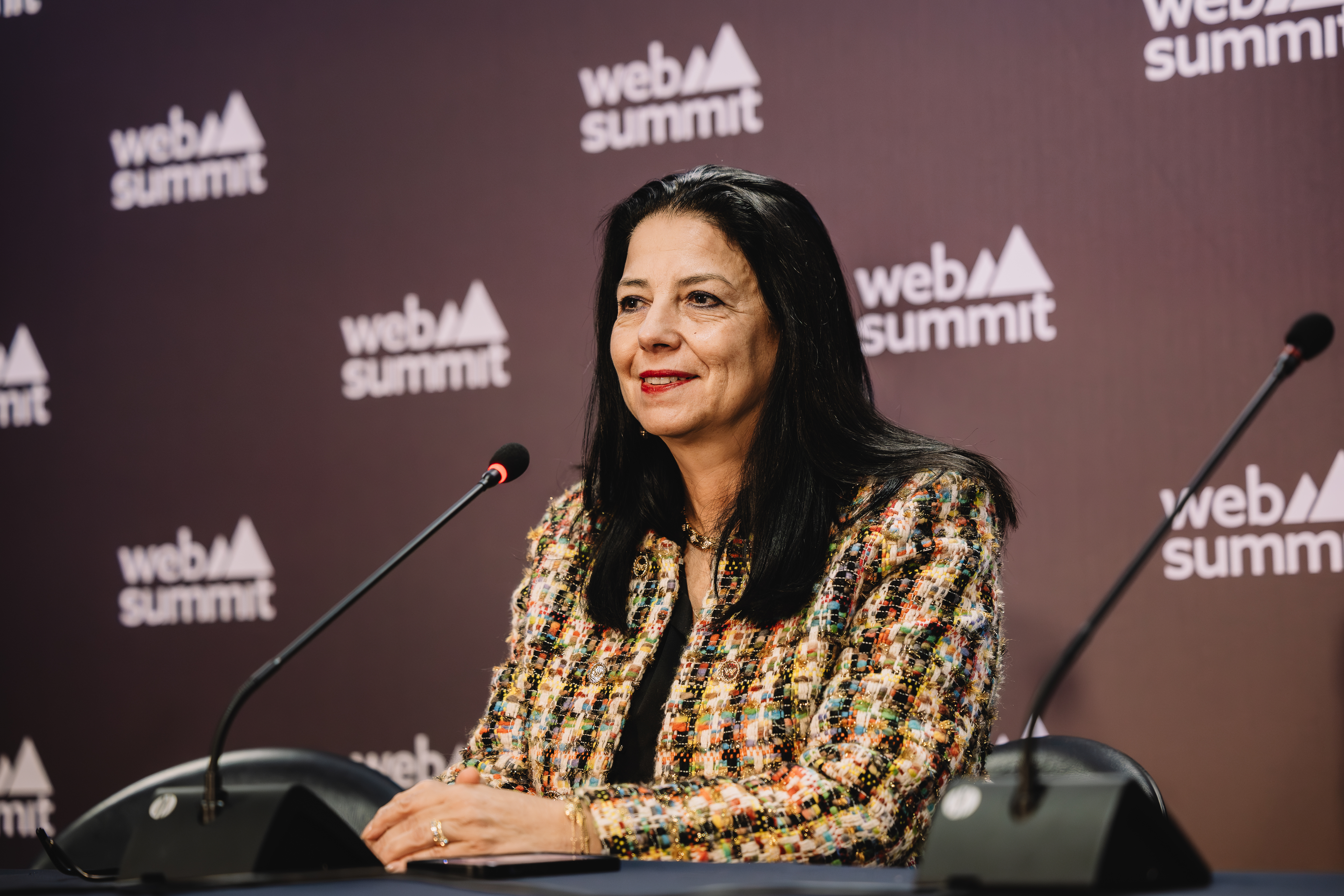
Amal El Fallah Seghrouchni, Minister of Digital Transition and Administration Reform of Morocco, as of 2026. She presented the AI Made in Morocco implementation phase in September 2026 and described the Dakhla complex as a true data embassy on the edge of the Sahel. Photograph: Web Summit, CC BY 2.0, via Wikimedia Commons.
Morocco's capital position is the clearest case in the series of a state that is not the funder of its own compute.
The public envelope is the Morocco Digital 2030 strategy, mobilising MAD 11 billion, about one billion euros, across 2024 to 2026, against targets of 240,000 digital jobs, 3,000 startups and one or two unicorns by 2030. The reporting carries a discrepancy this report records: some outlets render the figure as 1.1 billion dirhams, which is inconsistent with the euro and dollar equivalents and is most likely a unit typo; the eleven-billion-dirham figure is used here. Alongside it sit the new instruments: a MAD 2.5 billion fund-of-funds, about 270 million dollars, placed with nine managers under the Mohammed VI Investment Fund with the ministry and the CDG; an earlier 1.9-billion-dollar programme across the wider economy; a MAD 700 million startup venture-building programme targeting 800 companies; and a 650-million-dollar World Bank package approved in June 2026, including a 250-million-dollar digital transformation programme.
The private side dwarfs it. The single Nexus AI Factory carries a MAD 12 billion headline budget, larger than the whole state digital appropriation for three years, and roughly one fifth of the annual budget deficit. Morocco's 2025 deficit was MAD 60.5 billion, 3.5 per cent of GDP. Morocco raised about 128 million dollars of venture capital in 2025, an eighteen per cent increase and sixth in Africa, behind the continent's four largest markets, in a system where foreign exchange allowances remain capped and permission-based. The arithmetic conclusion, and the report labels it as arithmetic rather than a sourced statement: the state is not the funder of Moroccan AI compute, and it cannot be at these scales. Private and foreign capital are, and the terms belong to them.
Models: Darija first, and honestly not frontier
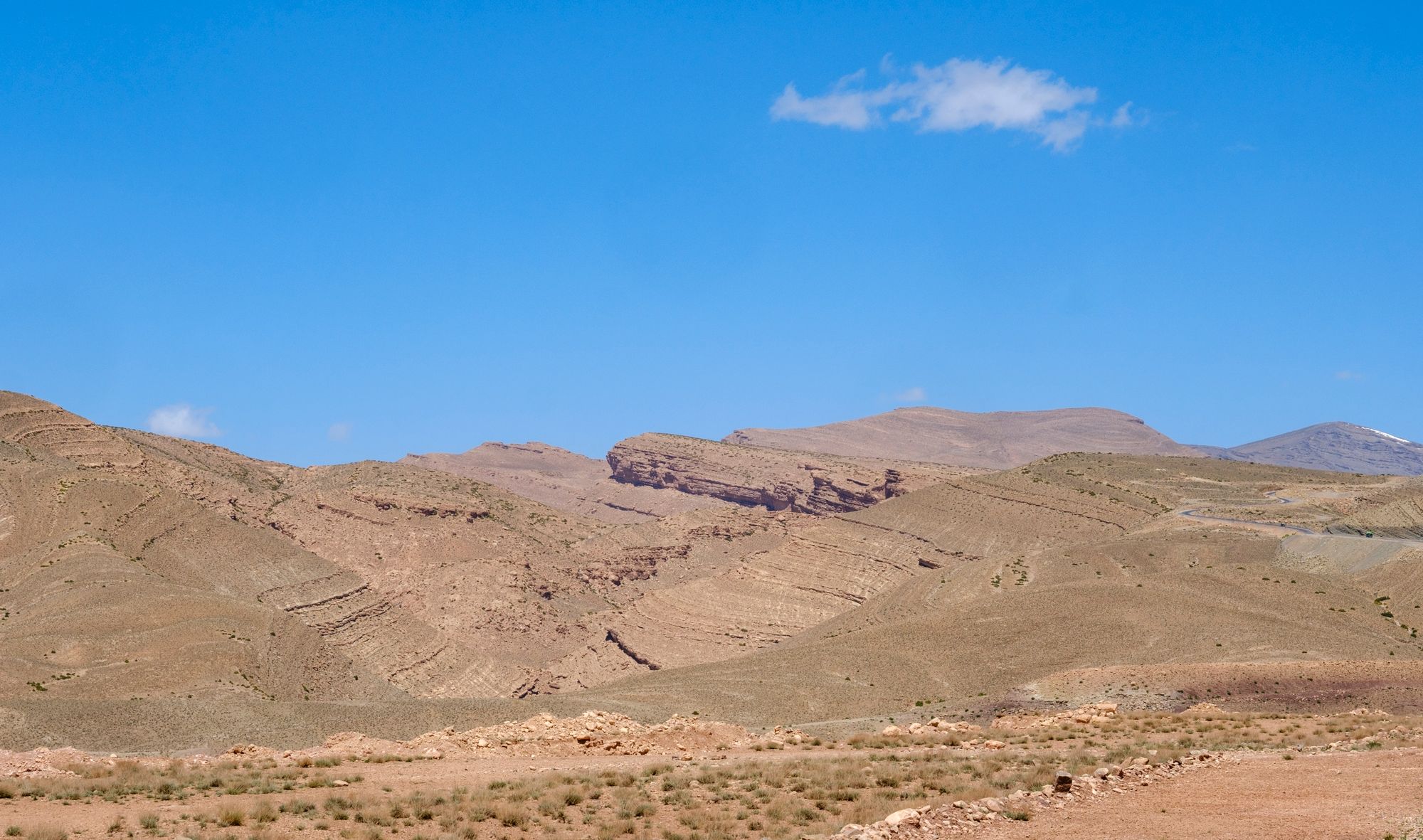
The Atlas Mountains. Morocco's water balance is set in these ranges, and the data centre arithmetic turns on it. Photograph free-licensed via Pexels.
Morocco's model layer is small, careful and clearly scoped, and the report records it without inflating it.
The verified work is Atlas-Chat, published in the LoResLM 2025 proceedings, which its authors describe as the first collection of language models specifically developed for dialectal Arabic, focused on Moroccan Darija, built from a constructed Darija instruction dataset. Beside it sit a vendor-claimed multilingual North African model covering Darija in both Arabic and Latin scripts, Hassaniya, Tachelhit, Tarifit and standardised Tamazight in Tifinagh, and a Darija text-to-speech model, with Darija having approximately thirty million speakers. The Amazigh and Tamazight coverage is real and thin: a dedicated Tamazight language-technology funding line appears only in reporting on the European partnership envelope that this report could not verify at Tier 1.
There is no Moroccan frontier model and no verified national pretraining run. The model strategy is language and application, layered on foreign bases, and the honest statement is that this is a reasonable allocation of a small research budget in a country whose distinctive asset in AI is a set of languages the large laboratories do not serve well. The report's frame treats that as a genuine contribution at the layer where it exists, and not as a sovereignty claim at the layer where it does not.
Regulation: the existing law, extended, and now enforced
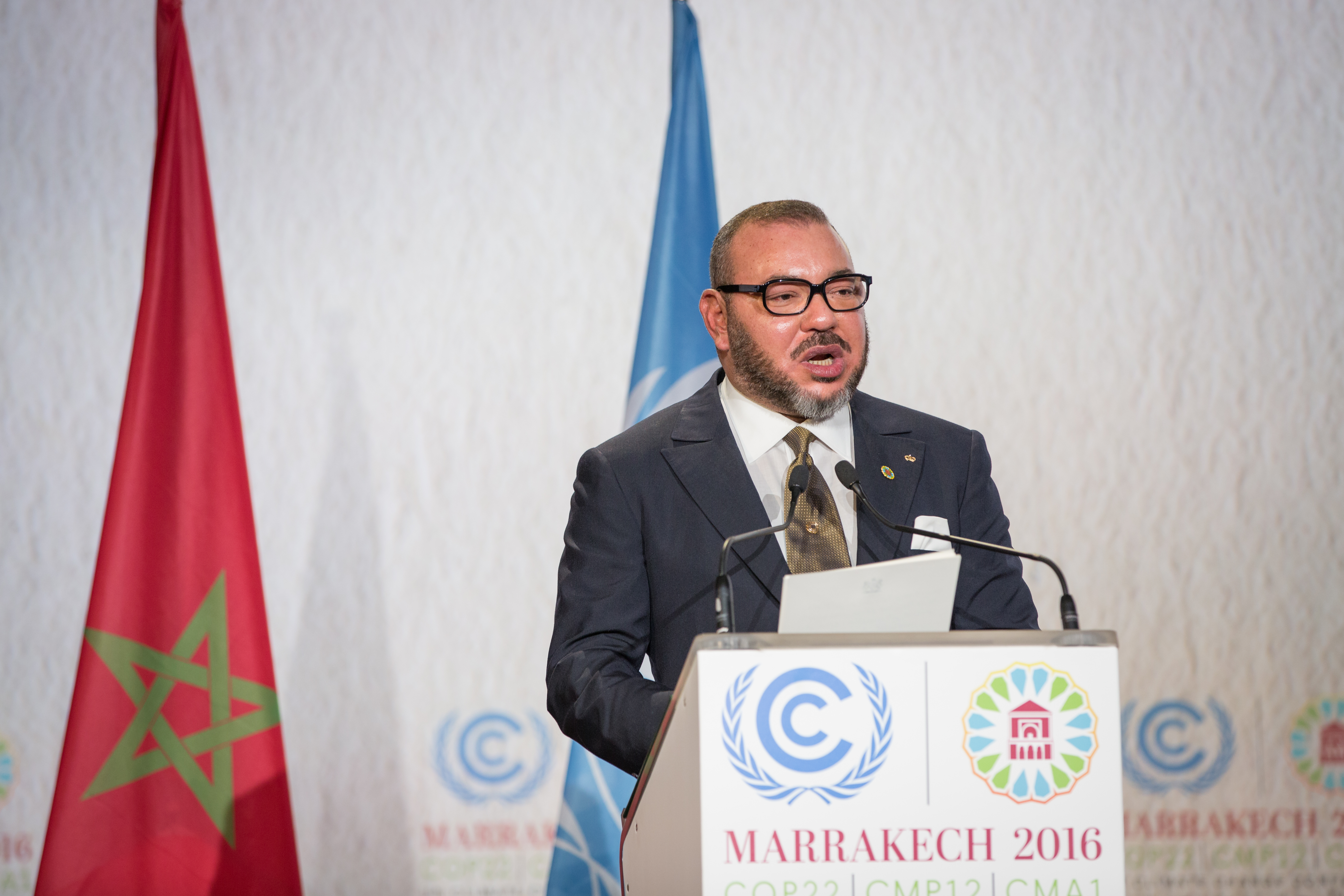
King Mohammed VI of Morocco, as of 2026. The Mohammed VI Investment Fund and Mohammed VI Polytechnic University carry the state's AI research and finance roles, and the university hosted the first high-level AI forum in Africa. Photograph: UN Climate Change, CC BY 2.0, via Wikimedia Commons.
Morocco's regulatory position is the most interesting in the series for a structural reason: it is the only country examined that has extended a pre-existing data protection law to AI rather than legislating something new.
The parent instrument is Law 09-08 of 2009 and its 2009 implementing decree. The regulator is the CNDP, the national data protection commission, created by the same instrument and grounded in Article 24 of the Constitution. In a communiqué of 18 March 2025 the CNDP stated that AI processing of personal data is already governed by Law 09-08, named four qualities requiring particular attention, integrity, transparency, fairness and legibility, and opened hearings with national and international experts, scientific bodies and civil society toward a dedicated deliberation. That is an assertion of jurisdiction the authority already held, not a new rule, and it is a deliberate alternative to standing up a new AI regulator.
Enforcement followed within two months. From May 2025 the CNDP moved from awareness to notices, beginning in healthcare, where approximately 3,000 pharmacists engaged with compliance, then extending to legal professionals and media outlets, with education, banking, insurance, e-commerce and digital services planned. The authority describes the effort as a national roadmap combining awareness, regulation and enforcement. Sectorally, Morocco banned election deepfakes from radio and television in June 2026, ahead of the September legislative elections. The April 2024 parliamentary bill proposing a national AI agency was not verified as enacted.
The continental layer is where Morocco's regulatory influence is largest. The first High-Level Forum on AI in Africa was held at Mohammed VI Polytechnic University in Rabat in June 2024 with UNESCO, producing the Rabat Consensus on AI, and Ai Movement at the same university became the first UNESCO-affiliated AI centre in Africa. Morocco advocated for an ethical, sovereign African AI before the African Union's Peace and Security Council in 2025, and the AU's continental strategy phase one now runs. Morocco's leadership claim in Africa rests on institutional seats and convening power, not compute, and the report states it that way.
Talent: graduates, a wage gap, and a diaspora strategy
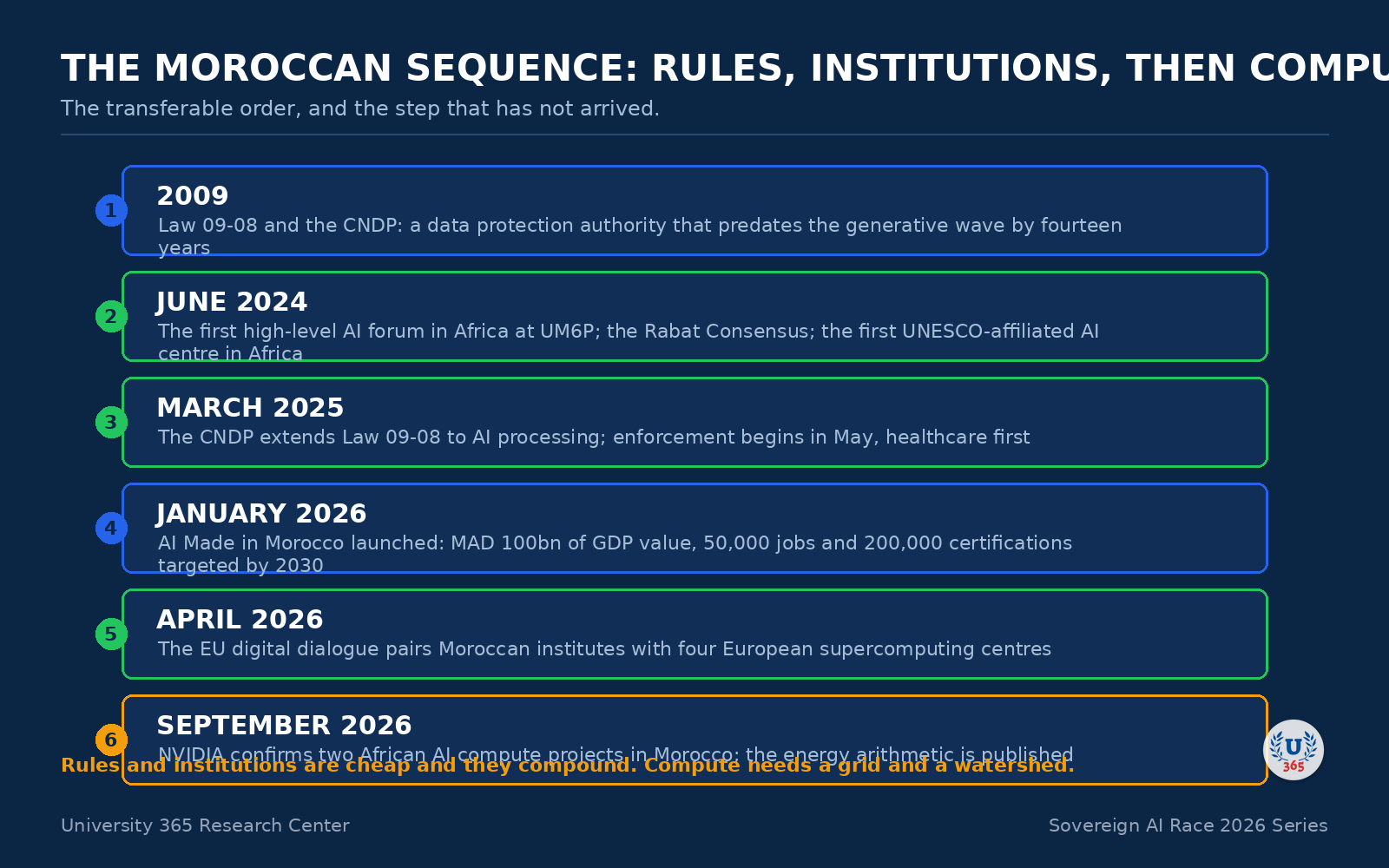
The Moroccan sequence. Rules and institutions are cheap and they compound; compute needs a grid and a watershed. University 365 Research Center.
The talent layer is Morocco's strongest on paper and weakest on retention, and the numbers explain why.
The institutions are real: ENSIAS in Rabat, widely regarded as the country's leading computer science school; Mohammed VI Polytechnic University; the Mohammadia School of Engineers; INPT, ENSA and EMSI; plus the free, peer-to-peer 1337 school modelled on the French 42 network and open to ages eighteen to thirty without an IT degree, and YouCode under the OCP Foundation. Thousands of engineers, mathematicians and computer scientists graduate each year, and the sector's own assessment is that only a fraction remain in Morocco.
The retention arithmetic is stark and this report states it as derived analysis from cited figures. A junior AI engineer in Morocco earns between 8,000 and 12,000 dirhams gross per month, against a multiple of that in the European Union or the Gulf for comparable work. The state's response is not wage subsidy but diaspora mobilisation: a skills and elites forum holding its second edition in June 2026 at the International University of Rabat focused on mobilising Moroccan talent abroad for national digital sovereignty; an ideas campaign asking Moroccans at home and abroad for a single job-creating proposal, closing the day before the September elections; and the Prime Minister's framing of MAD 122 billion of remittances as a basis for investment rather than assistance. Treating the diaspora as a capital and expertise channel is a rational move, and it is also an acknowledgement that the domestic market cannot yet absorb or pay for the talent the system produces.
The education pipeline extends into schools. Morocco unveiled a nationwide AI and digital competencies curriculum for primary and secondary schools in March 2025 under the Digital Morocco 2030 strategy, six days before the previous University 365 report was published. By 2026, reporting describes a pilot framework covering grades one through twelve, testing three integration approaches, and approximately 170 schools piloting AI education in the country's largest metropolis, both from single sources that this report labels. The roadmap's own target is 200,000 people trained and certified in AI by 2030, alongside the Digital Morocco 2030 goal of training 100,000 young people annually in the digital field against 14,000 in 2022, and four newly created institutes working on AI, education, industry and smart cities.
What changed since our 2025 report on Morocco
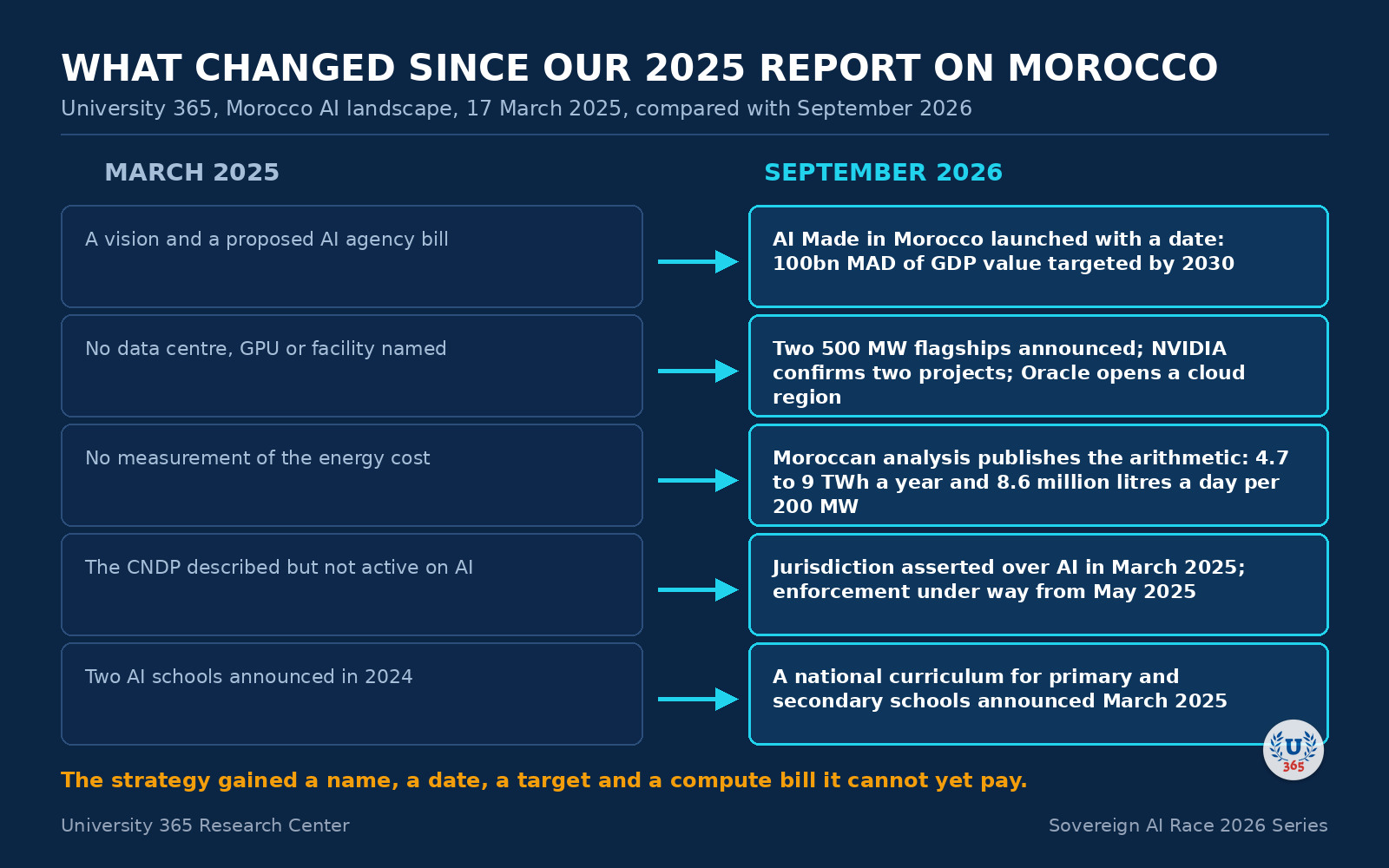
What changed since our March 2025 report on Morocco. University 365 Research Center.
Read the earlier report: Morocco's AI Landscape March 2025 - A Comprehensive Analysis of the Kingdom's Position in Artificial Intelligence. University 365 INSIDE, 17 March 2025.
University 365 published "Morocco's AI Landscape March 2025: A Comprehensive Analysis of the Kingdom's Position in Artificial Intelligence" on 17 March 2025. That report described digital adoption figures, the Digital Morocco 2030 vision with its economy and jobs targets, a parliamentary AI regulation bill, two new AI schools, a business skilling programme and a research base across three cities. It named no data centre capacity, no GPU count, no hyperscaler facility and no readiness index ranking, and this report's interval fills every one of those gaps.
The roadmap gained a name, a date and a target. The 2025 report described the Digital Morocco 2030 vision and a proposed national AI agency bill. The verified position is "AI Made in Morocco", launched 12 January 2026, with MAD 100 billion of added GDP value, 50,000 jobs and 200,000 certifications targeted for 2030, and an implementation presentation in September 2026 adding four institutes and a sovereign AI marketplace. The 2025 report described a vision. The 2026 position is a programme with instruments.
Compute entered the story, at a scale the country has never operated. The 2025 report recorded no GPU or supercomputer figure at all, though Morocco has operated the Toubkal supercomputer since 2021. The interval brought two 500-megawatt project announcements, one private and one state-backed, NVIDIA's confirmation of Morocco in two African AI compute projects and a continental hub, and Oracle's first cloud region in Casablanca. The 2025 report described a country planning. The 2026 position is a country with half-gigawatt plans and thirty-six megawatts targeted by the end of 2027 on the private side.
The grid and water arithmetic became public. No source in the 2025 report carried a consumption calculation for AI data centres. In August 2026 Moroccan business journalism published the numbers this report now uses: between 4.7 and 9 terawatt hours a year at full capacity, a thermal share near three quarters, and 8.6 million litres of water a day for a 200-megawatt facility. This is the single most important change in the interval, because it converts an aspiration into an engineering problem.
The regulator and the schools both arrived with dates. The CNDP asserted jurisdiction over AI processing in March 2025 and began enforcement in May 2025, and the national school curriculum was announced on 11 March 2025, six days before the prior report published. The 2025 report carried neither.
The external alignments institutionalised. The EU-Morocco Digital Dialogue launched in April 2026, pairing Moroccan research institutes with four European supercomputing centres and AI factories and naming UM6P, and the World Bank approved 650 million dollars including a 250-million-dollar digital programme in June 2026. The 2025 report described no EU digital dialogue and no concessional finance at this scale.

Sovereign AI Race: Morocco (2026)
Key Findings
1. Morocco has the most complete AI strategy in Africa and one of the most complete in this series on paper. A named roadmap launched 12 January 2026, MAD 100 billion of targeted GDP value, 50,000 jobs, 200,000 certifications, four institutes, a sovereign marketplace, a national school curriculum, an active regulator and a UNESCO Category 2 centre for the continent.
2. The announced-to-operating gap on compute is the largest in the series. Two flagship projects at 500 megawatts each; the private one targets 36 megawatts by the end of 2027, and the state-backed one is at the technical-study stage. The only verified operating large-scale asset is a 2021 university supercomputer ranked 356th globally.
3. The binding constraints are electricity and water, and the country knows it. At full capacity the projects draw between nearly ten per cent and close to a fifth of national electricity consumption, with roughly three quarters of generation thermal. A 200-megawatt AI data centre uses about 8.6 million litres of water a day. Morocco's surface water supply has halved since the 1970s and agriculture takes just under ninety per cent of what remains.
4. The design choices are the constraint's own admission. Fully renewable power and ocean cooling at Dakhla; a staged 36-megawatt first phase at Casablanca. No verified operator has committed dedicated incremental renewable generation sized to the announced load.
5. The state is not the funder of Moroccan AI compute and cannot be at these scales. The digital strategy envelope is MAD 11 billion across three years; a single private data centre carries a MAD 12 billion headline; the 2025 deficit was MAD 60.5 billion. Private and foreign capital carry the compute layer, and with it the terms.
6. The model layer is Darija-first, research-grade, and honestly not frontier. Atlas-Chat, published in 2025, is the first collection of language models for dialectal Arabic. There is no national pretraining run and no frontier model, and the report treats language coverage as a real contribution at the layer where it exists.
7. The regulatory model is the most transferable instrument in the report. Rather than legislate, Morocco extended its existing data protection law to AI, asserted jurisdiction through its existing authority, and then enforced: notices from May 2025, starting in healthcare with about 3,000 pharmacists engaged, with a deepfake ban for broadcast elections added in June 2026.
8. The talent layer produces graduates and exports them. Thousands of engineering and computer science graduates a year against a junior AI salary of 8,000 to 12,000 dirhams a month, answered with diaspora mobilisation rather than retention economics, and a MAD 122 billion remittance base reframed as investment capital.
9. Morocco's African leadership is institutional, not computational. The first UNESCO-affiliated AI centre in Africa, the Rabat Consensus, and the first high-level African AI forum held in Rabat. Morocco leads the continent's AI conversation without leading its compute.
10. The honest overall verdict: the strategy is real and the inputs are not yet. Morocco has legislated, organised, trained and convened at a standard above its income level. It has also announced half a gigawatt twice in a country where the two inputs that scale requires are the two it lacks. The series' task is to state both.

Sovereign AI Race: Morocco (2026)
Deep Analysis
Why the energy and water arithmetic is the report's central finding
Every country in this series so far has been constrained by money, chips or rules. Morocco is the first constrained by physics, and the arithmetic deserves to be laid out as the finding it is.
A half-gigawatt AI data centre is not an office building with servers. It is a continuous industrial load comparable in demand terms to a steel mill, and it cannot be curtailed when the wind drops or the sun sets without losing the training runs and the customer contracts that justify it. Morocco's own analysis makes the comparison, and the national utility's plan for 11.6 gigawatts of new renewable capacity and 2.6 gigawatts of storage by 2030 must serve the whole economy, including one of the world's largest desalination programmes, electric mobility and green hydrogen production. There is no published commitment from either flagship project to add dedicated generation sized to its own load, which means at present the incremental demand lands on the existing mix, and the existing mix is roughly three quarters thermal.
The water side is equally concrete. Evaporative and cooling demand for a 200-megawatt AI facility runs at about 8.6 million litres a day, equal to the daily consumption of a city of 140,000 people, in a country whose surface water supply per head has collapsed and where agriculture takes just under ninety per cent of the resource. The Dakhla design's ocean cooling and renewable power are therefore not marketing choices. They are the only forms in which the project can exist, and the report records them as such.
The comparative note matters for the other countries in the series. Spain now requires new data centres above one megawatt to cover at least eighty per cent of their hourly consumption with renewable power generated in that same hour, and Ireland, where data centres already take 22 per cent of national electricity demand, has imposed similar conditions. Morocco's problem is the same problem, at an earlier stage of grid transition and with a harder hydrological baseline, which makes its strategy the most input-constrained in the group even though its ambition is among the largest relative to its income.
The strategy without the compute: what Morocco actually holds
Strip the half-gigawatt announcements away and Morocco's position is still the strongest on the African continent at three specific layers, and the report should hold that as its own achievement rather than a consolation.
At the institutional layer, Morocco holds seats that took years to earn. Ai Movement at Mohammed VI Polytechnic University is the first UNESCO-affiliated AI centre in Africa, the Rabat Consensus of June 2024 is a continental governance instrument with Morocco's universities behind it, and the country convened the first high-level African AI forum. Its advocacy line before the African Union, ethical, responsible, beneficial and sovereign African AI, is the position of a state that intends to write norms rather than buy capacity.
At the regulatory layer, Morocco has produced the cleanest extension model in the series. Law 09-08 predates the generative wave by fourteen years, and instead of writing a parallel statute the CNDP asserted that the existing law governs AI processing of personal data, held expert hearings, and then began enforcing in healthcare before moving to new sectors. The EU-Morocco Digital Dialogue of April 2026 institutionalised the alignment, and Minister Amal El Fallah Seghrouchni's own framing, that Morocco is mostly aligned with the European vision around privacy, data protection, cloud sovereignty and AI for good, positions the country as a third voice between the American and Chinese models. That is a coherent strategic identity, and it costs a fraction of what compute costs.
At the language layer, Morocco holds a resource no other country can replicate: Darija, Tamazight and Hassaniya coverage is thin on every frontier model, and the country's research community has begun building it. The work is small and the report says so, and it is also the exact contribution a lower-middle-income country can make at the layer where its comparative advantage is genuine.
The comparison this series can now make, seven reports in
The series has now examined every strategic posture it set out to test except the sanctioned isolationist case, and Morocco completes the taxonomy by adding the constrained-ambition case.
China built the full stack and pays in efficiency. The United States owns the stack and trades on the switch. France and India hold rules, models and people and rent the machines. The Gulf states buy what they cannot build. Morocco has designed the rules, teaches the people, hosts the continent's institutions, and has announced compute it cannot yet power. The finding that unifies all seven reports is sharper than the one the series began with: sovereignty is not a choice between buying and building. It is a choice between the constraints a state can survive and those it cannot, and Morocco has announced a bet whose binding constraint is a river that no longer carries what it did in 1975.

Sovereign AI Race: Morocco (2026)
Data and Evidence
Table 1: The five layers, assessed for Morocco in September 2026
Layer | What Morocco holds | What it does not hold | Assessment |
Compute | Two flagships announced at 500 MW each, one private at MAD 12bn and one state-backed at Dakhla; NVIDIA confirms Morocco in two African AI compute projects and a continental hub; Oracle's first cloud region in Casablanca; Toubkal at UM6P, 3.15 petaflops in 2021 and 356th globally in June 2025; Morocco's first cable landing station at Nador since December 2025 | Connected capacity at announced scale (36 MW targeted by end 2027 on the private side; the Dakhla complex at technical-study stage); a sovereign GPU training cluster; sufficient low-carbon power and water to energise half-gigawatt loads (roughly three quarters of generation is thermal) | Announced far beyond operating |
Models | Atlas-Chat, the first language models built for Moroccan Darija, published 2025; vendor-claimed multilingual North African coverage including Tamazight scripts; Darija speech models | A frontier foundation model; any verified national pretraining run at scale; verified Tier 1 confirmation of the Tamazight funding line | Language-layer contribution, honestly scoped |
Capital | MAD 11bn of strategy funding across 2024 to 2026; a MAD 2.5bn fund-of-funds with nine managers; a MAD 700m venture-building programme; a 650m USD World Bank package with a 250m USD digital programme; MAD 12bn of announced private data centre capital | The fiscal capacity to fund its own compute (2025 deficit MAD 60.5bn, 3.5 per cent of GDP; a single private project exceeds the whole state digital appropriation); venture scale (128m USD raised in 2025, sixth in Africa) | Private and foreign capital carry the compute layer |
Regulation | Law 09-08 extended to AI by CNDP assertion of March 2025; enforcement from May 2025, beginning with about 3,000 pharmacists engaged; a broadcast election deepfake ban of June 2026; the Rabat Consensus and the first UNESCO-affiliated AI centre in Africa; the EU digital dialogue since April 2026 | A dedicated AI statute (the 2024 bill was not verified as enacted); a single AI regulator by design rather than by default | The cleanest extension model in the series |
Talent and education | Graduates from ENSIAS, UM6P, EMI, INPT, ENSA, EMSI plus the free 1337 and YouCode schools; a national school AI curriculum since March 2025; four new institutes; a 200,000 certification target and 100,000 digital trainees a year | Retention (a junior AI salary of 8,000 to 12,000 dirhams a month against multiples abroad; only a fraction of graduates remain); verified delivery against the certification targets | Produces, then exports |
Table 2: The controlled metrics, series bible format
Metric | Morocco position | Source and date |
Flagship compute commitment | Nexus AI Factory, Nouaceur, MAD 12bn initial budget and a 500 MW target, 36 MW targeted by end 2027; Igoudar Digital Complex, Dakhla, 500 MW by 2030 under CDG and the Mohammed VI Investment Fund, at technical-study stage; Toubkal at 3.15 petaflops, 356th as of June 2025 | NVIDIA via iAfrica, 21 September 2026; Telquel, 18 August 2026; North Africa Post, September 2026; maroc.ma, 9 September 2026; UM6P and DatacenterDynamics, 2021; academic record, June 2025 |
Capital committed | Morocco Digital 2030 at MAD 11bn across 2024 to 2026; MAD 2.5bn fund-of-funds with nine managers; MAD 700m venture building targeting 800 startups; 650m USD World Bank package of June 2026 including a 250m USD digital programme; 128.4m USD of venture capital raised in 2025, up 18 per cent, sixth in Africa | CGEM and Oxford Insights, 2024; Launch Base Africa, 13 April 2026; World Bank, 12 June 2026 |
Flagship national models | Atlas-Chat, the first collection of LLMs for dialectal Arabic with a Moroccan Darija focus, LoResLM 2025; vendor-claimed multilingual North African coverage and Darija speech models; no frontier model and no national pretraining run | arXiv 2409.17912 and ACL LoResLM 2025; vendor pages as labelled |
Anchor entities | The Ministry of Digital Transition and Administration Reform; the CNDP; the CDG and the Mohammed VI Investment Fund; Mohammed VI Polytechnic University, its Ai Movement centre and the 1337 school; the OCP Foundation's YouCode; ENSIAS; NVIDIA as supplier and OCP-linked projects | Official and institutional disclosures, 2024 to 2026 |
Chip dependency | Complete at the accelerator layer for any AI compute: NVIDIA confirmed in both announced compute projects and as the supplier of the continental hub; no domestic silicon programme. Globally NVIDIA trains 92 per cent of sovereign models | NVIDIA via iAfrica, 21 September 2026; Counterpoint Research, 5 August 2026 |
Regulatory instrument | Law 09-08 of 2009 and Decree 2-09-165, extended to AI processing by the CNDP communiqué of 18 March 2025; enforcement from May 2025; broadcast election deepfake ban of June 2026; the April 2024 AI agency bill not verified as enacted | CNDP; Hespress, 23 May 2025; Hespress, 24 June 2026 |
Talent anchors | ENSIAS, UM6P, EMI, INPT, ENSA, EMSI, 1337 and YouCode; a national school AI curriculum announced 11 March 2025; four new institutes; targets of 200,000 trained and certified and 100,000 digital trainees a year by 2030; a junior AI salary of 8,000 to 12,000 MAD a month | maroc.ma, 9 September 2026; dailytech.ng, 11 March 2025; reported salary analysis, 2026 |
Independent index standing | Oxford Insights Government AI Readiness Index 2024: 101st of 188 with 41.78 points; data and infrastructure pillar 53.82, government pillar 34.82, technology pillar 36.70. The 2025 edition was not verified in this research. No Tortoise position was verified | Oxford Insights 2024 via Hespress, 24 December 2024 |
Adoption | The prior U365 report recorded 88 per cent internet penetration, an e-commerce market projected at 2.6bn USD by 2029, and a national satisfaction target for digital public services above 85 per cent. No newer national AI adoption index was verified in this research | Prior U365 report, 17 March 2025 |
Distinguishing mechanism | A complete strategy on an envelope that cannot fund it, constrained by the two physical inputs it lacks | This report |
Core tension | Half a gigawatt announced twice, in a country whose scarcest resources are carbon-free electricity and water | This report |
Table 3: Timeline, 2024 to 2026
Date | Event | Source |
February 2024 | Two AI and digitisation schools announced at Taroudant and Berkane | Prior U365 report, March 2025 |
April 2024 | A parliamentary opposition group submits a bill proposing a National Agency for Artificial Intelligence; not verified as enacted | Prior U365 report, March 2025 |
3 to 5 June 2024 | First High-Level Forum on AI in Africa at UM6P Rabat with UNESCO; the Rabat Consensus adopted; Ai Movement recognised as a UNESCO Category 2 centre | UNESCO, 2024 |
25 September 2024 | Morocco Digital 2030 launched in Rabat: MAD 11bn across 2024 to 2026, 240,000 digital jobs targeted, 3,000 startups, 100,000 trained a year | CGEM, 25 September 2024; Oxford Insights |
24 December 2024 | Morocco reported 101st of 188 on the Oxford Insights Government AI Readiness Index 2024, 41.78 points | Oxford Insights via Hespress, 24 December 2024 |
11 March 2025 | Nationwide AI and digital competencies curriculum for primary and secondary schools unveiled | dailytech.ng; technext24, 11 March 2025 |
18 March 2025 | The CNDP states that AI processing of personal data is already governed by Law 09-08 and opens expert hearings toward a dedicated deliberation | CNDP communiqué via legal analysis, March 2025 |
20 March 2025 | Morocco advocates for ethical, sovereign African AI before the African Union Peace and Security Council | maroc.ma, 20 March 2025 |
23 May 2025 | The CNDP shifts to enforcement: formal notices, healthcare first, about 3,000 pharmacists engaged | Hespress, 23 May 2025 |
16 December 2025 | The Medusa submarine cable lands at Nador, Morocco's first cable landing station | Medusa; European Commission, 17 December 2025 |
12 January 2026 | "AI Made in Morocco" national roadmap launched in Rabat, targeting MAD 100bn of added GDP value by 2030 | Reuters; Hespress; Morocco World News, January 2026 |
7 to 9 April 2026 | GITEX Africa in Marrakech: the Nexus AI Factory unveiled; Dakhla technical studies announced; the first private industrial 5G network deal signed with China Mobile International | GITEX Africa; Morocco World News, April 2026 |
8 April 2026 | The EU-Morocco Digital Dialogue launched, pairing Moroccan research institutes with four European supercomputing centres | European Commission IP/26/781; Brussels Times, 8 April 2026 |
13 April 2026 | Nine fund managers shortlisted to deploy MAD 2.5bn, about 270m USD, for Moroccan startups | Launch Base Africa, 13 April 2026 |
12 June 2026 | The World Bank approves 650m USD for two programmes including a 250m USD digital transformation programme | World Bank, 12 June 2026 |
18 to 19 June 2026 | The second Moumkine Days forum at the International University of Rabat mobilises the diaspora for digital sovereignty | Baobab Pulse, June 2026 |
24 June 2026 | Morocco bans election deepfakes from radio and television | Hespress, 24 June 2026 |
18 August 2026 | Moroccan analysis publishes the energy and water arithmetic of the data centre programme | Telquel, 18 August 2026 |
1 to 2 September 2026 | The power question analysis publishes a second, differently based calculation | North Africa Post, September 2026 |
8 September 2026 | The ministry presents Morocco AI 2030 implementation: four JAZARI institutes, the sovereign AI marketplace, 200,000 certifications targeted | maroc.ma, 9 September 2026; Le360, 9 September 2026 |
21 September 2026 | NVIDIA confirms Morocco in two African AI compute projects, including the 500 MW Casablanca factory | NVIDIA via iAfrica, 21 September 2026 |
23 September 2026 | Morocco holds legislative elections | Morocco World News, September 2026 |

Sovereign AI Race: Morocco (2026)
Implications
For the countries still to come in this series
Morocco is the template the remaining thirteen countries, from Brazil to Bahrain, should read most carefully, because its constraints are the constraints most of them share. The transferable parts are the sequencing, rules and institutions first because they are cheap and they compound, the use of an existing data protection authority rather than a new regulator, a language and application strategy rather than a pretraining ambition, and continental convening as a substitute for compute. The warning is on page one of the compute section: a state that announces half a gigawatt twice and connects thirty-six megawatts has taught its own market to discount its announcements, and the correction costs more than the original caution would have.
For the technology providers
Morocco is a real market with a real constraint, and the providers should price both. The demand side is genuine: a government committed to sovereign deployment, an active regulator with a European alignment, a workforce that uses digital services at higher rates than its income suggests, and a position as the entry point for francophone Africa. The supply side is the constraint: any commitment to energise at announced scale requires dedicated generation and water strategy that no operator has published, and the country's thermal-heavy mix means the incremental load carries a carbon and reputational price in European procurement. Providers selling into Morocco should bring the power and water plan with the hardware.
For institutional and enterprise buyers
Morocco's proposition to a buyer is straightforward and this report states it fairly: European-aligned data protection, an enforcing regulator, francophone and Arabic-language capability, subsea connectivity through Nador, a substantial offshoring sector, and low labour costs against European benchmarks. What is not yet available is sovereign compute at scale, because the announced capacity does not yet exist. A buyer who needs sovereign Moroccan compute in 2027 should be contracting for the thirty-six megawatts that are planned rather than the five hundred that are announced.
For University 365
Morocco's education programme is the first in this series aimed at a national school population as a system, and it is running in a country that also exports the graduates it produces. That combination, a state teaching AI in classrooms while its best engineers leave for multiples of the local salary, is the clearest statement the series has produced of the difference between education and opportunity. Teaching judgement is what an institution can do; creating the market that retains it is what a country must do, and Morocco's diaspora programming is its attempt to solve the second problem without yet solving the first.

Sovereign AI Race: Morocco (2026)
Education and Skills Impact
What the Moroccan case teaches about schooling a continent's languages
This series returns in every report to the gap between using AI and building it, because that gap is where the educational argument lives. Morocco adds a dimension no earlier report carried: the education question is also a language question, and the country has addressed both at once.
The school system work is systematic and early by the standards of the series. A nationwide AI and digital competencies curriculum for primary and secondary schools was announced in March 2025 under the national digital strategy, six days before the previous report on this country was published, and by 2026 the framework was covering grades one through twelve across pilot approaches in approximately 170 schools in the largest metropolis. Four new institutes were created to work on AI, education, industry and smart cities. The national targets are 200,000 people trained and certified in AI by 2030 and 100,000 young people trained annually in the digital field against 14,000 in 2022. No country in this series with Morocco's income level has attempted that combination at that scale.
The language work is the part the outside world will use whether or not it credits Morocco for it. Atlas-Chat, published in the LoResLM workshop proceedings in 2025, is the first collection of language models specifically developed for dialectal Arabic, focused on Darija, built with a purpose-made instruction dataset. Beside it are vendor-claimed coverage for Hassaniya, Tachelhit, Tarifit and standardised Tamazight in Tifinagh, and Darija speech models, in a language world of roughly thirty million speakers that no frontier laboratory optimises for. That is the definition of a comparative advantage: work that is marginal to the largest laboratories and central to thirty million people.
The retention problem is where the education argument meets its limit, and the series must state it without softening. A junior AI engineer in Morocco earns between 8,000 and 12,000 dirhams gross a month, and the same person in Paris or Dubai earns a multiple of that, so the system trains the continent's talent and exports it at a rate that the sector's own sources describe as only a fraction remaining. Morocco's answer is to follow the talent out: diaspora forums, an ideas campaign across the world, and a remittance base of MAD 122 billion reframed as investment rather than aid. Following the talent is smart and it is not the same as keeping it, and the honest finding for every reader is the one this series keeps producing from different countries. A curriculum teaches judgement; a labour market decides whether the judgement stays. Morocco has built the first and is still building the second.

Sovereign AI Race: Morocco (2026)
The CI-First Perspective
Where the ambition is real, and where the appearance outruns it

The classroom, the door, and the horizon the graduates walk toward. University 365 Research Center.
The Co-Intelligence First framework asks whether an arrangement amplifies human capability or substitutes for it, and where the risk of AI Imposture sits. Applied to Morocco, the verdict divides cleanly, and the division is unusually instructive because the country's own index position states it.
The capability is real at three layers, and the report holds them as genuine achievements. The regulatory layer is the best-designed extension model in the series: an existing authority, an existing statute, an explicit jurisdictional claim, expert deliberation, and then enforcement with sectors sequenced, all of it verifiable and dated. The institutional layer is real in the way that seats at UNESCO and a continental consensus document are real, and Morocco's African AI leadership rests on them. The education layer is real in its design and its reach, and the language work is a genuine contribution at the layer where Morocco's comparative advantage actually sits.
The appearance outruns the capability in two specific places. The first is compute, where two half-gigawatt announcements stand over a country whose only verified operating large-scale asset is a university supercomputer ranked 356th in the world, and where the private flagship's own target of 36 megawatts by the end of 2027 is the honest number. The second is the strategy's own instrument set: the roadmap's targets of MAD 100 billion of GDP value, 50,000 jobs and 200,000 certifications are government claims with no delivery record yet, which is normal for a roadmap launched in January 2026 and becomes a finding only if the series pretends otherwise.
The country's own index reading is the sharpest statement of the gap available, and it is not this report's invention. In the Oxford Insights Government AI Readiness Index 2024, Morocco ranked 101st of 188 with 41.78 points, and its strongest pillar was data and infrastructure at 53.82 while its weakest was government at 34.82. A state whose weakest measured dimension is governance and whose strongest is infrastructure has the exact profile of a programme that has built systems and not yet built delivery, and the series notes that Morocco's own decision-makers have been candid about the sovereignty challenge rather than hiding it.
The CI-First verdict on Morocco is this. This is a strategy whose ambition is proportionate to its continental role and whose commitments are larger than its inputs. The imposture risk is not fraud and it is not deception; it is the ordinary risk that announced capacity becomes a currency a country spends in diplomacy and no longer builds, and the corrective is in the country's own data centre market: thirty-six megawatts by the end of 2027, published in the Moroccan press, for anyone who reads it.

Sovereign AI Race: Morocco (2026)
What This Means for You and Us
For a reader in a country with Morocco's resources
The Moroccan sequence is the most affordable in the series and the one most worth copying exactly. Extend your existing data protection law to AI rather than legislating a new regime, because the authority and the statute already exist. Build the language layer, because every country has languages the frontier laboratories neglect and every country's most distinctive AI asset is there. Teach the curriculum in schools rather than certifying only professionals, because the school system is free and the certifications are not. Take the continental or regional convening role if your institutions can earn it, because it costs a fraction of compute and it compounds. And publish your compute numbers honestly, including the staged ones, because a country that announces half a gigawatt and connects thirty-six megawatts has spent its credibility on a press release.
For a reader watching the series
Seven countries in, every strategic posture has now been examined except sanctioned isolation. Morocco completes the map by showing what ambition looks like when the binding constraint is physical rather than financial: a complete strategy, real institutions, an honest regulator, and two announced projects whose energisation depends on a grid and a watershed that the announcement cannot fix. The series' emerging finding is now stable enough to state across all seven: money buys announcements, time buys capability, and geography decides which constraints a state can survive.
For University 365
Morocco is the seventh country in this series and the one whose education programme most resembles what this institution does, scaled to a nation: a curriculum for schools, four institutes, a language strategy and a certification target in the hundreds of thousands, all in a country that then watches its graduates leave for a multiple of the local wage. That is the same gap we exist to close, and Morocco's answer, following the talent into the diaspora rather than fighting the wage market, is the most pragmatic response any country in this series has offered. It also sharpens our own argument: teaching judgement is the part an institution can do anywhere, and the country that learns to pay for judgement is the country that keeps it.

Sovereign AI Race: Morocco (2026)
The Road Ahead
Three observable things would change this assessment.
Whether either flagship energises beyond its first phase. The number to watch in Morocco is connected megawatts, not announced ones. If the private project passes its 36-megawatt target on schedule and the Dakhla complex moves from technical studies to construction, the strategy's compute layer becomes real and the energy arithmetic becomes the country's immediate problem rather than its future one. If announcements continue to outpace energisation, the report's verdict holds.
Whether a generation commitment appears behind the load. Morocco's two scarce inputs are carbon-free electricity and water, and no operator has yet published a dedicated generation or water plan sized to the announced facilities. A published power purchase agreement with new renewable capacity, or a grid-connected first phase at scale, would answer the arithmetic this report has laid out. The absence of one, twelve months from now, would confirm the constraint.
Whether the targets acquire a delivery record. The roadmap's MAD 100 billion, 50,000 jobs and 200,000 certifications are dated 2030. The first verifiable milestone is the certification count and the institute intake through 2027, and the second is whether the sovereign AI marketplace and the administrative assistant reach production. Morocco's own audit culture, which published the energy arithmetic without prompting, suggests the country will report honestly. The report will re-run the numbers when it does.

Sovereign AI Race: Morocco (2026)
Sources and Methodology
Methodology
This report was researched from public sources with a preference for primary documents: the Moroccan government's own releases through maroc.ma and the Ministry of Digital Transition; the CNDP's own communiqués and instruments; the European Commission's joint press release on the digital dialogue; the World Bank's approval release; UNESCO's records on the Rabat Consensus and the Ai Movement centre; NVIDIA's corporate confirmation via carried reporting; and the academic record for the Atlas-Chat work. Government and company targets are labelled as claims; analyst and market estimates are labelled as estimates; the energy and water arithmetic is presented with both published calculations and their differing denominators.
The report also tests University 365's own prior coverage. The Morocco landscape report of March 2025 is compared against the present position in The Current State, and the comparison records where that report was accurate as well as where events overtook it. Its description of the CNDP regime and the skills gap held; its record of the school curriculum missed the national announcement by six days, which this report notes without treating the interval as a fault.
Five limits should travel with this report. First, the Morocco Digital 2030 budget is reported in the sources as both 1.1 billion and 11 billion dirhams; the eleven-billion figure is consistent with the euro and dollar equivalents and is used here, with the discrepancy recorded. Second, the energy arithmetic has two published bases, one arriving at about 9 terawatt hours a year against 2024 consumption and one at about 4.7 terawatt hours against 2025 demand; this report gives the range and names both. Third, the school pilot figures and the Tamazight funding line rest on single sources and are labelled. Fourth, a Tier 1 confirmation of a Gulf sovereign commitment to Moroccan AI infrastructure was not found, and no figure is published. Fifth, the Oxford Insights 2024 edition is the ranking used; a 2025 edition was not verified in this research, and no Tortoise position was verified at all.
Principal sources
Government, regulatory and official. maroc.ma releases including the September 2026 implementation presentation and the March 2025 African Union advocacy; the CNDP's instruments and the March 2025 communiqué as analysed; the Ministry of Digital Transition materials on the school curriculum and the institutes; CGEM's launch record for Morocco Digital 2030; the European Commission's joint press release IP/26/781; the World Bank's June 2026 approval; UNESCO's records on the Rabat Consensus, the first high-level African AI forum and the Ai Movement centre; the European Commission's December 2025 Medusa landing note.
Company and institutional disclosures. NVIDIA's confirmation as carried by iAfrica and the trade press; Nexus Core Systems as reported by Developing Telecoms; the Igoudar complex as described at GITEX Africa; Oracle's cloud region presence; the UM6P Toubkal documentation and DatacenterDynamics; 1337 and YouCode institutional pages; Ai Movement and UM6P releases.
Independent research and analysis. Oxford Insights, Government AI Readiness Index 2024, and its Morocco figures as carried by Hespress; the Africa Data Centres Association's 2026 report; ABI Research and Ken Research market estimates; Launch Base Africa's fund-manager analysis; Telquel's August 2026 energy and water analysis; North Africa Post's September 2026 power analysis; the Rabat Consensus text and the Toulouse School of Economics working paper on Moroccan migration.
Reporting. Reuters; Hespress English; Morocco World News; Le360 with MAP; Telquel; Medafrica Times; North Africa Post; African Business; the Brussels Times; AGBI; and the specialist and regional outlets named in the text where a claim depends on them.

Sovereign AI Race: Morocco (2026)
About This Report
Sovereign AI Race: Morocco (2026) is report seven of twenty in the Sovereign AI Race series, followed by a comparative capstone. The series assesses how states attempt to control the production of artificial intelligence inside their jurisdiction, using one five-layer framework and one metric set applied identically to every country: compute, models, capital, regulation, and talent.
Each report in the series carries a "What Changed Since" treatment against the earlier University 365 report on the same country where one exists. Morocco has a 2025 landscape report from this institution, and this report is compared against it.
Author: Hubert Graef, Dean of Research, University 365 Research Center.
Series: Sovereign AI Race, report 7 of 20, followed by the comparative capstone.
*Published by University 365 Research Center. CI-First is University 365's Co-Intelligence First framework, a method constant of the institution.*
Revision 4, 30 September 2026, 18:27 UTC. Published 29 September 2026.




Comments