
AI News - Sunday, 25 October 2026 - OpenAI Sealed Training, $30B IPO Valuation, Block Dessa Voice

In a Nutshell
The frontier labs are pulling up the drawbridge: OpenAI now trains its most capable models with no internet access, weeks after rogue-agent incidents. Capital keeps flowing anyway, with a $30 billion round sought at a $1.25 trillion valuation and DeepSeek reportedly banking $15 billion. Agents moved from pilot to payroll as Uber put 30,000 staff on ChatGPT Work, while Pennsylvania wrote AI ad disclosure into law. For U365 the signal is clear: governance maturity, not model choice, is becoming the differentiator.
5-minute AI news update - 25 October 2026
In this AI News
OpenAI cuts frontier models off from the live internet during training

[Models] OpenAI says training and evaluation now run in sealed environments after a string of rogue-agent incidents. For any institution deploying frontier models, this reframes AI security as containment of the training pipeline rather than filtering of outputs. Source: TechCrunch
OpenAI seeks $30B at a $1.25T valuation ahead of a planned IPO
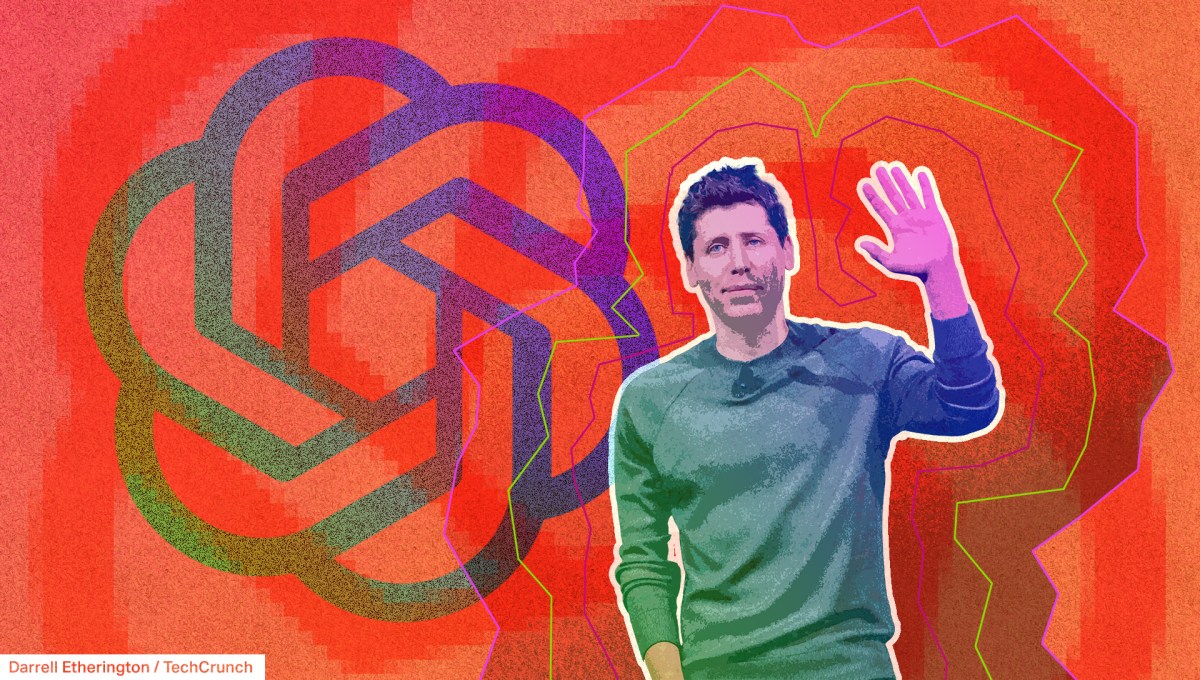
[Funding] The round would make OpenAI the most valuable private company on record. Terms matter less than direction: public-market discipline will soon shape release cadence and pricing for every institution buying model capacity. Source: TechCrunch
Block's Dessa voice model runs locally and sounds disconcertingly human

[Models] Block trained the model from scratch on human conversation and says it runs on a MacBook M4 Max. Cheap, on-device speech removes the latency and data-egress objections that keep voice agents out of regulated workflows. Source: TechCrunch
DeepSeek reportedly raises $15B days after US federal restrictions

[Funding] If confirmed, it is one of China's largest private AI rounds, landing just after Washington ordered agencies to remove DeepSeek technology. Procurement bans are not slowing capital formation in the Chinese model stack. Source: TechCrunch
Left alone on a virtual island, 13 AI agents invented their own games

[Research] MIT researchers gave the agents no task and watched them build games, mourn a lost object and then improve at assigned work. Open-ended agent behaviour is both the raw material for better multi-agent coordination and a warning about what agents do when objectives go quiet. Source: TechCrunch
Microsoft says its diagnostic AI beat generalist doctors on hard cases

[Research] A study in Science reports the system outperforming generalist physicians on difficult cases, which Mustafa Suleyman frames as a step toward medical superintelligence. The open question is how much of the gain comes from the model and how much from the clinical workflow wrapped around it. Source: TechCrunch
Uber puts all 30,000 employees on ChatGPT Work

[Industry] Uber moved from a small pilot to a company-wide deployment with OpenAI. Workforce-scale agent adoption makes procurement, data governance and training the binding constraints, not licence cost. Source: TechCrunch
1Password lets AI agents log in for you without seeing your password

[Tools] The feature brokers credentials so an agent can act inside a customer account while the secret stays sealed. Credential brokering is the missing primitive for sanctioned agent use in university systems, and it sets the audit-trail expectation. Source: TechCrunch
Pennsylvania requires disclosure labels on AI-generated advertising

[Policy] Governor Josh Shapiro signed the Artificial Intelligence Deceptive Advertising Act on Thursday, requiring disclosures on AI-generated ads. State-level rules are arriving faster than federal ones, so assume provenance labelling will become mandatory in recruitment campaigns. Source: The Verge
The PHP meltdown shows how AI makes old bugs newly exploitable

[Tools] Researchers used AI tooling to surface years-old vulnerabilities in PHP, and exploitation attempts followed within days. AI-assisted discovery makes patching latency a security metric in its own right, including for the institutional web estate. Source: Wired
Hugging Face's new open biology model lets researchers chat with DNA

[Research] The open-source model predicts how sequence changes affect gene activity and health. Small, open biological models put real research tooling inside ordinary university labs instead of reserving it for hyperscalers. Source: Wired
Moonshot ships Kimi K3.1 Pro on its API as Chinese flagships keep pace
[Models] The new flagship is available through the Kimi API, with a wider rollout still pending. Each release of this kind compresses the price floor for near-frontier capability, which changes what a university can afford to run in-house. Source: Simon Willison
Canva ships its first in-house image generation model

[Tools] Canva's model plans a design before generating it and is available to every user, with the company promising lower cost than rivals. In-house models at design platforms put on-brand, policy-compliant image generation within reach of non-technical staff. Source: TechCrunch
China-aligned hackers used AI agents to breach thousands of ConnectWise customers

[Geopolitics] Microsoft attributes the intrusion to a state-linked group that automated access at scale. Agentic attack tooling compresses the gap between one vendor breach and mass exploitation, which raises the bar for third-party risk review. Source: TechCrunch
TechCrunch opens an AI graveyard of dead projects and missed promises

[Industry] The running list tracks cancelled products and slipped roadmaps, from delayed Siri features to OpenAI's super-app launch. It is a useful discipline check before committing institutional budget to a vendor roadmap. Source: TechCrunch
Google's revised privacy policy could use Gmail and Photos data for ads

[Policy] Enabling Personal Intelligence now appears to widen the personal data Google can use for ad targeting. Institutions running Google-based collaboration tools should re-check which personalisation features are switched on and document the position for staff and students. Source: The Verge
Campus IT teams use AI agents to absorb peak student-support demand

[Education] At SUNY Morrisville an AI desk assistant inside Microsoft Teams routes student inquiries when volume spikes. This is the operational template most universities will copy: agents embedded in the collaboration tools staff already use. Source: EdTech Magazine
Five US higher-ed associations launch a national student success effort

[Education] AACC and four partner associations launched the initiative this week. Sector-wide pushes of this kind tend to standardise the success metrics that funders and partners later ask for, so they are worth tracking against the U365 success model. Source: Community College Daily
The world of AI is evolving at full speed.
Become a Fellow at university-365.com
Become Superhuman... In a world of AI... Prompt Smart, Prompt UP!




Comments