
AI News - Thursday, 19 November 2026 - Anthropic $1.5T IPO, Nvidia Post-Huang, Gemini 4 Neon

In a Nutshell
Anthropic priced its IPO at $83 a share, a $1.5 trillion marker that resets how AI capital is valued. Nvidia begins its post-Huang era while still guiding to record revenue. Google, Microsoft and OpenAI all pushed new models, and banks and school districts moved to contain the risks that agents create.
5-minute AI news update - 19 November 2026
In this AI News
Anthropic prices IPO at $83 a share, valuing it near $1.5 trillion

[Industry] Anthropic priced its initial public offering above the projected range, with reporting putting the raise near $81 billion and the fully diluted valuation near $1.5 trillion. It is the clearest market verdict yet on enterprise AI spending. Public reporting duties will also make Anthropic's risk disclosures readable, which helps buyers judge vendor stability. Source: TechCrunch

Nvidia board says it will not reinstate Jensen Huang as CEO

[Industry] Nvidia confirmed Colette Kress leads as interim CEO and that the board has no plan to bring back its former chief, while the SEC reportedly opened a probe. The company still guided to rising revenue. Governance risk at the main supplier of AI compute is now a real planning variable, not a headline. Source: TechCrunch
Nvidia stops selling AI chips to China after Huang's exit

[Geopolitics] Nvidia is walking away from H200 sales in China, reversing the approval fight its former chief executive waged with Washington. Export-driven market segmentation is hardening rather than softening. Compute access, not model quality, remains the main geopolitical lever in AI. Source: The Verge
Google launches Gemini 4 Neon as its next flagship model family

[Models] Google introduced Gemini 4 Neon on its official blog, and the launch dominated model discussion within hours. It lands in the middle of the busiest release week of the quarter. For U365 it confirms frontier capability keeps getting cheaper, which changes the build versus buy maths for our own AI features. Source: Google Blog
Microsoft ships seven new MAI models at Ignite 2026
[Models] Microsoft used Ignite to release seven models it positions on price-performance rather than raw frontier scale. Paired with Copilot becoming the surface for Office, Microsoft is pushing cheap inference into everyday work. Institutions standardised on Microsoft 365 will meet these models by default rather than by choice. Source: Microsoft AI
OpenAI releases GPT-6.2 Astra and Sol with a split early reception

[Models] OpenAI introduced Astra as its model for the hardest problems and Sol as the cheaper efficient option, publishing a system card the same day. Early power users split sharply, with some public testers calling Astra essentially unusable in their workflows. The gap between benchmark gains and practitioner experience is what we should test, not assume. Source: Simon Willison
Google opens Genie 4 world model to AI Ultra subscribers
[Models] Project Genie 4 is now rolling out to eligible Google AI Ultra subscribers, putting interactive world-model generation in front of paying users. World models are the training ground for embodied AI and simulation-heavy products. Universities building virtual labs and simulation-based learning should track this class of tool closely. Source: Google DeepMind Blog
Microsoft puts Word, Excel and PowerPoint inside Copilot
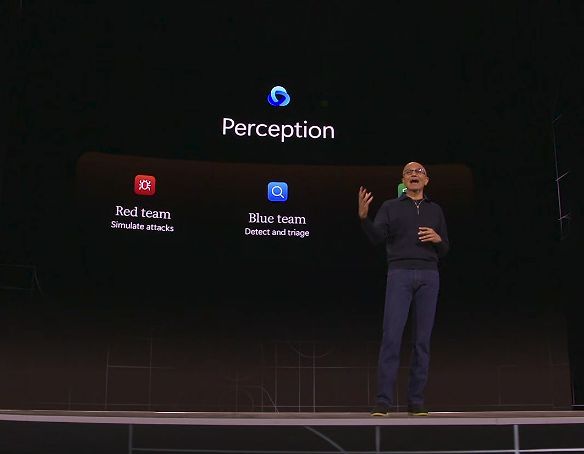
[Tools] At Ignite, Microsoft called Copilot the new operating system for work and moved the Office applications inside it, with always-on agents as the next step. That inverts the model from application first to agent first. It changes what staff training, permissions and data governance must cover. Source: Ars Technica
Banks tell customers that AI agent losses are the customer's problem

[Policy] Citi is the latest major bank to restrict personal finance AI agents and to disclaim liability when an agent is compromised. Agentic commerce is hitting liability allocation before it hits technical limits. Any U365 agent touching payments or personal data needs that same question answered internally first. Source: TechCrunch
NYC, LA and Chicago school districts weigh dropping Google Search

[Policy] The largest US school districts are looking for AI-free search alternatives for students, according to The Verge and the New York Times. Procurement pressure on AI defaults is arriving through education first. It is a live precedent for our own policy on AI features pushed into student-facing tools. Source: The Verge
AI swarm verifies the Enormous Theorem in 24 days

[Research] Axiom Math reported two results showing AI-assisted formal verification scaling to 16 million lines of mathematics, a classification project that took humans decades. Machine-checkable proof is the strongest form of AI output because correctness can be verified rather than trusted. That standard is directly useful for how we judge AI work in teaching and research. Source: IEEE Spectrum
Survey finds over a third of Gen Z use AI as a social companion

[Research] Wired reports that more than a third of Gen Z rely on AI for friendship, and that those users report higher rates of loneliness. For a university this is a student wellbeing signal, not just a technology trend. It argues for explicit guidance on companion AI inside our student support model. Source: Wired
Snapchat lets AI coding assistants build AR Lenses from plain language

[Tools] Lens creators can now describe what they want and have Claude Code or Cursor generate the Lens end to end. It is a concrete case of coding agents entering a creative production pipeline rather than a developer toolchain. Expect the same pattern to reach courseware and interactive content authoring. Source: TechCrunch
Google adds temporary, off-the-record threads to AI Mode in Search

[Tools] AI Mode now offers temporary conversations that stay out of search history and are not used for personalisation. Privacy controls on AI surfaces are turning into a procurement question rather than a settings detail. Worth noting when we review which AI tools staff may use with student data. Source: TechCrunch
Amazon and Google will own nearly 30% of Anthropic after its IPO

[Funding] Amazon will hold just under 15% of Anthropic after listing with room to increase, and Google is a close second. Concentration of model ownership inside two cloud providers narrows the field of independent vendors. That matters for any institution trying to avoid single-cloud dependency in its AI stack. Source: TechCrunch
Nadella says AI agents will reshuffle the economics of the web

[Industry] Microsoft's chief executive argues agents could break advertising-driven business models and force commerce platforms to rethink how value is captured. If traffic stops being human, the open web's funding model changes with it. That has downstream effects on how universities publish and how our content gets found. Source: TechCrunch
Colleges rethink AI licensing and budgeting as demand grows
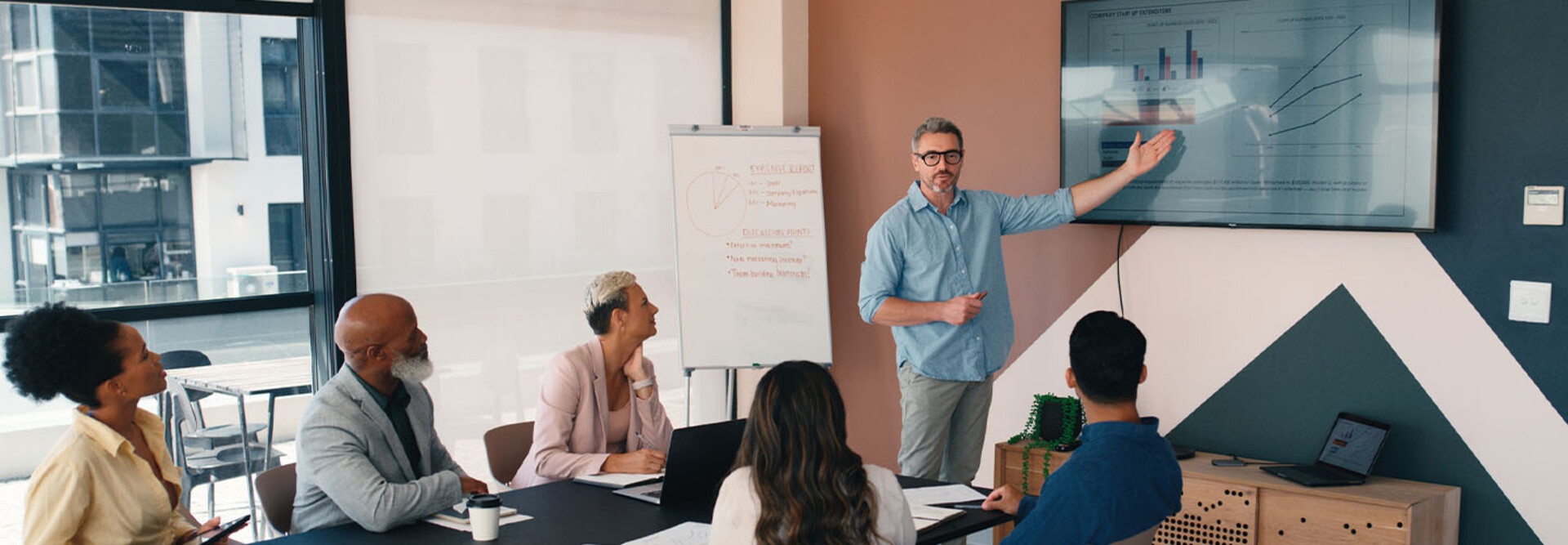
[Education] Institutions are being pushed to treat AI as a licensed workforce-development cost rather than a discretionary pilot. Seat-based pricing and duplicate departmental contracts are the usual failure points. U365 should hold one consolidated licence view before department-level buying spreads. Source: EdTech Magazine
Wired: criminals adopt point-and-shoot AI hacking tools

[Policy] Artex and similar AI-assisted penetration tools let inexperienced attackers scan targets and succeed at exploitation, Wired reports. The barrier to entry for serious intrusion is falling faster than defensive tooling is improving. Patch cadence and exposure scanning remain the cheapest controls we actually own. Source: Wired
The world of AI is evolving at full speed.
Become a Fellow at university-365.com
Become Superhuman... In a world of AI... Prompt Smart, Prompt UP!




Comments