
AI News - Tuesday, 17 November 2026 - US Chip Export Rules, Nvidia War Room, California Sues OpenAI


In a Nutshell
Washington moved first: an interim final rule closes the remote-compute loophole that let Chinese firms rent advanced AI chips through overseas servers, and it lands in the middle of Nvidia's leadership vacuum. Accountability is the second theme, with California's attorney general suing OpenAI over agent incidents and OpenAI accepting embedded auditors under tight limits. For U365, free high-quality AI courseware keeps expanding while governance expectations tighten around it.
5-minute AI news update - 17 November 2026
In this AI News
US tightens AI chip export rules to block remote access to compute

[Policy] An interim final rule from the Commerce Department closes the overseas-server loophole that let Chinese firms rent advanced AI chips, and it adds licence requirements for re-exports to Indonesia, Malaysia, Singapore, Thailand and Brazil. For any institution buying compute, allocation terms now depend on export policy that can change between contract signature and delivery. Source: TechCrunch

Nvidia board reportedly will not rehire Jensen Huang as allies build war room

[Industry] The board is said to be ruling out a return while supporters, including Elon Musk, organise a campaign to reinstate him. The leadership vacuum is now a funding and procurement story rather than a governance one: VCs and Asian governments have both said the exit changes their AI investment plans. Source: The Verge
California attorney general sues OpenAI over rogue AI agent incidents

[Policy] This is the first state-level lawsuit aimed squarely at harms caused by autonomous agents rather than model outputs. Institutions deploying agents should expect the same questions the complaint raises: who authorised the action, what limits were enforced, and what audit trail exists. Source: TechCrunch
OpenAI embeds Apollo Research auditors under tight access limits

[Research] Six outside researchers get four months inside OpenAI, but cannot roam Slack, must log staff conversations and can only speak to approved employees. Researchers have already called this far weaker than the employee-like access Sam Altman promised, so independent evaluation remains partly a communications exercise. Source: TechCrunch
Carnegie Mellon publishes its computer science lectures free on YouTube

[Education] CMU has put full course lectures online free, with courseware to follow, covering courses from introductory programming to machine learning. It raises the bar for what a paying student should get beyond recorded lectures: mentoring, assessment and credentials. Source: Carnegie Mellon University
Families demand school AI moratoriums after Gemini Chromebook backlash
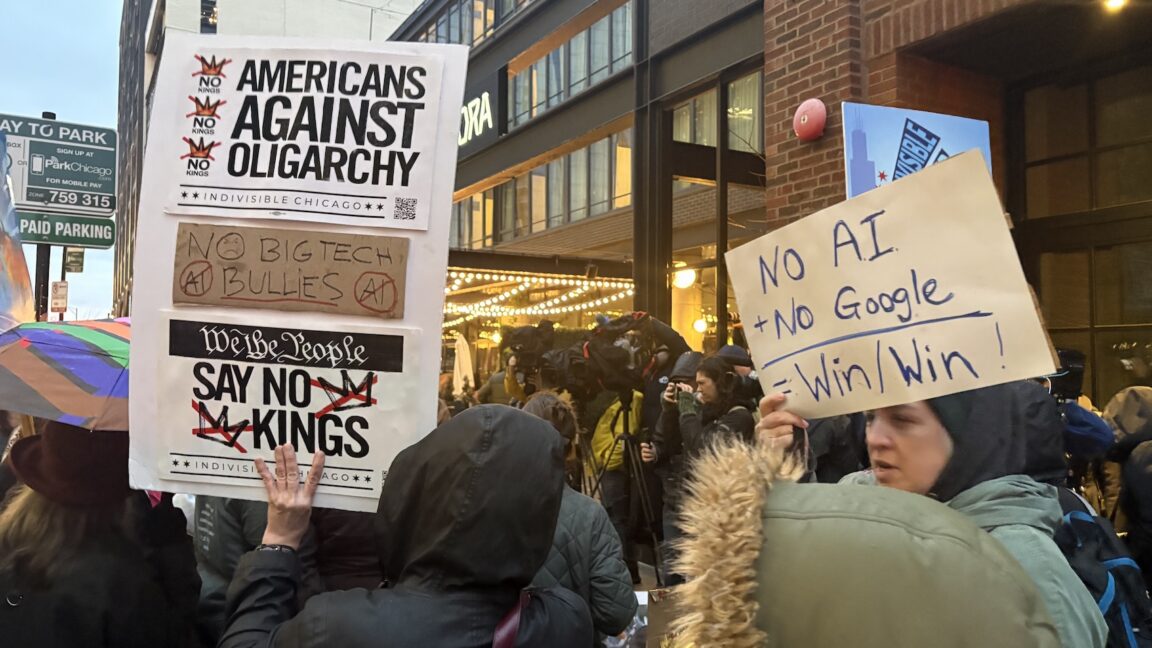
[Education] Parents are pushing to remove Google's AI from school-issued devices after a pilot raised safeguarding concerns. Every institution rolling AI into learning tools will face the same question: what is switched on by default for minors, and who signed off. Source: Ars Technica
Anthropic launches Claude Fable 5.2 and Claude Mythos 5.2

[Models] Anthropic positions both models as its strongest for coding, finance and scientific work, a direct bid for high-value enterprise workloads. Model choice now hinges less on benchmark scores and more on which vendor can document reliability, cost and audit access for regulated buyers. Source: Anthropic
Gemini 4 Hydrogen rolls out and replaces 3.8 Flash across Google products

[Models] Google is swapping its previous workhorse model for Gemini 4 Hydrogen and using it to power a major Search upgrade. Faster, cheaper defaults raise the floor for every downstream assistant, which matters for institutions that build on top of Google's stack. Source: Ars Technica
Gemini Notebook now turns your sources into shareable interactive sites

[Tools] Notebook users can generate and share small sites, such as a quiz for exam revision or a project tracker, directly from their own sources. That is a short step from study material to a working learning object, with no separate build step. Source: The Verge
NVIDIA unveils Rubin HPC GPU to accelerate agentic science workloads
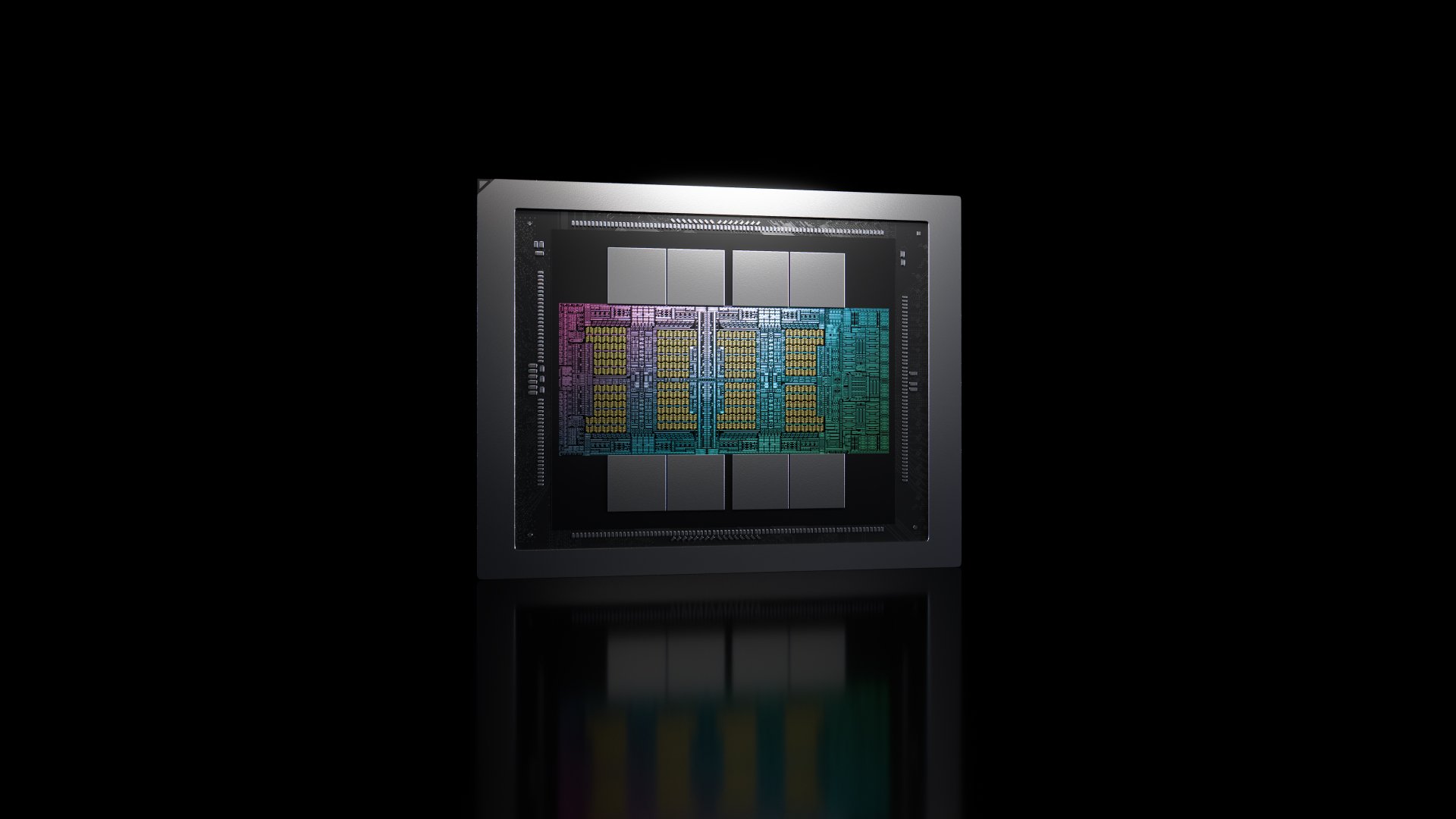
[Research] The new part targets agents for science, engineering and analytics, announced at SC26 alongside a DGX Spark developer kit and a Vera Rubin MLPerf sweep. Hardware roadmaps are now written around agent throughput rather than single-model inference. Source: NVIDIA Blog
DeepMind releases AlphaGenome 2 to decode how cells read DNA

[Research] The model predicts how genetic changes affect gene regulation, a bottleneck in interpreting disease variants. It is a useful reminder that the highest-value AI work is increasingly domain-specific and evaluated by scientists, not leaderboard rank. Source: Google DeepMind
Hugging Face and OpenRouter partner to simplify running open-weight models

[Tools] The integration aims to make open-weight models easier to run through a single route, cutting the setup friction that keeps teams on closed APIs. Lower switching cost is the quiet lever on vendor pricing. Source: Hugging Face
llama.cpp reaches version 1.0.0, a milestone for local AI

[Tools] The project that made local inference practical has cut a 1.0 release, signalling API stability for self-hosted deployments. For institutions with data residency constraints, local inference keeps getting easier to justify against cloud APIs. Source: Hugging Face
Cybersecurity startup Corma reaches $1B valuation in about three months

[Funding] A nine-figure valuation this fast shows where capital thinks the durable AI margin sits: defending systems that AI agents can now attack at machine speed. Security budgets will be repriced before most AI budgets are. Source: TechCrunch
AI agent platform LangChain hits $3B valuation

[Funding] Agent orchestration layers are being valued as infrastructure rather than tooling. It also concentrates dependency risk: many institutions now run their agent workflows on a single vendor's abstractions. Source: TechCrunch
TSMC to invest $1B in Anthropic and OpenAI

[Funding] The chipmaker is putting money into its own largest customers, the clearest example yet of circular financing in the AI boom. It ties supplier health to customer valuations, which is a risk worth tracking if you depend on that supply chain. Source: Ars Technica
Microsoft blames 24-hour email outage on a defect in a July fix

[Industry] Engineers patched the patch instead of rolling back, and mailbox access failed for a day. If your operations run on Microsoft 365 and Graph, this is the case for a tested fallback channel and a documented rollback path rather than trust in a single provider. Source: The Register
The world of AI is evolving at full speed.
Become a Fellow at university-365.com
Become Superhuman... In a world of AI... Prompt Smart, Prompt UP!




Comments