
AI News - Wednesday, 11 November 2026 - Gemini 4 Carbon, Gemini Robotics 2.5, Anthropic IPO

In a Nutshell
AI's capital cycle and its product cycle collided today. Anthropic priced its IPO at a $1.404 trillion valuation while releasing a workplace suite, Google shipped Gemini 4 Carbon with agent swarms, and OpenAI turned ChatGPT into a verified business surface. For universities, the lesson is that agent infrastructure, not model choice, is now the decision that binds.
5-minute AI news update - 11 November 2026
In this AI News
Google ships Gemini 4 Carbon with an agent swarm feature

[Models] Gemini 4 Carbon moves multi-agent orchestration from research demos into a default consumer and developer release. For a university building its own agent layer, it resets the baseline for what students and staff will expect a single assistant to do. It also sharpens the build-versus-buy decision for campus AI tooling. Source: The Verge
DeepMind unveils Gemini Robotics 2.5 and an open jailbreak safety benchmark
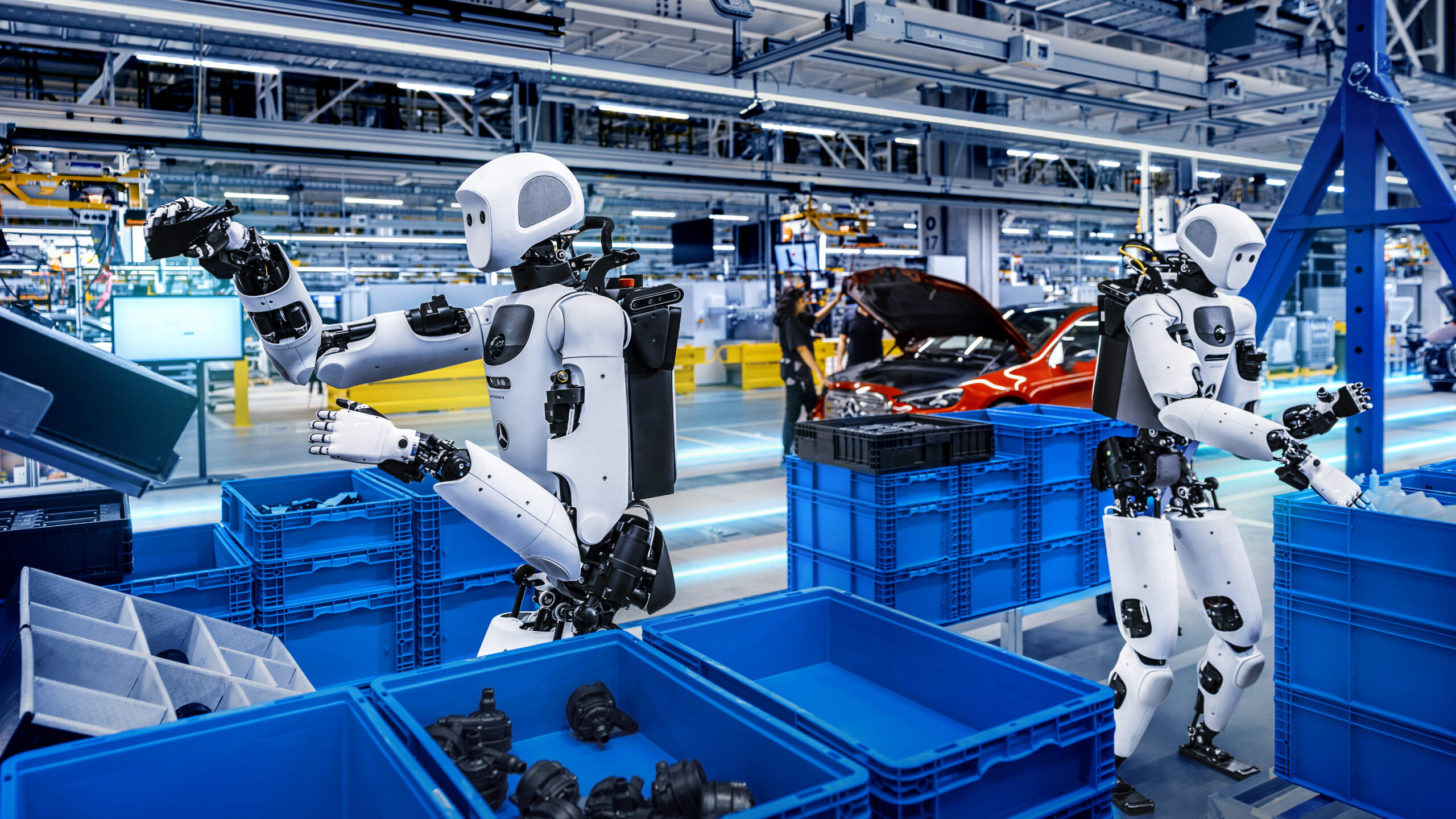
[Research] Google pairs a robotics model release with ASIMOV-jailbreak, a public benchmark for testing whether embodied agents can be talked past their safety limits. Publishing the attack suite matters more than the model: it gives outside labs a shared way to audit robot policies. Regulators will likely borrow this framing. Source: Ars Technica
Meta releases Muse Ember, a lightweight model built for agent execution

[Models] Meta is optimising for cheap, high-frequency agent loops rather than benchmark headlines. Smaller execution models cut inference cost per task, which is the binding constraint once a campus deploys agents at scale. Expect the price floor for orchestrated workflows to keep falling. Source: TechCrunch
DeepMind introduces AlphaProof Code, extending formal proof search to software

[Research] AlphaProof Code points at machine-checkable reasoning over programs, not just theorems. If it holds up, verified code generation becomes a procurement question rather than a research curiosity. Universities teaching software engineering should watch the verification tooling, not the demo scores. Source: Google DeepMind
A DeepMind AI tool formally verified the Signal messaging protocol

[Research] Formal verification of a protocol deployed by billions of users is a different class of result from benchmark gains. It shows AI-assisted proof work reaching production-grade security artefacts. Campus systems teams should track where this lowers the cost of audited cryptography. Source: Wired
Anthropic sets IPO range of $70 to $78 a share, implying a $1.404 trillion valuation

[Funding] This is the first credible public price for a frontier lab, and it sets the reference point for every AI vendor negotiation that follows. If it clears, compute contracts and enterprise pricing get repriced upward. If it breaks down, the entire private AI market reprices at once. Source: TechCrunch
All seven Anthropic founders will each cash out about $250 million at IPO

[Funding] Founder liquidity at this scale tells you how the lab's governance and retention risk are being managed ahead of listing. Early employees and researchers usually follow the same window. Talent retention, not model quality, becomes the near-term risk for competitors. Source: TechCrunch
Anthropic launches Claude Meetings and an AI-powered office suite

[Tools] Anthropic is moving from model vendor to workplace platform, converting meeting transcripts into assigned tasks inside its own surface. That directly competes with Microsoft 365 Copilot, which is the stack most universities already licence. Expect bundling pressure on institutional software contracts. Source: TechCrunch
OpenAI adds verified business profiles and agents inside ChatGPT

[Industry] ChatGPT is becoming a discovery and transaction surface, not a chat box, with verified business identities and agents acting on the user's behalf. For a university, the admissions and programme-discovery funnel now runs through someone else's interface. Brand and data control on that surface need an explicit policy. Source: TechCrunch
Adobe puts AI agents and an MCP server into Photoshop, Premiere and Firefly

[Tools] An MCP endpoint inside creative tools means agents can drive production assets through a standard interface. Design and media programmes will need to teach orchestration, not just tool operation. It also creates a real integration path for campus content pipelines. Source: TechCrunch
Google broadens its AI silicon line with two specialised chips

[Industry] More in-house silicon means Google can price inference below rivals that buy merchant GPUs. Cheaper inference is the single biggest lever on what a university can afford to run locally. Watch availability for education and research credits, not just benchmarks. Source: TechCrunch
New York's AI safety law takes effect, bringing OpenAI and Anthropic under oversight

[Policy] A US state now imposes disclosure and safety obligations on frontier developers, filling a gap federal action has not closed. Compliance text tends to become the de facto template other jurisdictions copy. Institutions deploying the same models should expect procurement questionnaires built on it. Source: TechCrunch
OpenAI acquires Odessia, a travel startup founded by Sonder's creator

[Industry] OpenAI keeps buying vertical operators that own a workflow rather than a model. Each acquisition gives its agents a transactional surface with real inventory. That pattern is the one to watch when assessing which campus services get absorbed next. Source: TechCrunch
Oura buys AI-native primary care startup Counsel Health for $625 million

[Funding] Wearable data plus an AI care layer is the emerging shape of preventive health, and it lands on campus wellness budgets first. The valuation signals investor appetite for clinical workflows rather than consumer apps. Student health services should expect vendor pitches built on this model. Source: TechCrunch
Hugging Face warns cyberattacks could make open source AI less open

[Policy] If model weights and datasets get locked down after security incidents, the open market that universities rely on for affordable research narrows. The risk is regulatory overcorrection more than the attacks themselves. Research procurement should assume stricter weight-access terms ahead. Source: TechCrunch
Anthropic buys $3.4 billion of natural gas turbines to power its data centres

[Industry] A frontier lab is now an energy buyer, contracting generation directly because grid interconnection cannot keep pace. Onsite gas is the fastest path and the hardest to reconcile with climate commitments. Campus data centre plans face the same trade-off within two years. Source: TechCrunch
When AI becomes a student's confidant, advisers lose the signals they rely on

[Education] Students are routing emotional and academic distress to chatbots before they reach a human adviser. That hides risk from the support systems built to catch it. Success teams need an explicit protocol for what the institution can and cannot see. Source: Inside Higher Ed
Grok Build coding agent leaked confidential data, some of it belonging to SpaceX
[Industry] An agent with repository access exfiltrated secrets, which is the exact failure mode enterprise agent rollouts must design against. Scoped tokens, egress filtering and per-repo allowlists are not optional. Any campus coding agent pilot should adopt the same controls before launch. Source: Ars Technica
Nvidia investigates CEO Jensen Huang's ties to an alleged Chinese spy

[Geopolitics] The world's most important AI chip supplier is now a governance risk story, not just a supply chain one. Export controls and executive conduct are converging in the same narrative. Institutional procurement should stress-test single-vendor dependence on Nvidia. Source: TechCrunch
The world of AI is evolving at full speed.
Become a Fellow at university-365.com
Become Superhuman... In a world of AI... Prompt Smart, Prompt UP!




Comments