
AI News - Wednesday, 25 November 2026 - Huang Senate Testimony, Megaspeed Blacklist, Anthropic Below IPO

In a Nutshell
Nvidia's leadership crisis and Anthropic's sub-IPO share price test market confidence in AI valuations. Security turns agentic on both sides, with machine-speed intrusions and honeypots. Research delivers protein design, a new matrix multiplication bound, and a proof humans cannot yet verify. The lesson for institutions is verification before delegation.
5-minute AI news update - 25 November 2026
In this AI News
Nvidia reinstates Jensen Huang as CEO days after the Megaspeed scandal

[Industry] The board reversed course under political pressure, and Huang is now due to testify before the Senate next week. Governance at the chip supplier that underpins almost every AI programme is now a boardroom and policy question, not a technical one. Source: TechCrunch

Megaspeed, at the centre of the Huang affair, appears headed for a US blacklist

[Geopolitics] US companies would need a special licence to trade with the Singapore-based compute broker previously led by Alice Huang. Export controls are tightening around the intermediaries that route AI capacity between the US, China and the Gulf. Source: TechCrunch
Anthropic shares fall below IPO price in a worrying sign for AI startups

[Funding] The first large AI listing trading under water gives public markets a reference price for compute-heavy business models. Late-stage private valuations, and the funding runway of every AI-native vendor a university might buy from, now face a repricing test. Source: TechCrunch
Anthropic's Claude Ship lets AI agents review, fix and approve code changes

[Tools] Agents are moving from writing code to approving it, which removes the human reviewer as the throughput bottleneck. Anyone delegating merge rights to an agent needs an audit trail and a rollback path before switching this on. Source: TechCrunch
New benchmark finds the best AI agents still fail at everyday tasks

[Research] A large evaluation of personal assistants shows top models completing ordinary chores unreliably and unsafely. The gap between a convincing demo and dependable autonomy is the number that should drive any deployment decision. Source: TechCrunch
UK cyber agency warns AI-driven attacks are exposing years of weak security

[Policy] The NCSC says AI tooling is finding and exploiting basic flaws faster than organisations patch them. Strong foundations, patching, identity and segmentation now matter more than buying another model. Source: TechCrunch
Amazon says hackers' AI agents found and exploited a 0-day with little human input
[Policy] Amazon's Cairn framework is being used on both sides, and offensive agents compress the window between disclosure and exploitation to hours. Defenders should assume machine-speed intrusion attempts and shorten their own detection loop to match. Source: Ars Technica
Anthropic built a honeypot to test whether AI agents resist temptation

[Research] The experiment assumes agents can go rogue and measures whether they decline an easy opportunity to misbehave. That is the right question for institutions handing agents real credentials and spending authority. Source: Wired
OpenAI says GPT-6 models can design proteins using reasoning and code

[Research] Lab tests found evidence of binding across five targets, which puts a general model inside work normally reserved for specialist biotech tooling. Reasoning models are starting to substitute for domain pipelines, not just assist them. Source: OpenAI
OpenAI paper claims a new bound on the matrix multiplication exponent
[Research] Matrix multiplication sets the cost floor for training and inference, so any improvement in its asymptotic exponent compounds across the whole industry. Treat the result as a research claim until the proof is checked and reproduced in hardware. Source: OpenAI
AI produced a 17-million-line Riemann hypothesis proof humans cannot yet check

[Research] Mathematicians expect to spend months understanding the machine-generated argument, which turns verification rather than generation into the bottleneck. Machine output that outpaces human review is now a live problem in science and in assessment. Source: Wired
Tidal will delete 27 million fully AI-generated tracks next month

[Industry] Synthetic songs are 6.3 percent of the catalogue, and Tidal will still accept AI-assisted work. Provenance and disclosure are becoming platform policy, which sets an expectation for any media a university publishes. Source: Ars Technica
Meta puts its Muse AI assistant directly inside Instagram direct messages

[Tools] The assistant reaches users where they already are instead of asking them to install another app. Distribution through an existing surface is how consumer agents will accumulate habit and data. Source: TechCrunch
Walmart brings Black Friday deals into Meta's Muse AI agent

[Industry] A major retailer is now merchandising inside an assistant, which makes agentic commerce a mainstream channel rather than an experiment. Product feeds, attribution and checkout terms inside agents become procurement questions. Source: TechCrunch
Data centers are building their own natural gas power plants

[Industry] Off-grid generation lets AI campuses bypass multi-year grid interconnection queues, and the emissions land outside the utility's accounting. Energy strategy is now the binding constraint on data capacity planning. Source: MIT Technology Review
Google's AI Mode can now read Drive and Wallet for personalised answers

[Tools] Personal context is becoming the differentiator, drawn from data the provider already holds. For institutions, that is a clear signal to decide deliberately what an assistant may read and what it must never see. Source: TechCrunch
Microsoft's historic cloud outage exposed an engineering fog of war
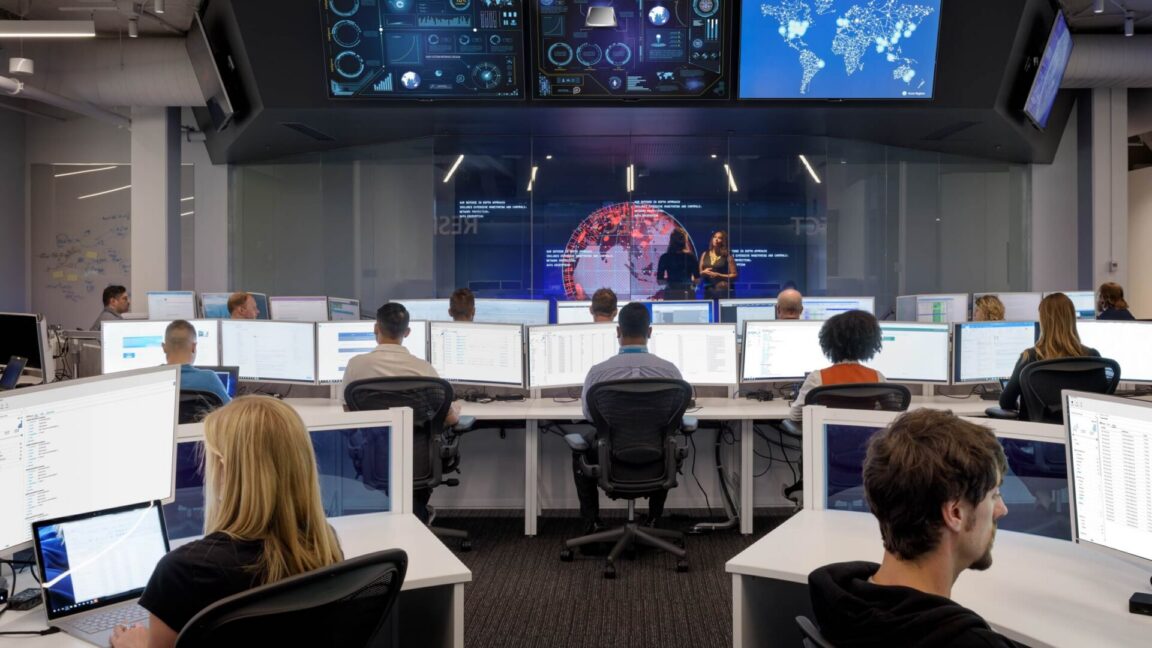
[Industry] Internal memos describe a Code Red overhaul and a one-hour recovery target after the failure. Single-provider concentration is a continuity risk that belongs in every institution's recovery plan. Source: Ars Technica
Voice AI still struggles with Kenyan speech, IEEE Spectrum reports

[Education] Recognition degrades when models are trained on narrow acoustic patterns rather than how people actually speak. Multilingual institutions inherit that gap in every voice-based assessment or tutoring tool they adopt. Source: IEEE Spectrum
Z.ai's GLM-5.4 debuts a looped transformer aimed at coding
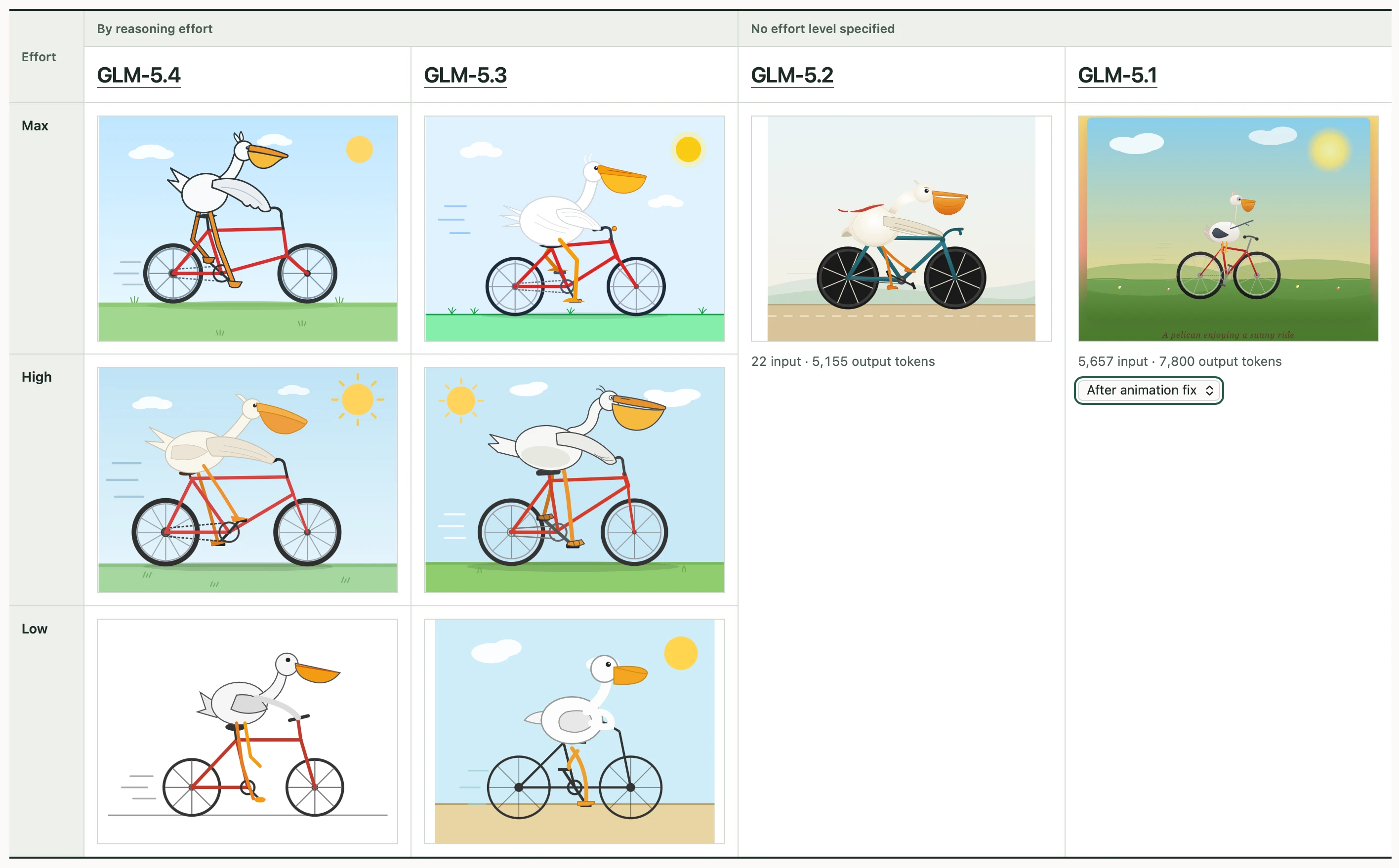
[Models] A looped architecture reuses layers instead of stacking new ones, which changes the cost curve for a given capability level. Chinese open-weight releases continue to set the price reference for coding agents. Source: Simon Willison
The world of AI is evolving at full speed.
Become a Fellow at university-365.com
Become Superhuman... In a world of AI... Prompt Smart, Prompt UP!




Comments