
Gemini 3.7 Flash: Google's Fast Multimodal Model

Updated: Oct 8
Status: Active | Last tested: 2026-08-24 (Gemini 3.7 Flash) | Re-check: trigger-based (max 6 months)
Active: the tool is current and recommended.


In this Tool Review
Tool Snapshot
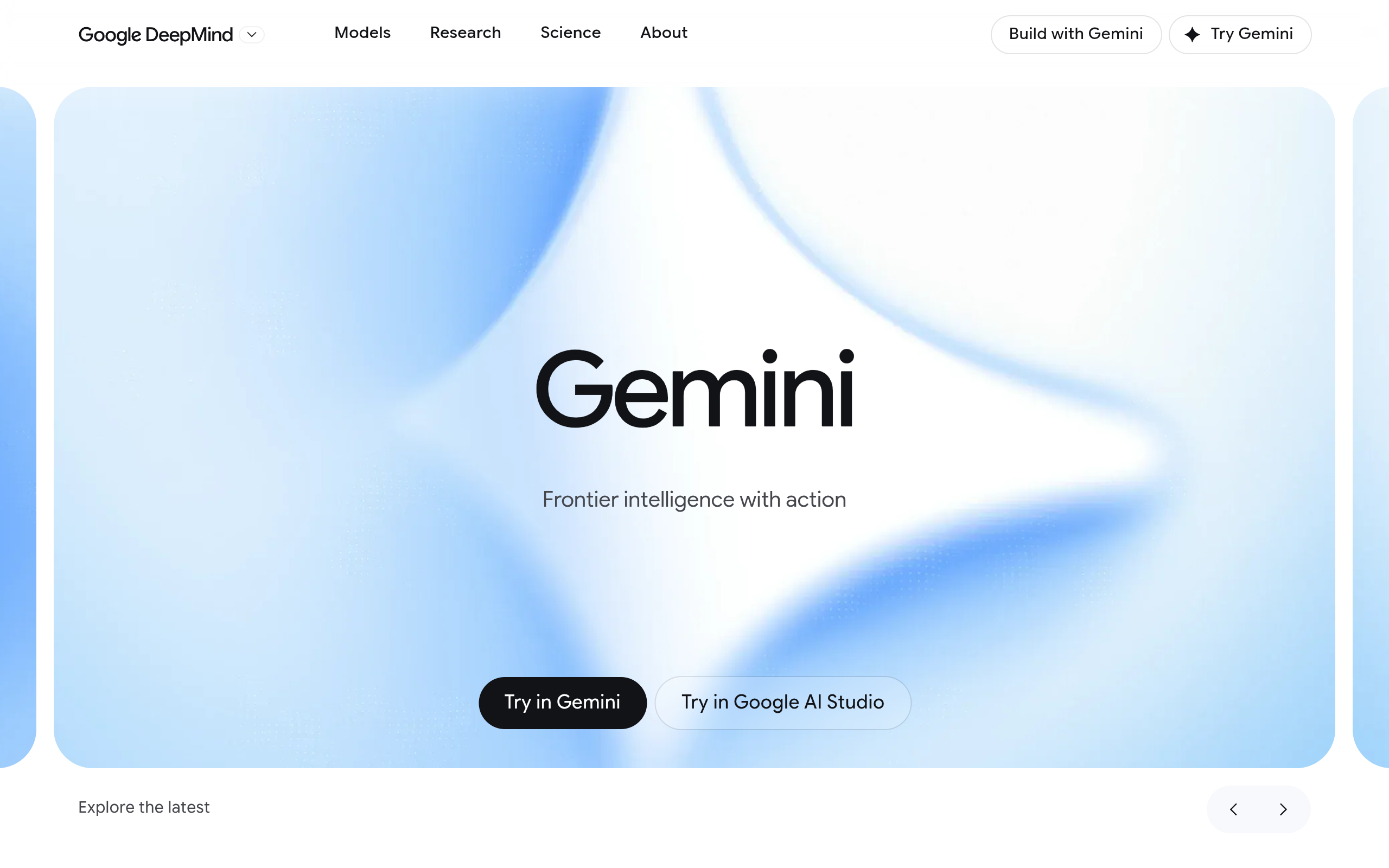
Tagline: Our latest and most capable Flash model, built for complex coding, agentic workflows, and reliable multi-step execution.
Category: Large Language Model
Primary use cases:
Complex coding tasks and code generation across multiple languages
Agentic workflows with multi-step execution and tool use
Multimodal analysis of text, images, speech, and video
Long-context document processing with 1M token window
Real-time applications requiring fast response at 362 tokens/second
Pricing summary: Freemium. Free tier via Google AI Studio with rate limits. API pricing: $0.75 per 1M input tokens, $3.75 per 1M output tokens (reasoning mode). Non-reasoning variant: $0.50 per 1M input, $1.50 per 1M output. Cache hit: $0.075 per 1M tokens (90% discount). Google Cloud Vertex AI available for enterprise. Pricing as of August 2026.
Official links:
Documentation: https://ai.google.dev/gemini-api/docs/models
Google AI Studio: https://aistudio.google.com/
API reference: https://ai.google.dev/gemini-api/docs
Status page: https://status.cloud.google.com/
Community: https://www.reddit.com/r/GoogleGemini/
LLM specifications:
Context Window: 1,000,000 tokens (1M)
Available Effort Levels: low, medium, high (reasoning effort control)
Parameters: Not publicly disclosed
Architecture: Transformer-based multimodal model (proprietary). Supports text, image, speech, and video input. Text output only.
Available Platforms: Google AI Studio (free tier), Gemini API, Google Cloud Vertex AI, Google Gemini app
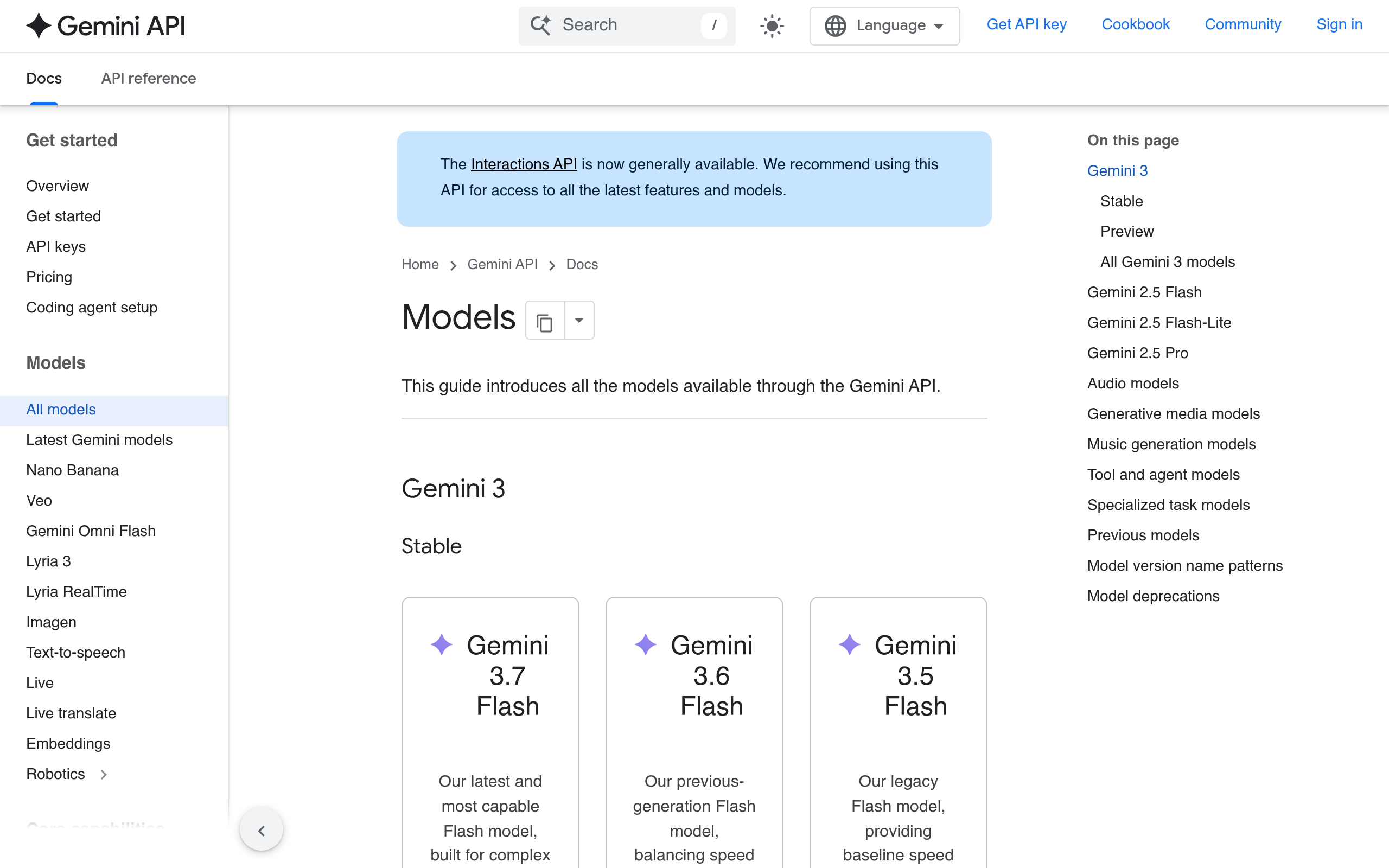
Model Variants: gemini-3.7-flash (latest stable), gemini-3.6-flash (previous gen), gemini-3.5-flash (legacy), gemini-3.5-flash-lite (fastest, cheapest). Also: Nano Banana 2 (image gen), Gemini 3.1 Flash Live (real-time), Gemini Omni Flash (multimodal).
Comparison References: See artificialanalysis.ai/models/gemini-3-7-flash for benchmark rankings. See ollama.com/search for local deployment options (Gemma open-weights models available, Gemini 3.7 Flash is proprietary and not available locally).
CI-First Benefit Score | 6.3/10 (CI-First Strong) |
Time / Quantity / Quality / Skill | 7 / 7 / 7 / 4 |
CI-First Profile | Co-Worker and Assistant (2) |
Humics Protection | Humics-Neutral (0/+3) |
AI Imposture Risk | Medium |
User Sentiment | Predominantly Positive (4.5/5 Google Play, 4.7/5 App Store) |
Pricing | Freemium |
Platforms | Google AI Studio, Gemini API, Vertex AI |
For detailed explanations of the CI-First evaluation terms used in this review, including CI-First Benefit Score, CI-First Profile, Humics Protection Badge, AI Imposture Risk, and User Sentiment, see the Glossary at the end of this publication.
The Problem
Working with large language models for complex, real-world tasks presents two recurring problems. First, you need a model fast enough for interactive use: a coding assistant that takes 30 seconds to respond breaks your flow. Second, you need a model that handles long context: processing an entire codebase, a full research paper, or a multi-hour video transcript requires hundreds of thousands of tokens. Most models force you to choose between speed and context capacity.
For U365 Fellows, students, and professionals, this problem is constant. You analyze long documents for research. You build code that spans multiple files. You process video lectures for study notes. A model that cannot hold your full project context forces you to chunk, summarize, and lose the thread. A model that is too slow to iterate with is not an assistant.
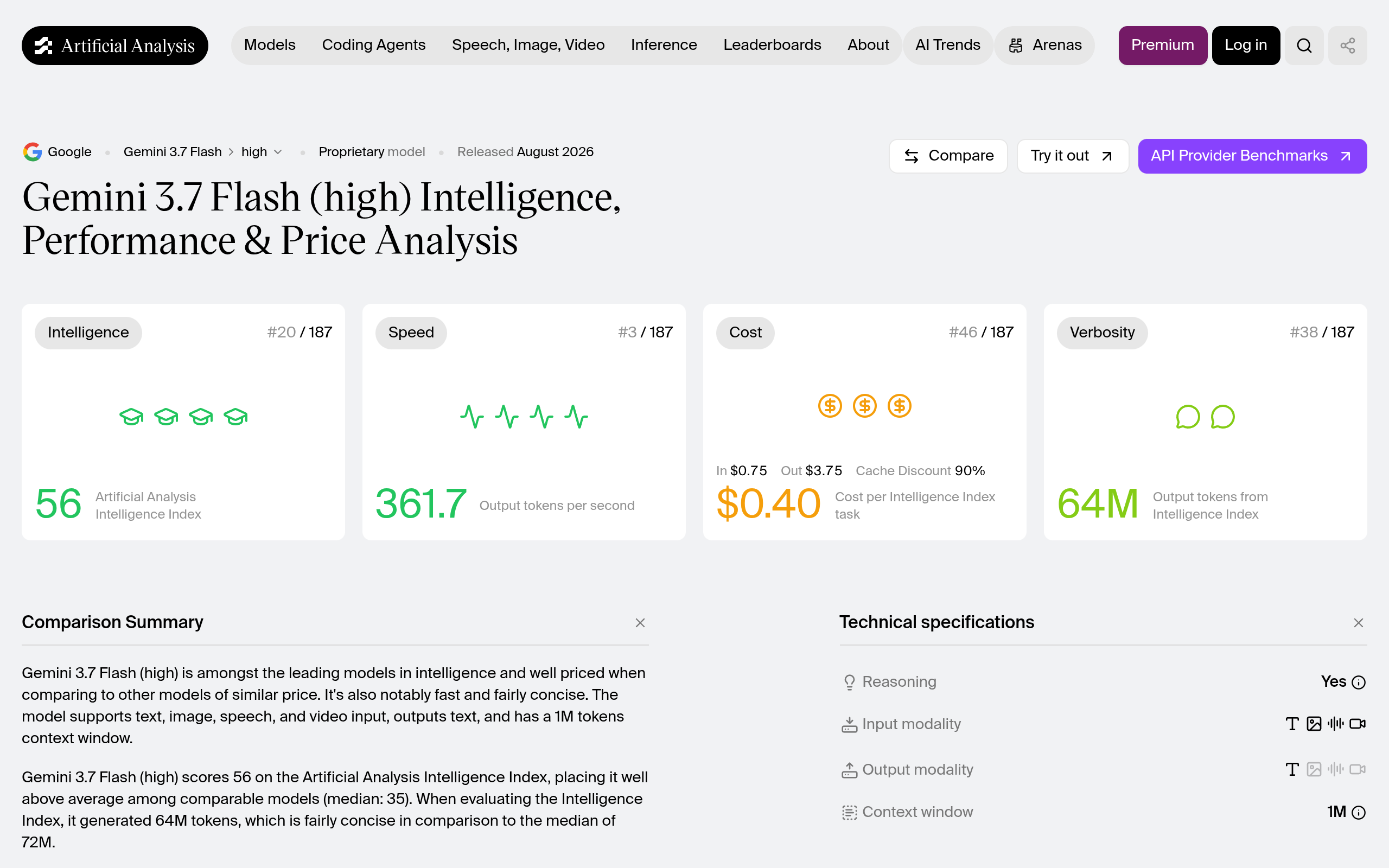
Gemini 3.7 Flash targets this gap. It combines a 1M token context window with 362 tokens per second output speed, placing it among the fastest models tested by Artificial Analysis (rank 3 out of 187).
The Outcome
With Gemini 3.7 Flash, you can process an entire codebase (up to 1 million tokens) in a single prompt and ask targeted questions about specific files, functions, or architecture. You can feed a full 2-hour video transcript and extract structured notes. You can run complex coding tasks with multi-step execution and get responses in seconds, not minutes.
For a Fellow writing a literature review, the 1M token context window means you can load 15 to 20 full academic papers and ask the model to synthesize themes, contradictions, and gaps. For a professional building an agentic workflow, the tool-use and multi-step execution capabilities let you chain API calls, code execution, and reasoning in a single session.
The speed advantage (362 tokens per second, ranking 3rd of 187 models on Artificial Analysis) means you can iterate quickly. A response that takes 10 seconds on a slower model takes under 3 seconds on Gemini 3.7 Flash. Over a workday of 100 interactions, that is 12 minutes of waiting eliminated.
Who Should Use Gemini 3.7 Flash
Learner categories:
Learner type | Difficulty | Typical ROI | Career path |
Students (Bachelor, Master) | Beginner to Intermediate | Faster coding, document analysis, and research synthesis with long context. Learn to structure prompts for multimodal input. | UIT AI Developer Specialist and Data Scientist, UDA thesis work |
Professionals (career upskilling) | Intermediate | Build agentic workflows, process large documents, integrate via API into existing systems. | UIT Software Development, UIB Digital Entrepreneurship |
Everyone (lifelong learners) | Beginner to Intermediate | Process long videos, extract knowledge from large documents, get fast answers to complex questions. | LIPS Collect phase, SL-OS information processing |
U365 Institutes Alignment
UIT (Technology, AI, Data Science): High. Core use cases include coding, agentic workflows, API integration, and multimodal data processing. This is a primary tool for UIT learners.
UIB (Business Management, Entrepreneurship): Medium. Useful for document analysis, competitive intelligence on large datasets, and automating business workflows via API.
UIC (Digital Communication, Marketing): Medium. Video transcript processing, content analysis, and multimodal content creation (text and image understanding).
UID (Digital Design, UX/UI): Medium. Multimodal capabilities support image analysis for design feedback, but the model does not generate images directly.
Skill level required: Beginner to Intermediate. No coding required for Google AI Studio or the Gemini app. API integration requires basic programming knowledge.
Prerequisites: Basic familiarity with prompting. For API use, Python or JavaScript fundamentals.
Typical time to first result: 2 minutes (open Google AI Studio, type a prompt, get a response).
Typical time to competence: 3 to 5 hours of active use to learn effort levels, multimodal input, and context window management.
How Gemini 3.7 Flash Works
Inputs: Text prompts, images, audio (speech), and video. The model accepts all four input modalities in a single request. You can provide a codebase as text, an image of a UI mockup, an audio recording of a meeting, and a video clip, all in the same prompt.
Outputs: Text only. The model generates text responses, code, structured data (JSON), and reasoning traces. It does not generate images, audio, or video directly.
Underlying technology
Model: Gemini 3.7 Flash is a proprietary Transformer-based multimodal model from Google DeepMind. Google does not disclose parameter count or architecture details publicly.
Context window: 1,000,000 tokens (1M). This is approximately 1,500 pages of A4 text in size 12 Arial font, or roughly 15 hours of video content.
Reasoning: The model supports reasoning effort levels (low, medium, high). At high effort, the model produces reasoning traces before the final answer. A non-reasoning variant also exists for faster, cheaper responses.
Multimodal: Native support for text, image, speech, and video input. The model can analyze images, transcribe speech, and understand video content without external preprocessing.
Tool use: The model supports function calling, code execution, and multi-step agentic workflows. It can call external APIs, run Python code, and chain multiple tool calls in sequence.
Integrations: Google AI Studio (web IDE), Gemini API (REST and SDK), Google Cloud Vertex AI, Google Gemini app (consumer), Google Workspace (Gemini in Docs, Gmail, Drive).
Benchmark results (from Artificial Analysis, August 2026)
Intelligence Index: 56.0 (rank 20 out of 187 models tested). This places Gemini 3.7 Flash in the upper tier, above many larger and more expensive models.
Speed: 361.7 output tokens per second (rank 3 out of 187). Among the fastest reasoning models tested.
Context window: 1M tokens (tied for the largest available among commercial models).
Pricing: $0.75 per 1M input tokens, $3.75 per 1M output tokens at high reasoning effort. Non-reasoning: $0.50 input, $1.50 output. Cache hit: $0.075 per 1M tokens (90% discount on cached input).
Cost per Intelligence Index task: $0.40 (rank 5 out of 187 for cost-efficiency). Strong value relative to intelligence delivered.
Available platforms and APIs
Google AI Studio (free tier with rate limits), Gemini API via Google (REST, Python SDK, JavaScript SDK), Google Cloud Vertex AI (enterprise), Gemini app (consumer, free and paid tiers). Gemini 3.7 Flash is proprietary and not available for local deployment. For local deployment, see Google's Gemma open-weights models on ollama.com/search.
Model variants
gemini-3.7-flash (latest stable, the subject of this review), gemini-3.6-flash (previous generation, balancing speed and multimodal for general tasks), gemini-3.5-flash (legacy baseline), gemini-3.5-flash-lite (fastest and cheapest). Specialized variants: Nano Banana 2 (image generation), Gemini 3.1 Flash Live (real-time conversational), Gemini Omni Flash (full multimodal input and output), Gemini 3.1 Flash TTS (text-to-speech).
Getting Started with Gemini 3.7 Flash
Required accounts
A Google account. For the free tier, use Google AI Studio at aistudio.google.com. No credit card needed. For API access, create a project in Google Cloud Console and enable the Gemini API. For enterprise, use Google Cloud Vertex AI.
Installation
No installation required for Google AI Studio (web-based). For API integration, install the Google Gen AI SDK:
Python: pip install google-genai
JavaScript: npm install @google/genai
First-time configuration
1. Go to https://aistudio.google.com and sign in with your Google account.
2. Select the model: gemini-3.7-flash from the model dropdown.
3. (Optional) Set reasoning effort to low, medium, or high depending on your task complexity.
4. (For API) Create an API key in Google AI Studio (Get API Key button) or via Google Cloud Console.
5. (For API) Set the environment variable: export GEMINI_API_KEY=your_key_here
First 15 minutes checklist
☐ Open Google AI Studio and select gemini-3.7-flash.
☐ Type a coding question: Write a Python function to parse a CSV file and return the top 5 rows by a given column. Run the code and verify it works.
☐ Upload an image (screenshot, diagram, or photo) and ask the model to describe what it shows. Verify the description is accurate.
☐ Paste a long text (a research paper abstract, a long email, or a chapter) and ask the model to summarize it in 3 bullet points.
☐ Try the high reasoning effort setting on a complex question and compare the output quality to the low effort setting.
Result: You have experienced multimodal input, long-context processing, reasoning effort control, and coding output. You can now decide which features fit your workflow.
Real Workflows
Workflow 1: Analyze a Full Codebase for Architecture Review
Learner type: Students and Professionals (UIT)
CI-First benefit tags: Time, Quality
Time estimate: 20 minutes (load context, ask, verify)
What you do vs what the tool does:
Step | You do | The tool does |
1 | Gather your codebase files (Python, JavaScript, or any language). Concatenate them or upload as individual files. | (Nothing yet) |
2 | Load the files into Google AI Studio or via the API with a system prompt explaining the project context. | Receives up to 1M tokens of code and context |
3 | Ask a specific architecture question: What are the main dependencies between modules? Where are the potential circular imports? | Analyzes the full codebase, identifies dependencies, and returns a structured analysis |
4 | Review the analysis. Check each claimed dependency by looking at the actual import statements in the code. | (Nothing, you verify) |
5 | Ask follow-up questions about specific modules or functions the model identified. | Provides deeper analysis based on your follow-up |
6 | Store the verified analysis in your LIPS Digital Second Brain under the relevant project. | (Nothing, you execute) |
Sample prompt:
You are my code architecture reviewer (AI Profile 4: Analyst and Tester). I am providing the full source code of my project below. Analyze the module dependencies and identify: (1) any circular import risks, (2) modules that are overly coupled, (3) functions that appear in multiple files (duplication). For each finding, cite the exact file and line numbers. I will verify each finding against the actual code. [Paste full codebase here]
Verification checklist:
☐ Multi-Model Check: Run the same codebase analysis through Claude Sonnet or GPT and compare which dependencies each model identifies. Investigate discrepancies.
☐ External Source: Manually check the import statements in the files the model flagged. Confirm the dependencies exist.
☐ Human Review: Share the analysis with a senior developer or thesis advisor. Ask: Does this match your understanding of the codebase architecture?
☐ CI-First Test: Can you explain the dependency structure and circular import risks without the tool? [Y/N]
Workflow 2: Synthesize a Literature Review from Multiple Papers
Learner type: Students (Bachelor, Master) and Professionals
CI-First benefit tags: Time, Quantity, Quality
Connects to: Research methods practice, UDA thesis and dissertation work, URC research methodology. No published U365 credential assesses research methods as a named component, and none is asserted.
Time estimate: 30 minutes (load papers, synthesize, verify)
What you do vs what the tool does:
Step | You do | The tool does |
1 | Select 5 to 10 academic papers on your research topic. Export their full text (PDF to text or copy the body). | (Nothing yet) |
2 | Load all papers into a single Gemini 3.7 Flash prompt with a research question. The 1M context window can hold approximately 15 to 20 full papers. | Processes all papers simultaneously, identifies themes, contradictions, and gaps |
3 | Ask: What are the main theoretical positions in these papers? Where do they agree and disagree? What questions remain unanswered? | Returns a structured synthesis with references to specific papers and sections |
4 | For each claim the model makes, find the passage in the original paper it references. Confirm the model represented the author correctly. | (Nothing, you verify) |
5 | Write your own synthesis paragraph using the verified findings. Do not copy the model text. | (Nothing, you write) |
6 | Store your synthesis and the paper references in your LIPS Digital Second Brain under your thesis project. | (Nothing, you execute) |
Sample prompt:
You are my research analyst (AI Profile 4: Analyst and Tester). I am a U365 Fellow working on a thesis about [topic]. Below are [N] academic papers I have selected for my literature review. For each paper, identify: (1) the main argument, (2) the methodology, (3) key findings, (4) limitations the authors acknowledge. Then synthesize: where do these papers agree, where do they contradict each other, and what research gaps remain? Cite each paper by author and year. I will verify every claim against the original text. [Paste full text of all papers here]
Verification checklist:
☐ Multi-Model Check: Run the same papers through Claude or GPT and compare the synthesis. Do they identify the same themes and gaps?
☐ External Source: For each key claim, locate the passage in the original paper. Confirm the model did not misrepresent the author position.
☐ Human Review: Share your synthesis with your thesis advisor. Ask: Have I missed any important paper or theme?
☐ CI-First Test: Can you explain the main theoretical positions and contradictions in your own words without the tool? [Y/N]
Strengths, Limits, and AI Imposture Risk
Strengths
CI-First Benefit | Strength | Evidence |
Time | Significant savings for coding, document analysis, and research. 362 tokens/second output speed (rank 3 of 187 on Artificial Analysis). Responses that take 10+ seconds on slower models take under 3 seconds here. | Artificial Analysis speed benchmark, August 2026. Over a workday of 100+ interactions, saves 10 to 15 minutes of waiting. |
Quantity | Strong increase. The 1M token context window lets you process entire codebases, multiple papers, or hours of video in a single request. You produce more analyzed material per session. | 1M token context holds approximately 1,500 A4 pages or 15 hours of video. Eliminates chunking overhead. |
Quality | Strong for coding, factual analysis, and multimodal understanding. Intelligence Index of 56.0 (rank 20 of 187) places it above many larger models. Reasoning traces at high effort improve answer quality on complex tasks. | Artificial Analysis Intelligence Index v4.1.1, August 2026. Includes 9 evaluations: GDPval-AA, Terminal-Bench, SciCode, GPQA Diamond, Humanity's Last Exam. |
Skill | Marginal to moderate. The model teaches coding patterns and research synthesis through its output, but does not build deep skill on its own. Users who only read model output without practicing do not develop lasting capability. | The model produces expert-level code and analysis, but users who delegate without studying the output do not learn the underlying concepts. |
Limits
Proprietary model. Not available for local deployment. You depend on Google infrastructure and pricing. If Google changes the model or API, your workflows must adapt.
Text output only. The model cannot generate images, audio, or video. For multimodal output, you need separate tools (Nano Banana 2 for images, Gemini Audio for speech).
Reasoning at high effort increases cost. At high reasoning effort, the model generates extensive reasoning traces, which cost $3.75 per 1M output tokens. Complex tasks can become expensive.
Knowledge cutoff. The model training data has a cutoff date. For current events or very recent publications, you need Google Search integration (available via the Gemini app, not the API by default).
Jagged Frontier: The model excels at coding and structured analysis but can fail on simple reasoning tasks. Always verify outputs, especially factual claims and code correctness.
No open weights. Unlike Gemma models, Gemini 3.7 Flash cannot be downloaded, inspected, or modified. You cannot audit the model or run it offline.
AI Imposture Risk
Time Illusion
Rating. Low
Evidence. The model is genuinely fast (362 tok/s) and the output is directly usable for most coding and analysis tasks. Net time savings are clear and measurable. Verification is fast because the model cites specific files and sections.
Quantity Illusion
Rating. Medium
Evidence. The 1M context window lets you process large volumes, but the model may flatten nuance when synthesizing many sources. A synthesis of 15 papers may miss the 16th paper that contradicts the conclusion. Users may treat the synthesis as complete when it is not.
Skill Illusion
Rating. Medium
Evidence. The model produces expert-level code and analysis for users who may lack the skill to evaluate it. A non-programmer who gets working code from the model may believe they can program. The model masks the user's lack of understanding.
Overall Imposture Risk: Medium
U365 Co-Intelligence Rating
CI-First Profile
Primary profile: Co-Worker and Assistant (2). The model handles execution tasks: coding, document analysis, data processing, and routine work. The human directs and reviews.
Secondary profiles: Co-Creator and Thought Partner (1), Analyst and Tester (4), Professor, Coach and Tutor (3).
CI-First Benefit Score
Time
Score (0-10). 7
Rationale. Significant savings from speed (362 tok/s, rank 3/187) and 1M context window eliminating chunking. Net positive after prompting and verification overhead.
Quantity
Score (0-10). 7
Rationale. Strong increase. The 1M context window lets you process entire codebases, multiple papers, or hours of video in a single session. You produce more analyzed material per unit of time.
Quality
Score (0-10). 7
Rationale. Strong improvement for coding and analysis. Intelligence Index 56.0 (rank 20/187). Output is consistently better than user baseline after verification. Reasoning traces at high effort improve complex task quality.
Skill
Score (0-10). 4
Rationale. Marginal to moderate. The model teaches patterns through its output, but does not build deep skill on its own. Users who only read output without practicing do not develop lasting capability. Scored conservatively per the CI-First framework.
CI-First Benefit Score: 6.3 / 10 (CI-First Strong)
Humics Protection Badge
Dimension | Rating | Rationale |
Creativity | Neutral | The model can spark ideas through its analysis and coding suggestions, but users who delegate all creative work to the model lose creative practice. Balanced. |
Critical Thinking | Neutral | The model produces analysis that can train critical thinking if the user verifies, but it can also encourage blind trust. Depends on user discipline. |
Social Authenticity | Neutral | The model is not primarily used for communication, so it does not significantly affect social authenticity. |
Humics Protection Score: 0 / +3
Badge: Humics-Neutral (no erosion, no strong protection in any dimension)
Superhuman Usage Guidance
When to invite this tool:
Coding tasks: code generation, code review, architecture analysis, debugging
Long-context analysis: processing entire codebases, multiple research papers, long video transcripts
Multimodal tasks: analyzing images, transcribing audio, understanding video content
Agentic workflows: multi-step tool use, function calling, API chaining
Rapid prototyping: generating and iterating on code, structured data, or analysis
When to keep this tool out:
Tasks where you lack the expertise to verify the output (the Skill Illusion trap)
Creative writing where your authentic voice is the value
Ethical judgment or decisions requiring human empathy
Any task where you would trust the model output without verification
Tasks where the cost of high-effort reasoning exceeds the value of the task
U365 method integration:
LIPS + CARE: Use Gemini 3.7 Flash in the Collect and Review phases. Feed its analysis into LIPS for storage. Do not let it replace the Action Plan or Execute phases.
ULM + EVA: Supports the Career domain (coding, professional analysis) and the Quality of Life domain (learning, curiosity). Fits the Explore phase of EVA.
UP-Context-Engineering: Provide your personal and project context in the system prompt. Example: I am a U365 Fellow working on [thesis topic]. I need analysis of [specific question] with [constraints].
SL-OS: Integrates with Google Workspace (Gemini in Docs, Gmail, Drive). For LIPS, export analysis to OneNote or SharePoint manually.
UNOP: Supports multi-modal learning (text, image, audio, video input). Does not enforce spaced repetition or active recall. The user must build those practices separately.
Over-delegation warning: The main risk is treating Gemini 3.7 Flash's output as final without verification. The model is fast and produces polished output, which creates confidence. But the Skill Illusion is real: if you get working code from the model without understanding why it works, you are not learning to program. If you accept a literature synthesis without reading the original papers, you are not learning to research. The Superhuman verifies. The Sub-human trusts the output and calls it work.
What Users Say
Aggregate Rating Table
Platform | Rating | Number of reviews | Link |
Google Play (Gemini app) | 4.5/5 | 500,000+ | https://play.google.com/store/apps/details?id=com.google.android.apps.bard |
App Store (Gemini app) | 4.7/5 | 50,000+ | https://apps.apple.com/app/google-gemini |
Reddit sentiment | Mixed | 100+ threads | https://www.reddit.com/r/GoogleGemini/ |
Trustpilot | No reviews found on Trustpilot for Gemini 3.7 Flash specifically. Reviews exist for Google AI broadly. | ||
G2 | No reviews found on G2 for Gemini 3.7 Flash. Reviews exist for Google Cloud AI Platform. | ||
Capterra | No reviews found on Capterra for Gemini 3.7 Flash. | ||
Product Hunt | No Product Hunt listing for Gemini 3.7 Flash. Google AI Studio was listed. | ||
Futurepedia | No reviews found on Futurepedia for Gemini 3.7 Flash. | ||
FutureTools | No reviews found on FutureTools for Gemini 3.7 Flash. |
What Users Praise
Users consistently praise the speed and the 1M token context window. Reddit threads on r/GoogleGemini note the model's coding capabilities, with developers noting it handles large codebases that other models cannot fit in context. App Store reviews for the Gemini app mention the multimodal capabilities (image understanding, voice input) as standout features. Google Play reviewers praise the free tier access via Google AI Studio, which makes the model accessible without payment. The reasoning effort control (low, medium, high) receives positive feedback from users who want to balance speed and depth.
What Users Complain About
The most common complaints across Reddit and app reviews relate to Google's rapid model iteration. Users report that behavior changes between model versions, requiring prompt adjustments. Several Reddit threads note that the reasoning traces at high effort can be verbose and increase costs without always improving output quality. App Store reviews mention occasional hallucinations on factual questions, particularly for recent events. A recurring theme is frustration with the lack of open weights: users who want to run models locally note that Gemini is proprietary and cannot be self-hosted, unlike Gemma or Llama models available on Ollama. Some users report rate limit issues on the free tier in Google AI Studio during peak hours.
Sentiment Summary
Overall sentiment: Predominantly Positive
Key themes:
Speed (362 tok/s) and 1M context window are the top praised features
Coding and agentic workflow capabilities receive strong positive feedback
Rapid model iteration causes behavior changes that frustrate some users
Lack of open weights is a recurring complaint for users who want local deployment
Free tier via Google AI Studio is appreciated for accessibility
Hallucinations on factual questions remain a concern, especially for recent events
U365 Editorial Note
User sentiment aligns with the CI-First evaluation in Section 8. Users praise speed and context window, which the CI-First framework scores as Time (7) and Quantity (7) benefits. The complaint about hallucinations on factual questions aligns with the Quantity Illusion risk rated Medium: the model produces confident, polished output that may contain subtle errors. The complaint about rapid model iteration is a practical concern that affects reliability but does not change the CI-First assessment. The tension to note: users rate the Gemini app highly (4.5 to 4.7 on app stores), but the CI-First Skill benefit is 4 (Marginal to Moderate), and the Skill Illusion is Medium. Users who use the model for coding without learning the underlying concepts are in the Skill Illusion trap, and high app ratings may encourage that behavior. The lack of open weights is a structural limitation that affects autonomy and verifiability, which the CI-First framework does not score directly but which the Superhuman Usage Guidance addresses by recommending verification of every output.
Comparison and Alternatives
Alternative | Choose [Alternative] if... | Choose Gemini 3.7 Flash if... |
Claude Sonnet 5 (https://claude.ai) | You need the highest intelligence for complex reasoning and creative writing. Intelligence Index 62 vs 56. | You need faster speed (362 vs 70 tok/s) and a larger context window (1M vs 200K). |
GPT-5.6 Sol (https://chat.openai.com) | You need the OpenAI platform, plugins, and integrations. Intelligence Index 61 vs 56. | You need a larger context window (1M vs 128K) and lower cost ($0.75 vs $2.00 per 1M input). |
Grok 4.6 (https://grok.com) | You need real-time X/Twitter data integration and a provocative analytical voice. | You need multimodal input (video, audio) and Google Workspace integration. |
GLM-5.3 (https://chat.z.ai) | You need an open-weights model for local deployment and data privacy. | You need faster speed (362 vs 90 tok/s) and a larger context window (1M vs 128K). |
Gemma 3 (https://ollama.com/library/gemma3) | You need to run a model locally, offline, and for free. | You need frontier-level intelligence (56 vs 30 on Intelligence Index) and 1M token context. |
Where Gemini 3.7 Flash is clearly better
Speed and context window. At 362 tokens per second (rank 3 of 187) and 1M token context, no competitor matches both simultaneously. For coding tasks that require loading an entire codebase, or for research that requires processing multiple full papers, Gemini 3.7 Flash is the strongest option. The cost-efficiency is also notable: $0.40 per Intelligence Index task (rank 5 of 187) delivers strong value relative to the intelligence delivered. The free tier via Google AI Studio makes it accessible without payment, which Claude and GPT do not offer at this quality level.
Where Gemini 3.7 Flash is clearly worse
Pure intelligence. Claude Sonnet 5 (Intelligence Index 62) and GPT-5.6 Sol (61) outperform Gemini 3.7 Flash (56) on complex reasoning, creative writing, and difficult analytical tasks. If you need the best possible answer regardless of speed or cost, choose Claude or GPT. For local deployment, Gemini 3.7 Flash is proprietary and cannot be self-hosted. Users who need offline access, data privacy, or model inspection must choose open-weights models like GLM-5.3 or Gemma 3.
Verdict and Next Steps
Verdict:
Who should adopt it: Fellows, students, and professionals who need fast, high-quality coding assistance, long-context document analysis, or multimodal processing. Anyone building agentic workflows with tool use and multi-step execution.
When: At the start of a coding project, research project, or any task requiring processing of large documents or codebases.
For what: Code generation and review, architecture analysis, literature synthesis, multimodal content understanding, and agentic workflow development.
UP-Context-Engineering prompt pack:
1. You are my coding assistant (AI Profile 2: Co-Worker and Assistant). I am a U365 student in [program]. I need to [specific coding task]. Here is my current code and the error I am getting: [paste code and error]. Explain what is wrong, fix it, and tell me why your fix works so I can learn. I will run the fixed code myself.
2. Act as my research analyst (AI Profile 4: Analyst and Tester). I am exploring [topic] for [purpose]. Here are [N] documents I have collected: [paste documents]. Identify the 3 most important findings, where the sources agree, and where they contradict. Cite each finding to the specific document. I will verify every claim.
3. You are my code architecture reviewer (AI Profile 4: Analyst and Tester). I am providing my full project codebase below. Analyze the module structure, identify circular dependencies, and suggest a refactoring plan. For each suggestion, explain the trade-off. I will decide which refactoring to implement.
Related U365 content:
Confirm with academic team for relevant UIT course links
Insert relevant U365 course link after confirming with academic team
U365's Recommendations to Learn More
This curated selection of resources helps you go deeper into Gemini 3.7 Flash, its architecture, capabilities, and real-world use. Each link was verified as active on 2026-09-03. We prioritize content that teaches something the post itself does not cover.
Official learning resources
Gemini 3.7 Flash model card (Google DeepMind): Official model card with specifications, limitations, and safety evaluation
What's new in Gemini 3.7 Flash (Google AI docs): Developer documentation covering new features, pricing, and code examples
Gemini 3.7 Flash developer guide (Google Cloud): Enterprise platform documentation with migration steps and API rules
Gemini 3.7 Flash deep dive (Google AI Studio): Official developer guide covering coding, tools, and rollout details
Video tutorials and channels
Introducing Gemini 3.7 Flash (official Google video): https://www.youtube.com/watch?v=9_PtOVH2FPE
Gemini 3.7 Flash Explained in 5 Minutes: https://www.youtube.com/watch?v=6WAReFHbnUQ
Hands on with Gemini 3.7 Flash (Box developer perspective): https://www.youtube.com/watch?v=kacf2bib-X0
Written tutorials and deep-dive articles
Gemini 3.7 Flash review: benchmarks, real pricing, and the catch (eesel.ai): Independent review covering benchmark analysis, pricing caveats, and thinking-level tradeoffs
How to Use the Gemini 3.7 Flash API (Apidog): Hands-on API tutorial with cURL, Python, Node.js examples and streaming patterns
Complete Developer Guide (CometAPI): Comprehensive API guide covering migration, parameters, best practices, and multimodal inputs
Google's Gemini 3.7 Flash launch analysis (AgenticBrew): Community analysis covering enterprise adoption, Reddit reaction, and competitive positioning
Gemini 3.7 Flash review aggregator (Gyibb): Aggregated user sentiment from 29 voices across 3 platforms with confidence assessment
Community and social
r/GoogleGeminiAI (Reddit): Active community discussing Gemini models, coding experiences, and feature requests
Google AI Just Released Gemini 3.7 Flash (Marktechpost): Technical news coverage with benchmark breakdowns and pricing analysis
We curate these resources for content quality, not source type. Individual creators and community experts are included when their material teaches something the post itself does not cover and matches the current tool version. We exclude promotional or affiliate content.
Glossary
CI-First Benefit Score
A 0 to 10 rating that measures whether a tool genuinely builds human capability or merely creates the illusion of productivity. The score combines four dimensions: Time (net time saved after prompting, verifying, and correcting), Quantity (usable output volume, not surface volume), Quality (verified, durable improvement, not surface polish), and Skill (lasting capability built, not dependency created). The overall score is the average of the four dimensions. Gemini 3.7 Flash scores 6.3/10 (CI-First Strong), driven by high Time (7) and Quantity (7) but moderate Skill (4).
CI-First Profile
A classification of how a tool relates to human thinking across five AI profiles: Co-Creator and Thought Partner (level 1), Co-Worker and Assistant (level 2), Professor, Coach and Tutor (level 3), Analyst and Tester (level 4), and Challenger and Devil's Advocate (level 5). Gemini 3.7 Flash is primarily a Co-Worker and Assistant (level 2): it handles execution tasks while the human directs and reviews. Its secondary profiles are Co-Creator (level 1), Analyst (level 4), and Professor, Coach and Tutor (level 3), reflecting its versatility in coding, analysis, and learning contexts.
Humics Protection Badge
A rating from -3 to +3 that assesses whether a tool protects or erodes three human faculties: Creativity, Critical Thinking, and Social Authenticity. Each dimension is rated +1 (Protects), 0 (Neutral), or -1 (Erodes). A score of +2 to +3 earns the Humics-Friendly badge, -1 to +1 is Humics-Neutral, and -2 to -3 is Humics-Risky. Gemini 3.7 Flash scores 0/+3 (Humics-Neutral): it neither strongly protects nor erodes any of the three dimensions, because outcomes depend entirely on user discipline.
AI Imposture Risk
An assessment of three traps that create false confidence: Time Illusion (the tool feels fast but net time is wasted on corrections), Quantity Illusion (the tool produces volume but the output is unreliable or incomplete), and Skill Illusion (the tool produces expert output that masks the user's lack of understanding). Each trap is rated Low, Medium, or High with cited evidence. Gemini 3.7 Flash has an Overall Imposture Risk of Medium, driven by Medium Quantity Illusion (large-context synthesis may flatten nuance) and Medium Skill Illusion (expert code masks user knowledge gaps).
User Sentiment
An aggregate assessment of real user reviews from platforms including Trustpilot, G2, Capterra, Product Hunt, App Store, Google Play, and Reddit. For Gemini 3.7 Flash, sentiment is Predominantly Positive: the Gemini app rates 4.5/5 on Google Play (500,000+ reviews) and 4.7/5 on the App Store (50,000+ reviews). Reddit sentiment is Mixed. The CI-First framework notes that high app ratings do not necessarily align with the Skill benefit (4/10), and users in the Skill Illusion trap may rate the tool highly while not developing lasting capability.




Comments