
Meta Muse Spark 1.3: Personal AI Agent That Gets Things Done

Updated: Oct 16

Status: Active | Last tested: September 12, 2026
Active: the tool is current and recommended.


In this Tool Review
Tool Snapshot
Category: AI Agent Platforms
Provider: Meta (Meta Superintelligence Labs)
Version tested: Muse Spark 1.3 (September 8, 2026 launch)
License: Proprietary (closed-source)
Platforms: iOS, Android, Web (muse.ai), WhatsApp
Official links:
Website: https://ai.meta.com/muse/
Download (iOS): https://apps.apple.com/us/app/muse-from-meta/id6760173601
Download (Android): https://play.google.com/store/apps/details?id=com.facebook.aura
Official blog: https://about.fb.com/news/2026/09/introducing-muse-personal-ai-agent
Security: https://security.muse.ai/
Design: https://introducing.muse.ai/
Primary use cases:
Booking travel, restaurant reservations, and appointments
Sending emails and filling out online forms
Monitoring prices, home security feeds, and weather alerts
Managing reminders, goals, and action plans
Shopping with secure checkout via Link by Stripe
Generating images and creating documents
Researching topics and summarizing content from connected apps
Pricing summary: Free tier with usage limit. Paid plans at $20/month and $100/month depending on usage level.
CI-First Benefit Score | 6.3 / 10 (Strong) |
Time / Quantity / Quality / Skill | 7 / 7 / 6 / 5 |
CI-First Profile | (level 2) Co-Worker and Assistant |
Humics Protection | Friendly |
AI Imposture Risk | Medium |
User Sentiment | Mixed (No. 2 on App Store, early stage) |
Pricing | Free tier; $20/mo or $100/mo |
Platforms | iOS, Android, Web, WhatsApp |
For detailed explanations of the CI-First evaluation terms used in this review, including CI-First Benefit Score, CI-First Profile, Humics Protection Badge, AI Imposture Risk, and User Sentiment, see the Glossary at the end of this publication.
The Problem
Most AI assistants answer questions and generate content. They do not take action. You still have to copy the draft email into your client, open the booking site yourself, and fill out the form field by field. The gap between knowing what to do and actually doing it remains manual work.
People manage dozens of accounts across email, calendar, shopping, health, and home. Each lives in its own silo. No single tool coordinates across them. Reminders get lost between apps. Context disappears when you switch tabs. Long-term goals sit in a notes file that no one revisits.
Meta built Muse to close that gap. The question is whether an AI agent from a company whose revenue depends on data targeting can earn enough trust for people to hand over their credentials, payment methods, and private conversations.
The Outcome
Muse is a personal AI agent that runs on a dedicated cloud virtual machine called Muse Secure VM. It connects to your email, calendar, Instagram, and third-party apps to take actions on your behalf: sending emails, booking travel, filling forms, monitoring prices, and completing purchases. It keeps working in the background after you close the app.
A separate Sentinel agent approves or blocks every outbound action. Muse never sees your passwords or payment details. You approve sensitive actions before they execute. The product is free for most usage with paid tiers at $20 and $100 per month.
Muse launched on September 8, 2026 in the US on iOS, Android, and muse.ai, with WhatsApp integration. It climbed to No. 2 on the US App Store within two days. It is powered by Muse Spark 1.3, Meta's most capable model to date.
Who Should Use Muse
Muse targets everyday consumers who want to offload digital errands, not developers building pipelines. You do not need technical knowledge to set it up. If you can use WhatsApp, you can use Muse.
Fellow Categories
Fellow Category | Relevance | Why |
Busy professionals | High | Background task execution frees time for higher-value work. Email drafting, travel booking, and form filling run without active supervision. |
Small business owners | High | Monitoring prices, managing appointments, and handling customer service interactions without hiring staff. |
Students and researchers | Medium | Research summarization and document creation, but academic use is limited by US-only availability and no API for custom workflows. |
Developers | Low | Muse is a consumer product, not a developer platform. Developers should look at Muse Code or the Meta Model API instead. |
U365 Institutes Alignment
UIT (Technology, AI, Data Science)
Relevance. Medium
Why. Students learn about agentic AI architecture and the Muse Secure VM security model. Useful for understanding how personal agents interact with APIs and cloud infrastructure.
The limit that holds the row. The tool teaches no engineering of its own. The agent, the secure VM and the Sentinel model are architecture a Fellow reads rather than an artefact a Fellow builds: the product is closed-source, it publishes no developer API for the agent itself (developers are pointed at Meta's model API instead), and the page's own Skill note records that a user learns to operate Muse rather than gaining transferable skills. The competency that remains is reading a published agent and security architecture and explaining how credentials, approvals and background execution interact. No published U365 programme assesses that reading: a word-start accent-folded search over the title and full description of all 79 published programme descriptions returns zero matches for agent architecture, security architecture and personal agent. The near hits are five word-start matches for agent, inside the n8n and Superhuman certificate material and one NOVEC acculturation module, and they publish building or operating automations rather than reading the internals of a closed agent. The row stands at Medium for that reading-level work.
UIB (Business Management, Entrepreneurship)
Relevance. High
Why. Small business owners can offload administrative tasks. Students study how personal agents change operational workflows and customer service.
The limit that holds the row. The tool offloads administrative work; it teaches no management, finance or entrepreneurship content of its own, and it supplies no method for deciding which tasks may be delegated. What a business cohort can assess is the study the live reason names, how a personal agent changes operational workflows and customer service, evidenced by the Fellow's own reading of what the agent takes over and where the owner's judgement must stay in the loop. No published U365 programme assesses that study: a word-start accent-folded search over the title and full description of all 79 published programme descriptions returns zero matches for operational workflows and business automation, and the near hits that exist (administrative 1, customer service 2) sit in the Administrative Professional, Marketing Coordinator and Digital Transformation Strategist programmes, which assess the administration and service practices themselves rather than the supervision of a delegated workflow. The row stands at High for the study of the change, not for the offloading.
UIC (Digital Communication, Marketing)
Relevance. Medium
Why. Muse integrates with Instagram and WhatsApp. Marketing students analyze how conversational agents change customer touchpoints and content strategy.
The limit that holds the row. The tool operates channels; it composes no campaign, holds no brand voice and sets no editorial standard of its own, and its consumer surface bounds what a cohort can study, with US-only availability at launch and a limited connector set. The competency that remains is the analysis the live reason names: how conversational agents change touchpoints and content strategy, argued from the Fellow's own reading of the product and its published architecture. No published U365 programme assesses that analysis: a word-start accent-folded search over the title and full description of all 79 published programme descriptions returns zero matches for customer touchpoints and conversational design, and the near hits that exist (content strategy 1, campaign 1, social media 6) sit in the Content Marketing Specialist, Social Media Marketing Manager and related programmes, which assess the planning and channel craft itself rather than the analysis of an agent-mediated touchpoint. The row stands at Medium for the analysis, not for communication production.
UID (Digital Design, UX/UI)
Relevance. Medium
Why. Muse sets a design benchmark for agent interfaces. The chat-based interaction model and approval workflow are case studies in conversational UX.
The limit that holds the row. The interface is a case study a cohort reads; the tool supplies no design surface, produces no design artefact and evaluates no design against a brief, and the interaction pattern is fixed by the vendor rather than specified by the Fellow. The competency that remains is critique discipline: naming the decisions the chat-and-approval model makes on the user's behalf and what the pattern leaves out. No published U365 programme assesses conversational-interface critique: a word-start accent-folded search over the title and full description of all 79 published programme descriptions returns zero matches for conversational ux, agent interface and chat interface, and the near hits that exist (interaction design 2, user experience 2) sit in the UX Designer Expert and design degree programmes, which assess the design of such an interface rather than the critique of a fixed vendor pattern. The row stands at Medium for that critique work.
Skill Level and Prerequisites
No technical knowledge required. The product is designed for anyone who can use a messaging app. You need a Meta account and at least one connected app to get value from Muse.
Time to first result: under 5 minutes. Download the app, sign in, connect an app (email or calendar), and give Muse a task. The first task typically completes within minutes.
Time to competence: 1 to 2 weeks. Building trust and understanding which tasks Muse handles well requires experimentation. The approval system slows you down at first but builds confidence over time.
How Muse Works
Underlying Technology
Muse is powered by Muse Spark 1.3, Meta's most capable model, built specifically for real-world agentic work. The model handles planning, tool use, multi-step reasoning, and natural language understanding within a conversational interface.
Each Muse agent runs on Muse Secure VM, a dedicated cloud-based virtual machine. This VM houses the agent, a browser, and the user's connected data. The VM persists between sessions, so Muse can continue working in the background after the app closes.
Key Technical Features
Muse Secure VM: isolated cloud virtual machine with its own browser. No other agent can reach it.
Sentinel agent: a separate security agent on the same VM that approves or blocks every outbound action at the system level.
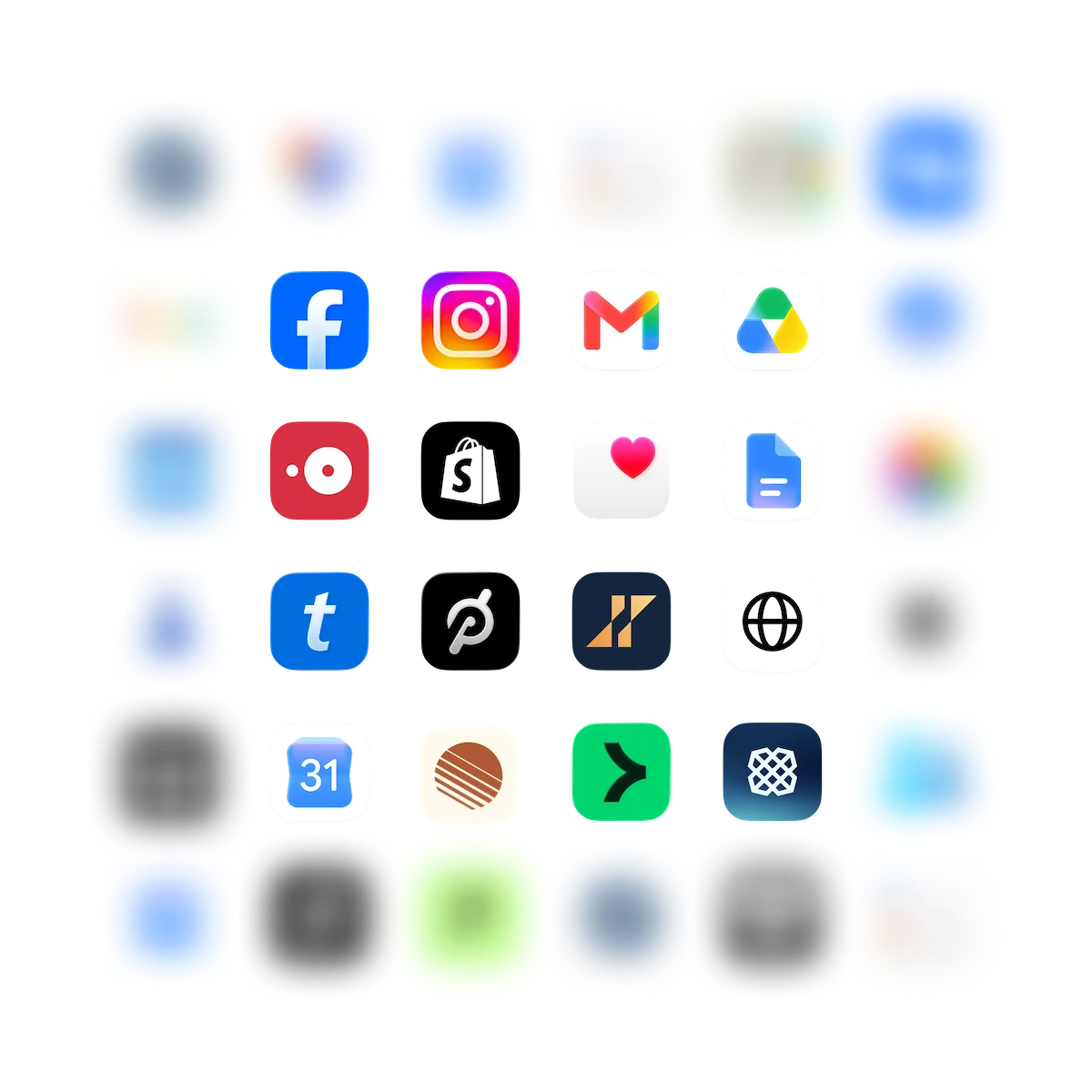
Connectors: Muse connects to email, calendar, Instagram, and third-party apps. Users choose which apps and what level of access each gets.
Background execution: Muse keeps working after you close the app and returns when it needs approval or has an update.
Secure credential storage: passwords and payment methods are stored encrypted. Muse can use them without seeing them.
Link by Stripe: one-time-use card numbers at checkout so your real card is never exposed. First AI agent covered by Link's purchase protections.
Memory: Muse remembers details from conversations and can act on information mentioned only once.
Custom tool building: if a task needs a connector that does not exist, Muse can build one on the fly.
Privacy Architecture
Muse separates the agent from credentials at the system level. Muse has no visibility into passwords or payment methods. Credentials go into a secure store that Muse can use but cannot read. A Sentinel agent acts as a gatekeeper for all outbound network traffic. Nothing Muse does reaches the internet unless the Sentinel approves it.
Users choose which apps Muse connects to and what each connection can do. For email, you can grant read-only access or allow Muse to send on your behalf. You can revoke access or disconnect any service at any time. You can opt out of your interactions being used to train Meta's AI models. Muse does not share conversations or VM data with Meta's ads systems.
Later in 2026, Meta will introduce Muse Confidential VM, where the entire VM is encrypted with a key only the user holds. Even Meta will not be able to access the data.
Getting Started
Installation
Download the Muse app from the App Store (iOS) or Google Play (Android). You can also access Muse at muse.ai or through WhatsApp. The product is available in the US only at launch.
First-Time Configuration
Sign in with your Meta account. Muse will guide you through connecting your first apps. Start with email or calendar since these unlock the most common workflows. For each app, choose the access level: read-only or full action capability. You can change these settings later.
First 15 Minutes Checklist
Download and sign in to the Muse app
Connect your email account (choose read-only first to build trust)
Connect your calendar
Ask Muse to summarize your unread emails from today
Ask Muse to check your calendar for conflicts this week
Give Muse a small task: find a restaurant for dinner tonight on OpenTable
Review the audit trail to see what Muse did and how it logged each step
Verification Checklist
Multi-Model Check: Compare Muse's email summaries with what you see in your inbox directly
External Source: Verify any booking or reservation Muse makes by checking the confirmation email
Human Review: Approve every purchase and email Muse sends until you trust the system
CI-First Test: Did Muse save you time on a task you would have done yourself? If not, adjust your usage pattern
Real Workflows
Workflow 1: Travel Booking
Tell Muse you need to book a flight and hotel for a specific date range. Muse opens its browser, searches for flights, compares prices, and presents options. You approve the selection. Muse fills out the booking form and checks out with a one-time Link card. The reservation confirmation appears in your connected email.
Verification Checklist
Multi-Model Check: Search the same flights on Google Flights to compare
External Source: Check the confirmation email from the airline
Human Review: Approve the purchase before Muse checks out
CI-First Test: Measure total time including approval steps versus booking manually
Workflow 2: Email Management
Connect your email with send capability. Ask Muse to draft responses to pending emails. Muse reads each thread, drafts a reply, and presents it for approval. You review, edit if needed, and approve. Muse sends the email and logs the action in the audit trail. For routine replies, you can set Muse to always allow sending for specific contacts.
Verification Checklist
Multi-Model Check: Read the original thread yourself to verify the draft is accurate
External Source: Check sent folder to confirm the email went out
Human Review: Read every draft before approving until you trust Muse's tone
CI-First Test: Compare time spent drafting with Muse versus writing yourself
Workflow 3: Price Monitoring
Ask Muse to monitor a product price and alert you when it drops. Muse opens its browser periodically, checks the price, and sends you a notification when the target is reached. You can then approve a purchase or let Muse buy it automatically if you have set that permission. This runs in the background without you checking in.
Verification Checklist
Multi-Model Check: Manually check the price on the same site
External Source: Compare with a price tracking service like CamelCamelCamel
Human Review: Approve the purchase before Muse checks out
CI-First Test: Did the monitoring save you money or just create noise?
Strengths, Limits, and AI Imposture Risk
Strengths
Genuine action execution, not just text generation. Muse fills forms, makes purchases, and sends emails.
Strong privacy architecture. The Sentinel agent, credential isolation, and Confidential VM roadmap set a high bar for the industry.
Background execution. Tasks continue after you close the app.
Approval gates give users control over sensitive actions without blocking routine work.
Link by Stripe integration provides purchase protection and card isolation.
No technical knowledge required. The conversational interface works like messaging a person.
Memory system that remembers details and proactively suggests actions.
Limits
US only at launch. No international availability date announced.
Limited app ecosystem. 1Password, ShopPay, and smart glasses integration are coming soon but not available at launch.
Trust risk. Meta's advertising business model creates tension with the privacy promise, despite the technical architecture.
Early stage. The product launched September 8, 2026. Expect bugs, limited connectors, and evolving capabilities.
No developer API for the agent itself. Developers must use Muse Code or the Meta Model API for programmatic access.
Reddit reports of Muse Spark 1.3 (the underlying model) being inconsistent on coding tasks, with repetitive file reading and self-undoing behavior in agentic coding contexts.
Google Play ranking is low (No. 338 in Productivity), suggesting slower Android adoption.
AI Imposture Risk
Medium. Muse handles sensitive tasks: sending emails, making purchases, and accessing personal data. The approval system and Sentinel agent mitigate the risk significantly. However, users who set permissions to always-allow for convenience create a path where Muse acts without oversight. The risk increases when users stop reviewing the audit trail because they trust the system.
The Skill illusion is the primary concern. Muse can draft an email that looks correct but contains a factual error. If you approve without reading, the error goes out under your name. The Time illusion also applies: the overhead of reviewing approvals, checking the audit trail, and correcting mistakes can eat into the time saved.
U365 Co-Intelligence Rating
CI-First Profile
Primary: (level 2) Co-Worker and Assistant. Muse takes tasks off your plate and executes them. You remain the supervisor, approving key actions. Secondary: (level 1) Co-Creator and Thought Partner. Muse suggests ideas based on your goals and memory, proposing actions you had not considered.
CI-First Benefit Score
Time: 7
Rationale. Muse saves significant time on bookings, form filling, and monitoring. Background execution means tasks complete while you do other things. The approval overhead is real but manageable for most tasks.
Quantity: 7
Rationale. Muse handles multiple tasks simultaneously in the background. You can queue several errands and let them run. This multiplies what one person can manage at once.
Quality: 6
Rationale. Quality is strong for standard tasks (bookings, form filling) but variable for complex or nuanced work. The underlying Muse Spark 1.3 model has known inconsistency issues in agentic coding contexts. Email drafts need human review.
Skill: 5
Rationale. Muse can build custom connectors and learn from conversations. However, the skill benefit is limited by the closed ecosystem and US-only availability. You learn to use Muse, but you do not learn transferable skills.
Overall CI-First Benefit Score: 6.3 / 10 (Strong). Muse delivers clear, consistent benefits for task delegation. The score reflects genuine action execution, not just text generation. The Medium imposture risk tempers the score because the product is early stage and handles sensitive data.
Humics Protection Badge
Friendly. The approval system forces human oversight before sensitive actions. The audit trail keeps a record of everything Muse does. Users can revoke access at any time. The Sentinel agent architecture is designed to keep humans in control. However, the always-allow option creates a slippery slope toward over-delegation if users prioritize convenience over vigilance.
Superhuman Usage Guidance
Use Muse in Centaur mode: delegate routine execution to Muse, keep strategy and judgment for yourself. Start with read-only connections. Gradually grant action permissions as trust builds. Review the audit trail weekly for the first month. Never set always-allow for purchases or email sending until you have tested Muse extensively. Treat Muse as a capable intern who needs supervision, not as an autonomous employee.
What Users Say
Aggregate Rating Table
Platform | Rating | Reviews |
App Store (iOS) | Climbing charts | No. 2 on US App Store within 2 days of launch |
Google Play (Android) | Low adoption | No. 338 in Productivity category |
Product Hunt | Community discussion | Active discussion about distribution advantage and trust concerns |
Mixed to negative (model) | Muse Spark 1.3 criticized for coding inconsistency, repetitive file reading, and self-undoing behavior. Praise for health reasoning benchmarks. | |
Trustpilot (Meta) | Mixed (Meta overall, not Muse-specific) | Existing Meta reviews focus on Meta AI chatbot and hardware support, not Muse agent |
G2 | Not listed | No reviews found on G2 at time of review |
Capterra | Not listed | No reviews found on Capterra at time of review |
What Users Praise
App Store ranking shows strong consumer interest. No. 2 within 2 days.
Product Hunt users highlight the distribution advantage: Muse is already inside WhatsApp where billions of people communicate daily.
The privacy architecture gets praise from tech commentators. The Sentinel agent and credential isolation are genuinely innovative.
Background execution is seen as a key differentiator from chatbot-style assistants.
What Users Complain About
Reddit developers report Muse Spark 1.3 (the underlying model) has agentic coding issues: repetitive file reading, self-undoing edits, and inconsistent performance on complex tasks.
Trust concerns dominate discussion. Meta's advertising business model creates skepticism about the privacy promise.
Android adoption is significantly lower than iOS. Google Play ranking of No. 338 suggests the launch is not reaching Android users.
The product is US only. International users are excluded.
Product Hunt commenters note that Meta AI has been inside WhatsApp for over a year without becoming anyone's default assistant, questioning whether distribution alone will drive adoption.
Sentiment Summary
Consumer sentiment is cautiously optimistic. The App Store ranking shows real demand for personal agents. Technical community sentiment is mixed, with developers separating the agent product (promising architecture) from the underlying model (inconsistent on complex tasks). Trust is the central question: can a company that monetizes data be trusted with credentials and private conversations?
U365 Editorial Note
User sentiment aligns with the CI-First evaluation. The strong App Store ranking validates the Time and Quantity benefits: consumers want background task execution. The Reddit criticism of the underlying model aligns with the Quality score of 6: Muse is strong for standard tasks but variable for complex work. The trust concerns directly support the Medium AI Imposture Risk rating. The approval system is the right architecture, but the always-allow option creates a path toward over-delegation that users should resist.
Comparison and Alternatives
Tool | Where Muse is better | Where Muse is worse |
Google Gemini Spark | Privacy architecture (Sentinel, Confidential VM), WhatsApp integration, background execution | Google has deeper integration with Google Workspace and broader international availability |
Anthropic Claude Cowork | Consumer-friendly interface, no technical knowledge required, broader app connectors | Claude is more reliable for complex reasoning and coding tasks |
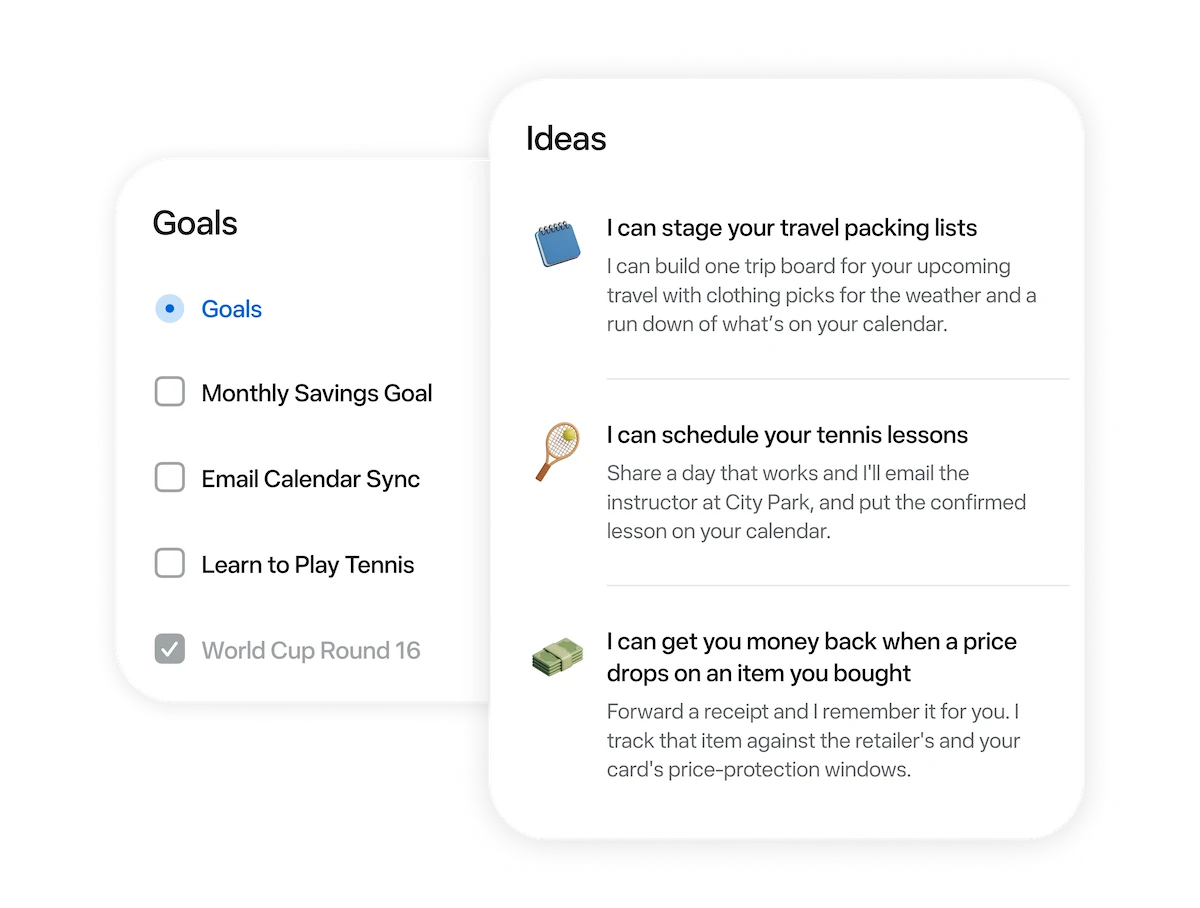
Instinct (SMS-based agent) | Richer interface with feed, ideas tool, and app connectors. More capable than SMS-only interaction. | Instinct works over any phone via SMS, no smartphone or Meta account required |
Manus AI | Stronger privacy architecture, Meta distribution, free tier with generous usage | Manus is available internationally and has a longer track record |
Verdict and Next Steps
Muse is the most ambitious personal AI agent launched to date. The architecture is sound: a dedicated VM, a Sentinel security agent, credential isolation, and an approval workflow that keeps humans in control. The privacy design is stronger than what Meta's advertising business model would suggest.
The product is early. US-only availability, limited connectors, and an underlying model with known consistency issues mean you should use Muse for standard tasks first: booking, monitoring, form filling. Build trust gradually. Start with read-only connections. Never use always-allow for purchases until you have completed dozens of approved transactions.
The CI-First Benefit Score of 6.3 reflects genuine utility. Muse saves time and increases the quantity of tasks you can manage. The Medium AI Imposture Risk is honest: the product handles sensitive data and the convenience of always-allow creates a real over-delegation path.
Next steps: download the app, connect email and calendar with read-only access, and give Muse three small tasks this week. Review the audit trail after each task. If the experience builds confidence, gradually grant action permissions. If it does not, wait for the next model update before investing more time.
U365's Recommendations to Learn More
We curate resources that teach something this review does not. Every link was verified as active on September 12, 2026.
Official learning resources
Meta Muse official page: https://ai.meta.com/muse/
How We Built Safety Into Muse: https://security.muse.ai/
How We Designed Muse: https://introducing.muse.ai/
Meta Model API quickstart (for developers): https://ai.developer.meta.com/docs/quickstart
Video tutorials and channels
Meta Muse Spark 1.1 Explained: Agentic AI Models by Webronaq: https://www.youtube.com/watch?v=AuLSVG4WTsE
Meta Muse Spark 1.1: The New AI Agent That Actually Gets Work Done: https://www.youtube.com/watch?v=yiSkcFRr0fE
Meta Muse Spark 1.1 Explained: Agentic AI Models by Webronaq (Published Jul 9, 2026, 5:00)
Meta Muse Spark 1.1 Explained: Agentic AI Models by Webronaq (Published Jul 9, 2026, 5:00)
Meta Muse Spark 1.1: The New AI Agent That Actually Gets Work Done (Published Jul 9, 2026, 6:16)
Written tutorials and deep-dive articles
Meta Muse: Personal AI Agent Features and Privacy Guide by Digital Applied: https://www.digitalapplied.com/blog/meta-muse-personal-ai-agent-guide
Meta Muse review: what the personal AI agent can and can't do by eesel AI: https://www.eesel.ai/blog/meta-muse-agent-review
Introducing Muse: The World's First Personal AI Agent Built for Everyone (Meta official): https://about.fb.com/news/2026/09/introducing-muse-personal-ai-agent
Meta debuts Muse, its long-planned personal AI agent by Axios: https://www.axios.com/2026/09/08/meta-debuts-muse-personal-ai-agent
Community and social
Muse by Meta on Product Hunt: https://www.producthunt.com/products/meta
r/LocalLLM Reddit discussion on Muse Spark: https://reddit.com/r/LocalLLM/comments/1sgn4xn/metas_muse_spark_llm_is_free_and_beats_gpt54_at
Resources on X
Dedicated X channels:
AI at Meta (@AIatMeta): https://x.com/AIatMeta
Meta Newsroom (@MetaNewsroom): https://x.com/MetaNewsroom
X posts with video content:
AI at Meta introducing Muse Code with multimodal visual coding demo: https://x.com/AIatMeta/status/2085084718416949323
AI at Meta on Muse Code architecture and persistent sub-agents: https://x.com/AIatMeta/status/2085084711471231247
We curate resources by content quality, not source type. Individual creators and community experts are welcome when their content is substantial, current, and teaches something this review does not cover. We exclude promotional and affiliate content.
Glossary
CI-First Benefit Score
A 0 to 10 score measuring how much an AI tool delivers the 4 Key AI Benefits: Time, Quantity, Quality, and Skill. Each dimension is scored independently, then averaged. The score answers whether Co-Intelligence is more profitable than Human Intelligence alone. For Meta Muse, the overall score is 6.3 (Strong), meaning it delivers significant benefits across most use cases.
CI-First Profile
The role AI plays in the collaboration with humans, classified into 5 levels: (level 1) Co-Creator and Thought Partner, (level 2) Co-Worker and Assistant, (level 3) Professor, Coach and Tutor, (level 4) Analyst and Tester, (level 5) Challenger and Devil's Advocate. Lower level numbers indicate higher AI autonomy. Muse is classified as (level 2) Co-Worker and Assistant primarily, with secondary (level 1) Co-Creator and Thought Partner capability.
Humics Protection Badge
An assessment of how well a tool protects uniquely human capabilities (creativity, critical thinking, social authenticity) from cognitive atrophy. Muse earns a Friendly badge because its approval system and audit trail actively encourage human oversight. However, the always-allow option creates a slippery slope toward over-delegation.
AI Imposture Risk
The threat that humans become passive operators, letting AI make decisions without understanding them. If Human Intelligence drops to zero, Co-Intelligence drops to zero regardless of AI capability. Muse has a Medium risk because it handles sensitive tasks (emails, purchases, data access) and the convenience of always-allow creates a path toward over-delegation.
User Sentiment
Aggregated opinion from review platforms, app stores, forums, and social media. For Muse, sentiment is mixed: strong consumer interest (No. 2 on App Store) but technical community concerns about the underlying model's consistency and Meta's trustworthiness with personal data.
Sources
Introducing Muse: The World's First Personal AI Agent Built for Everyone (Meta, Sep 8, 2026): https://about.fb.com/news/2026/09/introducing-muse-personal-ai-agent
Muse: Meta's personal AI agent, features and capabilities (Meta): https://ai.meta.com/muse/
Meta debuts Muse, its long-planned personal AI agent (Axios, Sep 8, 2026): https://www.axios.com/2026/09/08/meta-debuts-muse-personal-ai-agent
Meta launches AI agent that can access other apps (Reuters, Sep 8, 2026): https://www.reuters.com/business/meta-launches-ai-agent-that-can-access-other-apps-send-emails-make-payments-2026-09-08
Meta Rolls Out A.I. Agent That Can Send Your Emails and Book Your Travel (NYT, Sep 8, 2026): https://www.nytimes.com/2026/09/08/technology/meta-muse-ai-agent.html
Meta's AI agent Muse is now the No. 2 app in the US (TechCrunch, Sep 10, 2026): https://techcrunch.com/2026/09/10/metas-ai-agent-muse-is-now-the-no-2-app-in-the-us
Meta pushes into personal AI agents (CNBC, Sep 8, 2026): https://www.cnbc.com/2026/09/08/meta-personal-ai-agents-public-reckoning-privacy-safety.html
Meta Muse: Personal AI Agent Features and Privacy Guide (Digital Applied, Sep 8, 2026): https://www.digitalapplied.com/blog/meta-muse-personal-ai-agent-guide
Meta Muse review: what the personal AI agent can and can't do (eesel AI, Sep 9, 2026): https://www.eesel.ai/blog/meta-muse-agent-review
Muse by Meta on Product Hunt: https://www.producthunt.com/products/meta
Reddit r/LocalLLM Muse Spark discussion: https://reddit.com/r/LocalLLM/comments/1sgn4xn/metas_muse_spark_llm_is_free_and_beats_gpt54_at
AI at Meta on X: https://x.com/AIatMeta
Meta Model API quickstart (developers): https://ai.developer.meta.com/docs/quickstart




Comments