
Sovereign AI Race: USA (2026)

In this Report
The Co-Intelligence-First (CI-First) approach is a genuine and unique University 365 concept: a proposal for imagining a better future where AI and Human Intelligence coexist productively, each amplifying the other rather than replacing it.

The Context
The five layers, and why the licensor is a different case
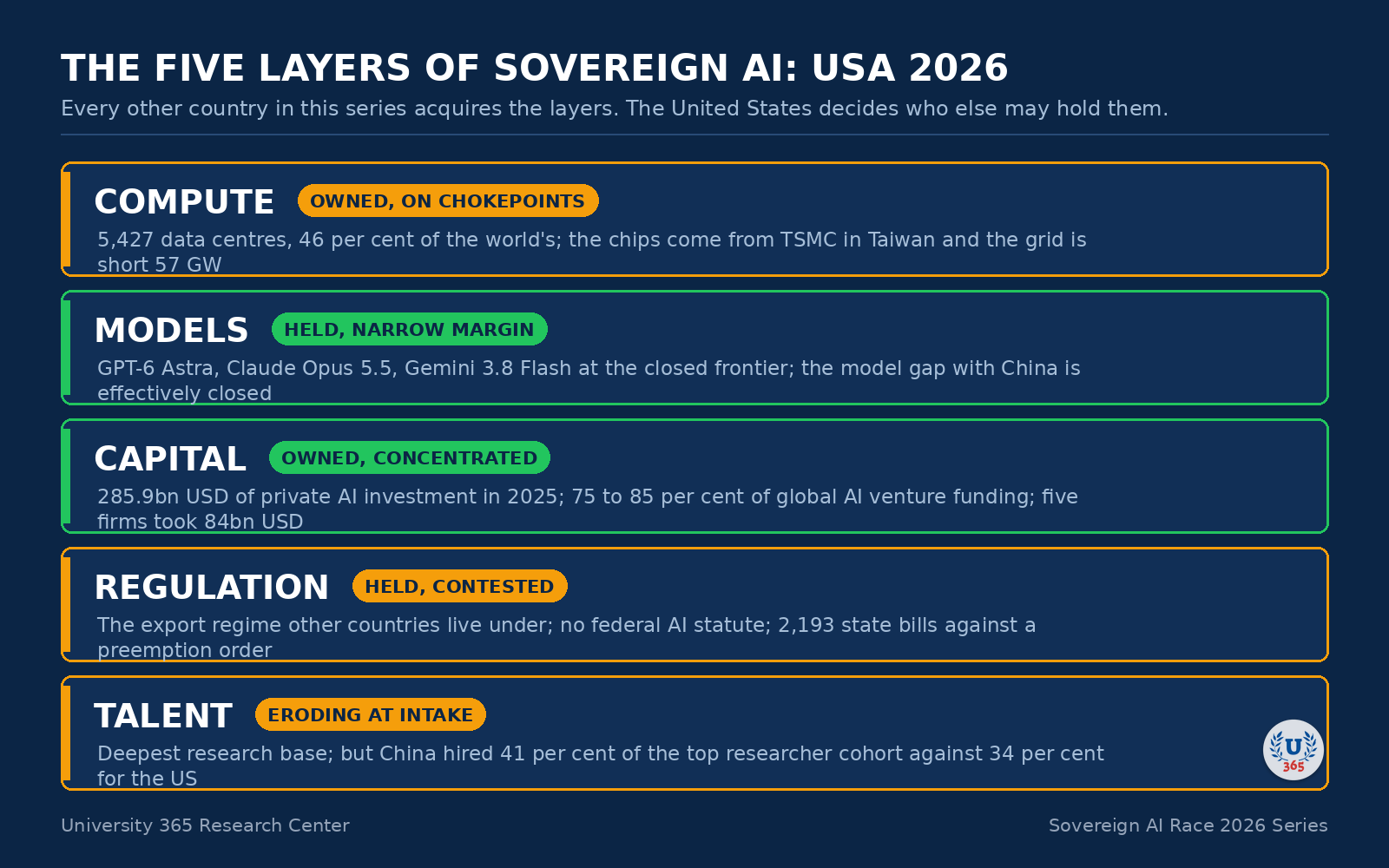
The five layers assessed. Every other country in this series acquires the layers; the United States decides who else may hold them. University 365 Research Center.
This is the fourth report in a twenty-part series assessing how states attempt to control the production of artificial intelligence inside their own jurisdiction. The framework is fixed and applied identically to every country. Sovereign AI capacity separates into five layers, and a state can hold any one of them without holding the others.
Compute sovereignty is the physical layer: where the chips and data centres sit, and who may switch them off. Model sovereignty is who builds the models a country depends on, and in whose languages and domains those models are competent. Capital sovereignty is who funds the build-out and on what terms. Regulatory sovereignty is who writes the rules and whether they can be enforced. Talent and education sovereignty is who builds and runs the systems, and how the next generation is prepared.
The first three reports examined countries acquiring these layers. The United Arab Emirates holds models, capital, regulation and talent, and rents compute on a licence that expires. Saudi Arabia owns capital absolutely, buys compute, and derived its flagship model from a Chinese open base. China built all five layers under sanctions and pays for it in efficiency. The United States occupies a position none of them can: it writes the licensing regime the others live under, it hosts the largest concentration of data centres and capital in the world, and it holds, in the form of the export control power and the location of the frontier laboratories, the ability to decide which countries get access to the most capable systems and on what terms.
That position is the report's subject. The American problem is not acquiring sovereignty. It is whether retaining control of the stack for itself is compatible with the export strategy it now runs, in which the same stack is packaged and sold to partners as their own sovereign capability, and whether the control can be sustained against the chokepoints that sit outside American jurisdiction.
The vocabulary this report needs
Four terms recur, and they are defined here once.
The diffusion rule is the Framework for Artificial Intelligence Diffusion, issued in mid-January 2025 by the outgoing Biden administration. It created a worldwide licence requirement for advanced AI chips and the first controls on AI model weights, and it divided the world into tiers of access. It was rescinded on 13 May 2025, two days before it would have taken effect.
The full-stack export programme is the American AI Exports Program established by Executive Order 14320 in July 2025, under which the Department of Commerce packages chips, data centres, models, security and applications into bundles it promotes to partner countries as the route to sovereign AI.
The licence-for-investment model describes how access is now granted: favourable export status and chip approvals are exchanged for investment commitments, host-government involvement, and security and reporting conditions. The United Arab Emirates is the worked example.
The switch is the retained ability to withdraw access. The United States can move a chip export from approved to denied by rule, and it has shown that access to its frontier models can be sequenced as a national security asset rather than a shared allied resource. No partner holding an American stack controls that switch.
The Question
Does the licence to deny others also secure the American position at home?
The United States has spent four years building and then partially dismantling a system of controls over who may buy the most advanced computing in the world. The controls were meant to slow China. They have also, by their design, made every partner country's access to frontier compute and models conditional on decisions taken in Washington.
At the same time the American position is measured, and the measurements carry a tension the other reports in this series do not face. The country leads every major index of AI capability. It hosts 5,427 data centres, more than ten times any other country. Its private AI investment in 2025 reached $285.9 billion, more than twenty-three times China's. Its laboratories built the frontier models, from GPT-6 Astra to Claude Opus 5.5 to Gemini 3.8 Flash. And yet the margin at the frontier has narrowed to something close to a rounding error, the leading research talent now chooses China more often than America, most of the capital it deploys sits in a small number of firms whose break-even depends on revenues that do not yet exist, and the physical foundation of the entire stack runs through chokepoints the United States does not control.
So the question is not whether the United States is first. It is what being first is made of, now that the lead is narrow, the hardware comes from one island, the power grid is short by tens of gigawatts, the export regime inverted from denial to deal-making within eighteen months, and 2,193 state-level bills stand in unresolved conflict with a federal executive order that seeks to preempt them.
The Contradiction
The deal sold to partners as sovereignty is the same licence the seller can revoke
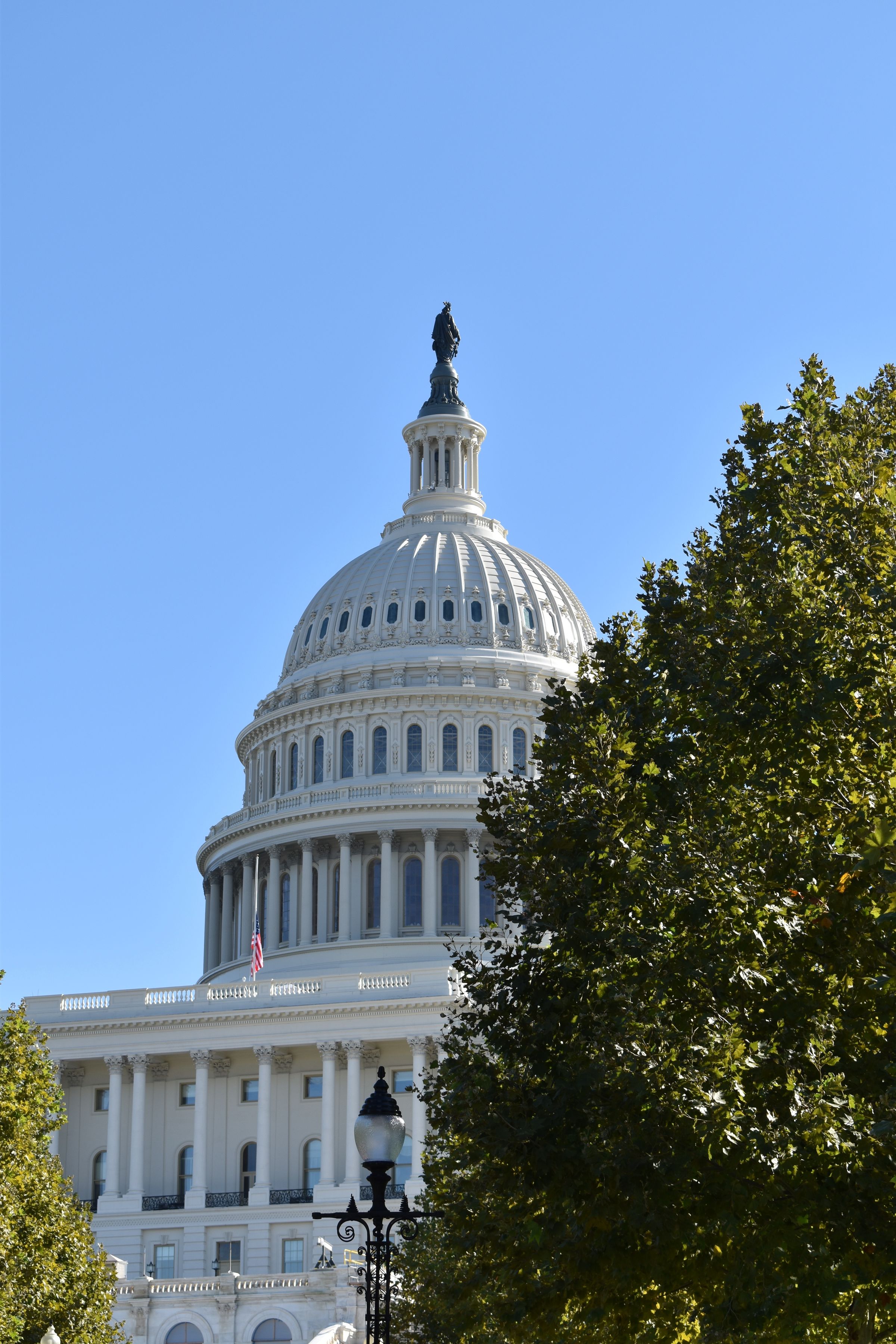
The United States Capitol. The country that decides other nations' access to frontier computing has enacted no comprehensive AI statute of its own. Photograph: Jackie Friedlander via Pexels.
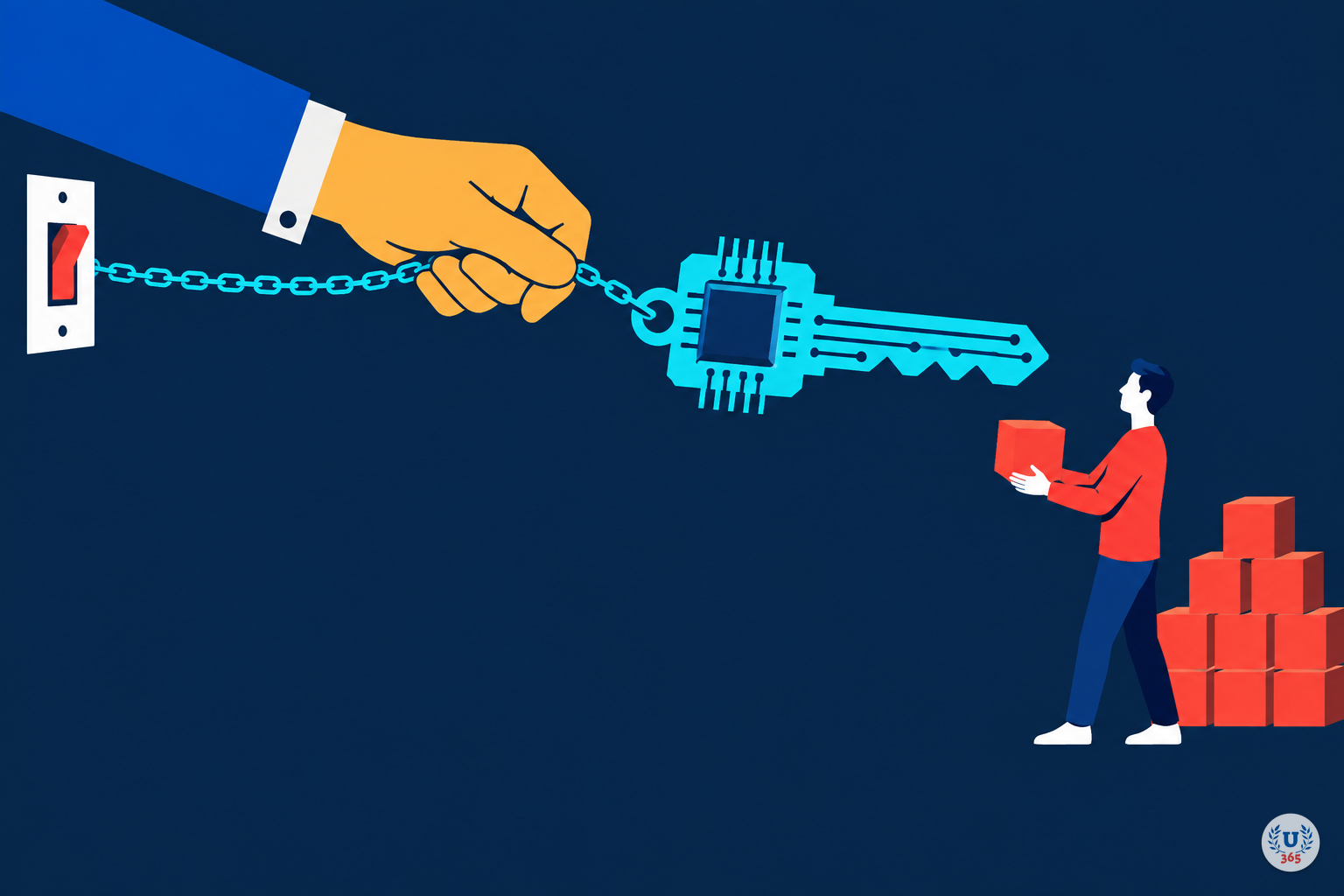
The stack is handed over, and the chain on the key stays attached. University 365 Research Center.
Here is the paradox, and it is structural rather than accidental.
The United States runs a programme that packages the entire American AI stack, chips, data centres, models, security and applications, into ready-to-deploy bundles for partners, backed by federal financing and diplomatic advocacy, and sells it as the route to their sovereign AI. In the same period, it has demonstrated that it can switch off access to a leading American model for every foreign user on earth, and that it treats pre-release access to frontier systems as a national security asset to be sequenced rather than a shared allied resource. The White House has formally directed OpenAI and Anthropic to withhold their newest models from the United Kingdom's AI Security Institute until the American domestic review completes. That episode is recent and reported from a single source, and this report labels it as reported; the wider pattern, from the diffusion rule to the case-by-case licence regime, is documented in the federal record.
The mechanics make the tension explicit. The reported replacement framework for the rescinded rule would tier licensing by compute volume: small shipments on simplified review, larger ones requiring pre-clearance and conditions that can include disclosure of business models or American government access to facilities, and the largest clusters requiring host-country government involvement and matching investment in American AI. The American position, stated plainly, is that the partner gets the stack and the United States keeps the authority over what it can do and who else can join.
That is not hypocrisy. It is a deliberate instrument, and the report treats it as one. But it has a measurable cost, and the cost is visible in the layer the United States does not control: the open-weight model market. While American policy restricted access, Chinese laboratories published weights that anyone could download, and the result is in the telemetry. Chinese systems accounted for 57 to 67 per cent of tokens processed on a major model-routing platform in the week of 14 September 2026, against 6 to 13 per cent in February 2026. Chinese open models hold roughly twice the cumulative downloads of American ones. Congress has begun asking why.
There is a second contradiction, entirely domestic. The country that runs the world's most restrictive licensing regime abroad runs almost no licensing regime at home. There is no comprehensive federal AI statute. In its place stand an executive order built to preempt state law, an AI Litigation Task Force created to sue states, and 2,193 published state AI bills with 101 enacted laws as of 13 September 2026. The nation that decides which countries may receive frontier compute cannot yet decide, as a legislature, what its own citizens may rely on.
And a third, in the physical foundation. The stack that the United States exports rests on components it does not fully command. TSMC fabricates almost every leading AI chip, in Taiwan, with a single American expansion only beginning operations in 2025. NVIDIA holds an estimated 80 to 95 per cent of the AI chip market, ASML holds the extreme-ultraviolet lithography monopoly, and the power grid is short by an estimated 57 gigawatts through 2028, of which fast power closes 24 gigawatts, leaving a 33 gigawatt base-case net shortfall. The strongest stack in the world is assembled from single points of failure.
The Current State
Compute: the deepest stack in the world, on one foundry and a strained grid
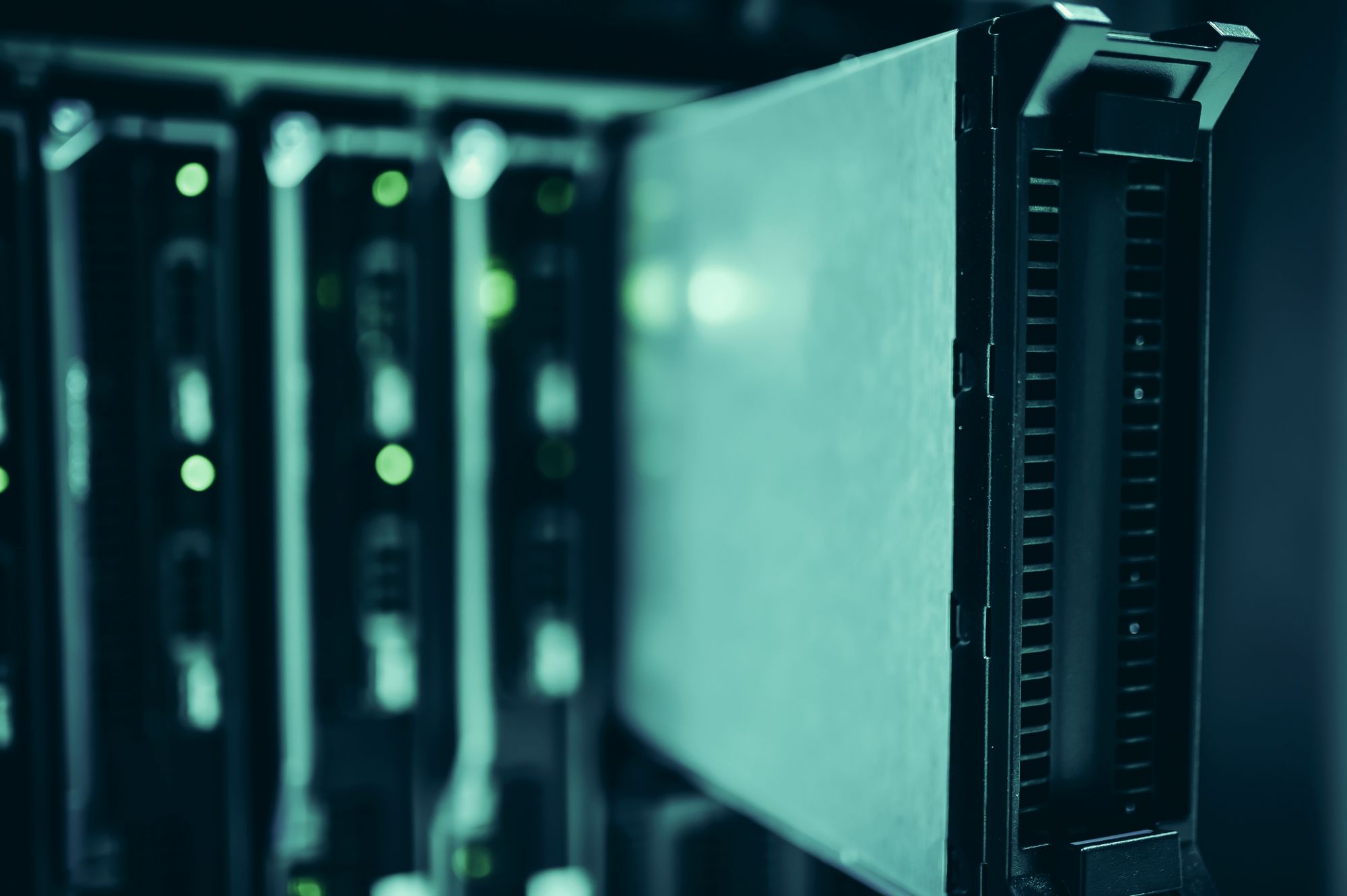
The American build-out: 5,427 data centres, 46 per cent of the world's total, and an estimated 57 gigawatt power shortfall through 2028. Photograph: panumas nikhomkhai via Pexels.
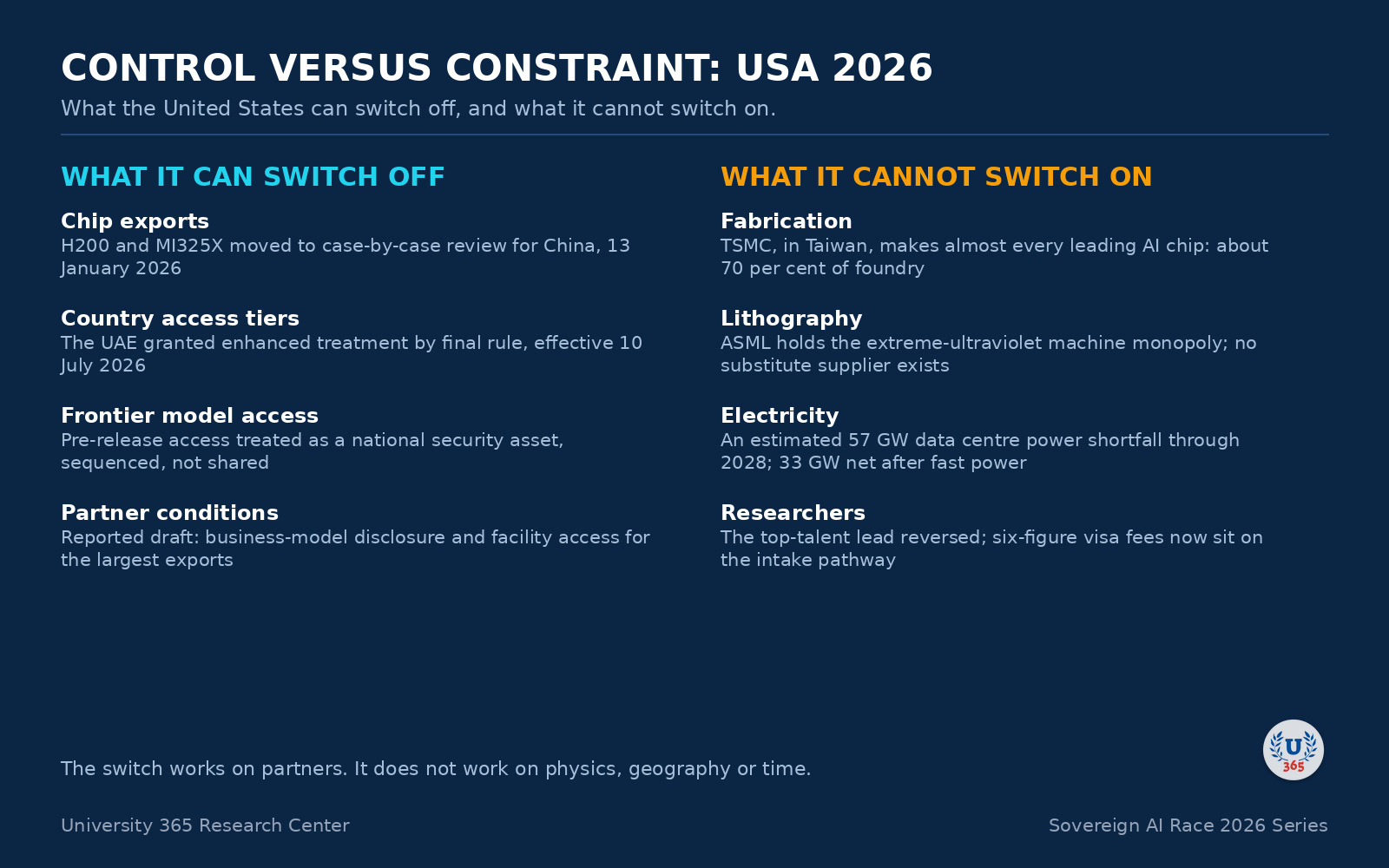
Control and constraint. The switch works on partners; it does not work on physics, geography or time. University 365 Research Center.
The American compute position is the strongest in the world by every aggregate measure and the most exposed by every structural one.
Stargate, announced at the White House on 21 January 2025 with a $500 billion commitment over four years and $100 billion deployed immediately, reached nearly 7 gigawatts of planned capacity and over $400 billion of investment over three years by September 2025, with sites at Abilene and Milam County in Texas, Lordstown in Ohio and elsewhere, selected from more than 300 proposals across more than 30 states. The distinction this series insists on applies here as everywhere: planned capacity is not operating capacity, and the buildout now runs into grid and equipment limits rather than capital limits.
The capital side of the buildout is enormous and concentrated. Moody's projects hyperscaler capital expenditure of $785 billion in 2026, closing in on $1 trillion in 2027. Goldman Sachs sees the total rising 50 per cent to $1.2 trillion, and estimates the companies would need about $300 billion in annual AI revenues to break even. The United States hosts 5,427 data centres, 46 per cent of the global total against Germany's 529. It also consumes more energy than any other country, and the constraint has become domestic: Morgan Stanley lifted its estimate of the data centre power shortfall to 57 gigawatts for 2026 through 2028, roughly 50 per cent above its prior figure, after the industry shifted to 72-GPU rack formats. Sightline Climate expects between 30 and 50 per cent of large data centres due online in 2026 to be delayed by power constraints, equipment shortages and local opposition.
Underneath the capacity sits the structural exposure. TSMC holds roughly 70 per cent of the global pure-play foundry market and fabricates almost every leading AI chip. NVIDIA holds an estimated 80 to 95 per cent of the AI chip market. ASML holds the extreme-ultraviolet lithography monopoly. AWS holds about 32 per cent of cloud infrastructure. Each is an American advantage in the sense that the companies are American or aligned; each is a chokepoint in the sense that a single disruption anywhere on the chain stops the stack.
Capital: the world's AI funding market, concentrated in a handful of firms
The capital layer is the least contested American possession in the series, and it is also the most concentrated.
United States private AI investment reached $285.9 billion in 2025, more than twenty-three times China's $12.4 billion by the same measure. Independent measures of the American share of global AI venture funding in 2025 range from roughly 75 per cent to 85 per cent depending on methodology: CB Insights puts the United States at 85 per cent of all global AI funding and 53 per cent of deals, the OECD at approximately 75 per cent of global AI venture capital deal value at $194 billion, and Crunchbase end-of-year figures at 79 per cent at $159 billion. AI companies raised $270 billion of the $512.6 billion invested by venture capital firms worldwide in 2025, the first year on record that AI captured more than half of all global venture funding.
Within that total sits a concentration the report records without resolving. Five companies, OpenAI, Scale AI, Anthropic, Project Prometheus and xAI, captured $84 billion in 2025, about 20 per cent of all global venture capital deployed that year. Thirty-three per cent of all global funding went to rounds above $500 million. Goldman Sachs estimates the hyperscaler build-out needs about $300 billion in annual AI revenues to justify itself, which is either the shape of a durable industry or the arithmetic of a bubble, and the honest position is that the evidence does not yet decide which.
The capital layer also carries the same concentration problem the report noted for China, in mirror. Chinese state capital builds an industry that answers to the state. American private capital builds an industry that answers to a small number of funds and firms whose returns depend on a revenue curve not yet visible.
Models: still first, by the narrowest margin in the series

San Francisco, home of the frontier laboratories. Photograph: Stephen Leonardi via Pexels.
The American model layer remains the frontier, and the margin has narrowed to the point where the Stanford AI Index 2026 records the United States and China model performance gap as effectively closed: as of March 2026, Anthropic's top model led the best Chinese model by 2.7 per cent.
The named frontier in September 2026 is American. OpenAI released GPT-6 Astra on 3 September 2026, its first model to reach the Critical level of cybersecurity capability under its own Preparedness Framework, at a 1,050,000-token context window. Anthropic's Claude Opus 5.5 and the GPT-6 Sol and Luna releases that followed within hours of it turned September into a price war, with OpenAI pricing one model at exactly half its competitor's rate. Google shipped Gemini 3.8 Flash on 2 September 2026. Meta returned to open weights on 10 August 2026 with Muse-Glimmer-30B after appearing to abandon them earlier in the year, and its cumulative Llama downloads stand above 1.2 billion.
The open-weights position is where the American layer is weakest. The four highest-scoring open-weight models on the Artificial Analysis Intelligence Index come from Chinese laboratories, and the best American open model on the same board scores 38 against 60 for the leaders. Alibaba's Qwen family drew roughly 2,045 million downloads in 2026 and anchors more than 151,000 derivative repositories. The pattern this series documented in the China report is confirmed from the American side: the United States leads at the closed frontier and has conceded the open base layer by default.
Regulation: a rescinded rule, a tariff, a preemption order, and no statute
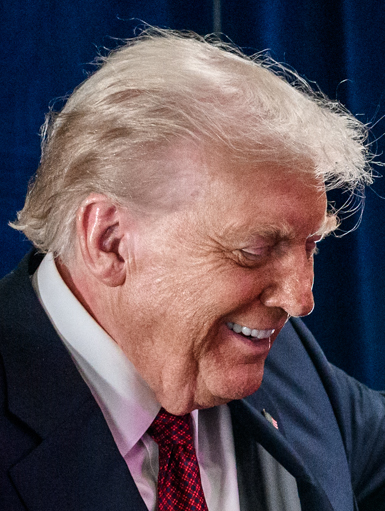
Donald Trump, President of the United States, as of 2026. He signed Proclamation 11002 in January 2026, imposing a 25 per cent tariff on certain advanced computing chips, and Executive Order 14365 in December 2025 on state-law preemption. Photograph: The White House, public domain, via Wikimedia Commons.
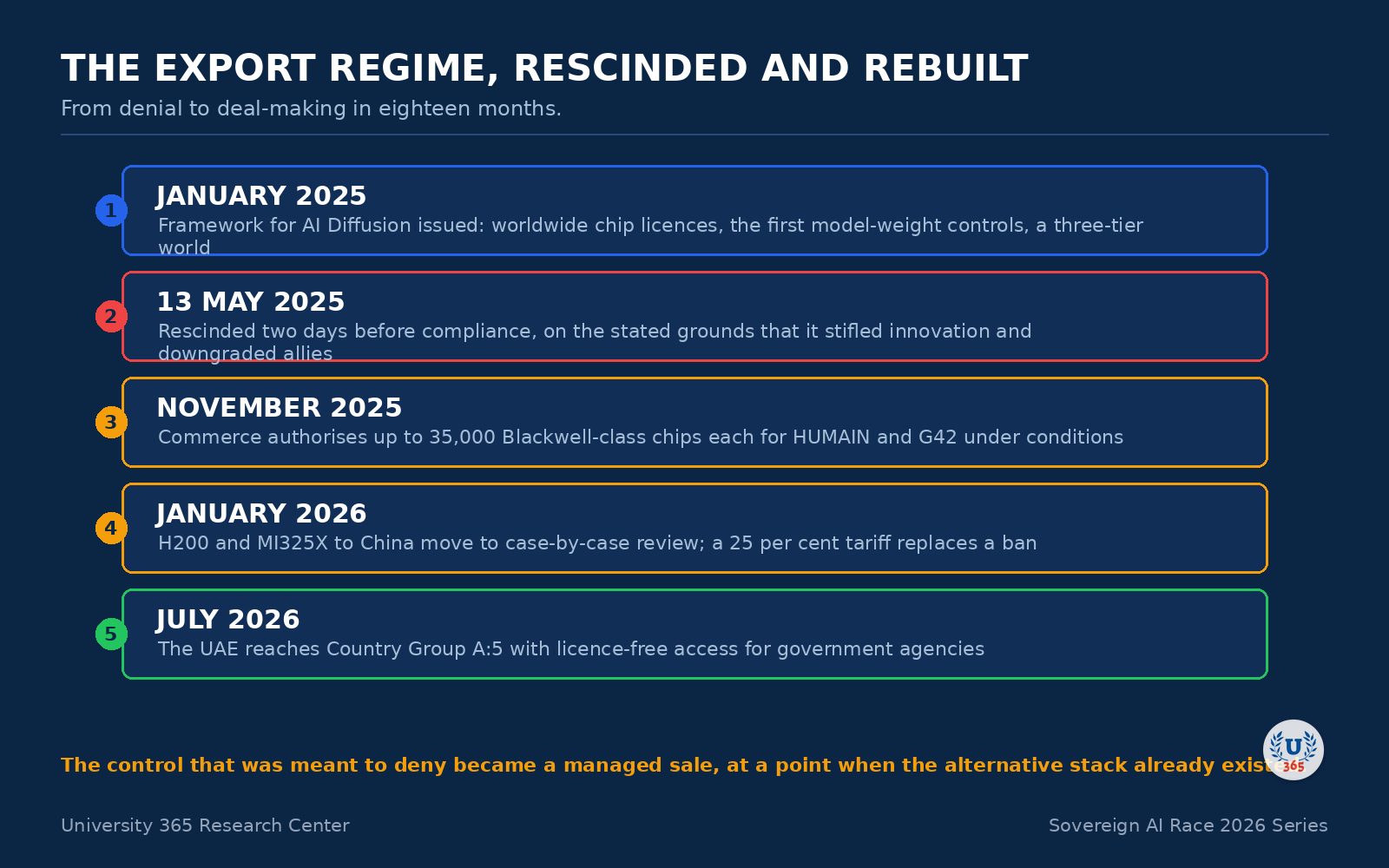
The export regime, rescinded and rebuilt. From denial to deal-making in eighteen months. University 365 Research Center.
The American regulatory position is the hardest to summarise in the series, because it moved in three directions at once: away from restriction abroad, toward deal-making, and into open conflict with the states at home.
The diffusion rule was issued in mid-January 2025 as an interim final rule with a 15 May 2025 compliance date. It added the first controls on AI model weights, created a worldwide licence requirement for advanced computing chips under ECCNs 3A090.a and 4A090.a, and set a three-tier country framework in which about 150 middle-tier countries faced complex limits. On 13 May 2025, two days before compliance began, the Bureau of Industry and Security announced its rescission and instructed enforcement officials not to enforce it, stating that the rule would have stifled American innovation and undermined diplomatic relations with dozens of countries by downgrading them to second-tier status. No formal replacement has been issued. A reported draft circulated from about 5 March 2026 would tier licensing by compute volume, with the largest cluster exports requiring host-government involvement and matching investment in American AI, and it remains a reported draft, not a rule, as of this report's date.
What replaced the rule in practice is a deal architecture. On 19 November 2025, Commerce authorised advanced chip exports to HUMAIN in Saudi Arabia and G42 in the United Arab Emirates, up to 35,000 Blackwell-class chips each, under security and reporting conditions. On 13 January 2026, a BIS final rule moved exports of NVIDIA H200 and AMD MI325X chips to China and Macau from a presumption of denial to case-by-case review. On 14 January 2026, President Trump signed Proclamation 11002, imposing a 25 per cent tariff on certain advanced computing chips including the H200 and MI325X, effective the following day, while exempting chips imported to support the domestic supply chain. And on 10 July 2026, a final rule granted the UAE enhanced favourable treatment: removal from two restricted country groups, addition to Country Group A:5, and an entity-specific framework under which UAE government agencies may receive advanced computing items licence-free.
Two pieces of legislation sit unresolved. The AI OVERWATCH Act, H.R. 6875 and its Senate companion S. 4456, would require licences and congressional notification for exports of high-performance AI chips to countries of concern; it has advanced through committee and is not enacted. The Chip Security Act, S. 1705 and H.R. 3447, would require location-verification mechanisms in covered chips; one report says it has not cleared committee, another that the House Foreign Affairs Committee advanced it 42 to 0 in March 2026, and this report states the conflict rather than resolving it. Its safe status is: not enacted as of September 2026.
At home, the federal government has moved against state regulation rather than toward federal regulation. Executive Order 14365, signed 11 December 2025, launches federal preemption of state AI law, establishes an AI Litigation Task Force to sue states, and conditions broadband funding on states not enforcing conflicting rules, with carve-outs for child safety, compute infrastructure and procurement. The stated rationale is that American AI leadership depends on a minimally burdensome national framework. Against it stand 2,193 published AI bills across all 50 states and 101 enacted laws as of 13 September 2026, a volume that has passed the point where any state-level operator can track its obligations. There is still no comprehensive federal AI statute.
Talent and education: the lead that eroded
The talent layer is where the American position declined most clearly during the interval this report covers.
The United States lost its lead in attracting the world's top AI researchers. A study of 10,280 researchers representing about 40 per cent of the authors accepted at the 2025 Conference on Neural Information Processing Systems found that China hired 41 per cent of the world's leading AI researchers in 2025 against 34 per cent who went to American companies, a reversal from 2022, when the United States drew 46 per cent and China 27 per cent. The study is published by a China-based think tank, and the report treats the figures as that source's measurement; the direction is corroborated by the Stanford AI Index 2026, which records the decline in American talent attraction independently.
Immigration policy moved against the pipeline in the same period. A September 2025 proclamation imposed a $100,000 fee on H-1B consular petitions; a district court vacated it in June 2026 and the matter is pending appeal; a new proclamation renewed the fee on 18 September 2026; and in August 2026 the Department of Homeland Security proposed an additional $103,265 fee on all cap-subject petitions, including the advanced-degree exemption. These are fees on the exact pathway that once carried the country's research advantage.
The education base is broadly adopting, and unevenly prepared. Four in five American university students now use generative AI. Research published in Science, analysing surveys from more than 95,000 students at 20 public research universities, found that about one-third used generative AI regularly, with substantial use for completing and cheating on assignments, and its authors argue that higher education must reform assessment. The California State University system published the largest single study of AI use in higher education, surveying more than 94,000 students, faculty and staff across 22 campuses. On the employer side, almost seven in ten American employers reported difficulty finding the talent they need, and an analysis of the buildout's labour side found that about one in five businesses now use AI while just 1.3 per cent have hired anyone trained in AI to run it.
What changed since our 2025 report on the United States
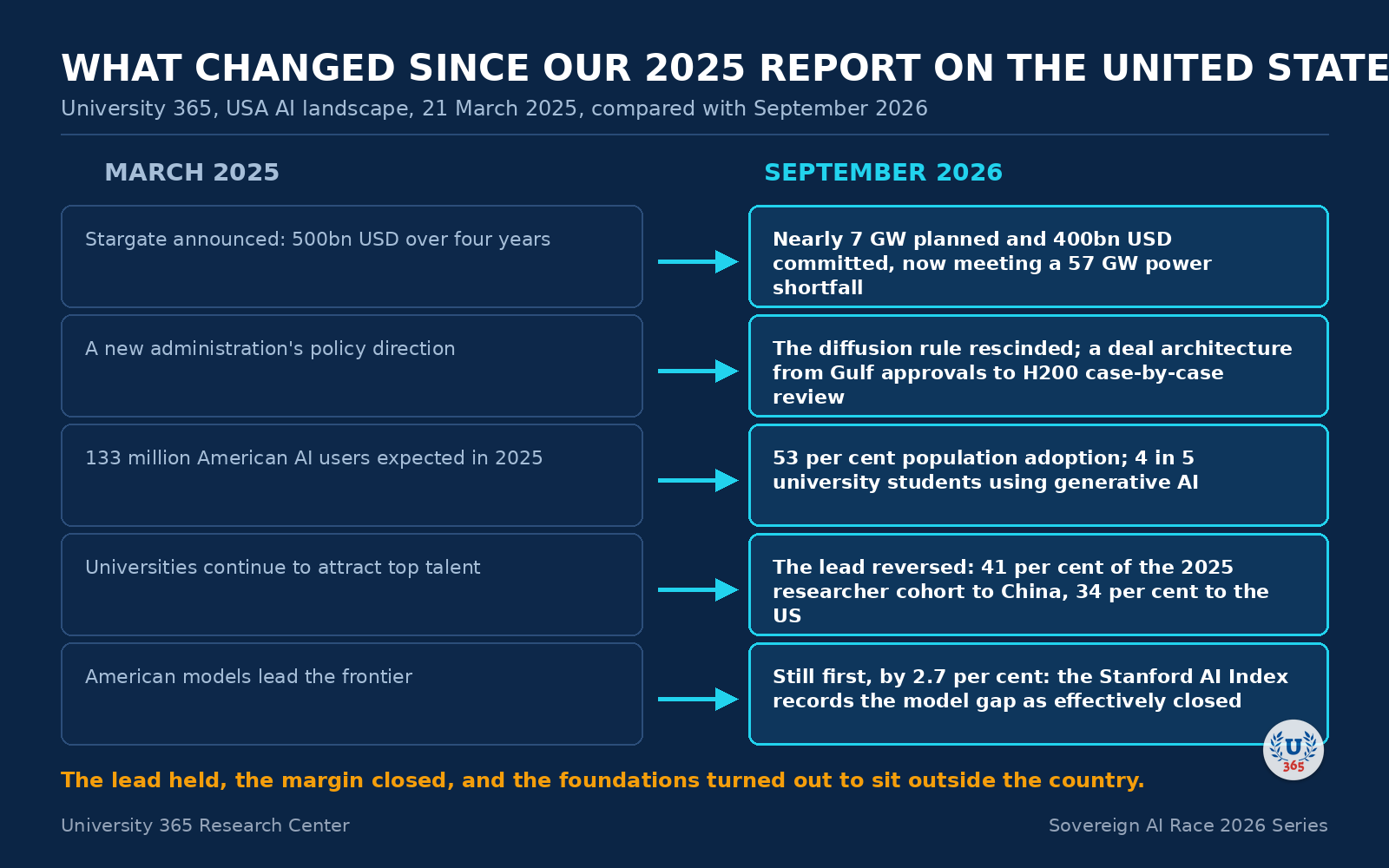
What changed since our March 2025 report on the United States. University 365 Research Center.
Read the earlier report: The USA AI Landscape in March 2025 - Innovation, Policy, and the Future of American Intelligence. University 365 INSIDE, 21 March 2025.
University 365 published "The USA AI Landscape in March 2025: Innovation, Policy, and the Future of American Intelligence" on 21 March 2025. That report was written two months into a new administration, with the Stargate announcement fresh, and it treated the country's trajectory as one of expanding leadership. The interval has tested that reading, and the comparison is instructive in both directions.
The Stargate projection became a measured buildout, and then met a physical constraint. The 2025 report described the $500 billion, four-year commitment announced in January 2025. The measurable change is that by September 2025 the programme had reached nearly 7 gigawatts of planned capacity and over $400 billion committed across sites in more than 30 states, and that the binding constraint has moved from capital to power: an estimated 57 gigawatt shortfall through 2028 and 30 to 50 per cent of 2026 capacity at risk of delay. The 2025 report described a plan. The 2026 position is a plan meeting a grid.
The policy architecture was rescinded and rebuilt around deals. The 2025 report described the policy shifts of a new administration. It could not know that the diffusion rule, issued days before it was written, would be rescinded two days before taking effect, that H200-class exports to China would move to case-by-case review in January 2026, that a 25 per cent tariff would replace a ban, or that the UAE would receive enhanced favourable treatment in July 2026. The direction of American policy inverted, from restriction-first to deal-first, within eighteen months.
The adoption figures doubled and moved into classrooms. The 2025 report recorded about 21 million new American AI users expected in 2025, a national total of 133 million, and 52 per cent of users reporting heavier reliance. The measurable change is structural: generative AI reached 53 per cent population-level adoption, four in five university students use it, and 88 per cent of organisations report adoption. The 2025 report described consumers arriving. The 2026 position is institutions arrived.
The talent advantage reversed. The 2025 report stated that American universities and research institutions continue to attract top talent. The current data shows China hiring 41 per cent of the leading researcher cohort against 34 per cent for American companies, reversed from 46 to 27 per cent in 2022. This is the single most consequential change of the eighteen months, because it is the layer the money cannot rebuy quickly.
The frontier held and the margin closed. The 2025 report named Claude 3.7, Grok 3 and the early Gemini line. The current frontier is GPT-6 Astra, Claude Opus 5.5 and Gemini 3.8 Flash, and the gap to the best Chinese models has closed to 2.7 per cent on the Stanford measure. The 2025 report described American models leading. The 2026 position is American models leading by the narrowest margin the series has recorded.
Key Findings
1. The United States holds all five layers, and its sovereignty question is inverted. Every other country in this series is acquiring capacity. The United States is deciding how much of its capacity to share, on what terms, and with what retained control. The export regime is not a policy about other countries; it is the American sovereignty instrument.
2. The export architecture inverted within eighteen months. The diffusion rule was rescinded two days before taking effect in May 2025. What followed is a deal architecture: Gulf chip approvals in November 2025, H200 case-by-case review for China in January 2026, a 25 per cent tariff replacing a ban, the UAE's enhanced favourable treatment in July 2026, and the full-stack export programme packaging the American stack for partners.
3. The retained switch is the defining asymmetry. Partners adopt the stack as their sovereign capability while the supplier keeps the authority to revoke. The clearest public demonstration is the reported withholding of frontier models from an allied safety institute pending American review. Labelled as reported, it is the pattern the licence regime implies.
4. The physical foundation runs through chokepoints the United States does not control. TSMC fabricates almost every leading AI chip in Taiwan. ASML holds the lithography monopoly. The grid is short by an estimated 57 gigawatts through 2028. The strongest stack in the world is assembled from single points of failure.
5. Capital dominance is the least contested layer and the most concentrated. The United States captured roughly 75 to 85 per cent of global AI venture funding in 2025 depending on the measure. Within it, five companies took $84 billion and the hyperscaler build-out needs about $300 billion in annual revenues to break even.
6. The frontier margin closed to 2.7 per cent. The Stanford AI Index 2026 records the model performance gap between the United States and China as effectively closed. The American lead is now measured in months, not generations.
7. The open base layer was conceded by default. The four highest-scoring open-weight models on the Artificial Analysis index are Chinese. Chinese-origin systems took 57 to 67 per cent of routed token traffic in the week of 14 September 2026. American policy restricted access while Chinese laboratories published weights that anyone could download, and the download numbers record the consequence.
8. The talent lead reversed. China hired 41 per cent of the world's leading AI researchers in 2025 against 34 per cent for American companies, a full reversal from 2022. Immigration fees raised the cost of the pathway that built the advantage.
9. The domestic regulatory position is unresolved in both directions. There is no federal AI statute, 2,193 state AI bills and 101 enacted state laws as of September 2026, and an executive order built to preempt them. The country that decides other nations' access to AI cannot yet legislate its own.
Deep Analysis
Why the policy inverted: controls failed at the layer they targeted, and cost at the layer they did not
The American policy inversion was not ideological drift. It was an empirical correction, and the evidence for it is in this report's own series.
The controls were designed to slow China at the compute layer, and at that layer they worked: China's most advanced shipping process sits roughly five years behind, its accelerator yields run near 40 per cent, and its binding constraint has moved to memory. But the thing the controls were meant to prevent, China reaching the model frontier, happened anyway, because model capability stopped scaling mainly with training compute while the controls were being written. The China report in this series documents how a country denied the hardware built a complete domestic stack and then distributed open-weight models to the world.
The American response, visible from November 2025 onward, accepts that logic and trades on it: if denial produces a parallel stack, then participation captures the market that denial would lose. Selling H200s to China on case-by-case licences, taking a 25 per cent tariff on the same products, and packaging the full stack for partners is a strategy for monetising the lead rather than defending it. Whether it also accelerates the competitor it was designed to slow is the open question, and the honest answer is that both readings are supported by the evidence.
The licence as an instrument, and its limits
The licence-for-investment model is a genuine innovation in statecraft, and the UAE is its worked example. Enhanced favourable treatment, removal from restricted country groups, licence-free access for government agencies, entity-specific approvals that extend to subsidiaries: the rule text of July 2026 is the most favourable treatment the United States has granted any country in the Gulf, and it was granted in exchange for alignment and investment.
The limits of the instrument are three, and each is documented. First, it works only on the countries that want American silicon, and the open-weight model market shows that a growing share of the world's developers will build on models they can download without asking anyone. Second, it converts American policy into an object of suspicion precisely among the allies it courts: a partner that adopts the stack must price the possibility that the switch is pulled, and the reported withholding of frontier models from the United Kingdom's safety institute gives the suspicion its evidence. Third, it forces the American government into the role of global gatekeeper with conditions that include facility access and business-model disclosure, which is a governance burden no agency is currently staffed to carry.
The chokepoints the United States does not control
The American stack has an inner contradiction that no policy addresses: it is American at the design layer and East Asian at the manufacturing layer and constrained at the power layer.
TSMC, in Taiwan, fabricates almost every leading AI chip; its American expansion began operations only in 2025. ASML, in the Netherlands, is the sole supplier of the extreme-ultraviolet lithography machines without which no leading-edge chip is made. NVIDIA's dominance is American, but it is dominance of a design that must pass through both. And the grid constraint is now measured: a 57 gigawatt shortfall through 2028, 33 gigawatts net after fast power, with 30 to 50 per cent of 2026 capacity at risk of delay.
The comparison with China in this series is exact and uncomfortable. China's dependency is a memory stockpile and an older process node. The American dependency is a foreign foundry, a foreign machine builder, and its own grid. Both countries built stacks they cannot fully control. The United States can switch off its partners; it cannot switch on more electricity, and it cannot relocate an island.
Data and Evidence
Table 1: The five layers, assessed for the United States in September 2026
Layer | What the United States holds | What it does not hold | Assessment |
Compute | 5,427 data centres, more than ten times any other country; Stargate at nearly 7 GW planned and over $400bn committed; hyperscaler capex approaching $1tn; the deepest cloud and accelerator demand in the world | A domestic leading-edge fabrication base (TSMC in Taiwan makes almost every leading AI chip); sufficient power (an estimated 57 GW shortfall through 2028); freedom from EUV-machine dependency (ASML) | Owned, on chokepoints it does not control |
Models | GPT-6 Astra, Claude Opus 5.5, Gemini 3.8 Flash at the closed frontier; Meta returning to open weights; the deepest research base in the field | The open-weight lead, conceded to Chinese laboratories; a frontier margin (2.7 per cent on the Stanford measure, effectively closed) | Held, at a narrowing frontier |
Capital | $285.9bn private AI investment in 2025, 23 times China; roughly 75 to 85 per cent of global AI venture funding; hyperscaler capex at $785bn for 2026 | Nothing material at the funding layer; the risk is concentration, five firms taking $84bn and a break-even dependent on roughly $300bn in annual AI revenues | Owned, and concentrated |
Regulation | The export control power and the licensing regime other countries live under; EO 14320's full-stack export programme; EO 14365 preempting state law | A comprehensive federal AI statute; settled state-federal division (2,193 state bills, 101 enacted laws); an enacted export-controls update (the OVERWATCH and Chip Security Acts remain bills) | Held, and contested at home |
Talent and education | The deepest university and laboratory base; four in five students using generative AI; 88 per cent organisational adoption | The researcher-attraction lead, now reversed (41 per cent of the 2025 cohort to China, 34 per cent to the United States); an immigration pipeline (six-figure visa fees on the pathway it needs) | Held, and eroding at the intake |
Table 2: The controlled metrics, series bible format
Metric | USA position | Source and date |
Flagship compute commitment | Stargate: $500bn over four years announced January 2025, $100bn immediate; nearly 7 GW planned and over $400bn committed by September 2025; hyperscaler capex of $785bn projected for 2026, rising toward $1.2tn | SoftBank, 21 January 2025 and 24 September 2025; Moody's via DatacenterDynamics, 14 May 2026; Goldman Sachs via Bloomberg, 25 September 2026 |
Capital committed | $285.9bn private AI investment in 2025; roughly 75 to 85 per cent of global AI venture funding depending on the measure; $270bn of $512.6bn global VC went to AI companies | Stanford HAI AI Index 2026 via MeriTalk; CB Insights Q3 2025; OECD, February 2026; The Journal Record, 6 February 2026 |
Flagship national models | GPT-6 Astra (3 September 2026, 1.05m-token context, first OpenAI model at Critical cybersecurity capability); Claude Opus 5.5; Gemini 3.8 Flash (2 September 2026); Muse-Glimmer-30B (open weights, 10 August 2026) | OpenAI, 3 September 2026; Google, 2 September 2026; The Register, 10 August 2026 |
Anchor entities | OpenAI, Anthropic, Google DeepMind, Meta, xAI, NVIDIA, Microsoft, Amazon, Oracle; the Department of Commerce (BIS) as export-control administrator | Official company and agency disclosures, 2025 to 2026 |
Chip dependency | Domestic design (NVIDIA at an estimated 80 to 95 per cent of the AI chip market); foreign fabrication (TSMC, Taiwan, roughly 70 per cent of pure-play foundry); foreign lithography (ASML, EUV monopoly) | Stanford HAI AI Index 2026; analyst estimates, 2026 |
Regulatory instrument | Framework for AI Diffusion, issued mid-January 2025, rescinded 13 May 2025; replacement reported as draft from March 2026; EO 14320 (July 2025) full-stack exports; EO 14365 (December 2025) state-law preemption; no comprehensive federal AI statute | Federal Register; BIS, 13 May 2025; White House, July 2025 and December 2025 |
Talent anchors | First in the Stanford AI Index model and patent-output measures; four in five university students using generative AI; the researcher-attraction lead reversed | Stanford HAI AI Index 2026; Carnegie China study via New York Post, 26 September 2026 |
Independent index standing | First in the Oxford Insights Government AI Readiness Index 2025, score approximately 87; first in the Tortoise Media Global AI Index 2025, China second; the Stanford AI Index 2026 records the model performance gap with China as effectively closed | Oxford Insights, 2025; Tortoise Media, 2025; Stanford HAI, April 2026 |
Adoption | Generative AI at 53 per cent population-level adoption; 88 per cent organisational adoption; 133 million American AI users in 2025, with 52 per cent reporting heavier reliance | Stanford HAI AI Index 2026; prior U365 report, March 2025 |
Distinguishing mechanism | Control of compute and the licence to withhold it, converted into a deal architecture | This report |
Core tension | Sells the stack as sovereignty while keeping the switch that can shut it off | This report |
Table 3: Timeline, 2023 to 2026
Date | Event | Source |
30 October 2023 | Biden executive order on safe, secure and trustworthy AI | Federal record |
Mid-January 2025 | Framework for Artificial Intelligence Diffusion issued, with a 15 May 2025 compliance date; first controls on AI model weights | BIS; law-firm trackers, May 2025 |
21 January 2025 | Stargate announced at the White House: $500bn over four years | SoftBank, 21 January 2025 |
23 January 2025 | Executive Order 14179 revokes the Biden AI order and directs a national AI roadmap | White House; Holland & Knight, July 2025 |
13 May 2025 | BIS rescinds the diffusion rule two days before compliance, instructing officials not to enforce it | BIS press release, 13 May 2025 |
23 July 2025 | Executive Order 14320 establishes the American AI Exports Program for full-stack technology packages | White House, 23 July 2025 |
23-24 September 2025 | Five new Stargate sites; nearly 7 GW and over $400bn over three years | SoftBank, 24 September 2025 |
19 November 2025 | Commerce authorises advanced chip exports to HUMAIN and G42, up to 35,000 Blackwell-class chips each | Middle East Institute; CNBC, 20 November 2025 |
11 December 2025 | Executive Order 14365 launches federal preemption of state AI law | ComparativeAI rule record, 2026 |
13 January 2026 | BIS final rule: H200 and MI325X exports to China and Macau move to case-by-case review | Covington, January 2026 |
14 January 2026 | Proclamation 11002: 25 per cent tariff on certain advanced computing chips, effective 15 January | Daily Compilation of Presidential Documents, 14 January 2026 |
16 March to 1 April 2026 | Commerce opens the inaugural Call for Proposals under the American AI Exports Program | trade.gov, March and April 2026 |
14 May 2026 | Moody's raises hyperscaler capex forecast to $785bn for 2026 | DatacenterDynamics, 14 May 2026 |
10 July 2026 | UAE enhanced favourable treatment effective: Country Group A:5, licence-free access for government agencies | Federal Register, 14 July 2026 |
10 August 2026 | Meta publishes Muse-Glimmer-30B, its first open-weights model since Llama 4 | The Register, 10 August 2026 |
3 September 2026 | OpenAI releases GPT-6 Astra | OpenAI, 3 September 2026 |
14 September 2026 | Chinese-origin systems reach 57 to 67 per cent of routed token traffic, against 6 to 13 per cent in February 2026 | CNBC via Startup Fortune, September 2026 |
18 September 2026 | Proclamation renews the $100,000 H-1B petition fee for a further year | AHA News, 22 September 2026 |
25 September 2026 | Goldman Sachs: AI capex rising 50 per cent to $1.2tn, requiring about $300bn in annual AI revenues | Bloomberg, 25 September 2026 |
26 September 2026 | CNBC reports rising public backlash against the data centre buildout; American private AI investment at $285.9bn for 2025 | CNBC, 26 September 2026; Stanford HAI via MeriTalk |
Implications
For the partners buying American stacks
The package is genuinely the fastest route to frontier capability, and its terms are now visible in the rule text. A partner should read three things before signing: what conditions attach to the licence (business-model disclosure and facility access are on the table in the reported draft), what happens at renewal, and what the partner's own model layer looks like if the switch is pulled. The UAE's enhanced treatment is the most favourable draft of these terms that exists, and even it attaches to named entities rather than to the country.
For the technology providers
The American providers face a demand structure they did not choose. The closed frontier is theirs, and the open base layer is being set by Chinese laboratories whose downloads now compound monthly. A strategy of selling access while restricting it works at the enterprise layer and loses at the developer layer, because developers standardise on what they can run without asking. The Muse-Glimmer release by Meta is the first sign of an American firm contesting the open layer again; whether it becomes a strategy or a gesture is the thing to watch.
For institutional and enterprise buyers
Procurement now has a jurisdictional dimension it did not have in 2024. The questions worth asking of any model or cloud supplier are which jurisdiction controls the licence under which it operates, what notice a shutdown would carry, and what the continuity plan is. The American stack is the most capable and the most conditioned; the Chinese stack is the least conditioned and withholds the method. Those are the actual terms of the market, and both are defensible choices if they are made knowingly.
For the countries in this series
The American case defines the market everyone else trades in. The UAE and Saudi Arabia bought into it and hold capital. China built around it. The remaining sixteen countries will choose a mixture, and this report's contribution is to make the mixture explicit: compute and frontier models from the American stack with its conditions, or open weights without conditions and without the method. The choice is not about friendship. It is about which supplier can turn something off, and what the buyer keeps when they do.
Education and Skills Impact
What the American case teaches about the difference between adoption and capability
This series returns in every report to the gap between using AI and building it, because that gap is where the educational argument lives. The American case produces the sharpest measurement of that gap in the series so far, because the country adopted fastest and can count what it did not get.
Four in five American university students use generative AI, 88 per cent of organisations report adoption, and the country reached 53 per cent population-level adoption faster than the personal computer or the internet. Under the adoption sits a measured shortage of the people who build and run the systems. The labour analysis cited in this report found that about one in five American businesses use AI while just 1.3 per cent have hired anyone trained in AI to run it. Almost seven in ten employers report difficulty finding the talent they need. The research on student use finds that a third of students use generative AI regularly and a substantial number use it to complete work they did not do, which is a measurement of dependence arriving before the capability it substitutes for.
The talent pipeline is where the cost lands. The country lost its lead in attracting the world's top AI researchers, reversed from 46 to 27 per cent of the cohort in 2022 to 41 to 34 per cent against it in 2025, while raising six-figure fees on the visa pathway that historically carried them in. A country can buy compute, build data centres and price its models competitively within a budget cycle. It cannot buy back a generation of researchers inside one, and the research on assessment suggests the domestic pipeline is not yet producing judgement at the rate the adoption implies.
That is the educational finding of this report, and it is stated for every reader anywhere. The American case shows that adoption is not capability, that the measurement of adoption can look like the measurement of capability for years, and that the difference between the two is the discipline at the top of the ladder: the ability to judge what a model returns, to verify it, and to build the thing itself. The country with the most users in the world is short of the people who build, and its own labour statistics say so.
The CI-First Perspective
Where the capability is real, and where the appearance outruns it

The strongest stack in the world, held up by anchors it does not own. University 365 Research Center.
The Co-Intelligence First framework asks whether an arrangement amplifies human capability or substitutes for it, and where the risk of AI Imposture sits. Applied to the United States, the verdict divides the layers cleanly, and the division is the opposite of the one this series found in the Gulf states.
The capability is real, and at four layers it is the deepest in the world. The compute estate is physical and enormous; 5,427 data centres out of a global 46 per cent share is not a claim, it is a census. The capital is deployed, not merely announced, and the revenue figures of the providers are audited. The models are downloadable and testable by anyone, and they lead the closed frontier on every independent board. The research base remains the world's reference standard. None of this is a projection.
The appearance that outruns the capability sits in three specific places. The first is the sovereignty being sold to partners. A stack whose controlling licence sits in another country's capital is a capability on terms, and the term is the switch. Selling it as sovereignty is the largest imposture risk this series has documented, not because the technology is fake, but because the word overstates what the buyer holds. The second is the domestic regulatory vacuum. A country that regulates the world's access to AI through an executive-branch licensing regime, while its own legislature has enacted no statute and its states have enacted 101 conflicting ones, produces the appearance of a coherent national framework that its own federal structure does not supply. The third is the build-out arithmetic. Capital expenditure approaching $1 trillion against a break-even requirement of about $300 billion in annual AI revenues is a wager that may resolve either way; while it resolves, the announcements should be read as commitments rather than as industry.
The honest CI-First verdict on the United States is this. Its capability is real at the layer of things it makes and the layer of things it funds, and its constraint is the layer of things it controls: the switch works on partners and not on physics, and the country that can turn off a foreign data centre cannot turn on a gigawatt or a foundry on the island where its chips are made. In the framework of this series, the United States is an owner of the full stack with conditional custody of two of its layers, and the condition is not a foreign licence. It is geography, energy and time.
What This Means for You and Us
For a reader in a country choosing a stack
The practical test this report offers is the same one the China report offered, applied from the seller's side. Ask what the supplier can turn off, and what you keep if they do. With the American stack, you keep the hardware you have bought and lose the next shipment, the next model, and the updates; the conditions run with the relationship. That is not a reason to refuse the stack. It is a reason to price it, to write the continuity plan before the switch question is live, and to keep at least the evaluation capability in your own hands, which is the one layer that transfers with neither supplier.
For a reader watching the series
Four countries have now been assessed and the structure is tightening. The UAE and Saudi Arabia bought capability and hold capital. China built everything and pays in efficiency. The United States owns everything and trades on the switch, while its own foundations run through Taiwan, the Netherlands and a strained grid. In every case, the layers that money buys are held, and the layer that requires time, judgement and method is short. That finding will be tested sixteen more times, and the American case suggests the test that matters is not who leads but who can be switched off.
For University 365
The American case sharpens the argument this series is building more than any report before it. The most adoption-saturated country in the world, with the deepest capital and the best models, reports that it cannot find the people who can run what it built, and its own research finds that its students are using AI faster than they are learning to judge it. That is the gap this institution exists to teach against, and it is now measurable in the richest market on earth. The educational case for teaching method rather than tool use no longer needs the Chinese experiment alone to evidence it. It has the American labour statistics, and they are our own market's numbers.
The Road Ahead
Three observable things would change this assessment.
Whether the open layer is contested or conceded. Meta's Muse-Glimmer release is the first American move back into open weights since Llama 4. If the American laboratories publish base models at competitive scale, the download curve that currently favours Chinese laboratories can move. If they do not, the base layer of the world's AI is set outside the United States, and no export regime addresses that.
Whether the power constraint binds the buildout. The 57 gigawatt shortfall and the 30 to 50 per cent delay estimate are projections from 2026 research. Watch the actual energisation dates of announced campuses. If the grid catches the buildout, the American compute lead compounds. If it does not, announced capacity and operating capacity diverge in the same way they did in the Gulf states, at the largest scale the world has attempted.
Whether the replacement framework is issued, and what it contains. The reported draft tiers licensing by compute volume, with the largest clusters requiring host-government involvement and matching investment. If that framework is issued in federal form, the deal architecture becomes a regime and the partners' terms become knowable in advance. If it is not issued, the regime remains case-by-case discretion, which is harder for partners to price and easier for adversaries to route around.
Sources and Methodology
Methodology
This report was researched from public sources with a preference for primary documents: the Federal Register text of the diffusion rule's rescission and the January 2026 final rule, Proclamation 11002 as published in the Daily Compilation of Presidential Documents, Executive Orders 14179, 14320 and 14365, the BIS press releases, the Federal Register entry for the UAE rule, congressional bill texts, and the Stanford HAI AI Index 2026 alongside the Oxford Insights and Tortoise indexes. Company claims are attributed to the company; figures that rest on single sources are labelled as reported.
The report also tests University 365's own prior coverage. The USA landscape report of March 2025 is compared against the present position in The Current State, and the comparison records where that report was accurate as well as where events overtook it.
Five limits should travel with this report. First, the reported replacement framework for the diffusion rule is a reported draft; no Federal Register citation for an issued rule was found as of this report's date, and the tiering figures are attributed as reported. Second, the Anthropic valuation is unresolved between two published figures, $380 billion in February 2026 and $965 billion in May 2026, and this report uses neither as a headline. Third, the enactment status of the Chip Security Act is disputed between sources and is stated here as not enacted with the conflict recorded. Fourth, the withholding of frontier models from the United Kingdom's safety institute is recent and single-sourced and is labelled as reported throughout. Fifth, the claim that about 90 per cent of global private AI funding went to the United States was not verified in any source during research; what is verified, from four independent measures, is a share of roughly 75 to 85 per cent, and that is the range this report uses.
Principal sources
Government and regulatory. Federal Register documents including the rescission of the AI Diffusion Rule (May 2025) and the enhanced favourable treatment for the United Arab Emirates (July 2026); Bureau of Industry and Security press releases; the Daily Compilation of Presidential Documents (Proclamation 11002, January 2026); the White House (Executive Orders 14179, 14320 and 14365, and the January 2026 fact sheet); US Department of Commerce / trade.gov (American AI Exports Program); USCIS; congressional bill texts for H.R. 6875, S. 4456, S. 1705 and H.R. 3447; the GAO decision B-337935.
Independent research and indices. Stanford HAI, AI Index 2026; Oxford Insights, Government AI Readiness Index 2025; Tortoise Media, Global AI Index 2025; Carnegie China, researcher-migration study via the New York Post, 26 September 2026; CB Insights, Venture Report Q3 2025; OECD, venture capital in artificial intelligence through 2025; Moody's and Goldman Sachs research as reported; Morgan Stanley data centre power research as reported; Sightline Climate via Latitude Media; SemiAnalysis on data centre delay claims.
Reporting. Reuters; Bloomberg; the Financial Times as carried; CNBC; The Register; DatacenterDynamics; the New York Times; Rest of World; and the trade press named in the text where a claim depends on it.
About This Report
Sovereign AI Race: USA (2026) is report four of twenty in the Sovereign AI Race series, followed by a comparative capstone. The series assesses how states attempt to control the production of artificial intelligence inside their jurisdiction, using one five-layer framework and one metric set applied identically to every country: compute, models, capital, regulation, and talent.
Each report in the series carries a "What Changed Since" treatment against the earlier University 365 report on the same country where one exists. The United States has a 2025 landscape report from this institution, and this report is compared against it.
Author: Hubert Graef, Dean of Research, University 365 Research Center.
Series: Sovereign AI Race, report 4 of 20, followed by the comparative capstone.
*Published by University 365 Research Center. CI-First is University 365's Co-Intelligence First framework, a method constant of the institution.*
Revision 3, 29 September 2026, 08:36 UTC. Published 29 September 2026.




Comments