
The AI Model Market, November 2026: 20 Labs, Closed and Open Weight, Priced and Compared

Updated: Nov 20
Edition 1, November 2026. Data verified 19 November 2026. Next edition: 1 December 2026. This page is a market reference, not a CI-First review.
In this Report
AI Labs studied that publication
 OpenAI |  Anthropic |  Google DeepMind |  Meta |  xAI |
 Amazon |  Microsoft |  Mistral AI |  ByteDance |  Baidu |
 DeepSeek |  Moonshot AI |  Alibaba (Qwen) |  Z.ai (Zhipu AI) |  Xiaomi |
 MiniMax |  Tencent |  Nvidia |  Cohere |  IBM |
Logos are trademarks of their owners, used for identification only. Their use does not imply endorsement.
Related Lecture
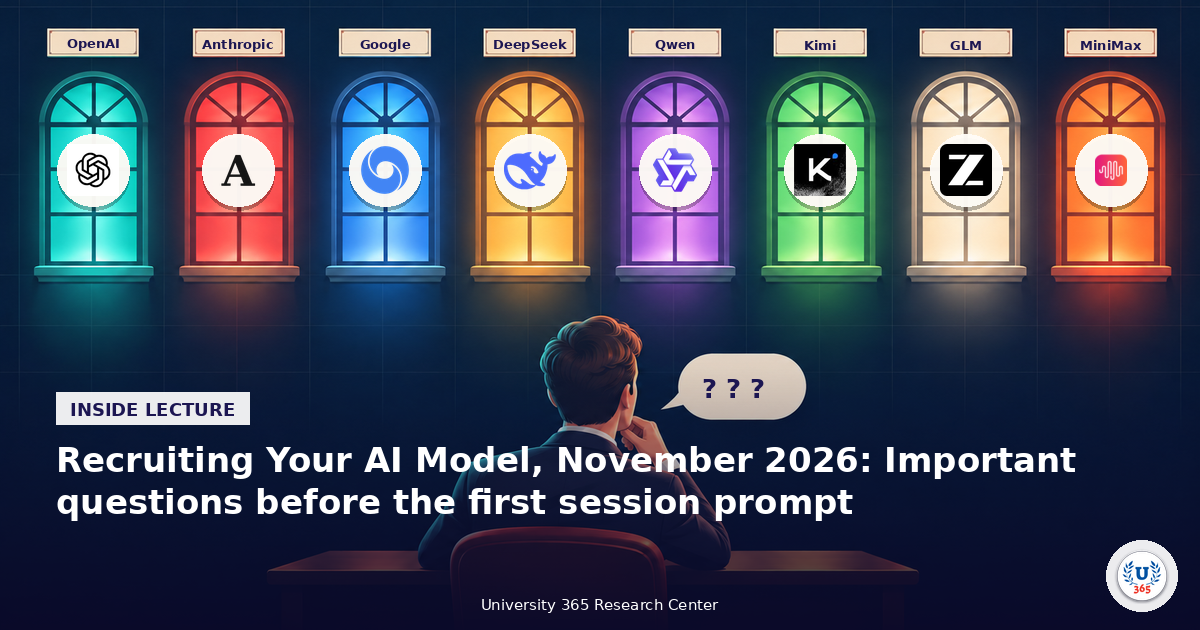

The AI Model Market, November 2026: 20 Labs, Closed and Open Weight, Priced and Compared
What this publication is, and what it is not
This page is a market reference. It lists 20 AI labs, ten that sell closed-weight models and ten that publish open weights, with the current catalogue of each and the four numbers a buyer compares before signing: context window, list price, independent benchmark level and licence.
The 20 labs are our selection, made on the five criteria set out in the next section. This is not a market-share ranking, no lab pays to appear, and no lab has seen this page before publication.
Every price is a USD list price for the standard tier, per 1 million tokens, on the verification date of 19 November 2026. Catalogues change monthly. A price on this page is a snapshot with a date on it, not a standing offer, and the Watch line under each table carries the changes already announced.
This page is not a CI-First review and it carries no score. CI-First is the University 365 method for judging whether an AI tool improves a person's work, and the scored verdicts live in the separate Tools Reviews linked from every model row. The CI-First evaluation framework explains the versioning and what each sub-score means.
Every model row starts with a miniature of its Tools Review hero image and links to that review. At the last update of this page, forty-seven of the seventy listed models carried a live review. The other twenty-three show a neutral tile reading Review in progress, carry no link, and each one is queued for review. The edition publishes with that split stated rather than hidden, and each queued row is replaced with its live hero image as its review lands.
The performance argument behind the two catalogues is a separate page: Open vs. Closed AI in 2026 measures how the two groups actually perform, and it is not replaced by this page.
Logos are trademarks of their owners, used for identification only. Their use does not imply endorsement.


The AI Model Market, November 2026: 20 Labs, Closed and Open Weight, Priced and Compared
How the 20 labs were selected
The selection was fixed before any table was built, and the same five criteria apply to both tens. In this order:
Frontier capability, measured on independent leaderboards: the lab needs at least one current model that a third party can score today.
Breadth of the current catalogue: several models a buyer can actually deploy, not one announcement and a waitlist.
Developer availability: a first-party API, a cloud marketplace or downloadable weights that any developer can reach.
Release continuity in the last 12 months: a lab that stopped shipping current models does not hold a place in the ten.
Enterprise or consumer scale: enough usage that the lab's licensing and pricing choices move the market.
The 10 plus 10 rule follows from the reader's question, not from the size of the market. Exactly 10 closed-weight and exactly 10 open-weight labs keep the two lists comparable and keep the page usable as a summary; a longer list stops being one.
A lab appears once. When a lab qualifies on both sides, it sits in the list that matches the majority of its current catalogue and its licensing strategy, and the exception is flagged in the section that follows each list. Meta and Mistral AI are in the closed ten for that reason: most of what they sell runs through a hosted API, and what they publish as weights appears in the open-weights table that closes the closed ten.
A lab outside the tens is not written off. Apple, LG AI Research, StepFun, InclusionAI, Ai2, Upstage, SK Telecom, Thinking Machines Lab, AI21, Reka and Naver are on the watchlist for this edition: on the verification date at least one of the five criteria is not met, usually a general-purpose API or the breadth of the catalogue.
What moves a lab next edition: a new frontier model that a third party scores, a catalogue that grows past its peers, a first-party API that opens, or a licensing change that moves the lab across the 10 plus 10 line. A lab that retires models without replacing them, or stops publishing weights it used to publish, is reviewed for exit and the change is recorded in the changelog.
The AI Model Market, November 2026: 20 Labs, Closed and Open Weight, Priced and Compared
How to read the tables
Six columns carry the comparison, and the terms behind them are defined once here, with the two exception tables at the end of each list explained where they appear. Read this section once and the tables that follow read quickly.
Review thumbnail. The first column is a 96 by 50 miniature of the model's U365 Tools Review hero image, and the image is a link to that review. A model with no live review carries a neutral tile reading Review in progress and no link, because a review that does not exist cannot be pictured.
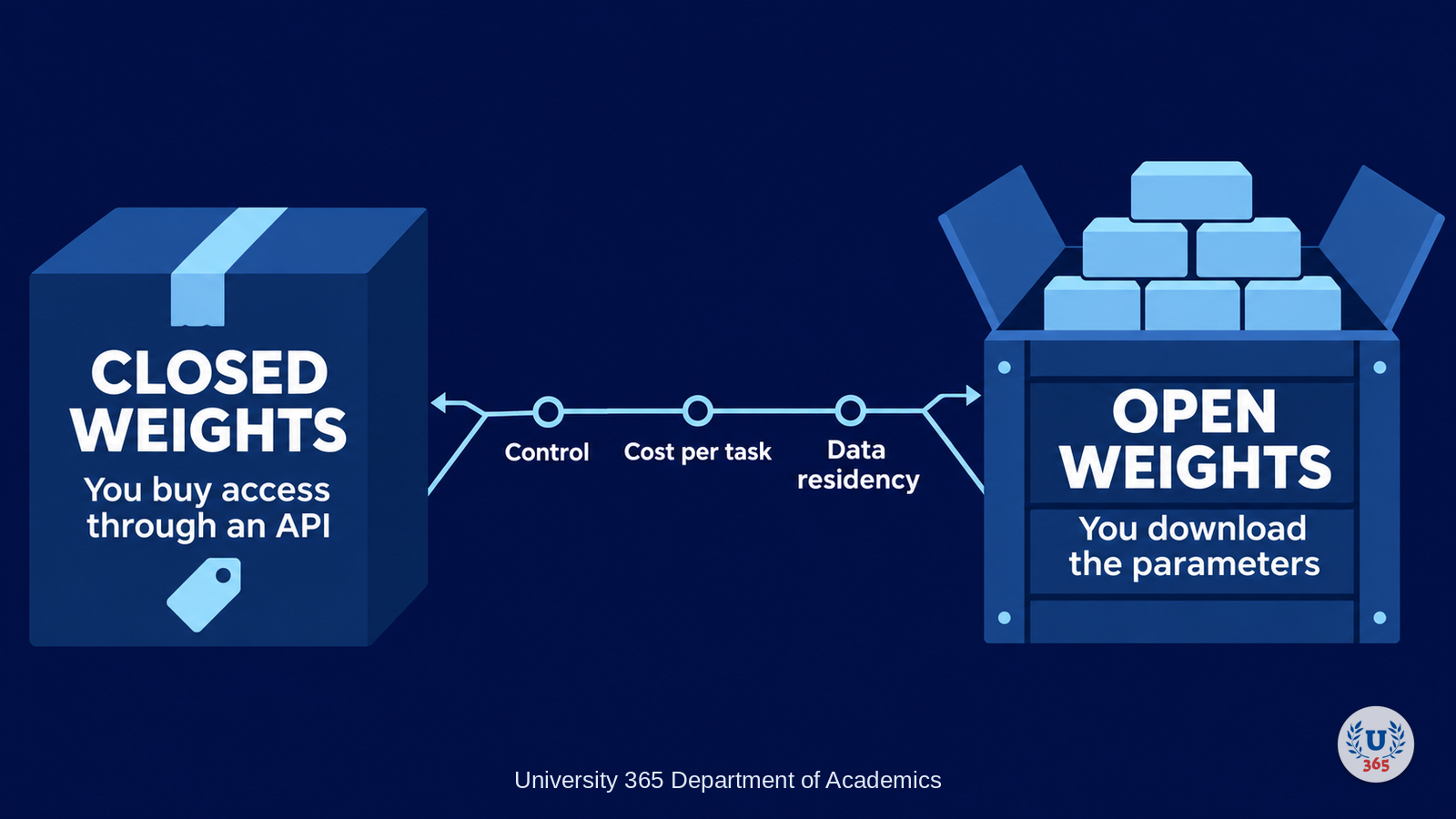
Open weights. Open weights means the lab publishes the trained parameters, so you can download them, run them on your own hardware, fine-tune them and redistribute them under the licence that ships with the file. You get the file, not the training data, and the model is still the lab's design.
Open source. Open source is a stronger claim than open weights. An OSI-approved licence grants those rights without a field-of-use limit; in this edition only the MIT, Apache 2.0 and OpenMDW 1.1 releases meet that test. The Kimi, GLM-5.3, Qwen Max, Muse Model and MiniMax Community licences are custom: they permit commercial use under revenue, user or model-as-a-service thresholds, and one of them forbids commercial use outright.
Context window. The context window is the maximum number of input tokens the vendor accepts in one request. The maximum output is a different number: it is what the model can return in one response. Gemini 4 returns up to 1 million tokens; most models return 128K or publish no maximum at all.
Total and active parameters. Total parameters count every weight in the model. Active parameters count the weights used per token in a mixture-of-experts model. A 1.05 trillion parameter model with 52 billion active parameters costs roughly what a 52 billion parameter model costs to serve, and holds the knowledge of the larger one.
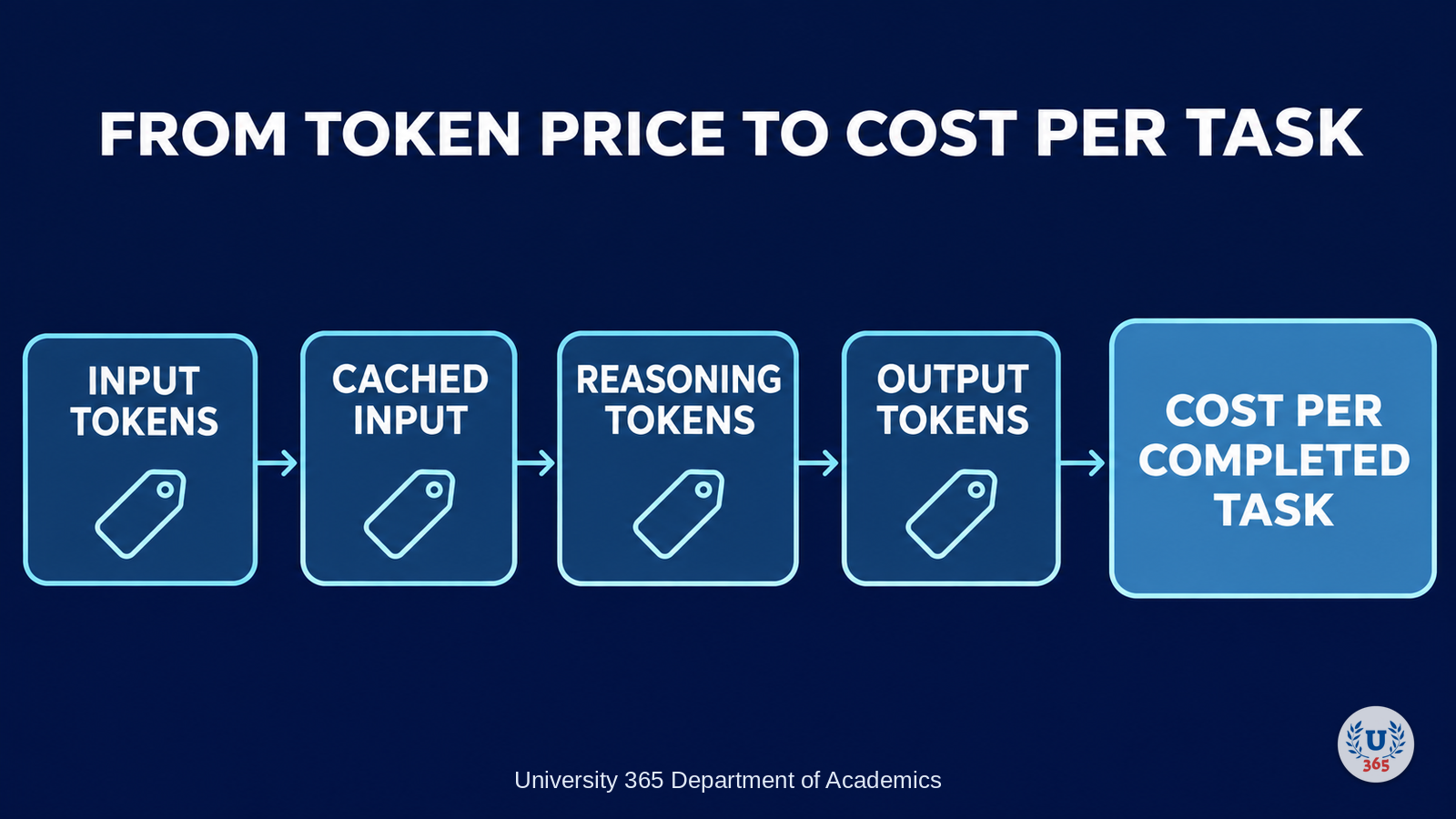
List price. The list price is the published USD price for the standard tier per 1 million tokens, with input and output priced separately. It excludes batch, committed-use and cache discounts, which can be large, and it is not what a task costs.
Cached input. Cached input is the price per 1 million tokens for a prefix the vendor has already processed, usually a fraction of the normal input price. It rewards keeping your system prompt and your reference documents stable across calls; a cache miss is billed at the full input price.
Reasoning tokens. Reasoning tokens are what the model spends thinking before it answers. They are billed as output tokens, sometimes at a separate rate, and they are why a cheap model with a long reasoning budget can cost more per answer than a dearer model with a short one.
Cost per completed task. Cost per completed task is the number that decides a purchase: input tokens read, cached input reused, reasoning tokens spent, output tokens written, plus retries and tool calls, all multiplied by the per-token prices. Two models at the same list price produce very different costs per task, because one may need a third of the tokens and two attempts.
The AA Intelligence Index and its effort setting. The AA Intelligence Index is an independent, third-party benchmark scored from 0 to 100, higher is better; The Reality of AI Benchmarks explains how a number like this is produced and what it does not tell you. Every score here carries the reasoning effort it was measured at, from low to max, because a score moves several points with effort and scores taken at different settings are not comparable. A missing entry reads Not listed or Not measured and is never filled with an estimate.
Licence. The licence column names the exact licence or terms on the model card on the verification date, not the word open. It is what you may do with the weights where they exist, and the API terms where they do not.
Availability. Availability is where a model is actually served: a first-party API, a cloud marketplace, or your own hardware after a download. It sits in the lab paragraph rather than in the table, because one model is often sold through three routes at different prices.
Deprecation. Deprecation is the date a vendor stops selling a model, or a price change it has already announced. A retired model can still be the right choice if you self-host it, but it is a decision with an end date, which is why the Watch line under each table carries the dated facts.
The AI Model Market, November 2026: 20 Labs, Closed and Open Weight, Priced and Compared
The closed-weight ten
Closed weight means the lab sells access to a model it does not publish: you buy tokens through an API, and the file stays with the lab. The ten blocks below run in the order the selection was fixed, and each carries the lab's current generally available catalogue rather than its announcements.
1. OpenAI (United States): from 8 dollars to 10 cents per million input tokens on a 1.05 million token context
OpenAI sells the GPT-6 family through its own API and through Azure and Amazon Bedrock. The current line runs from GPT-6.2 Astra at 8 dollars per million input tokens to GPT-6 Luna at 10 cents, all with a 1.05 million token context window and 128K maximum output. Reasoning effort is selectable from low to max on every model. The company also publishes GPT-OSS 120B under Apache 2.0 for self-hosting.
Review thumbnail | Model | Context in / out | Price in / out per 1M | AA Index (effort) | Licence |
 | GPT-6.2 Astra | 1,050,000 / 128,000 | 8 / 40 | 62.14 (max) | Proprietary (OpenAI API terms) |
 | GPT-6.2 Sol | 1,050,000 / 128,000 | 2 / 10 | 57.26 (max) | Proprietary (OpenAI API terms) |
 | GPT-6.1 Terra | 1,050,000 / 128,000 | 1 / 5 | 51.33 (max) | Proprietary (OpenAI API terms) |
 | GPT-6 Luna | 1,050,000 / 128,000 | 0.1 / 0.5 | 27.86 (max) | Proprietary (OpenAI API terms) |
 | GPT-OSS 120B | not disclosed / not disclosed | self-hosted / self-hosted | 3.82 (high) | Apache 2.0 |
Best for: Teams that want one vendor across a frontier tier and a cheap tier with a stable API surface.
Watch: 2026-11-17: GPT-6.2 Astra and GPT-6.2 Sol released, both priced below the GPT-6 Astra model they replace.
2. Anthropic (United States): four models, all with a 1M context window and adaptive thinking
Anthropic sells four current models on its own API, on Amazon Bedrock, Google Cloud and Microsoft Foundry. Every one carries a 1 million token context window and 128K maximum output. Thinking is adaptive and always on for Fable 5.2 and Opus 5.5. Prices run from 8 dollars to 10 cents per million input tokens, and Haiku 5.5 doubles its input price above 100K tokens. Anthropic publishes no open weights.
Review thumbnail | Model | Context in / out | Price in / out per 1M | AA Index (effort) | Licence |
 | Claude Fable 5.2 | 1,000,000 / 128,000 | 8 / 40 | 64.56 (max) | Proprietary (Anthropic commercial terms) |
 | Claude Opus 5.5 | 1,000,000 / 128,000 | 4 / 20 | 59.11 (max) | Proprietary (Anthropic commercial terms) |
 | Claude Sonnet 5.5 | 1,000,000 / 128,000 | 2 / 10 | 54.54 (max) | Proprietary (Anthropic commercial terms) |
 | Claude Haiku 5.5 | 1,000,000 / 128,000 | 0.1 / 0.5 | 36.48 (max) | Proprietary (Anthropic commercial terms) |
Best for: Long-horizon agentic coding and knowledge work where delegation and a 1M context window matter.
Watch: 2026-11-09: Claude Fable 5.2 released at 64.6 on the independent index, the highest score in this list.
3. Google DeepMind (United States): four Gemini 4 tiers within three index points of each other
Google DeepMind sells the Gemini 4 family through the Gemini API, AI Studio and Vertex AI. Carbon, Argon and Neon sit within three points of each other on the independent index at 2 to 3 dollars per million input tokens, and all four models carry a 1 million token context window with output up to 1 million tokens. Gemini 4 Hydrogen is the low-cost tier with a free allowance. Gemma 4 is published as open weights under Apache 2.0.
Review thumbnail | Model | Context in / out | Price in / out per 1M | AA Index (effort) | Licence |
 | Gemini 4 Neon | 1,000,000 / 1,000,000 | 3 / 15 | 61.4 (xhigh) | Proprietary (Google API terms) |
 | Gemini 4 Carbon | 1,000,000 / 1,000,000 | 2 / 10 | 60.03 (high) | Proprietary (Google API terms) |
 | Gemini 4 Hydrogen | 1,000,000 / 1,000,000 | 1.5 / 7.5 | 53.92 (xhigh) | Proprietary (Google API terms) |
 | Gemini 4 Argon | 1,000,000 / 1,000,000 | 2 / 10 | 50.41 (high) | Proprietary (Google API terms) |
 | Gemma 4 31B | 256,000 / not disclosed | self-hosted / self-hosted | 4.38 (reasoning) | Apache 2.0 |
Best for: Buyers who want frontier-level reasoning at 2 to 3 dollars per million input tokens.
Watch: 2026-12-01: Gemini 4 Carbon and Gemini 4 Argon list prices double from 2 to 4 dollars input and from 10 to 20 dollars output.
4. Meta (United States): Muse Wonder Full, Muse Spark and Muse Ember plus two open-weight releases
Meta sells the Muse family through the Meta Model API at api.meta.ai, and bundles Muse Wonder Full into its Muse Code subscription. Muse Spark 1.3 and Muse Ember 1.0 both carry a 1,048,576 token context window, and Ember returns up to 524,288 tokens. Contributor mode trades a lower price for permission to train on your content. Meta also publishes Muse Spark Open at 816B parameters and Muse Glimmer at 30B.
Review thumbnail | Model | Context in / out | Price in / out per 1M | AA Index (effort) | Licence |
| Muse Wonder Full | 1,000,000 / not disclosed | not disclosed / not disclosed | 50.08 (max) | Proprietary (Muse Code subscription terms) |
 | Muse Spark 1.3 | 1,048,576 / not disclosed | 1.25 / 4.25 | not listed | Proprietary (Meta Model API terms) |
| Muse Ember 1.0 | 1,048,576 / 524,288 | 0.1 / 0.5 | 36.02 (max) | Proprietary (Meta Model API terms) |
 | Muse Spark Open | 1,048,576 / not disclosed | self-hosted / self-hosted | 24.88 (not stated) | Muse Model License |
| Muse Glimmer 30B | 131,072 / not disclosed | self-hosted / self-hosted | 6.34 (not stated) | Apache 2.0 |
Best for: Agentic coding teams that want a 1M context model at 1.25 dollars input, or self-hosting at 816B parameters.
Watch: 2026-11-09: Muse Ember released at 10 cents per million input tokens for requests up to 200K tokens.
5. xAI (United States): three Grok tiers at a flat 2 dollar input price with a 500K context
xAI sells Grok 4.7, 4.6 and 4.5 through its own API, with a 500K token context window on all three and the same 2 dollar input and 6 dollar output price per million tokens. Requests above 200K input tokens move to higher long-context rates. Reasoning effort is configurable. The catalogue also keeps Grok 4.3 and Grok 4.20 variants at a lower price with a 1M token context. xAI publishes no open weights.
Review thumbnail | Model | Context in / out | Price in / out per 1M | AA Index (effort) | Licence |
| Grok 4.7 | 500,000 / not disclosed | 2 / 6 | 35.49 (xhigh) | Proprietary (xAI API terms) |
 | Grok 4.6 | 500,000 / not disclosed | 2 / 6 | 31.0 (xhigh) | Proprietary (xAI API terms) |
 | Grok 4.5 | 500,000 / not disclosed | 2 / 6 | not listed | Proprietary (xAI API terms) |
Best for: Teams that want configurable reasoning and a 500K context window at a flat 2 dollar input price.
Watch: 2026-09-21: Grok 4.7 released; Grok 4.6 scores 31 at xhigh on the independent index, against 35 for 4.7.
6. Amazon (United States): Nova 2 Lite plus two current Nova 1 models, first-party on Bedrock
Amazon sells Nova through Amazon Bedrock, priced in US East. The current first-party line pairs Nova 2 Lite, the general-availability Nova 2 reasoning model at 33 cents input and 2.75 dollars output per million tokens, with two still-current Nova 1 models: Nova Premier at 4.375 and 12.50 dollars and Nova Pro at 80 cents and 3.20 dollars. Nova 2 Pro and Nova 2 Omni remain in preview on 2026-11-19 and are excluded from this edition under the current-GA-only rule. Billing runs through the AWS account and provisioned throughput is available. No independent index row exists for a current Nova model.
Review thumbnail | Model | Context in / out | Price in / out per 1M | AA Index (effort) | Licence |
| Nova Premier | 1,000,000 / not disclosed | 4.375 / 12.5 | not listed | Proprietary (AWS terms) |
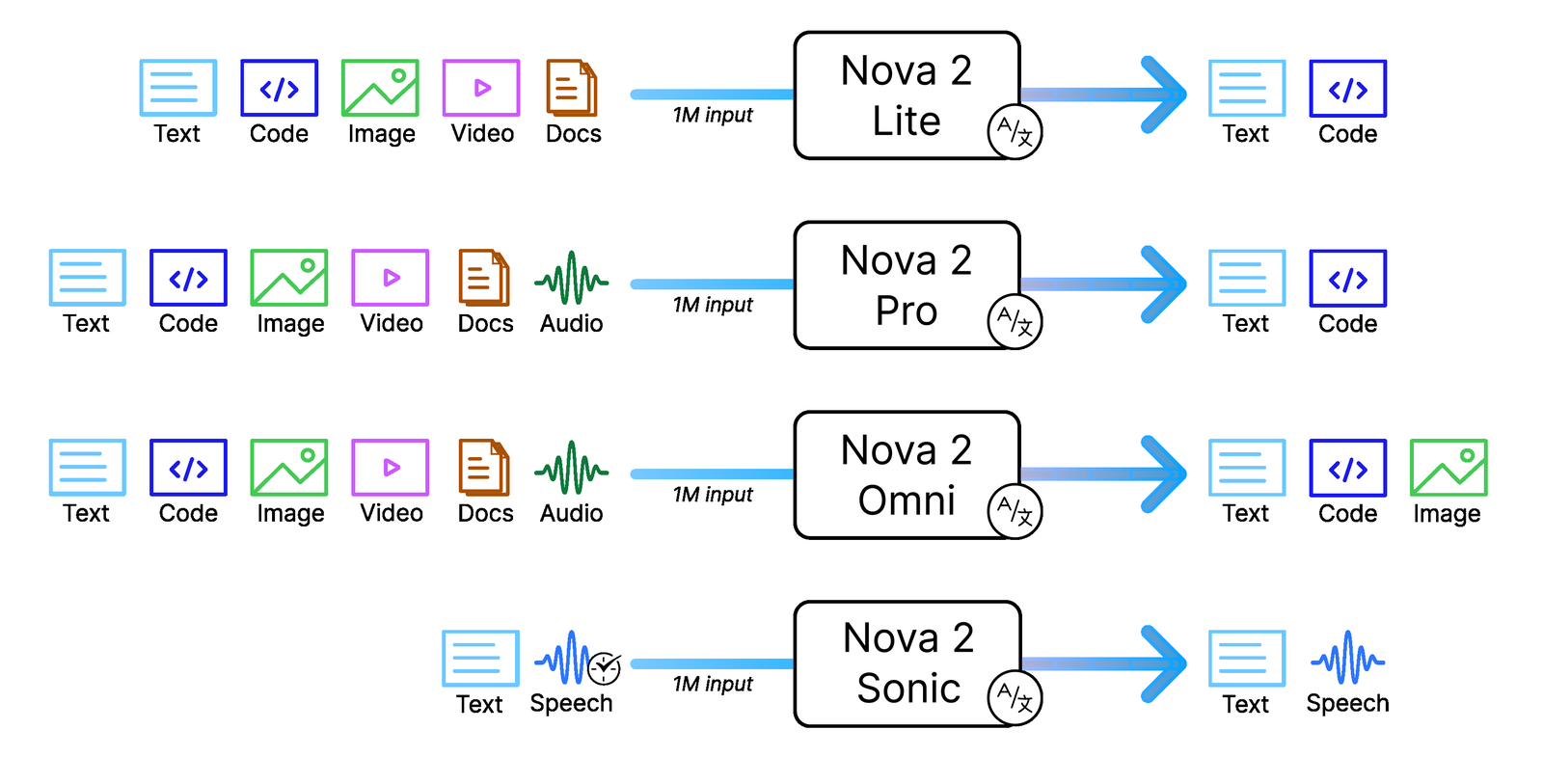 | Nova 2.0 Lite | 1,000,000 / 64,000 | 0.33 / 2.75 | not listed | Proprietary (AWS terms) |
| Nova Pro | 300,000 / 10,000 | 0.8 / 3.2 | not listed | Proprietary (AWS terms) |
Best for: Teams already on AWS that want a low-cost multimodal model inside their existing Bedrock contract.
Watch: 2026-11-19: Nova 2 Pro and Nova 2 Omni are still labelled Preview on the Bedrock pricing page, so the Nova 2 generation contributes one generally available model, Nova 2 Lite.
7. Microsoft (United States): Phi-4 under MIT, with the MAI text model still in preview
Microsoft sells Phi-4, Phi-4-mini and Phi-4-multimodal as open weights under MIT, downloadable from Hugging Face and runnable on Azure or your own hardware. Its first-party MAI text model, MAI-Thinking-1, is in preview on Azure AI Foundry and is therefore not listed here. Microsoft-Decision-1.1 is generally available for classification and scoring. Image, voice and transcription models are sold separately through Foundry and Azure Speech.
Review thumbnail | Model | Context in / out | Price in / out per 1M | AA Index (effort) | Licence |
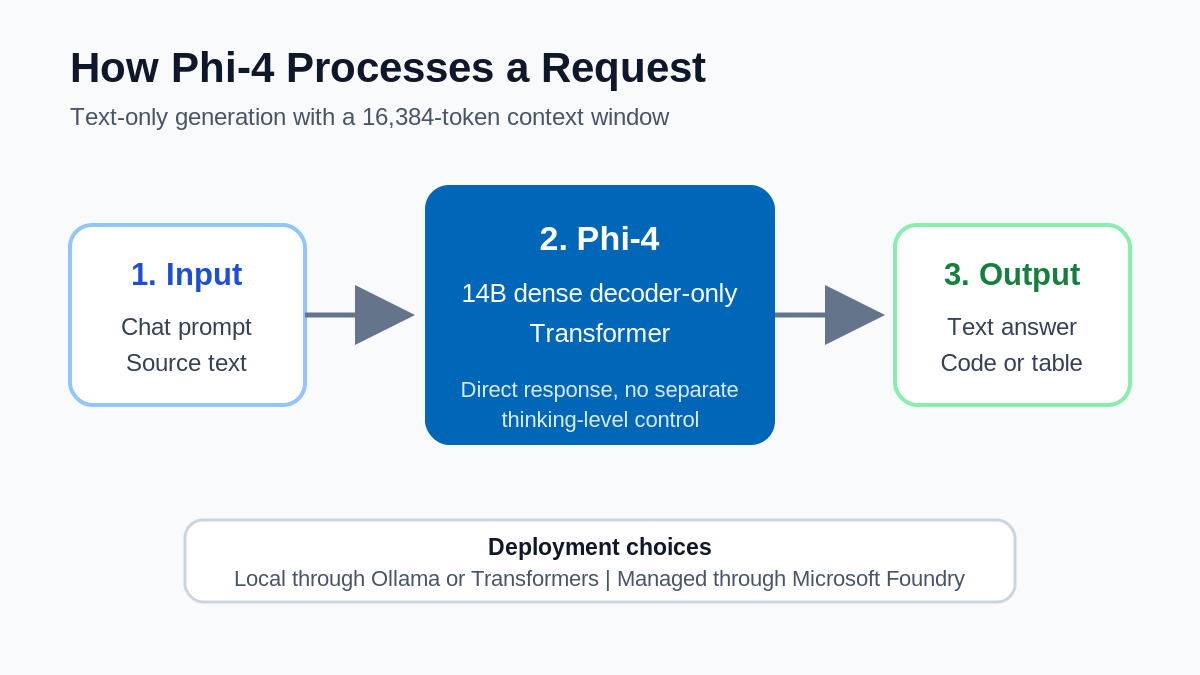 | Phi-4 | 16,000 / not disclosed | self-hosted / self-hosted | not listed | MIT |
| Phi-4-mini-instruct | 128,000 / not disclosed | self-hosted / self-hosted | not listed | MIT |
| Phi-4-multimodal-instruct | 128,000 / not disclosed | self-hosted / self-hosted | not listed | MIT |
| Microsoft-Decision-1.1 | 32,000 / not disclosed | not disclosed / not disclosed | not listed | Proprietary (Microsoft terms) |
Best for: Teams that need a small model they can run on their own hardware under a permissive licence.
Watch: 2026-11-19: MAI-Thinking-1 remains in preview on Azure AI Foundry, so Microsoft has no generally available first-party text model outside Phi.
8. Mistral AI (France): open weights with a commercial licence, from 3B to 1.05T parameters
Mistral sells Mistral Large 4, Mistral Small 4 and the Ministral 3 family as open weights and through its own API. Large 4 is a 1.05 trillion parameter mixture of experts with 52B active parameters, a 1M token context and a commercial open-weight licence. Small 4 and the Ministral models carry Apache 2.0. The API also resells third-party open models from Z.ai and DeepSeek. Mistral Medium 3.5 is deprecated and excluded.
Review thumbnail | Model | Context in / out | Price in / out per 1M | AA Index (effort) | Licence |
| Mistral Large 4 | 1,000,000 / not disclosed | 0.7 / 2.1 | 26.12 (high) | Mistral Ecosystem Open Weight License v26.10 |
 | Mistral Small 4 | 256,000 / not disclosed | 0.15 / 0.6 | 4 (reasoning) | Apache 2.0 |
 | Ministral 3 14B | 256,000 / not disclosed | 0.2 / 0.2 | not listed | Apache 2.0 |
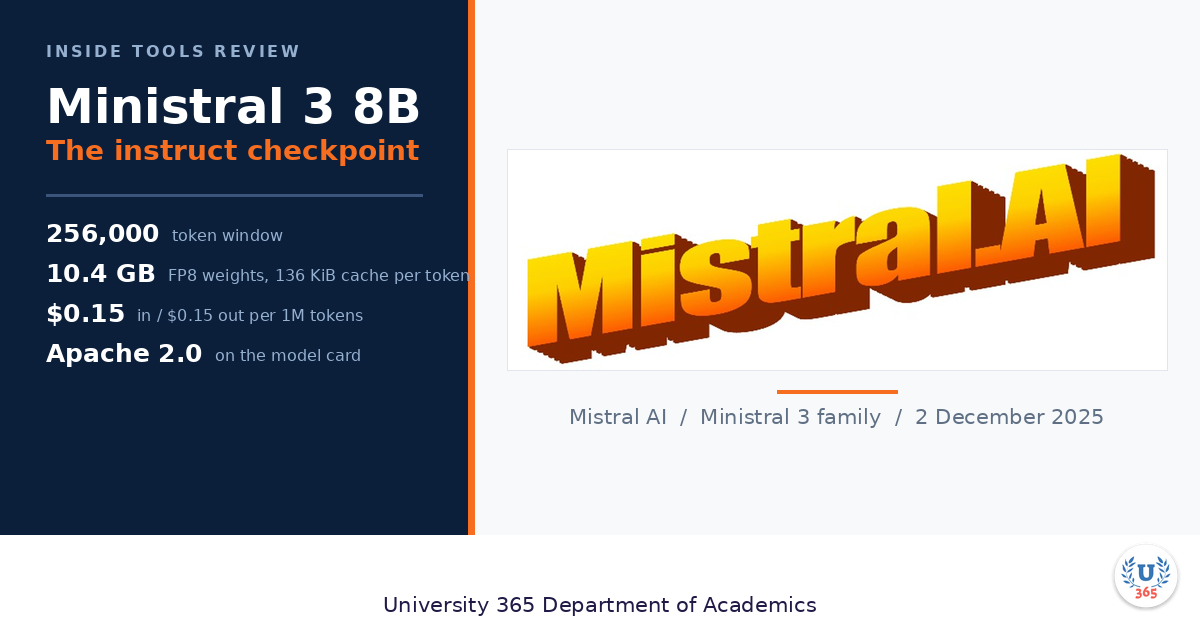 | Ministral 3 8B | 256,000 / not disclosed | 0.15 / 0.15 | not listed | Apache 2.0 |
| Ministral 3 3B | 256,000 / not disclosed | 0.1 / 0.1 | not listed | Apache 2.0 |
Best for: European buyers who need open weights with a commercial licence and EU hosting options.
Watch: 2026-10-31: Mistral Medium 3.5 was deprecated, with Mistral Large 4 named as the replacement.
9. ByteDance (China): the Doubao Seed family, API only, priced in renminbi
ByteDance sells the Doubao Seed family through Volcano Engine in China, with input-length tiers that reach 1,024K tokens on Seed 2.1 Pro and Seed Evolving. Prices are quoted in renminbi, from 0.80 yuan per million input tokens on Seed 2.1 Lite to 6 yuan on the Pro tier. The models are API only. ByteDance publishes no open weights for this family, and no independent index row exists for a current Doubao model.
Review thumbnail | Model | Context in / out | Price in / out per 1M | AA Index (effort) | Licence |
 | Doubao Seed 2.1 Pro | 1,024,000 / not disclosed | 0.8999 / 4.4996 | not listed | Proprietary (Volcano Engine terms) |
 | Doubao Seed Evolving | 1,024,000 / not disclosed | 0.8999 / 4.4996 | not listed | Proprietary (Volcano Engine terms) |
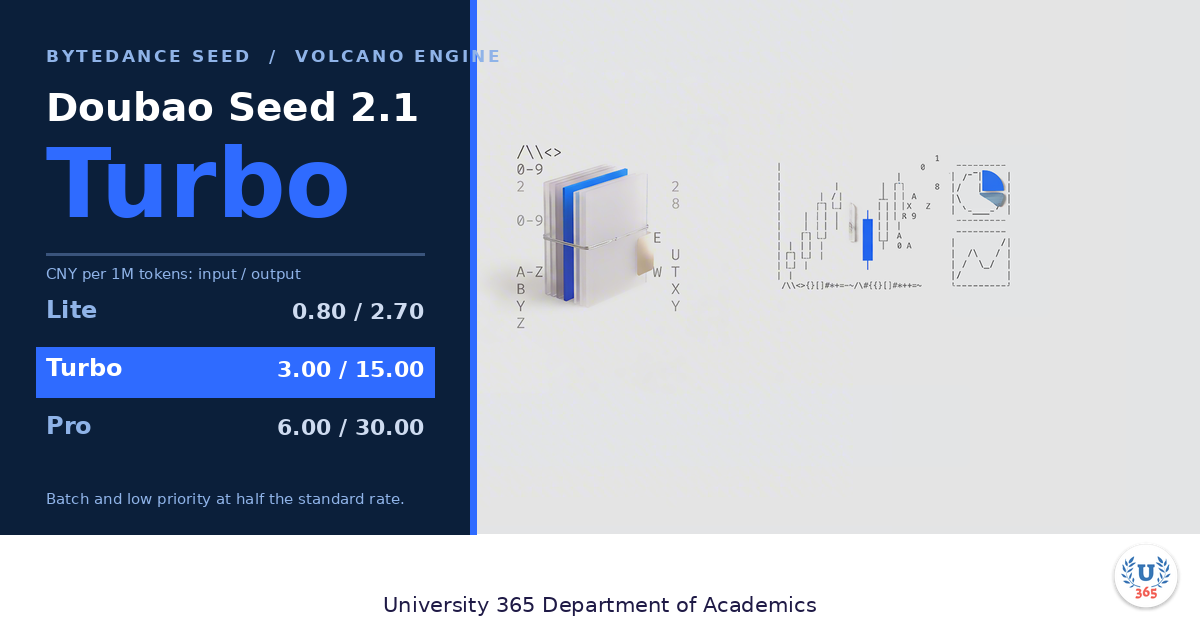 | Doubao Seed 2.1 Turbo | 256,000 / not disclosed | 0.45 / 2.2498 | not listed | Proprietary (Volcano Engine terms) |
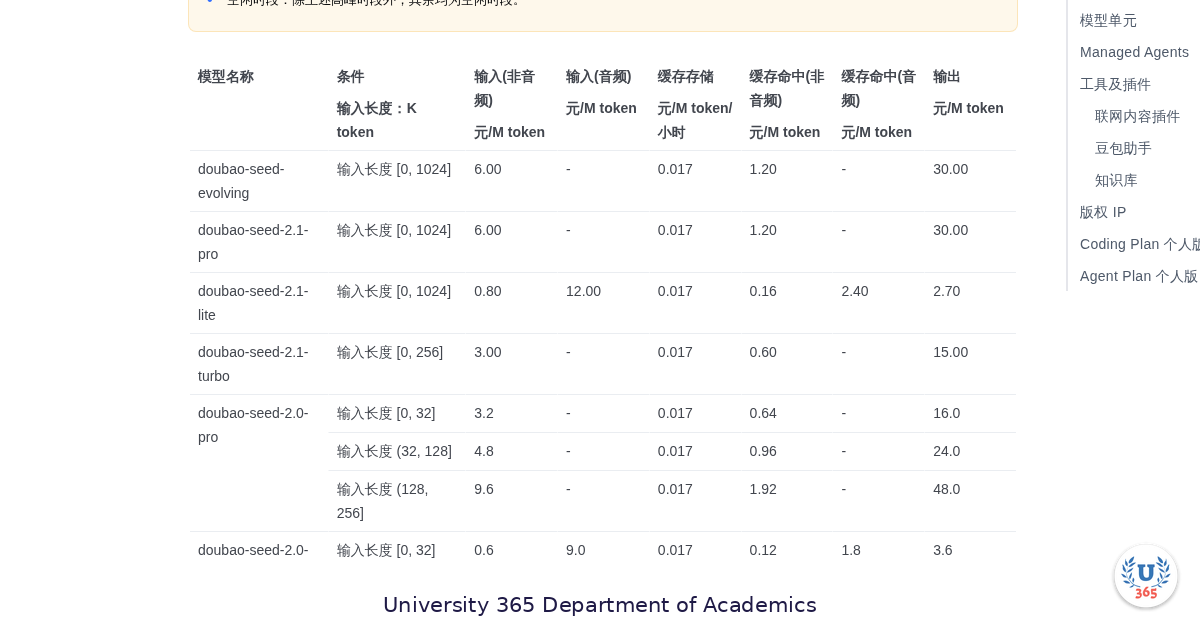 | Doubao Seed 2.1 Lite | 1,024,000 / not disclosed | 0.12 / 0.405 | not listed | Proprietary (Volcano Engine terms) |
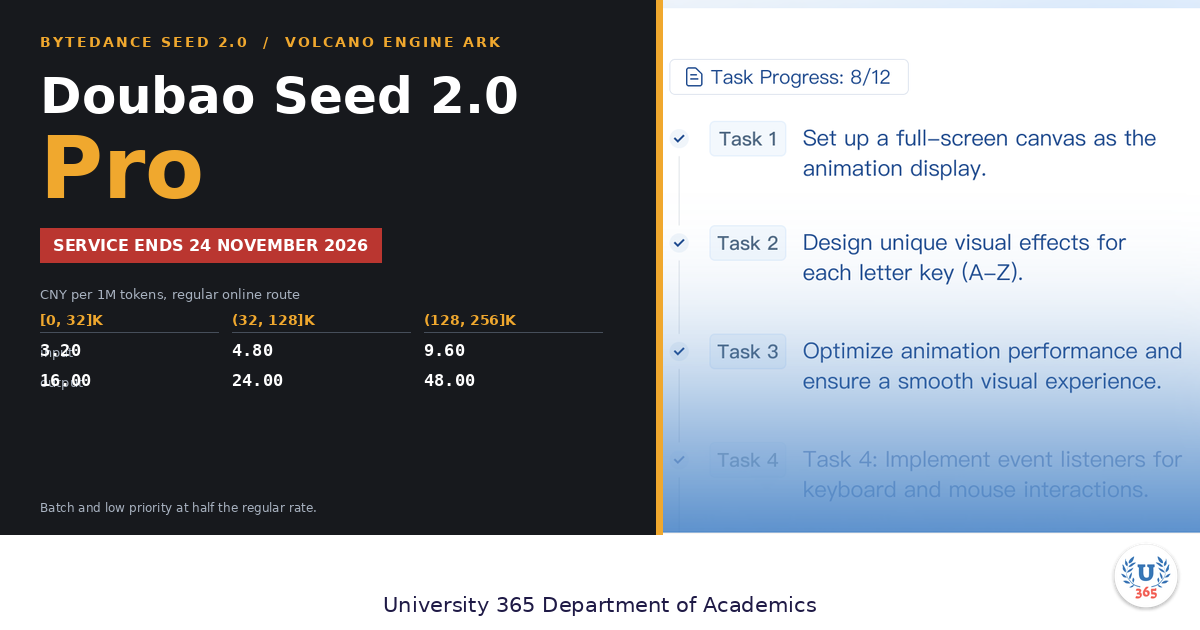 | Doubao Seed 2.0 Pro | 256,000 / 131,072 | 0.48 / 2.3998 | not listed | Proprietary (Volcano Engine terms) |
Best for: Buyers serving Chinese-language workloads who need a 1M context model from a domestic vendor.
Watch: 2026-11-18: server-side search and web fetch calls stopped being billed separately and are now billed as model tokens.
10. Baidu (China): ERNIE on Qianfan, with the flagship still in preview
Baidu sells the ERNIE family through Qianfan. The flagship ERNIE 5.5 Flash is in preview, so the only generally available text model with a published price on the vendor page on 19 November 2026 is ERNIE-Light-DT-1.0 at 8 yuan input and 28 yuan output per million tokens, with thinking on or off and output up to 128K tokens. ERNIE 5.1 is listed for use but carries no published price. No ERNIE weights are open.
Review thumbnail | Model | Context in / out | Price in / out per 1M | AA Index (effort) | Licence |
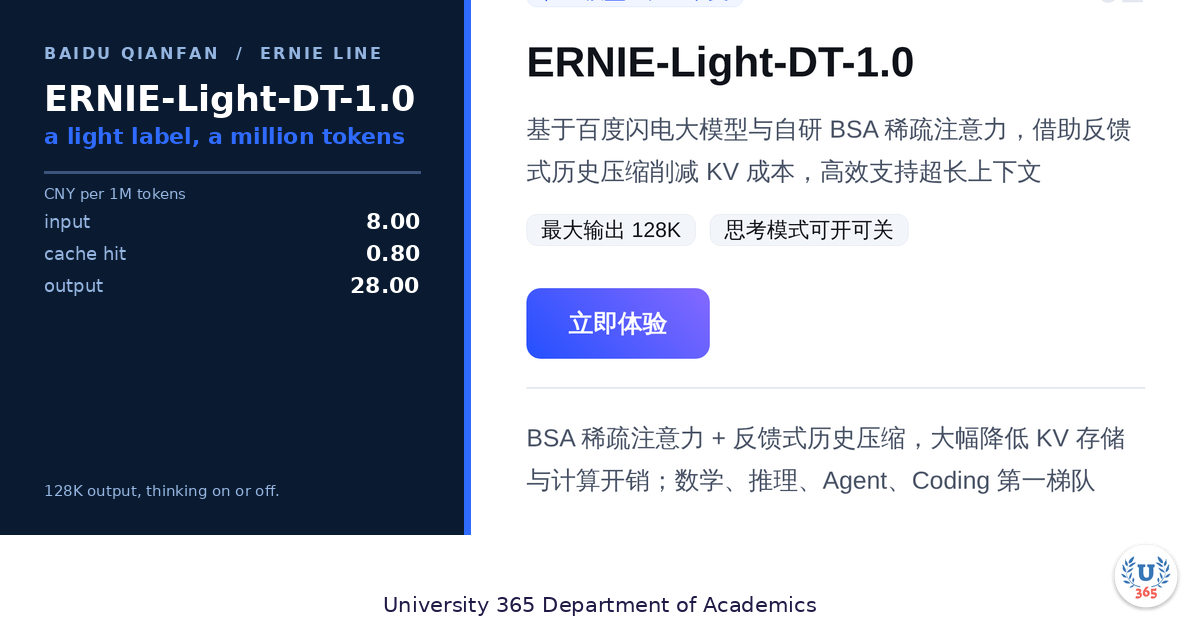 | ERNIE-Light-DT-1.0 | not disclosed / 128,000 | 1.1999 / 4.1997 | not listed | Proprietary (Qianfan terms) |
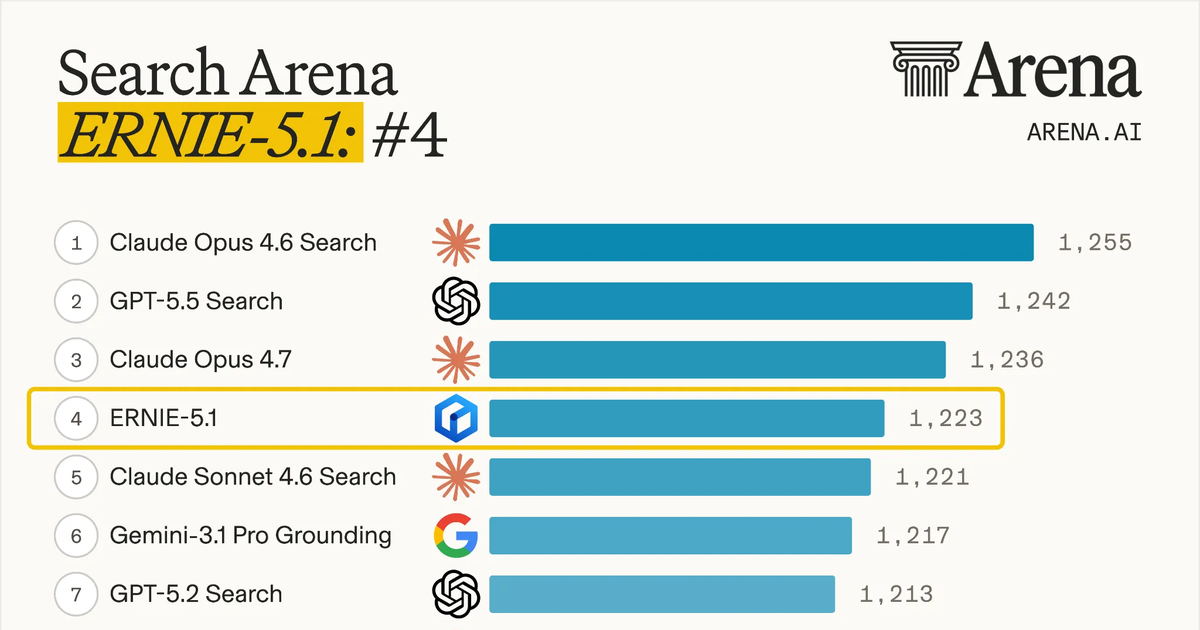 | ERNIE 5.1 | not disclosed / not disclosed | not disclosed / not disclosed | not listed | Proprietary (Qianfan terms) |
Best for: Chinese enterprise buyers already on Baidu Cloud who need a low-cost model with long output.
Watch: 2026-11-19: ERNIE 5.5 Flash is still preview; only ERNIE-Light-DT-1.0 carries a published price on the vendor product page.

The AI Model Market, November 2026: 20 Labs, Closed and Open Weight, Priced and Compared
When a closed lab also publishes open weights
A closed posture describes the bulk of a catalogue, not every model in it. Six of the closed ten also publish weights for at least one model, and a buyer who needs a downloadable file is not limited to the open ten. One row per model, with the licence that ships with the file and where the weights live.
Model | Lab | Licence | Weights live at |
GPT-OSS 120B | OpenAI | Apache 2.0 | huggingface.co/openai/gpt-oss-120b |
Gemma 4 31B | Google DeepMind | Apache 2.0 | huggingface.co/google/gemma-4-31B-it |
Muse Spark Open | Meta | Muse Model License | Meta release |
Muse Glimmer 30B | Meta | Apache 2.0 | Meta release |
Phi-4 | Microsoft | MIT | Hugging Face |
Phi-4-mini-instruct | Microsoft | MIT | Hugging Face |
Phi-4-multimodal-instruct | Microsoft | MIT | Hugging Face |
Mistral Large 4 | Mistral AI | Mistral Ecosystem Open Weight License v26.10 | Vendor release |
Mistral Small 4 | Mistral AI | Apache 2.0 | Vendor release |
Ministral 3 14B, 8B and 3B | Mistral AI | Apache 2.0 | Vendor release |
The Muse Model License and the Mistral Ecosystem Open Weight License v26.10 are not OSI-approved: both permit commercial use, both attach conditions. GPT-OSS, Gemma 4, Phi-4, Muse Glimmer, Mistral Small 4 and the Ministral 3 family carry Apache 2.0 or MIT. xAI, Amazon, ByteDance and Baidu publish no weights for a current model on the verification date.

The AI Model Market, November 2026: 20 Labs, Closed and Open Weight, Priced and Compared
The open-weight ten
Open weight means the lab publishes the parameters and you can run the model without the lab's API. The ten blocks below run in the order the selection was fixed. Each carries a licence line naming the exact terms and the host of the weights, because two models from the same lab can ship under different licences.
1. DeepSeek (China): two MIT-licensed model lines, priced for volume
DeepSeek publishes two current model lines, both with full weights on Hugging Face under the MIT licence: the 1.6T-parameter V4 Pro reasoning model and the 763B V4.1 Flash, which adds vision. The API is the cheapest route for most buyers and runs on a peak and off-peak rate card, with cached input at a fraction of the input price. The catalogue is narrow and deliberately so: two model ids, no small dense tier, no per-size variants.
Review thumbnail | Model | Context in / out | Price in / out per 1M | AA Index (effort) | Licence |
 | DeepSeek V4 Pro | 1,000,000 / 384,000 | 1.32 / 3.96 | 23 (high) | MIT |
 | DeepSeek V4.1 Flash | 1,000,000 / 384,000 | 0.3 / 1.2 | 32.59 (max) | MIT |
Best for: Teams that want frontier-class reasoning at the lowest output price and can accept a two-model catalogue.
Watch: DeepSeek retired the V4 Flash API models; the legacy model names now route to V4.1 Flash, and the weights remain published (pricing page, 19 November 2026).
Licence line: Weights: MIT, no commercial cap, no gating. Hugging Face: deepseek-ai.
2. Moonshot AI (China): 2.8T sparse models built for agentic work
Moonshot AI sells the Kimi API and publishes the full weights for every current model. Kimi K3.1 Pro and Kimi K3 are 2.8T-parameter sparse models with native image and video input and a one-million-token window, aimed at agentic coding and long knowledge work. K2.7 Code remains available to existing users at a lower price. Licensing is custom rather than OSI open source: commercial use is permitted, with a separate agreement above stated revenue and user thresholds.
Review thumbnail | Model | Context in / out | Price in / out per 1M | AA Index (effort) | Licence |
| Kimi K3.1 Pro | 1,048,576 / not disclosed | 2 / 10 | 46 (max) | Kimi K3.1-Pro License |
 | Kimi K3 | 1,048,576 / not disclosed | 3 / 15 | not measured | Kimi K3 License |
 | Kimi K2.7 Code | 262,144 / not disclosed | 0.95 / 4 | not measured | Modified MIT |
Best for: Agentic coding and long-document work where image and video input are needed.
Watch: Kimi K2 series stopped accepting new registrations on 31 October 2026 and is scheduled for retirement by the end of December 2026 (pricing page, 19 November 2026).
Licence line: Weights: Kimi K3.1-Pro License and Kimi K3 License, commercial use with thresholds; K2.7 Code under a Modified MIT licence. Hugging Face: moonshotai.
3. Alibaba, Qwen (China): hosted Max flagships and open weights side by side
Alibaba sells Qwen through Model Studio and, unusually, publishes weights for its frontier class: the 2.4T-parameter Qwen3.8 base, the 125B Flash-Next base with 6B active parameters, and the 27B dense model under Apache 2.0. The Max products themselves are API only and priced per region. Buyers get a genuine choice between a hosted flagship and downloadable weights, but the licence terms differ sharply by model, so each row has to be read on its own.
Review thumbnail | Model | Context in / out | Price in / out per 1M | AA Index (effort) | Licence |
| Qwen4 Max | 1,000,000 / 131,072 | 1.5 / 4.5 | 43 (xhigh) | Proprietary (API only) |
 | Qwen3.8 Max | 1,000,000 / 65,536 | 2 / 6 | 34 (xhigh) | Proprietary (API only) |
| Qwen3.8 Flash (Flash-Next weights) | 1,000,000 / not disclosed | 0.05 / 0.41 | 29 (xhigh) | Qwen Community License 1.0 |
 | Qwen3.8 27B | 262,144 / not disclosed | 0.5 / 3 | 20 (xhigh) | Apache 2.0 |
Best for: Buyers who want a hosted flagship and a credible open-weight fallback from one vendor.
Watch: Qwen4 Max was listed on 16 November 2026 at USD 1.50 input and USD 4.50 output per million tokens in the Singapore region, below Qwen3.8 Max (Model Studio pricing, 19 November 2026).
Licence line: Weights: Qwen3.8 Max base under the Qwen3.8-Max licence, Flash-Next under Qwen Community License 1.0, 27B under Apache 2.0. Hugging Face: Qwen.
4. Z.ai, formerly Zhipu AI (China): the GLM-5 family, MIT at the mid tier
Z.ai, formerly Zhipu AI, publishes the GLM-5 family on Hugging Face and sells the same models through its API. GLM-5.3 is the 753B flagship with a one-million-token window and three reasoning-effort levels; GLM-5.3 Flash is a 320B multimodal model with 18B active parameters and an MIT licence. GLM-5.2 remains listed at the same price. The newer models use a custom licence, while the Flash and 5.2 releases are MIT.
Review thumbnail | Model | Context in / out | Price in / out per 1M | AA Index (effort) | Licence |
 | GLM-5.3 | 1,000,000 / 128,000 | 1.4 / 4.4 | 32 (max) | GLM-5.3 License |
 | GLM-5.3 Flash | 1,000,000 / not disclosed | 0.15 / 0.5 | 28 (max) | MIT |
 | GLM-5.2 | 1,000,000 / not disclosed | 1.4 / 4.4 | not measured | MIT |
Best for: Bilingual Chinese and English workloads that need a one-million-token window at mid-market prices.
Watch: GLM-5.3-FlashX is a new mid tier at USD 0.37 input and USD 1.25 output per million tokens, and GLM-5-Turbo no longer appears in the Z.ai price table (19 November 2026).
Licence line: Weights: GLM-5.3 License for the flagship, MIT for GLM-5.3 Flash and GLM-5.2. Hugging Face: zai-org.
5. Xiaomi (China): low-cost omnimodal models with a 1M window
Xiaomi's MiMo platform sells two current models and publishes both weight sets under MIT. MiMo-V2.6-Pro is a 1.02T-parameter sparse model with 42B active parameters; Flash is a 309B model with 15B active. Both accept text, image, video and audio and carry a one-million-token window. API prices are among the lowest in this list, and a 9B distilled model is published for teams that need a small local deployment.
Review thumbnail | Model | Context in / out | Price in / out per 1M | AA Index (effort) | Licence |
 | MiMo-V2.6-Pro | 1,000,000 / 128,000 | 0.435 / 0.87 | not measured | MIT |
 | MiMo-V2.6-Flash | 1,000,000 / 128,000 | 0.14 / 0.28 | not measured | MIT |
| MiMo-V2.6-Distill-Qwen-9B | not disclosed / not disclosed | self-hosted / self-hosted | not measured | MIT |
Best for: Cost-sensitive multimodal agents that need audio and video input.
Watch: The MiMo pay-as-you-go table lists a Pro-UltraSpeed serving tier at USD 4.35 input and USD 8.70 output per million tokens, twenty times the standard Pro input price (19 November 2026).
Licence line: Weights: MIT for the V2.6 models and the 9B distill, no gating. Hugging Face: XiaomiMiMo.
6. MiniMax (China): multimodal agents under a community licence
MiniMax sells M3.1 Flash and M3 through its API and publishes weights for both, plus the older M2.7. M3.1 Flash and M3 are 428B-parameter multimodal models with 23B active parameters and a one-million-token window; M3 carries a permanent 50 percent discount on longer inputs. The community licence is not open source: commercial use requires a notice and, above USD 20 million in yearly revenue, prior written authorisation.
Review thumbnail | Model | Context in / out | Price in / out per 1M | AA Index (effort) | Licence |
| MiniMax M3.1 Flash | 1,000,000 / not disclosed | 0.15 / 0.6 | 29 (max) | MiniMax Community License |
 | MiniMax M3 | 1,000,000 / not disclosed | 0.6 / 2.4 | 19 (not stated) | MiniMax Community License |
 | MiniMax M2.7 | not disclosed / not disclosed | self-hosted / self-hosted | not measured | MiniMax Non-Commercial License |
Best for: Coding and computer-use agents that need a one-million-token window at low cost.
Watch: M3.1 Flash was published with open weights in October 2026 and is priced at USD 0.15 input and USD 0.60 output per million tokens (pricing page, 19 November 2026).
Licence line: Weights: MiniMax Community License for M3.1 Flash and M3; MiniMax Non-Commercial License for M2.7. Hugging Face: MiniMaxAI.
7. Tencent (China): the first Hy4-generation open release
Tencent published Hy4 Flash on 17 November 2026, the first open-weight model in its Hy4 generation. It is a 220B-parameter mixture of experts with 12B active parameters, text and image input, and a 1,048,576-token window, released under the Tencent Hy License, an Apache 2.0 derivative with extra terms for large model-as-a-service businesses. Tencent is migrating its model services to TokenHub, and no public per-token list price for Hy4 Flash was readable on the verification date.
Review thumbnail | Model | Context in / out | Price in / out per 1M | AA Index (effort) | Licence |
| Hunyuan Hy4 Flash | 1,048,576 / not disclosed | not disclosed / not disclosed | not measured | Tencent Hy License 1.0 |
Best for: Teams that want a long-window Chinese open-weight model and can self-host or use TokenHub.
Watch: Hy4 Flash weights were published on 17 November 2026; Tencent states that model services are moving to TokenHub, where new model access is now sold (billing page, 19 November 2026).
Licence line: Weights: Tencent Hy License 1.0, commercial use permitted below 100 million monthly active users. Hugging Face: tencent.
8. NVIDIA (United States): open weights at frontier scale for self-hosting
NVIDIA publishes the Nemotron 3 family as open weights under OpenMDW 1.1, a permissive licence with no commercial cap. Ultra is a 550B-parameter model with 55B active for hard reasoning; Super VL adds vision and video at 120B with 12B active; Lightning is a 30B model with 3B active that runs on one H100. NVIDIA does not publish a first-party per-token list price for production use, so self-hosting or a third-party host is the route.
Review thumbnail | Model | Context in / out | Price in / out per 1M | AA Index (effort) | Licence |
 | Nemotron 3 Ultra | 1,000,000 / not disclosed | self-hosted / self-hosted | 12 (reasoning) | OpenMDW 1.1 |
| Nemotron 3.5 Super VL 120B | 1,000,000 / not disclosed | self-hosted / self-hosted | not measured | OpenMDW 1.1 |
| Nemotron 3.5 Lightning | 1,000,000 / not disclosed | self-hosted / self-hosted | not measured | OpenMDW 1.1 |
Best for: Enterprises that need to self-host a frontier-scale model on owned GPUs.
Watch: Nemotron 3.5 Super VL was released in October 2026 at 120B total and 12B active parameters, with a one-million-token window (model card, 19 November 2026).
Licence line: Weights: OpenMDW 1.1, commercial use with no cap, no gating. Hugging Face: nvidia.
9. Cohere (Canada): small Apache 2.0 models for enterprise work
Cohere publishes smaller open-weight models than its Chinese peers and mixes licences. Command A+ is a 218B-parameter mixture of experts with 25B active parameters, vision input, a 128K window and an Apache 2.0 licence. Command A is 111B with a 256K window but its weights are non-commercial. North Mini Code is a 30B Apache 2.0 model for agentic coding. The North platform itself remains a closed product.
Review thumbnail | Model | Context in / out | Price in / out per 1M | AA Index (effort) | Licence |
 | Command A+ | 128,000 / 64,000 | not disclosed / not disclosed | 6 (not stated) | Apache 2.0 |
 | Command A | 256,000 / 8,000 | not disclosed / not disclosed | not measured | CC BY-NC 4.0 |
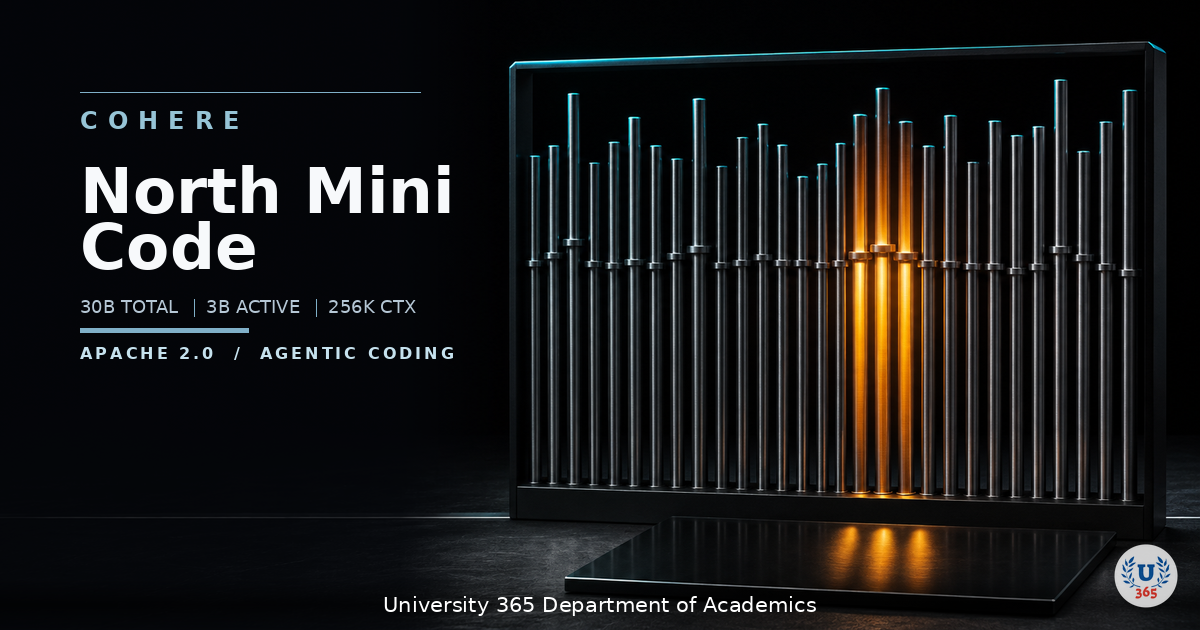 | North Mini Code | 256,000 / 64,000 | not disclosed / not disclosed | 3 (not stated) | Apache 2.0 |
 | North Small Translate 1.0 | 16,000 / 16,000 | not disclosed / not disclosed | not measured | CC BY-NC 4.0 |
Best for: Enterprise retrieval and agent deployments that need Apache 2.0 weights and vision input.
Watch: Command A+ moved the Command family to Apache 2.0; the earlier Command A, Vision and Reasoning weights remain CC BY-NC 4.0 (model cards, 19 November 2026).
Licence line: Weights: Apache 2.0 for Command A+ and North Mini Code; CC BY-NC 4.0 for Command A and North Small Translate. Hugging Face: CohereLabs.
10. IBM (United States): small Apache 2.0 models with a 128K context
IBM publishes the Granite 4.2 family as small dense models under Apache 2.0, with no commercial cap and no gating. The 3B, 8B and 30B tiers share a 128K native context that extends to 512K, and IBM reports SWE-Bench Verified scores of 47.67 for the 8B and 57.00 for the 30B. watsonx.ai lists Granite for deploy-on-demand hosting rather than per-token pay-as-you-go, so most buyers will self-host.
Review thumbnail | Model | Context in / out | Price in / out per 1M | AA Index (effort) | Licence |
| Granite 4.2 30B | 131,072 / not disclosed | self-hosted / self-hosted | not measured | Apache 2.0 |
 | Granite 4.2 8B | 131,072 / not disclosed | self-hosted / self-hosted | not measured | Apache 2.0 |
| Granite 4.2 3B | 131,072 / not disclosed | self-hosted / self-hosted | not measured | Apache 2.0 |
Best for: On-premise deployments that need small Apache 2.0 models with a 128K context.
Watch: Granite 4.2 was released on 25 August 2026 in 3B, 8B and 30B sizes; watsonx.ai lists no per-token pay-as-you-go price for them (19 November 2026).
Licence line: Weights: Apache 2.0, commercial use with no cap, no gating. Hugging Face: ibm-granite.
The AI Model Market, November 2026: 20 Labs, Closed and Open Weight, Priced and Compared
When an open lab also sells a closed API
The mirror case: an open posture describes most of a catalogue, not all of it. Every lab in the open ten also sells something through its own API, and five sell a tier whose weights are never published. One row per tier, with the route that sells it and the list price on 19 November 2026.
Model | Lab | Access route | List price in / out per 1M |
Qwen4 Max | Alibaba (Qwen) | Hosted API only, no weights | 1.50 / 4.50 |
Qwen3.8 Max | Alibaba (Qwen) | Hosted API only, no weights | 2.00 / 6.00 |
MiniMax M3.1 Flash | MiniMax | Hosted API, open weights published separately | 0.15 / 0.60 |
MiniMax M3 | MiniMax | Hosted API, open weights published separately | 0.60 / 2.40 |
Cohere North | Cohere | Closed enterprise platform, not a downloadable model | not disclosed |
The distinction matters at renewal. A hosted flagship can be repriced or retired with notice, while a published weight set cannot be withdrawn from the machines that already run it. Reading the licence line and the Watch line together tells you which of the two you are buying.
The AI Model Market, November 2026: 20 Labs, Closed and Open Weight, Priced and Compared
Five rankings that decide a purchase
Five short lists, each built from the same 70 published model rows. Every value is the vendor's list price or the independent index on 19 November 2026. There is no overall winner and no best lab: a ranking here orders one parameter, and a purchase weighs five.
Cheapest output price per 1 million tokens
Mistral AI, Ministral 3 3B: USD 0.10 output and USD 0.10 input per 1M tokens, 19 November 2026.
Mistral AI, Ministral 3 8B: USD 0.15 output and USD 0.15 input, 19 November 2026.
Mistral AI, Ministral 3 14B: USD 0.20 output and USD 0.20 input, with a 256K context, 19 November 2026.
Xiaomi, MiMo-V2.6-Flash: USD 0.28 output and USD 0.14 input, 19 November 2026.
ByteDance, Doubao Seed 2.1 Lite: USD 0.405 output and USD 0.12 input on a 1,024K context, 19 November 2026.
Only models with a published per-token price are ranked. Self-hosted models have no list price and are excluded from this list, not from the page.
Largest context window
OpenAI, GPT-6.2 Astra and GPT-6.2 Sol: 1,050,000 input tokens and 128,000 output tokens, 19 November 2026.
Moonshot AI, Kimi K3.1 Pro and Kimi K3: 1,048,576 input tokens, 19 November 2026.
Meta, Muse Spark 1.3 and Muse Ember 1.0: 1,048,576 input tokens, 19 November 2026.
Tencent, Hunyuan Hy4 Flash: 1,048,576 input tokens, 19 November 2026.
Google DeepMind Gemini 4, Alibaba Qwen4 Max and DeepSeek V4 Pro: 1,000,000 input tokens, 19 November 2026.
This list orders input context only. Output maximums differ far more: Gemini 4 returns up to 1,000,000 tokens, Meta Muse Ember 524,288, and most models on this page publish no maximum at all.
Highest independent index at a stated effort
Anthropic, Claude Fable 5.2: 64.56 on the AA Intelligence Index at max effort, 19 November 2026.
OpenAI, GPT-6.2 Astra: 62.14 at max effort, 19 November 2026.
Google DeepMind, Gemini 4 Neon: 61.40 at xhigh effort, 19 November 2026.
Google DeepMind, Gemini 4 Carbon: 60.03 at high effort, 19 November 2026.
Anthropic, Claude Opus 5.5: 59.11 at max effort, 19 November 2026.
Scores taken at different effort settings are not comparable, so the effort is printed with every score. A model can gain several points by being allowed a longer reasoning budget, and that budget is billed.
Best cost per completed task
Anthropic, Claude Haiku 5.5: 36.48 index at max effort against USD 0.50 output, which is 73.0 index points per output dollar, 19 November 2026.
Meta, Muse Ember 1.0: 36.02 at max against USD 0.50 output, 72.0 points per output dollar, 19 November 2026.
Alibaba, Qwen3.8 Flash (Flash-Next weights): 29 at xhigh against USD 0.41 output, 70.7 points per output dollar, 19 November 2026.
Z.ai, GLM-5.3 Flash: 28 at max against USD 0.50 output, 56.0 points per output dollar, 19 November 2026.
OpenAI, GPT-6 Luna: 27.86 at max against USD 0.50 output, 55.7 points per output dollar, 19 November 2026.
University 365 publishes no measured cost-per-task series for these catalogues, so this list is explicit about its proxy: the published index divided by the published output price, with both numbers printed so you can redo the division. A real cost per task also depends on how many tokens your own prompt needs, which is why the next section starts with your own cases rather than a price list.
Most permissive licence
DeepSeek: MIT for V4 Pro and V4.1 Flash, no commercial cap and no gating, 19 November 2026.
Xiaomi: MIT for MiMo-V2.6-Pro, MiMo-V2.6-Flash and the 9B distill, no cap and no gating, 19 November 2026.
NVIDIA: OpenMDW 1.1 for the Nemotron 3 family, commercial use with no cap, 19 November 2026.
IBM: Apache 2.0 for Granite 4.2 3B, 8B and 30B, no cap and no gating, 19 November 2026.
Cohere: Apache 2.0 for Command A+ and North Mini Code, while Command A stays CC BY-NC 4.0 and is not commercial, 19 November 2026.
OpenMDW 1.1 is permissive but not OSI-approved; MIT and Apache 2.0 meet the OSI definition. The most permissive licence on this list is still not permission to skip the model card: read the exact terms for the model you plan to ship.

The AI Model Market, November 2026: 20 Labs, Closed and Open Weight, Priced and Compared
How to choose a lab for your case
The decision protocol is in Recruiting Your AI Model, November 2026. This page gives you the data those seven questions need.
Six rules, in the order they save money. Each one comes with a concrete example.
1. Start from your task, not from the leaderboard. Take 20 real cases from your own queue, run them through two or three candidates and score the outputs yourself. A model that leads the index by three points and loses on your 20 cases is the wrong model for you, and you find that out in an afternoon.
2. Price per token is not cost per task. A model at USD 0.50 output that answers in 400 tokens costs less per task than one at USD 0.15 that reasons for 3,000 tokens and retries twice. Count tokens per completed task on your own 20 cases before you compare price lists.
3. A large context window is not accurate recall. A 1 million token window accepts the document; it does not promise the model reads the middle of it. Test retrieval at the length you actually need, with a question whose answer sits in the middle of the file.
4. Choose open weights for data residency and price control, and budget for GPUs and operations. A self-hosted 550B model needs the hardware, a serving stack, monitoring and someone on call at midnight. The licence is the easy part of that decision.
5. Check the licence, not the word open. A custom licence can cap revenue, require an attribution notice or forbid commercial use: Cohere Command A is CC BY-NC 4.0 and MiniMax M2.7 is non-commercial. Read the model card before you build a product on the file.
6. Wrap every model behind an abstraction layer and keep a fallback. Catalogues move: Google doubles two Gemini 4 list prices on 1 December 2026, Moonshot retires the Kimi K2 series by the end of December 2026 and Mistral deprecated Medium 3.5 on 31 October 2026. One integration point turns a deprecation into a configuration change.

The AI Model Market, November 2026: 20 Labs, Closed and Open Weight, Priced and Compared
What moved in November 2026
Dated facts, one bullet each, every bullet naming its source. This edition is the first of the series, so the changelog records both what moved in the market in November 2026 and what changed in the page itself against the earlier atlas it replaces.
2026-11-17: OpenAI released GPT-6.2 Astra and GPT-6.2 Sol, both priced below the GPT-6 Astra model they replace (OpenAI model index and pricing).
2026-11-09: Anthropic released Claude Fable 5.2, which scores 64.56 at max effort on the independent index (Anthropic model overview; Artificial Analysis v5.0.1).
2026-11-09: Meta released Muse Ember 1.0 at USD 0.10 per 1M input tokens for prompts up to 200K tokens (Meta Model API pricing).
2026-09-21: xAI released Grok 4.7; Grok 4.6 scores 31 at xhigh against 35.49 for Grok 4.7 (xAI model index; Artificial Analysis v5.0.1).
2026-10-31: Mistral AI deprecated Mistral Medium 3.5 and named Mistral Large 4 as the replacement (Mistral model overview).
2026-11-17: Tencent published the Hy4 Flash weights, the first open-weight model in its Hy4 generation, and moved model billing to TokenHub (Tencent Hunyuan; Tencent Cloud billing).
2026-10: MiniMax published M3.1 Flash with open weights under the MiniMax Community License, priced at USD 0.15 input and USD 0.60 output (MiniMax pricing).
2026-11-18: ByteDance stopped billing server-side search and web fetch separately on Volcano Engine; those calls are now billed as model tokens (Volcano Engine documentation).
2026-11-19: Baidu ERNIE 5.5 Flash remains in preview; ERNIE-Light-DT-1.0 is the only generally available ERNIE text model with a published price on the vendor page (Baidu Qianfan).
2026-11-19: Amazon Nova 2 Pro and Nova 2 Omni remain labelled Preview on the Bedrock pricing page, so the Nova 2 generation contributes one generally available model, Nova 2 Lite (AWS Bedrock pricing).
2026-12-01: Google Gemini 4 Carbon and Gemini 4 Argon list prices double, from USD 2 to USD 4 input and from USD 10 to USD 20 output, an announced change (Gemini API pricing).
2026-11-19: The series moves to one post per monthly edition. This edition publishes at a new address, the-ai-model-market-november-2026, and the earlier single-address atlas is left live and unchanged as the record of what it said (this page).
2026-11-19: The title is locked to The AI Model Market, <Month Year>, and the descriptor 20 Labs, Closed and Open Weight, Priced and Compared. The earlier atlas title is retired with its address (this page).
2026-11-19: Every table is banded. The header row carries a pale blue cell background, odd body rows white and even body rows light grey, so a reader follows a row across six columns without losing the line (this page).
2026-11-19: Twenty lab logos render at 240 by 240 pixels in the lab blocks, doubled from the first build, and a logo wall of 20 tiles sits directly under the table of contents, each tile linked to its lab section (this page).
2026-11-19: The table of contents links every lab section, not only the 12 content sections, so a reader can jump from the top of the page to any of the 20 labs (this page).
2026-11-19: The text Review column is removed. Every model row now begins with a 96 by 50 miniature of its Tools Review hero image, linked to the review; a queued model carries a neutral Review in progress tile and no link (this page).
2026-11-19: Review coverage is stated rather than implied: 47 of the 70 published model rows carry a live Tools Review at the last update of this page and 23 are queued, and the split is reported in the table cells themselves (this page).
2026-11-19: The freezes are shared with the UDA lecture Recruiting Your AI Model, November 2026, which reads its bench from the same data file and cites the same verification date (this page; UDA lecture).

The AI Model Market, November 2026: 20 Labs, Closed and Open Weight, Priced and Compared
How this page is maintained
Cadence. One edition each month, with the data frozen on the 1st at 09:00 UTC. November 2026 is Edition 1 and it was published on 19 November 2026 with the data verified the same day. Edition 2 publishes on the 1 December 2026 freeze, and the December edition is built on the same snapshot as the December lecture.
Editions are archived, not overwritten. Each edition keeps its own address and its own data. A new edition publishes at a new address, the previous one stays live exactly as it was published, and the only edit it receives is one forward link at the top naming the newer edition. A link to any edition stays valid and shows what the market looked like on its verification date.
Corrections are noted, not silently edited. A price or a licence that changes after the freeze is corrected in the table and recorded in the changelog with its date and its source. A model withdrawn by its vendor is marked as withdrawn rather than deleted without trace. DeepSeek V4 Flash is listed as retired for that reason and is excluded from the tables.
Proposing a lab. Send the lab name, its current catalogue with the vendor model and pricing pages, and which of the five selection criteria it meets. The research team reviews proposals at each freeze and records every entry and exit in the changelog.
Who does what. The University 365 Department of Research owns the selection and the data; the Department of Engagement assembles and publishes the page; the Department of Research re-verifies the live page after each edition.
Contact. Corrections and proposals go to the Department of Research through the University 365 contact page, and every accepted correction is dated in the next changelog.

The AI Model Market, November 2026: 20 Labs, Closed and Open Weight, Priced and Compared
Sources
Every value on this page was read on one of the pages below between 11:10 and 20:40 UTC on 19 November 2026. Vendor pages are the source of record for prices, context windows, licences and parameters; Artificial Analysis is the source of every independent index score. Prices published in CNY are converted at the ECB reference rate of 18 November 2026 (1 USD = 6.6672 CNY).
OpenAI model index: https://developers.openai.com/api/docs/models
OpenAI pricing: https://developers.openai.com/api/docs/pricing
Anthropic model overview: https://docs.anthropic.com/docs/en/about-claude/models/overview
Anthropic pricing: https://docs.anthropic.com/docs/en/about-claude/pricing
Gemini API models: https://ai.google.dev/gemini-api/docs/models
Gemini API pricing: https://ai.google.dev/gemini-api/docs/pricing
Meta Model API models: https://dev.meta.ai/docs/models
Meta Model API pricing: https://dev.meta.ai/docs/pricing-rate-limits
xAI model index: https://docs.x.ai/docs/models
xAI pricing: https://docs.x.ai/docs/pricing
Amazon Bedrock pricing: https://aws.amazon.com/bedrock/pricing/
Amazon Bedrock price list API: https://pricing.us-east-1.amazonaws.com/offers/v1.0/aws/AmazonBedrock/current/us-east-1/index.json
Azure Foundry models sold directly by Azure: https://learn.microsoft.com/en-us/azure/ai-foundry/foundry-models/concepts/models-sold-directly-by-azure
Mistral model overview: https://docs.mistral.ai/models/overview
Mistral Large 4 pricing: https://docs.mistral.ai/models/mistral-large-4-0
Volcano Engine model and pricing documentation: https://www.volcengine.com/docs/82379/1099320
Baidu Qianfan model documentation: https://cloud.baidu.com/product/wenxinworkshop
DeepSeek pricing: https://api-docs.deepseek.com/quick_start/pricing/
Moonshot AI pricing: https://platform.moonshot.ai/docs/pricing/chat
Alibaba Model Studio pricing: https://www.alibabacloud.com/help/en/model-studio/model-pricing
Z.ai pricing: https://docs.z.ai/guides/overview/pricing
Xiaomi MiMo pay-as-you-go pricing: https://mimo.mi.com/docs/price/pay-as-you-go
MiniMax pricing: https://platform.minimax.io/docs/pricing/overview
Tencent Cloud billing documentation: https://cloud.tencent.com/document/product/1729/97731
Cohere pricing: https://cohere.com/pricing
IBM watsonx.ai pricing: https://www.ibm.com/products/watsonx-ai/pricing
Hugging Face: deepseek-ai: https://huggingface.co/deepseek-ai
Hugging Face: moonshotai: https://huggingface.co/moonshotai
Hugging Face: Qwen: https://huggingface.co/Qwen
Hugging Face: zai-org: https://huggingface.co/zai-org
Hugging Face: XiaomiMiMo: https://huggingface.co/XiaomiMiMo
Hugging Face: MiniMaxAI: https://huggingface.co/MiniMaxAI
Hugging Face: tencent: https://huggingface.co/tencent
Hugging Face: nvidia: https://huggingface.co/nvidia
Hugging Face: CohereLabs: https://huggingface.co/CohereLabs
Hugging Face: ibm-granite: https://huggingface.co/ibm-granite
Hugging Face: openai gpt-oss-120b: https://huggingface.co/openai/gpt-oss-120b
Hugging Face: google gemma-4-31B-it: https://huggingface.co/google/gemma-4-31B-it
Artificial Analysis Intelligence Index v5.0.1: https://artificialanalysis.ai/models
ECB euro foreign exchange reference rates, 18 November 2026: https://www.ecb.europa.eu/stats/eurofxref/eurofxref-daily.xml
University 365, Discover the CI-First Approach: https://www.university-365.com/post/discover-the-ci-first-approach
University 365, The CI-First Evaluation Framework: https://www.university-365.com/post/the-ci-first-evaluation-framework-how-u365-scores-an-ai-tool-and-what-the-versions-mean
University 365, The Reality of AI Benchmarks: https://www.university-365.com/post/the-reality-of-ai-benchmarks-how-frontier-models-are-really-evaluated-in-2026
University 365, Open vs. Closed AI in 2026: https://www.university-365.com/post/open-vs-closed-ai-2026-report
University 365, Recruiting Your AI Model, November 2026: https://www.university-365.com/post/recruiting-your-model-november-2026-seven-questions-before-your-first-prompt
University 365, the earlier lab and model atlas, superseded by this edition




Comments